
Overview:
On 06/10/26 owlQuotes.com scored 54% — **Fair** – overall, the site has a solid base for AI visibility, but a few gaps around identity, trust, and content depth are holding it back from showing up as consistently as it could.
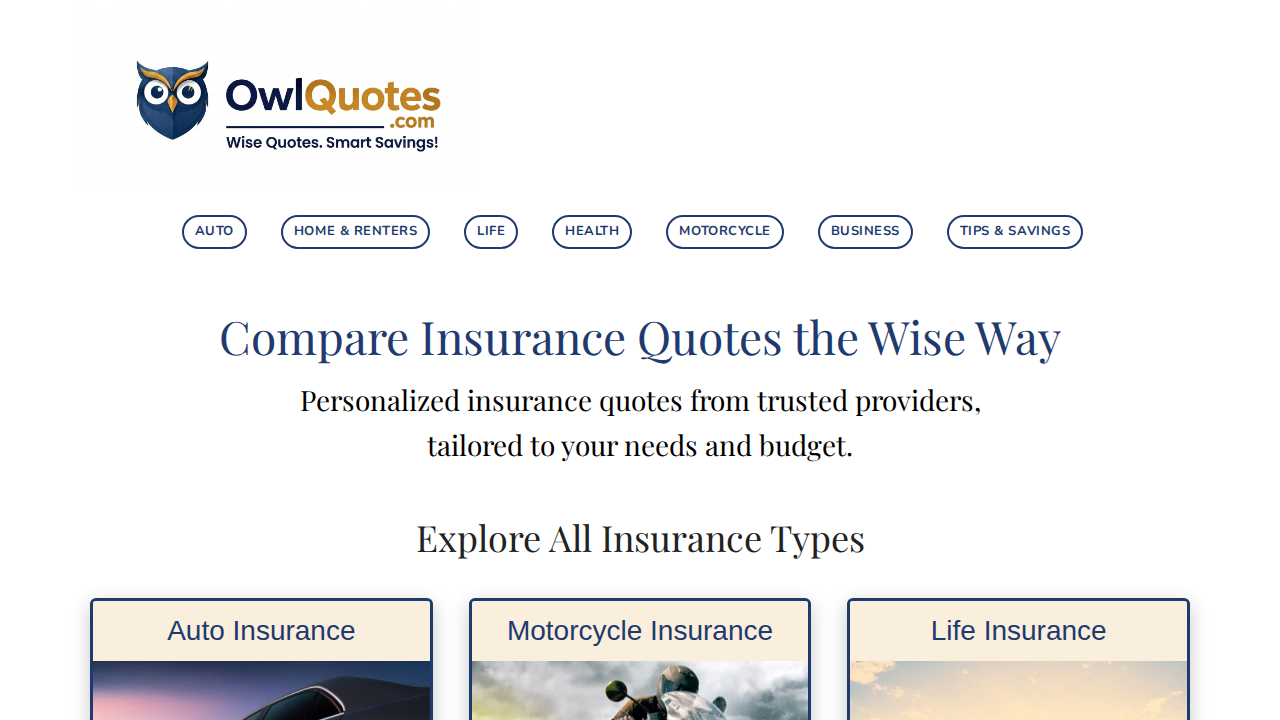
Executive summary
Score Breakdown (High Level)
- Discoverability: 83% - The site is technically very easy for search engines to find, though adding an image or video sitemap would help with visual content discovery.
- Structured Data: 58% - The homepage has solid organization and agency schema in place, but we weren't able to verify markup for blog posts or author profiles since no resource page was provided.
- AI Readiness: 67% - The site has a strong technical foundation for AI readiness with proper sitemaps and crawler access, though it currently lacks a Wikidata presence to help define its brand entity.
- Performance: 67% - Mobile performance for the homepage is generally solid, avoiding the "poor" category across all measured metrics.
- Reputation: 38% - We found that while the brand is recognized by AI models, it currently lacks essential trust signals like a verified physical address, social media links, or independent press coverage.
- LLM-Ready Content: 36% - The page is current and jargon-free, but it lacks the robust section lengths and author details needed to fully signal authority to generative engines.

The big picture on what’s missing
What stands out most is that the site reads cleanly in some areas, but key identity and trust signals aren’t showing up clearly, and the content doesn’t consistently give AI enough substance to pull strong, confident takeaways. These aren’t “errors” so much as visibility gaps—places where the story of who you are, why you’re credible, and what each section means isn’t fully reinforced. The sections below break down the specific missing signals across discoverability, structured data, reputation, and content readiness. Once you see them laid out, the overall path forward tends to feel pretty manageable.
Detailed Report
Discoverability
❌ No image or video sitemap detected
What we saw
We didn’t see an image or video sitemap in the sitemap data. That means your visual content doesn’t have a clear, dedicated pathway to be discovered and organized.
Why this matters for AI SEO
Generative engines rely on clean discovery signals to find and understand different content types. When visual assets aren’t clearly surfaced, they’re less likely to be indexed and referenced in AI answers.
Next step
Publish an image and/or video sitemap (or add image/video entries to your existing sitemap approach) so visual content can be discovered more reliably.
Structured Data
❌ Resource/blog page structured data couldn’t be verified
What we saw
The resource/blog page file we looked for was missing or empty, so we couldn’t confirm any article-level structured data there. As a result, that area of the site isn’t giving clear, machine-readable context.
Why this matters for AI SEO
When article or resource pages don’t provide consistent structured context, AI systems have a harder time confidently identifying what the page is and how it should be categorized. That can reduce how often content gets pulled into summaries or recommendations.
Next step
Make sure your resource/blog page is present and includes appropriate article/resource structured data so those pages can be interpreted consistently.
❌ No clear, non-generic author verified on resource/blog content
What we saw
Because the resource/blog page content was missing or empty, we couldn’t confirm an actual author for posts. That leaves author attribution unclear.
Why this matters for AI SEO
Clear authorship helps AI systems assign credibility and context, especially for informational content. When authorship is missing or generic, content can feel less “grounded” and harder to trust.
Next step
Add explicit author identification on resource/blog content so posts are clearly tied to a real person (not just the brand).
❌ Author profiles lacked external identity links
What we saw
We couldn’t verify author profiles that include external professional identity links (since the resource/blog page content was missing or empty). This leaves author identity unconnected beyond the site itself.
Why this matters for AI SEO
External identity links help AI systems disambiguate people and connect expertise across the wider web. Without those anchors, it’s harder for AI to build confidence in “who wrote this.”
Next step
Include external identity/profile links for authors (where relevant) so AI systems can connect author entities more confidently.
AI Readiness
❌ No Wikidata entity found for the brand
What we saw
We didn’t find a Wikidata entity associated with the brand. In the report data, the Wikidata entity ID field was empty.
Why this matters for AI SEO
Wikidata is a common identity anchor used across knowledge graphs and AI systems. When it’s missing, brand/entity understanding can be less consistent across models.
Next step
Create and/or validate a Wikidata entity for the brand and connect it to the official site so AI systems have a clearer identity reference.
Reputation
❌ Brand identity details weren’t consistently confirmed
What we saw
A physical business address could not be confirmed in the data. That creates a gap in basic brand identity consistency.
Why this matters for AI SEO
AI systems lean on consistent identity details to reduce ambiguity and increase trust. When core brand identifiers aren’t clear, it can weaken confidence in the entity behind the site.
Next step
Add and standardize a clear physical address in your brand presence so it can be consistently recognized.
❌ No matching Wikidata entry confirmed for the brand
What we saw
No Wikidata match was found for this brand in the reputation signals. This aligns with the separate AI readiness finding that no entity was detected.
Why this matters for AI SEO
A verified Wikidata presence helps AI models connect your brand to a stable, third-party entity record. Without it, brand knowledge can be fragmented across systems.
Next step
Establish a Wikidata entry that clearly represents the brand and confirms key identity fields.
❌ Wikidata identity anchors weren’t present
What we saw
The report indicates Wikidata did not have official identity anchors for the brand. This suggests there isn’t a strong, externally recognized entity record connecting your official profiles and identifiers.
Why this matters for AI SEO
Identity anchors help AI systems unify “who you are” across sources. When those anchors aren’t available, AI may be less confident in referencing or recommending the brand.
Next step
Ensure the brand’s Wikidata presence includes official identity anchors that connect to the real, owned properties.
❌ No verified third-party reviews detected
What we saw
We didn’t find third-party customer reviews or customer feedback in the evaluation data. This leaves a credibility gap from the perspective of outside validation.
Why this matters for AI SEO
AI systems often look for independent trust signals to support brand legitimacy and quality claims. Without review presence, the brand can come across as less proven.
Next step
Build a visible footprint of third-party customer feedback on reputable platforms so independent validation is easier to confirm.
❌ Review sources weren’t concrete
What we saw
The evaluation did not detect review sources that could be treated as concrete, verifiable references. In practice, this means even if testimonials exist somewhere, they weren’t found in a way that reads as independently confirmable.
Why this matters for AI SEO
Concrete review sources help AI systems distinguish between owned claims and independent feedback. When sources aren’t clear, reviews carry less weight in AI-driven trust assessment.
Next step
Make sure any customer feedback is tied to clearly attributable, third-party sources that can be referenced.
❌ No consistent social profile recognition across AI models
What we saw
The report flagged a lack of consensus across AI models on the brand’s major social profiles. That suggests the brand’s social identity isn’t consistently established.
Why this matters for AI SEO
Consistent social identity can act like a supporting “proof layer” for brand legitimacy. When AI systems can’t confidently connect social profiles to the brand, trust signals get thinner.
Next step
Standardize and reinforce the brand’s major social profiles so AI systems can consistently associate them with the brand.
❌ Homepage didn’t link to major social profiles
What we saw
No links to major social platforms were found on the homepage in the HTML. That removes an easy, direct connection between your site and your offsite brand profiles.
Why this matters for AI SEO
Direct, consistent linking helps AI systems validate that offsite profiles are truly owned by the brand. Without those connections, entity confidence can be weaker.
Next step
Add clear homepage links to the brand’s official social profiles so ownership signals are easy to verify.
❌ No independent offsite press or coverage detected
What we saw
The evaluation didn’t find independent media coverage or third-party press mentions tied to the brand. This suggests offsite authority signals are limited.
Why this matters for AI SEO
Independent coverage can act as a strong corroboration signal for AI systems. When it’s missing, it’s harder for AI to “triangulate” the brand’s legitimacy and relevance.
Next step
Establish a footprint of independent coverage so AI systems can find corroborating references beyond the site itself.
LLM-Ready Content
❌ No specific author name was present
What we saw
We didn’t see a specific author name called out; the content appears attributed only to the organization (and a mascot). That makes it hard to tell who is responsible for the content.
Why this matters for AI SEO
Generative engines tend to trust content more when it’s tied to a real person with clear ownership. Missing authorship can reduce perceived expertise and reliability.
Next step
Add clear author attribution on content so readers (and AI systems) can connect the page to a real creator.
❌ No non-social outbound links were found
What we saw
All links found were internal to the site, with no links out to external, non-social sources. That limits how the content connects to the broader information ecosystem.
Why this matters for AI SEO
Outbound references can help AI systems understand context and corroborate claims. When everything stays internal, the content can feel more isolated and less verifiable.
Next step
Include at least one relevant external, non-social reference link where it naturally supports the content.
❌ Sections were too thin for easy extraction
What we saw
Content sections were very short on average (around ~90 words), falling below the target range noted in the report. This makes the page feel more like a set of snippets than fully explained ideas.
Why this matters for AI SEO
LLMs do better when they can “grab” complete thoughts with enough supporting detail. When sections are too thin, AI may miss nuance or have less confidence summarizing the content.
Next step
Expand key sections so each one contains enough substance to stand on its own as a clear, extractable answer.
❌ No table-based quick reference content
What we saw
No HTML table element was detected. That means there isn’t an easy “at-a-glance” structure for comparisons, definitions, or summary data.
Why this matters for AI SEO
Tables can make key facts easier for AI systems to parse and reuse accurately, especially for comparisons and lists. Without them, important details may be harder to extract cleanly.
Next step
Add a simple table where it makes sense (e.g., comparisons or key takeaways) to create clearer, structured reference points.
❌ Key answers didn’t appear early in sections
What we saw
The content relied more on headers and card grids, without early lead paragraphs that clearly state the main takeaway. As a result, sections don’t quickly establish “the answer” in text.
Why this matters for AI SEO
AI engines often prefer pages where the main point is easy to find right away. When the core answer is buried or implied, content can be less likely to be quoted or summarized accurately.
Next step
Add short lead-in paragraphs that state the main takeaway near the start of important sections.
Does Anything Seem Off?
Thanks for taking our free GEO Grader for a spin. When we started this journey, the tool had a fairly long processing time to check everything we wanted both onsite and offsite, so we made a few adjustments on the backend to speed things up. As a result, there are times when the grader may not get everything 100% right. If something feels off, we recommend running the tool a second time to confirm the results. From there, you’re always welcome to reach out to us to schedule a GEO consultation, or to have your SEO provider validate the findings with a more detailed crawl and manual review.
