
Overview:
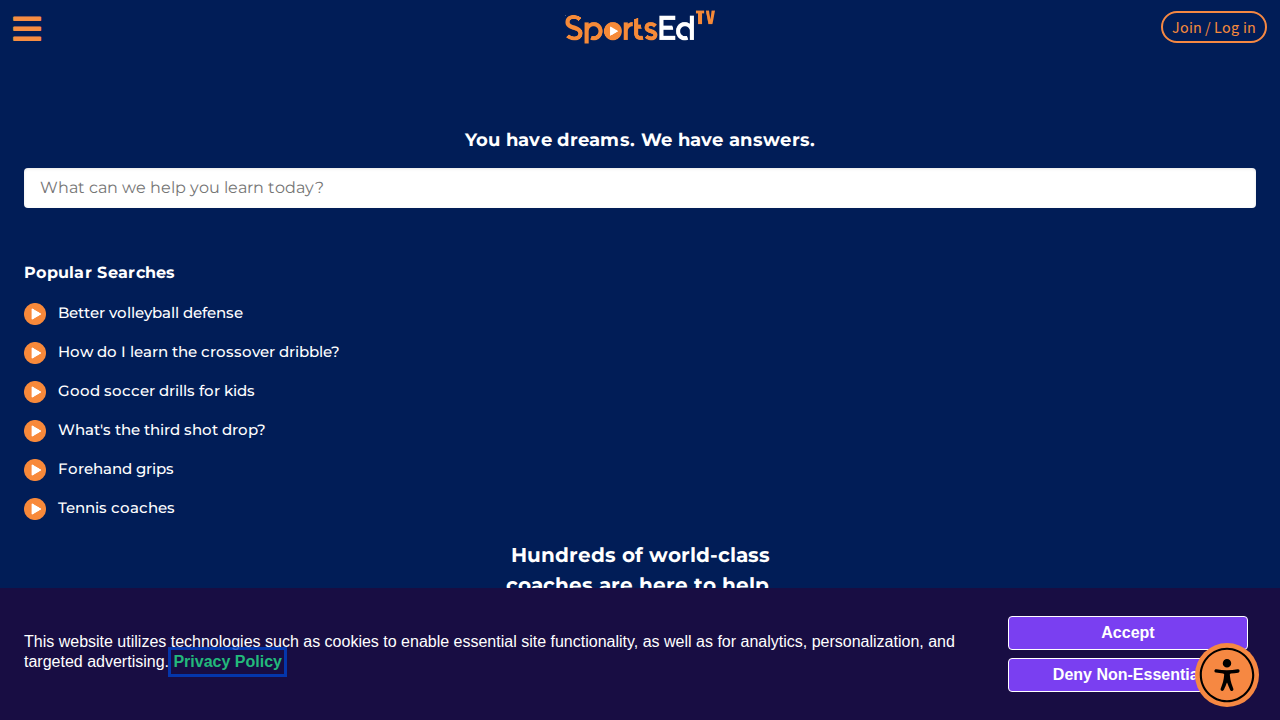
On 09/20/26 sportsedtv.com scored 54% — **Fair** – Overall, the site has a solid foundation for AI visibility, but a few key gaps make it harder for systems to confidently understand and attribute what you publish.
Executive summary
Score Breakdown (High Level)
- Discoverability: 100% - The site has a strong technical foundation for discovery, though it’s currently missing specialized sitemaps for its video and image content.
- Structured Data: 42% - The site has a solid start with its Organization schema, but we found some technical errors on the homepage and weren't able to verify any markup for the blog or resource pages.
- AI Readiness: 50% - The site is easily crawlable by AI bots and has clear brand pages, but it's missing helpful metadata like sitemap timestamps and a Wikidata entry.
- Performance: 50% - The site is responsive and visually stable on mobile, but the time it takes to load the main content is currently dragging down the overall performance experience.
- Reputation: 46% - The brand has a clean reputation and active social presence, though it currently lacks formal Wikidata verification and consistent identity anchors across all sources.
- LLM-Ready Content: 52% - The site is structured well for human readability but lacks specific author attribution and descriptive subheadings that help AI engines verify and categorize expertise.

Where things feel less clear
The big picture is that the site is generally understandable, but some of the signals AI systems rely on are either missing, inconsistent, or hard to validate. These aren’t “mistakes” so much as clarity gaps that can limit confidence around attribution, trust, and what each page section is really about. Below, we’ll walk through the specific areas where those gaps showed up so you can see exactly what’s getting in the way. The good news is the issues are concrete and identifiable, which makes them much easier to tackle than vague positioning problems.
Detailed Report
SECTION 0: DISCOVERABILITY
❌ Missing image or video sitemap
What we saw
We didn’t find a dedicated sitemap for images or videos. This stands out a bit given the site’s emphasis on visual training content.
Why this matters for AI SEO
Generative engines learn faster when they can clearly find and inventory key media assets at scale. When that visibility is limited, important visual content can be underrepresented in what AI systems understand about your brand.
Next step
Add a dedicated image sitemap and/or video sitemap so your media library is easier to discover and interpret.
Structured Data
❌ Resource/blog page schema not found in the evaluation
What we saw
We weren’t able to review structured data for a resource or blog page because that page content wasn’t available in the evaluation packet. That means we couldn’t confirm whether those pages include the signals AI systems typically rely on.
Why this matters for AI SEO
AI engines use these signals to understand what a page is, how it relates to the rest of your site, and whether it should be treated as credible content. When it’s missing or unconfirmed on editorial pages, attribution and trust can suffer.
Next step
Ensure your key resource/blog templates include structured data and can be consistently evaluated.
❌ Schema type error detected on the homepage
What we saw
One of the schema blocks used a type value written as “website” instead of the recognized “WebSite”. That makes that specific block invalid in practice.
Why this matters for AI SEO
When structured data is malformed, AI systems are more likely to ignore it, which reduces clarity about what the site represents. That can weaken how confidently your brand and pages are interpreted.
Next step
Correct the schema type value so it matches the recognized “WebSite” format.
❌ Resource/blog post author not confirmed
What we saw
We couldn’t verify that the resource/blog post includes a clear, non-generic author because the resource page content wasn’t available for review. As a result, author clarity wasn’t established.
Why this matters for AI SEO
Generative engines lean on author attribution to judge credibility and to reference the right source in answers. If authorship isn’t clear, your content can be harder to trust and reuse.
Next step
Make sure each resource/blog post clearly identifies a specific author and that it’s consistently available to be evaluated.
❌ Author profile links not confirmed
What we saw
We couldn’t confirm whether the author information includes profile links (like “sameAs” references) because the resource page wasn’t available in the evaluation packet.
Why this matters for AI SEO
Connected profile references help AI systems disambiguate people and verify identity. Without them, it’s easier for author signals to be treated as incomplete or ambiguous.
Next step
Include verifiable profile links for authors on resource/blog pages so identity is easier to confirm.
AI Readiness
❌ Sitemap update dates not present
What we saw
The sitemap didn’t include update timestamps for the listed URLs. That makes it unclear when content was last changed.
Why this matters for AI SEO
AI systems use freshness cues to prioritize what to crawl and what to trust as current. When those signals aren’t present, newer updates can be slower to register.
Next step
Add update timestamps to the sitemap so content recency is clearly communicated.
❌ No Wikidata entity found for the brand
What we saw
We didn’t find a Wikidata item associated with the brand in the provided brand data.
Why this matters for AI SEO
Knowledge sources like Wikidata can help generative engines verify and reconcile brand identity across the web. When that reference isn’t available, it can be harder for AI to confidently “lock in” who you are.
Next step
Create or claim a Wikidata entity for the brand so AI systems have a consistent identity reference.
Performance
❌ Main page content loads slowly on mobile
What we saw
The primary page element took longer than expected to appear on mobile. This suggests the core content experience may feel delayed for many users.
Why this matters for AI SEO
When important content loads slowly, it can reduce how reliably that content is processed and valued across discovery systems. It can also limit engagement signals that reinforce usefulness.
Next step
Improve how quickly the main above-the-fold content becomes visible on mobile.
Reputation & Brand Trust Analysis
❌ Brand recognition signal not confirmed
What we saw
We didn’t see clear confirmation in the report data that the brand is consistently recognized across the expected recognition sources. That makes this signal hard to validate.
Why this matters for AI SEO
Generative engines tend to be more confident when a brand is consistently referenced and recognized beyond its own site. When that signal isn’t confirmed, the brand can be treated as less established.
Next step
Compile and validate consistent third-party brand references that support broad recognition.
❌ Identity consistency is unclear
What we saw
The report noted a lack of consensus on official identity markers like the organization’s name and physical address across sources. In other words, the “official” details don’t line up cleanly.
Why this matters for AI SEO
AI systems look for consistent identity signals to avoid conflating brands or treating them as ambiguous. When the basics don’t align, trust and attribution can get weaker.
Next step
Standardize the brand’s official identity details so they’re consistent wherever they appear.
❌ Wikidata presence not established
What we saw
No matching Wikidata entity was identified for the brand in the reputation analysis.
Why this matters for AI SEO
Wikidata can act like a central “identity connector” that helps AI systems unify brand information. Without it, your brand graph can be harder to validate.
Next step
Create and verify a Wikidata entry for the brand to strengthen identity confidence.
❌ Wikidata identity anchors not found
What we saw
Because no Wikidata entity was found, the report also couldn’t confirm official identity anchors through Wikidata.
Why this matters for AI SEO
Identity anchors help AI systems reconcile your organization across sources and reduce ambiguity. When they’re missing, AI may be less confident about what information is “official.”
Next step
Add and verify the brand’s key identity anchors within Wikidata once an entity exists.
❌ Review platform specifics not confirmed
What we saw
We didn’t see enough detail to confirm which third-party platforms host customer reviews for the brand.
Why this matters for AI SEO
Generative engines weigh trust signals more confidently when they can connect them to specific, recognizable sources. If the sources are unclear, those signals can be diluted.
Next step
Document the primary review platforms associated with the brand so they can be consistently validated.
❌ Social profile consensus not established
What we saw
The report did not confirm consistent agreement on the brand’s major social media profiles across sources.
Why this matters for AI SEO
When AI systems see inconsistent or incomplete social identity signals, it becomes harder to confirm what’s official. That can reduce confidence in brand attribution.
Next step
Ensure the brand’s official social profiles are consistently represented across key sources.
❌ Independent press coverage not verified
What we saw
The report indicated that mentions exist, but it couldn’t verify independent press coverage as a confirmed signal in the required format.
Why this matters for AI SEO
Independent coverage can help establish third-party credibility and legitimacy. When it can’t be validated cleanly, that trust signal is harder for AI to lean on.
Next step
Consolidate and verify independent press mentions so they’re consistently attributable to the brand.
❌ Owned press mentions not verified
What we saw
The report could not verify owned press mentions as a confirmed signal in the required format.
Why this matters for AI SEO
Owned press pages help AI systems understand your brand narrative and official announcements. If those references aren’t clearly established, your “official story” can be less coherent to AI.
Next step
Make sure owned press mentions are clearly identifiable and consistently attributable to the brand.
LLM-Ready Content (Blog Analysis)
Heads up: this section looks at one article as a snapshot, so it’s a little more interpretive than the rest of the report and may shift slightly from run to run. Have questions? Just shoot us an email at hello@v9digital.com
❌ No clear, non-generic author
What we saw
We didn’t see an individual author name presented in a clear, specific way. The author signal reads as generic or missing.
Why this matters for AI SEO
AI systems rely on author attribution to assess expertise and to cite content confidently. When authorship is unclear, your content can lose trust and reusability.
Next step
Add a clear author name to the page so attribution is unambiguous.
❌ No data table found
What we saw
We didn’t find a table element on the page. That means structured, scannable “at-a-glance” information wasn’t present in that format.
Why this matters for AI SEO
Tables can make key facts easier for AI to extract, summarize, and reuse accurately. Without them, important details may be harder to interpret consistently.
Next step
Add a simple table where it naturally fits (for example, summaries, comparisons, or step-by-step drill elements).
❌ Subheadings aren’t descriptive
What we saw
Some subheadings were generic or utility-based (for example, navigation-style labels), rather than describing the content that follows. That makes the page’s structure harder to interpret.
Why this matters for AI SEO
Descriptive subheadings help AI map the topic structure and understand which sections answer which questions. When headings are vague, the content becomes less “chunkable” for generative answers.
Next step
Rewrite subheadings so they clearly describe the section’s topic in plain language.
❌ Key answers don’t show up early in sections
What we saw
The page didn’t include section openers that quickly summarize the point; the first paragraphs for sections were either missing or too short to clearly establish the answer. As a result, readers (and AI) have to work harder to extract the takeaway.
Why this matters for AI SEO
Generative engines tend to prioritize content that states the answer early and clearly. When the “main point” is buried, the page is less likely to be selected or accurately summarized.
Next step
Add a short, clear introductory paragraph at the start of each section that states the key takeaway.
Does Anything Seem Off?
Thanks for taking our free GEO Grader for a spin. When we started this journey, the tool had a fairly long processing time to check everything we wanted both onsite and offsite, so we made a few adjustments on the backend to speed things up. As a result, there are times when the grader may not get everything 100% right. If something feels off, we recommend running the tool a second time to confirm the results. From there, you’re always welcome to reach out to us to schedule a GEO consultation, or to have your SEO provider validate the findings with a more detailed crawl and manual review.
