
Overview:
On 04/08/26 farmdirectminnesota.com/ scored 74% — **Good** – Overall, the site looks solid for AI visibility, with a few clarity gaps around brand identity and how key content is presented.
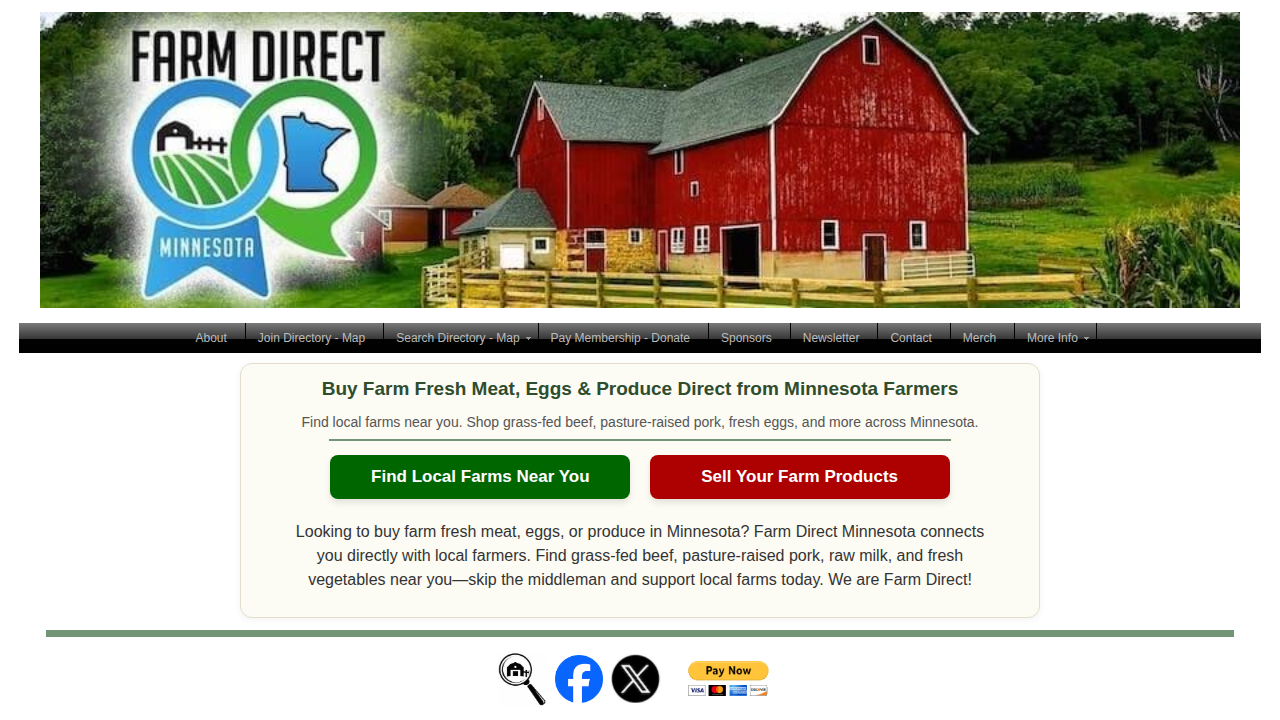
Executive summary
Score Breakdown (High Level)
- Discoverability: 92% - The site is in great shape with strong metadata and a valid sitemap, though we didn't see a dedicated image or video sitemap to help those assets show up better in search.
- Structured Data: 92% - The structured data is mostly solid, though the resource page lacks the specific author schema used to verify the creator's identity through external links.
- AI Readiness: 67% - The technical foundation is excellent with crawlable content and updated sitemaps, though the lack of a Wikidata entry is a notable gap for brand recognition.
- Performance: 100% - Mobile performance is excellent across the board, with both the homepage and the interactive map resource passing all core speed and stability thresholds.
- Reputation: 81% - The brand demonstrates strong offsite trust signals through social media and press coverage, though the lack of a Wikidata entry and inconsistent address data are notable gaps.
- LLM-Ready Content: 36% - The page provides clear authorship and a helpful interactive map, but it lacks the heading structure and visible dates needed for AI systems to easily parse and verify the content's freshness.

The big picture on visibility
What stands out most is that the site generally reads well to engines, but a few missing identity and context signals make it harder to confidently connect the brand, the author, and the resource content. These aren’t “errors” so much as places where the information isn’t as explicit or verifiable as it could be across the web and within the page. The next section breaks down the specific spots where those signals were missing, grouped by area so it’s easy to follow. Overall, the gaps are straightforward and very common for otherwise solid sites.
Detailed Report
Discoverability
❌ Image or video sitemap missing
What we saw
We didn’t find an image sitemap or a video sitemap available for the site. That means visual content has less dedicated context to help it get picked up cleanly.
Why this matters for AI SEO
When AI and search systems can’t easily discover and categorize visual assets, they’re less likely to surface them in rich results or use them as supporting evidence about what your site offers. This can limit how fully your brand and content get represented.
Next step
Add a dedicated sitemap for images and/or videos so your visual content is easier to discover and understand.
Structured Data
❌ Author identity links not included
What we saw
On the resource page, we didn’t detect author-related markup that includes identity links (like “sameAs” references). As a result, the author’s identity isn’t being reinforced through consistent external profiles.
Why this matters for AI SEO
AI systems lean on consistent identity signals to understand who created content and whether that creator is credible and real. When those connections aren’t present, it can be harder for engines to confidently attribute and trust the content.
Next step
Include author identity references that connect the author to their established profiles so attribution is clearer.
AI Readiness
❌ No Wikidata entity found for the brand
What we saw
We couldn’t find a Wikidata item ID associated with the brand. That leaves a common “reference point” missing that some AI systems use to confirm brand identity.
Why this matters for AI SEO
Without a widely recognized knowledge reference, AI engines may have a harder time reliably pinning down who you are—especially when summarizing your business or connecting your brand to other sources. This can reduce confidence in identity matching.
Next step
Create or claim a Wikidata entity for the brand so AI systems have a clear identity anchor.
Reputation & Offsite Signals
❌ Brand identity information is inconsistent
What we saw
We saw conflicting location details associated with the brand, with references pointing to Rochester in some places and Belgrade in others. This creates an “official identity” mismatch across sources.
Why this matters for AI SEO
AI systems look for consistent, repeated facts to confirm an entity’s identity. When core details like location vary across sources, it can make the brand feel harder to verify and summarize accurately.
Next step
Align the brand’s core identity details across the main places they appear so the same facts show up consistently.
❌ No Wikidata entity found
What we saw
We didn’t find a Wikidata entity for the brand in this evaluation. That means there isn’t a canonical knowledge entry that helps unify the brand’s identity across the web.
Why this matters for AI SEO
Wikidata is one of the more common “ground truth” sources used to cross-check brands. When it’s missing, AI engines have fewer reliable ways to connect the dots between your site and independent references.
Next step
Establish a Wikidata entity for the brand so identity references can consolidate around a single source.
❌ No Wikidata identity anchors
What we saw
Because there’s no Wikidata entry present, we also didn’t see official identifiers (or the official website) anchored there. That leaves a missing “proof point” tying the brand to verified properties.
Why this matters for AI SEO
Identity anchors help AI systems confirm they’re talking about the right organization, especially when names or locations can be ambiguous. Without them, brand matching can be less confident.
Next step
Add official identity anchors in Wikidata so the brand is easier to validate and connect to trusted references.
LLM-Ready Content (Blog Analysis)
Heads up: this section looks at one article as a snapshot, so it’s a little more interpretive than the rest of the report and may shift slightly from run to run. Have questions? Just shoot us an email at hello@v9digital.com
❌ No publish or update date found
What we saw
We didn’t find a visible publish date or update date on the page. We also didn’t see a date included in page-level details that would confirm when it was last refreshed.
Why this matters for AI SEO
AI systems use dates to judge timeliness, especially for directories and resources where freshness changes the value of the content. When there’s no clear date, engines may be less confident about how current the information is.
Next step
Add a clear publish date or “last updated” date that’s visible on the page.
❌ Freshness can’t be verified
What we saw
Because no update or modified date was detected, we couldn’t confirm whether the page has been updated recently. In practice, this makes the content’s recency unclear.
Why this matters for AI SEO
If an AI engine can’t verify that resource information is maintained, it may hesitate to prioritize it for time-sensitive queries. That can reduce how often the page is pulled into answers that depend on up-to-date info.
Next step
Make the page’s most recent update clearly identifiable so recency is easy to confirm.
❌ Content isn’t broken into readable sections
What we saw
We found zero section-level headings (
) organizing the resource into distinct parts. As a result, the page doesn’t have clear “content chunks” that separate key topics.
Why this matters for AI SEO
AI systems understand and reuse content more reliably when it’s organized into predictable sections. Without that structure, it’s harder to extract the right pieces and summarize them cleanly.
Next step
Restructure the page so the main content is clearly divided into labeled sections.
❌ Subheadings aren’t present to describe sections
What we saw
Because there were no
elements, there weren’t any descriptive subheadings available to signal what each section covers. That removes a key layer of on-page clarity.
Why this matters for AI SEO
Descriptive section labels help AI engines quickly understand page topics and map them to user questions. When they’re missing, the content can be interpreted as less clearly organized.
Next step
Add descriptive subheadings that summarize what each major section is about.
❌ Key answers don’t surface early
What we saw
Since there were no defined sections, we couldn’t verify that the most important takeaways appear early in the page layout. That makes it harder to confirm that the page leads with the answers people are most likely looking for.
Why this matters for AI SEO
AI systems often prioritize content that’s easy to scan and that presents the main point quickly. When the structure doesn’t clearly surface key information upfront, extraction and summarization can be less reliable.
Next step
Rework the page layout so the most important takeaways are clearly presented near the top.
Does Anything Seem Off?
Thanks for taking our free GEO Grader for a spin. When we started this journey, the tool had a fairly long processing time to check everything we wanted both onsite and offsite, so we made a few adjustments on the backend to speed things up. As a result, there are times when the grader may not get everything 100% right. If something feels off, we recommend running the tool a second time to confirm the results. From there, you’re always welcome to reach out to us to schedule a GEO consultation, or to have your SEO provider validate the findings with a more detailed crawl and manual review.
