
Overview:
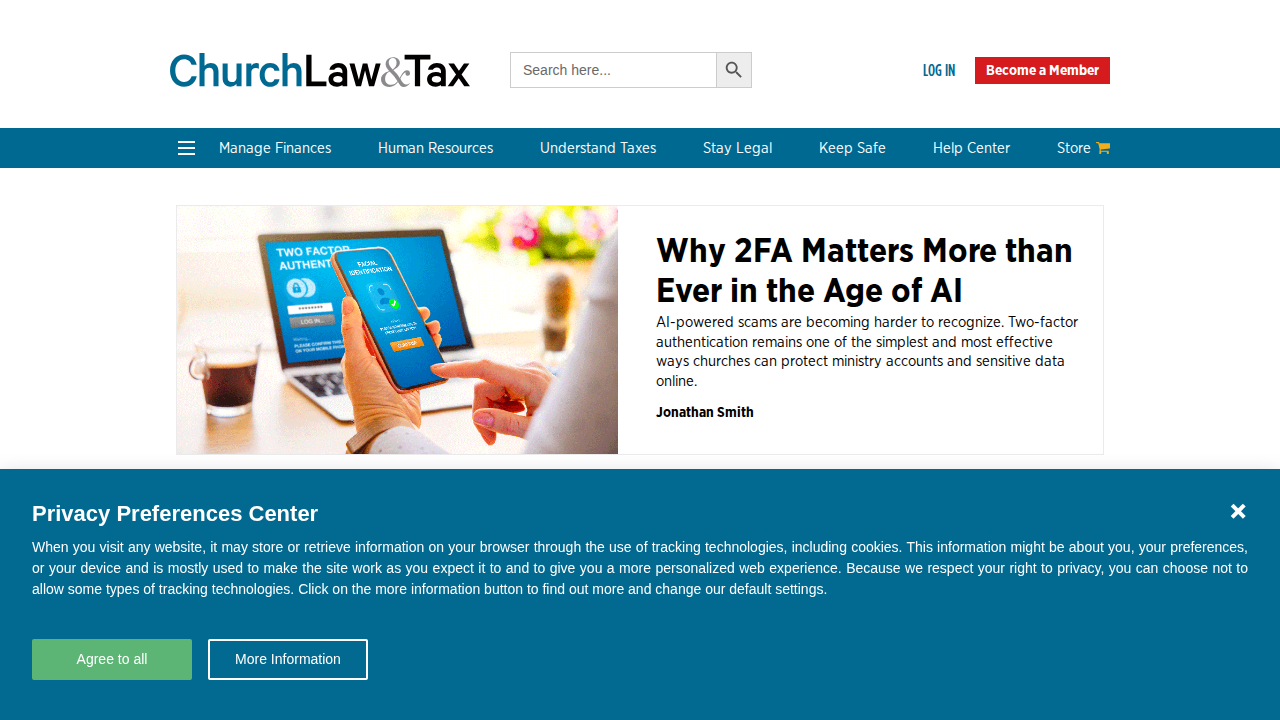
On 05/20/26 churchlawandtax.com scored 59% — **Fair** – Overall, the site shows a solid foundation for AI visibility, but a few clarity and trust gaps are holding it back.
Executive summary
Score Breakdown (High Level)
- Discoverability: 100% - Overall, this section looks to be in good shape, though we didn't see an image or video sitemap.
- Structured Data: 75% - The site has a very strong foundation of valid organizational and article schema, though the use of a generic author byline and the absence of external author links are clear gaps.
- AI Readiness: 67% - Overall, the site has a very strong technical foundation for AI with open crawler access and optimized sitemaps, although it lacks a Wikidata entity for structured brand verification.
- Performance: 56% - While layout stability looks great, the site is running into some serious bottlenecks with mobile load times and resource page responsiveness.
- Reputation: 35% - This section is a major bottleneck due to negative employee sentiment and the absence of official identity anchors like Wikidata.
- LLM-Ready Content: 52% - The post is well-referenced and clearly attributed to a specific editorial team, but it relies on an unconventional heading hierarchy that makes it difficult for AI to parse into distinct sections.

What stands out across the results
The big picture is that the site is in a workable place for AI visibility, but a few key signals aren’t coming through as clearly or consistently as they could. The gaps are less about “something being wrong” and more about how confidently systems can identify the brand, trust the sources behind the content, and access pages without friction. The next sections break down the specific areas where the report couldn’t confirm trust markers, where performance lagged, and where the article structure made parsing harder. None of this is unusual—these are common visibility blockers, and they’re straightforward to pin down once you see them laid out.
Detailed Report
Discoverability
❌ No image or video sitemap detected
What we saw
We didn’t find any dedicated sitemap coverage for images or video content. That means media assets may be harder to discover and interpret consistently.
Why this matters for AI SEO
Generative systems rely on clean, crawlable signals to understand what content exists and how it relates to a topic. When media isn’t clearly surfaced, it can limit how often those assets show up in AI-generated answers.
Next step
Add a dedicated image and/or video sitemap and make sure it’s accessible alongside your other discovery signals.
Structured Data
❌ Resource/blog author appears generic or unclear
What we saw
The visible byline shows “The Editors,” which reads like a generic group label rather than a specific person. The associated author name found in structured data also looked like an unidentifiable username.
Why this matters for AI SEO
AI systems tend to trust content more when they can tie it to a real, consistent author identity. Generic or unclear attribution makes it harder for models to confidently understand who is behind the content.
Next step
Update author attribution so the content clearly connects to a specific, identifiable author name.
❌ Author structured data missing external identity links
What we saw
The author’s structured data didn’t include any external profile links that help confirm the person’s identity.
Why this matters for AI SEO
When AI models can’t easily corroborate an author, they have less confidence in using the content as a cited source. Clear, consistent identity references help improve trust and reduce ambiguity.
Next step
Add external identity/profile links for the author in the structured data so the entity can be verified more easily.
AI Readiness
❌ No linked Wikidata entity found for the brand
What we saw
We didn’t see a Wikidata entity tied to the brand in the available data.
Why this matters for AI SEO
AI systems often use well-known knowledge sources to verify who an organization is and connect brand details across the web. Without that reference point, brand-level understanding can be less consistent.
Next step
Create or claim a Wikidata entity for the brand and ensure it clearly matches the organization.
Performance
❌ Homepage main content loads very slowly
What we saw
The homepage took over 20 seconds on mobile to fully load the main content. That’s slow enough to noticeably impact the experience.
Why this matters for AI SEO
If key content is slow to appear, crawlers and AI systems may have a harder time consistently accessing and evaluating it. It can also weaken user trust signals that AI models may implicitly reflect.
Next step
Reduce the time it takes for the homepage’s main content to appear on mobile.
❌ Resource page responsiveness is sluggish
What we saw
The resource/article page showed signs of sluggish responsiveness during loading. This suggests interactions may feel delayed while the page is still settling.
Why this matters for AI SEO
When content pages feel heavy or laggy, it can reduce engagement and overall reliability signals. Over time, that can indirectly affect how confidently AI systems reuse or reference the content.
Next step
Improve the resource page’s responsiveness so it reacts more quickly during load.
❌ Resource page main content loads very slowly
What we saw
The resource/article page took over 20 seconds on mobile to fully load the main content.
Why this matters for AI SEO
Slow content delivery can make it harder for AI systems to reliably extract the most important information from the page. It also raises friction for readers, which can reduce the page’s perceived usefulness.
Next step
Reduce the time it takes for the resource page’s main content to appear on mobile.
❌ Resource page overall performance is weak
What we saw
The resource page’s overall performance evaluation came back in the poor range. In plain terms, it’s struggling compared to what users (and systems) expect.
Why this matters for AI SEO
When performance is consistently weak on content pages, it can limit how accessible and “reliable” those pages feel to both users and automated systems. That can reduce how often the page is chosen as a source.
Next step
Bring the resource page’s overall performance up to a more stable, reliable baseline.
Reputation
❌ Negative employee feedback is present in the narrative
What we saw
We found affirmed negative employee feedback, specifically mentioning pay and management issues.
Why this matters for AI SEO
AI answers often reflect broad trust sentiment, not just what’s on your site. Negative brand narratives can become the “default context” models associate with the organization.
Next step
Audit your offsite employer narrative and document what’s publicly showing up most often about the brand.
❌ Brand recognition across AI systems wasn’t confirmed
What we saw
Based on the data provided, we couldn’t confirm broad brand recognition across multiple AI models.
Why this matters for AI SEO
If AI systems don’t consistently recognize a brand, they’re less likely to confidently describe it, recommend it, or connect it to the right topics.
Next step
Gather a clearer read on whether the brand is consistently recognized and described across major AI experiences.
❌ Brand identity consistency couldn’t be validated
What we saw
We weren’t able to validate consistent identity signals (like name/domain/address alignment) from the information available in this run.
Why this matters for AI SEO
When identity signals aren’t consistent or verifiable, AI systems can hesitate to connect the right brand details together. That uncertainty can lower trust and reduce visibility.
Next step
Confirm that your brand identity details are consistent and verifiable wherever the brand is referenced online.
❌ No matching Wikidata entity found for the brand
What we saw
A matching Wikidata entry for the brand wasn’t found.
Why this matters for AI SEO
Wikidata can act like a public “identity anchor” that helps AI systems connect your brand to official facts and related entities. Without it, brand authority signals can be harder to consolidate.
Next step
Create or reconcile a Wikidata entry so the brand has a stable, public entity reference.
❌ Official identity anchors weren’t verifiable
What we saw
Because a Wikidata entity wasn’t present, official identity anchors tied to that entity couldn’t be verified.
Why this matters for AI SEO
Identity anchors help AI systems confirm “this is the real organization” and reduce confusion with similarly named entities. Without them, trust and attribution can be less stable.
Next step
Ensure the brand has a verified entity record that includes clear official identifiers.
❌ Review sources weren’t clearly established
What we saw
While reviews and feedback exist, the available data didn’t clearly confirm the sources in a way we could treat as concrete.
Why this matters for AI SEO
AI systems tend to weigh third-party validation more when it’s specific and attributable. Vague or hard-to-verify review sourcing can reduce how strongly those trust signals carry.
Next step
Document the most important third-party review sources and make sure they’re clearly attributable.
❌ Consensus on major social profiles wasn’t confirmed
What we saw
We couldn’t confirm consistent consensus on the brand’s primary social profiles from the available information.
Why this matters for AI SEO
When major profiles aren’t consistently identified, AI systems have a harder time tying brand mentions back to official accounts. That can dilute authority and cause confusion in summaries.
Next step
Validate which social profiles are considered “official” and ensure they’re consistently referenced across the web.
❌ Independent press/coverage couldn’t be confirmed
What we saw
We weren’t able to confirm independent offsite press or coverage in the information provided for this run.
Why this matters for AI SEO
Independent coverage can help AI systems build confidence that a brand is established and noteworthy beyond its own website. Without it, the broader authority picture may look thinner.
Next step
Take inventory of any independent coverage and make sure it’s easy to associate with the brand.
❌ Owned press/press releases weren’t confirmed
What we saw
We couldn’t confirm the presence of owned press or press-release style coverage based on the data available.
Why this matters for AI SEO
Clear, attributable announcements help AI systems understand key brand milestones and “what the company does” in a structured narrative. If those signals aren’t present or discoverable, brand context can be harder to summarize.
Next step
Make sure brand announcements and updates are clearly published and easy to find.
LLM-Ready Content (Blog Analysis)
Heads up: this section looks at one article as a snapshot, so it’s a little more interpretive than the rest of the report and may shift slightly from run to run. Have questions? Just shoot us an email at hello@v9digital.com
❌ Content isn’t chunked into clearly readable sections
What we saw
The article didn’t include standard section headings that clearly break the piece into distinct parts. As a result, the content reads as one long flow rather than easy-to-scan segments.
Why this matters for AI SEO
AI systems tend to understand and reuse content more reliably when it’s organized into clean, named sections. When the structure is unclear, key points can be harder to extract accurately.
Next step
Restructure the article so it’s clearly divided into multiple readable sections with consistent subheadings.
❌ No HTML table detected
What we saw
We didn’t find a table in the article.
Why this matters for AI SEO
Tables can make comparisons, lists, and step-based information easier for AI systems to interpret and summarize without losing detail. Without one, structured takeaways may be harder to lift cleanly.
Next step
Where it makes sense, add a simple table to summarize key items (like examples, categories, or checklists) in a scannable format.
❌ Subheadings weren’t evaluable as descriptive
What we saw
Because clear section headings weren’t detected, we couldn’t identify (or evaluate) whether subheadings were descriptive and specific.
Why this matters for AI SEO
Descriptive subheadings act like signposts for both readers and AI systems. Without them, it’s harder for AI to map which parts of the article answer which questions.
Next step
Add clear, descriptive subheadings that label each section based on the question or topic it addresses.
❌ Key answers weren’t clearly surfaced early
What we saw
Since the article structure couldn’t be parsed into sections, we couldn’t confirm that the main answers are presented early in the piece.
Why this matters for AI SEO
Generative systems often prioritize content that makes the main takeaway easy to find quickly. When answers are harder to locate, AI may rely on other sources that summarize more directly.
Next step
Make sure the article surfaces the core takeaway near the top in a clear, easy-to-quote way.
Does Anything Seem Off?
Thanks for taking our free GEO Grader for a spin. When we started this journey, the tool had a fairly long processing time to check everything we wanted both onsite and offsite, so we made a few adjustments on the backend to speed things up. As a result, there are times when the grader may not get everything 100% right. If something feels off, we recommend running the tool a second time to confirm the results. From there, you’re always welcome to reach out to us to schedule a GEO consultation, or to have your SEO provider validate the findings with a more detailed crawl and manual review.
