
Overview:
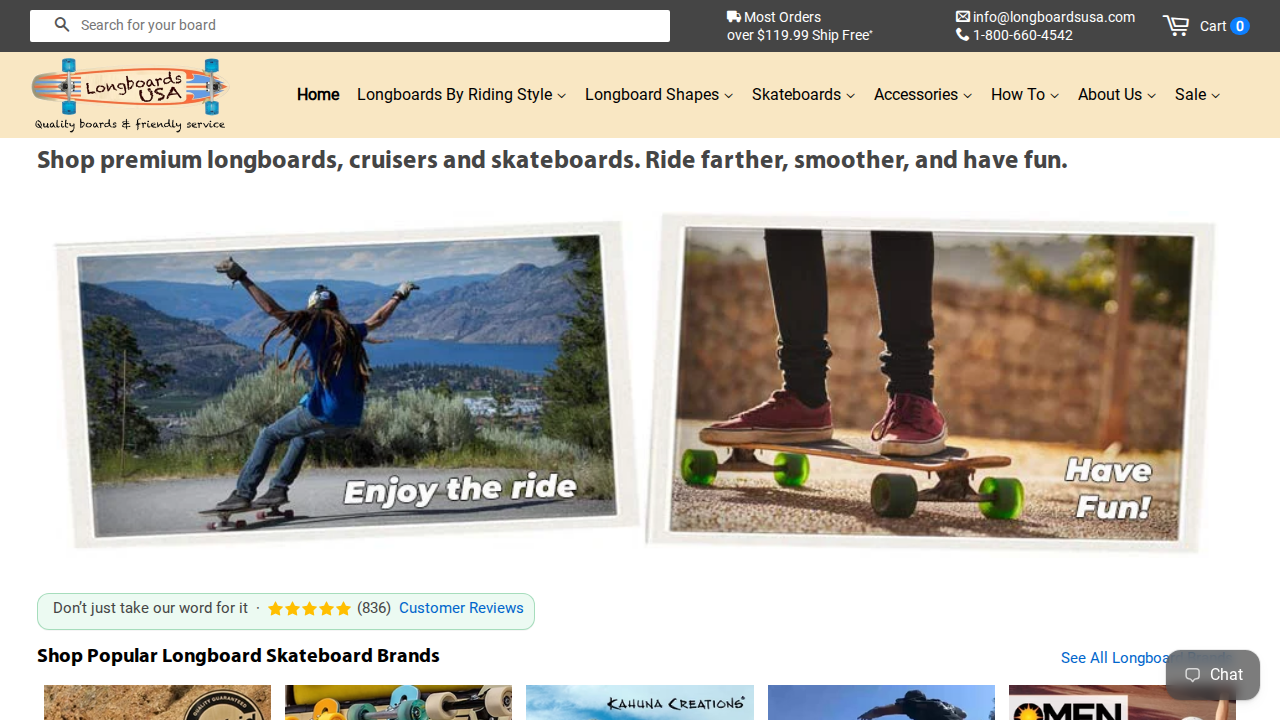
On 09/30/26 longboardsusa.com scored 59% — **Fair** – Overall, the site has a solid base, but a few clarity and trust gaps are keeping it from showing up as strongly as it could in AI-driven results.
Executive summary
Score Breakdown (High Level)
- Discoverability: 100% - The site is highly discoverable with clear metadata and open access for crawlers, though it's currently missing dedicated sitemaps for images and video.
- Structured Data: 58% - The homepage has a solid foundation with Organization and LocalBusiness schema, but we weren't able to confirm author or article markup for the blog content.
- AI Readiness: 50% - The site is open to AI crawlers and provides good brand context, but it lacks sitemap timestamps and a formal Wikidata presence.
- Performance: 50% - Mobile performance is a bit of a mixed bag, with great responsiveness and layout stability held back by a very slow initial load time for the main content.
- Reputation: 73% - The brand has a strong social presence and good review volume, but conflicting address information across the web and a lack of independent press coverage are the main bottlenecks.
- LLM-Ready Content: 36% - The page is technically up-to-date and well-linked, but its product-heavy structure lacks the specific author attribution and descriptive narrative sections that AI systems use to establish authority.

What stands out most overall
The big picture is that the site is findable and credible in a few core ways, but some key details aren’t coming through clearly enough for AI systems to fully trust and reuse. Most of the gaps are more about missing clarity signals than anything being “wrong,” especially around brand identity consistency and how content is presented. The next section breaks down the specific areas where the report couldn’t confirm important context, where the site felt thin or hard to summarize, and where visibility signals were incomplete. None of this is unusual, but it does explain why the overall results came back a bit mixed.
Detailed Report
Discoverability
❌ No image or video sitemap detected
What we saw
We didn’t see a dedicated sitemap specifically for image or video content. That means your visual content may not be getting the clearest possible signals for indexing.
Why this matters for AI SEO
Generative engines pull from what they can confidently find, interpret, and reference. When visual content is harder to surface consistently, it can limit how often your brand shows up with rich, useful context.
Next step
Add a dedicated image and/or video sitemap so visual content is easier to discover and catalog.
Structured Data
❌ Resource/blog page structured data wasn’t available to review
What we saw
No resource or blog page data was provided for evaluation, so we couldn’t confirm how your content pages are described. This left a gap in what we could validate beyond the homepage.
Why this matters for AI SEO
When content pages don’t have clear, confirmable details, AI systems have less to work with when summarizing your expertise or deciding what to cite. That can reduce the odds of your content being used as a trusted source.
Next step
Provide a representative resource/blog page for review and ensure it clearly describes the article and its publisher.
❌ Content authorship on resource/blog pages couldn’t be verified
What we saw
Because the resource/blog page wasn’t available, we couldn’t verify whether posts have a clear, non-generic author. As a result, authorship signals couldn’t be confirmed.
Why this matters for AI SEO
Authorship helps generative engines understand “who is behind” the content, which supports trust and reuse. When authorship is unclear or unverified, it’s harder for AI systems to treat the content as credible.
Next step
Make sure each article clearly lists a specific author and that the author can be consistently identified across the site.
❌ Author identity links weren’t confirmed
What we saw
The resource/blog page data wasn’t provided, so we couldn’t confirm whether author profiles include supporting identity links. This makes it harder to validate author identity signals.
Why this matters for AI SEO
Generative engines tend to trust content more when the creator’s identity is easy to connect to known, consistent profiles. Missing identity confirmation can limit how confidently AI systems attribute expertise.
Next step
Ensure author profiles include consistent identity references that connect the person to their broader online presence.
AI Readiness
❌ Sitemap doesn’t show when pages were last updated
What we saw
The sitemap was found, but it didn’t include page-level update timestamps. That makes it harder to tell which pages are newest or recently refreshed.
Why this matters for AI SEO
AI-driven discovery works best when systems can quickly identify what’s current. If freshness signals aren’t clear, newer updates may take longer to be recognized or prioritized.
Next step
Update the sitemap output so it includes a last-updated timestamp for each listed URL.
❌ No Wikidata entity found for the brand
What we saw
We didn’t find a Wikidata item connected to the brand. That leaves a missing piece in how the brand can be consistently identified across the wider web.
Why this matters for AI SEO
Generative engines rely on strong identity and entity cues to reduce ambiguity. Without a clear entity reference, it can be tougher for AI systems to confidently connect your brand to the right knowledge sources.
Next step
Create and/or claim a Wikidata entity for the brand and connect it to your official web presence.
Performance
❌ Main content is slow to fully appear on mobile
What we saw
The initial load experience on mobile was slow, with the primary page content taking a long time to fully show up. This creates a “slow start” before the page feels usable.
Why this matters for AI SEO
When pages take too long to present their core content, it can reduce the consistency of crawling, rendering, and user engagement signals. Over time, that can make it harder for AI systems to reliably extract and reuse information.
Next step
Reduce the time it takes for the main on-page content to display for mobile visitors.
Reputation
❌ Business address appears inconsistent across sources
What we saw
Different sources reported completely different physical addresses for the business. That kind of mismatch makes your identity details feel less stable.
Why this matters for AI SEO
AI systems look for consistent identity signals to confirm they’re talking about the right entity. Conflicting location information can weaken trust and increase ambiguity when engines try to verify your brand.
Next step
Standardize the business address across the web so the same location details show up everywhere the brand is listed.
❌ No Wikidata entry supporting brand identity
What we saw
A Wikidata entry for the brand wasn’t found. This removes one of the more widely used reference points for entity verification.
Why this matters for AI SEO
When generative engines build answers, they prefer brands they can tie to stable, third-party identity sources. Missing entity references can make it harder to be confidently surfaced in competitive queries.
Next step
Establish a Wikidata entry for the brand that reflects accurate, consistent identity information.
❌ Limited independent third-party coverage found
What we saw
We weren’t able to find independent, third-party press coverage or mentions for the brand during the review. This leaves your offsite authority picture feeling a bit one-sided.
Why this matters for AI SEO
Generative engines tend to place more trust in brands that are discussed elsewhere, not just on their own site. Without those outside references, it’s harder to build broad authority signals.
Next step
Build a stronger footprint of third-party mentions so the brand is validated beyond owned channels.
LLM-Ready Content (Blog Analysis)
Heads up: this section looks at one article as a snapshot, so it’s a little more interpretive than the rest of the report and may shift slightly from run to run. Have questions? Just shoot us an email at hello@v9digital.com
❌ No specific, non-generic author identified
What we saw
We didn’t see a visible or clearly identifiable individual author for the page, and the content appeared to be attributed to the brand generally. That makes it harder to tell who created the content.
Why this matters for AI SEO
AI systems are more likely to trust and reuse content when they can tie it to a real, accountable source. When authorship is vague, it weakens credibility signals.
Next step
Add a clear, specific author name to the page so it’s obvious who wrote or reviewed the content.
❌ Content isn’t chunked into substantial sections
What we saw
The page was structured more like a product grid than a text-forward article, and the sections were very short. As a result, the page doesn’t provide many “standalone” sections that explain a topic in depth.
Why this matters for AI SEO
Generative engines extract, summarize, and quote content more easily when it’s broken into meaningful blocks. Thin sections make it harder to pull clean answers and context.
Next step
Restructure the page so key topics are explained in fuller sections that can stand on their own.
❌ No table found for quick comparisons
What we saw
No table was detected on the page. That removes a common “at-a-glance” structure for summarizing differences between options.
Why this matters for AI SEO
Tables can be a clean, easy-to-interpret format for AI systems to lift structured comparisons from. Without them, the page may be harder to summarize succinctly.
Next step
Include a simple comparison table that summarizes key options, specs, or recommendations.
❌ Subheadings are often too generic
What we saw
Many subheadings were short or label-like (for example, sections that read more like category tags than topic descriptions). That makes it harder to scan the page and understand what each section is actually answering.
Why this matters for AI SEO
Clear subheadings act like signposts for AI, helping it map the page into distinct topics and pull the right snippet for the right question. Generic headings blur those boundaries.
Next step
Rewrite headings so they describe the specific question or takeaway of each section.
❌ Key answers don’t show up early in sections
What we saw
Most sections didn’t begin with a substantial explanatory paragraph, so the “point” of each section often wasn’t clear up front. This makes the content feel more like a set of blocks than a set of answers.
Why this matters for AI SEO
AI systems look for fast, direct explanations they can trust and reuse. When sections don’t lead with a clear answer, it’s harder for engines to extract clean summaries.
Next step
Add a short, plain-English lead paragraph at the start of each section that states the main takeaway.
Does Anything Seem Off?
Thanks for taking our free GEO Grader for a spin. When we started this journey, the tool had a fairly long processing time to check everything we wanted both onsite and offsite, so we made a few adjustments on the backend to speed things up. As a result, there are times when the grader may not get everything 100% right. If something feels off, we recommend running the tool a second time to confirm the results. From there, you’re always welcome to reach out to us to schedule a GEO consultation, or to have your SEO provider validate the findings with a more detailed crawl and manual review.
