
Overview:
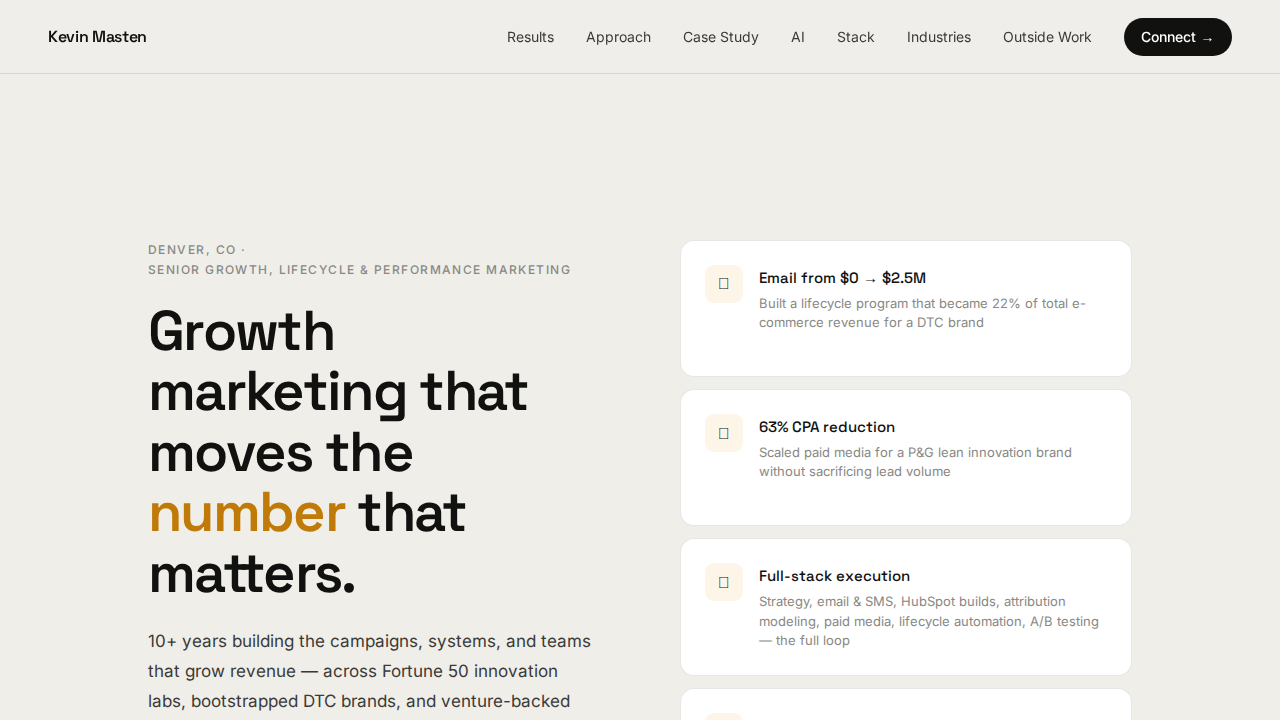
On 09/14/26 kevinmasten.com scored 54% — **Fair** – Overall, the site feels credible and easy to navigate, but a few key signals that help AI systems understand and surface your content aren’t consistently showing up.
Executive summary
Score Breakdown (High Level)
- Discoverability: 100% - The site is technically crawlable and has solid core metadata, but it's currently missing XML and media sitemaps to help search engines fully map the content.
- Structured Data: 0% - We weren't able to find any schema markup or structured data across the site, which is a significant gap for engine optimization.
- AI Readiness: 17% - We didn't see an XML sitemap or dedicated company context links, which makes it harder for AI engines to map the site and verify the brand's identity.
- Performance: 67% - Mobile performance looks solid across the board, with healthy load times and excellent visual stability on the homepage.
- Reputation: 81% - The brand has a solid foundation with multiple AI models recognizing the name and a clean reputation profile, though it lacks formal entity anchors like a Wikidata entry or a verified business address.
- LLM-Ready Content: 48% - The portfolio is logically structured and easy to navigate, but it misses key markers like explicit update dates and clear definitions for industry acronyms.

What stands out most overall
The big picture is that your brand signals look fairly solid, but some of the supporting context AI systems rely on to interpret and trust a site is either missing or hard to confirm. A lot of what came up isn’t “wrong,” it’s just that key details about structure, identity, and content recency aren’t being stated clearly enough for machines. Below, you’ll see a section-by-section breakdown of the specific areas where those signals didn’t show up in the evaluation. None of this is unusual, and it’s the kind of cleanup that typically makes AI visibility feel more predictable.
Detailed Report
Discoverability
❌ XML sitemap not found
What we saw
A standard XML sitemap wasn’t found, so there isn’t a clear “master list” of pages for discovery.
Why this matters for AI SEO
When AI-powered systems and search engines can’t easily map your site’s page inventory, it can slow down discovery and weaken confidence that they’ve found the full set of relevant pages.
Next step
Publish a standard XML sitemap for your key site URLs.
❌ Image and video sitemaps not found
What we saw
We didn’t see dedicated sitemaps for images or video content.
Why this matters for AI SEO
If media assets aren’t clearly surfaced, it can be harder for engines to fully understand and reuse visuals or multimedia that support your expertise and examples.
Next step
Add dedicated sitemaps for image and/or video assets if they’re a meaningful part of your site.
Structured Data
❌ Structured data not detected on the homepage
What we saw
No structured data markup was detected on the homepage.
Why this matters for AI SEO
Without these explicit signals, engines have to infer key details about what your site represents, which can reduce consistency in how you’re categorized and summarized.
Next step
Add structured data that clearly describes the site and its key entities.
❌ Organization-type structured data not found
What we saw
No organization-related structured data was found on the homepage.
Why this matters for AI SEO
This makes it harder for engines to confidently connect the site to a defined brand entity and associated identity details.
Next step
Include organization-focused structured data that represents the brand behind the site.
❌ Resource/blog structured data couldn’t be evaluated
What we saw
A resource or blog page wasn’t provided for this structured-data check, so article-level details couldn’t be verified.
Why this matters for AI SEO
When engines can’t confirm structured details for content pages, it can limit how reliably they extract author, topical, and attribution signals.
Next step
Provide a representative resource/blog URL for evaluation and ensure content pages include appropriate structured data.
❌ Major structured data errors check failed due to no structured data
What we saw
Because no structured data was detected, the site couldn’t be validated as “error-free” in this area.
Why this matters for AI SEO
Engines tend to rely on consistent, validated structured signals to reduce ambiguity when identifying entities and relationships.
Next step
Implement structured data and validate it to ensure it’s consistently interpretable.
❌ Author details on a resource/blog post couldn’t be confirmed
What we saw
A resource page was missing for review, so the author field for a typical article couldn’t be checked.
Why this matters for AI SEO
Clear author attribution helps AI systems understand who is speaking and whether the content maps to a credible, consistent expert identity.
Next step
Ensure resource/blog content includes a clearly identified, non-generic author and can be reviewed.
❌ Author “sameAs” references couldn’t be verified
What we saw
No author-related structured data (or resource page to check it on) was available, so cross-profile identity references weren’t verifiable.
Why this matters for AI SEO
When identity signals can’t be connected across the web, engines may be less confident that they’re attributing content to the right person or brand.
Next step
Add author identity references that connect the author to consistent offsite profiles.
AI Readiness
❌ XML sitemap not found
What we saw
An XML sitemap wasn’t found as part of the AI readiness signals.
Why this matters for AI SEO
If AI crawlers can’t quickly understand your site’s structure and key URLs, it can limit how completely your content gets discovered and represented.
Next step
Make an XML sitemap available so AI systems can more easily map the site.
❌ No “last updated” signals found in sitemap data
What we saw
Because a sitemap wasn’t found, the evaluation also couldn’t confirm any last-updated information for URLs.
Why this matters for AI SEO
Recency cues help engines understand what’s current versus outdated, which can influence what they choose to surface or summarize.
Next step
Include URL-level update information as part of your site’s discovery signals.
❌ No clear About/Company/Team link found
What we saw
The homepage didn’t surface a clear internal link to an About/Company/Team-style page for brand context.
Why this matters for AI SEO
When identity and context aren’t easy to confirm, AI systems can be less certain about who the site represents and how to describe it.
Next step
Add a clearly labeled brand-context page and link to it from the homepage.
❌ No Wikidata entity found for the brand
What we saw
A Wikidata entity identifier wasn’t found.
Why this matters for AI SEO
These kinds of third-party identity anchors can make it easier for engines to disambiguate and consistently recognize an entity.
Next step
Establish a Wikidata presence that matches the brand identity you want engines to recognize.
Reputation
❌ Missing formal identity anchors (Wikidata or official address)
What we saw
The evaluation didn’t identify a Wikidata profile or a verified physical business address.
Why this matters for AI SEO
When formal identity anchors are missing, engines can have a harder time treating the brand as a fully verified entity, especially across different datasets.
Next step
Add and align formal identity details so engines can more confidently verify the brand.
LLM-Ready Content (Blog Analysis)
Heads up: this section looks at one article as a snapshot, so it’s a little more interpretive than the rest of the report and may shift slightly from run to run. Have questions? Just shoot us an email at hello@v9digital.com
❌ No publish or update date shown
What we saw
No visible publication date or update date was found on the page.
Why this matters for AI SEO
Dates help AI systems judge freshness and contextual relevance, especially for results-focused or time-sensitive claims.
Next step
Add a clear publish date and/or “last updated” date to the article.
❌ Content freshness couldn’t be confirmed
What we saw
No explicit update/modified date was detected to confirm the content is current.
Why this matters for AI SEO
When recency isn’t clear, engines may be more cautious about surfacing the page for queries where “current” guidance matters.
Next step
Make the content’s most recent update date easy to find and verify.
❌ No table-based data formatting
What we saw
The resource didn’t use an HTML table to structure any key data.
Why this matters for AI SEO
Structured formatting can make it easier for AI systems to extract and reuse comparisons, breakdowns, or results without misreading the details.
Next step
Where you present structured facts or comparisons, include at least one table to make the data unambiguous.
❌ Subheadings aren’t consistently descriptive
What we saw
A portion of the subheadings didn’t closely match the language used in the opening sentence of their sections.
Why this matters for AI SEO
When headings and section openers don’t line up, it can make topical parsing less reliable and reduce how confidently the page gets summarized by section.
Next step
Rewrite subheadings so they more clearly mirror the main idea stated at the start of each section.
Does Anything Seem Off?
Thanks for taking our free GEO Grader for a spin. When we started this journey, the tool had a fairly long processing time to check everything we wanted both onsite and offsite, so we made a few adjustments on the backend to speed things up. As a result, there are times when the grader may not get everything 100% right. If something feels off, we recommend running the tool a second time to confirm the results. From there, you’re always welcome to reach out to us to schedule a GEO consultation, or to have your SEO provider validate the findings with a more detailed crawl and manual review.
