
Overview:
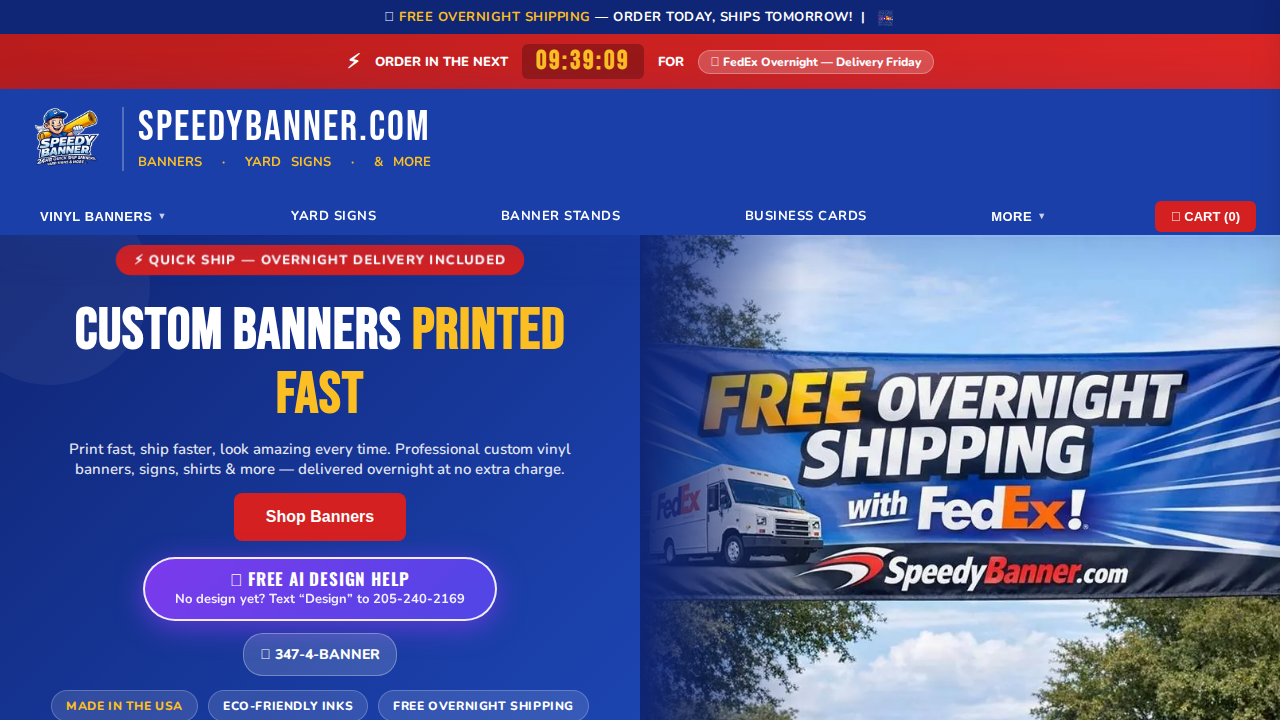
On 09/23/26 speedybanner.com/ scored 77% — **Good** – Overall, this site looks solid for AI visibility, with a few credibility and clarity gaps that slightly limit how confidently it can be understood and referenced.
Executive summary
Score Breakdown (High Level)
- Discoverability: 100% - This section is technically solid and search-engine friendly, though we couldn't find a dedicated image or video sitemap.
- Structured Data: 75% - The homepage features an impressive and error-free schema implementation, but the blog section currently lacks the specific author identification and social links that build trust.
- AI Readiness: 67% - The site has a very strong technical foundation for AI discovery and content freshness, though it lacks a formal Wikidata presence to solidify its brand identity.
- Performance: 100% - Mobile performance is in great shape across the board, with both the homepage and resource pages clearing all "not poor" thresholds for speed and stability.
- Reputation: 62% - The brand has solid social and review visibility, but mixed client sentiment and a lack of independent press coverage are holding back its reputation score.
- LLM-Ready Content: 76% - The content is well-structured for AI parsing with clear sections and early key answers, though it lacks an identified author and structured data tables.

The main themes we’re seeing overall
The big picture is that a few credibility and attribution signals are coming through as incomplete, even though the site is otherwise easy to access and interpret. These aren’t “mistakes” so much as missing clarity that can make it harder for AI systems to confidently connect your content to a real, verifiable brand and expert sources. Below, we’ll walk through the specific areas where the evaluation flagged gaps, grouped by section so it’s easy to scan. Overall, the issues are understandable and very workable once you see them laid out.
Detailed Report
Discoverability
❌ Missing image or video sitemap
What we saw
We didn’t find a dedicated image sitemap or video sitemap in the site data. That means visual assets don’t have a clear, centralized “inventory” for discovery.
Why this matters for AI SEO
Generative engines and search systems lean on clear signals to find and understand content types beyond just text. When visual content is harder to discover at scale, it’s less likely to show up as supporting context or be associated with the right pages.
Next step
Create and publish an image sitemap and/or video sitemap so your visual assets are easier to discover and associate with the right pages.
Structured Data
❌ No clear author listed on the resource page
What we saw
On the blog/resource page, the author field was present but blank, and the author name also wasn’t visibly shown on the page. In other words, the content reads like it was published without a clearly identified person behind it.
Why this matters for AI SEO
When authorship is unclear, it’s harder for AI systems to gauge expertise and confidently attribute statements to a real source. That can reduce how often the content is reused or cited when answers are generated.
Next step
Add a clear, non-generic author name to the resource page so the content has an identifiable human source.
❌ Missing author profile links for validation
What we saw
Because no author entity is defined, we didn’t see any author profile links that connect the writer to an external professional presence. That leaves the author identity unlinked and harder to verify.
Why this matters for AI SEO
Generative engines tend to trust content more when a creator can be confidently matched to a real-world identity. External profile connections help reduce ambiguity and strengthen credibility signals.
Next step
Include author profile links that connect the author to a verifiable external presence.
AI Readiness
❌ No Wikidata entity found for the brand
What we saw
We didn’t see a verified Wikidata entry associated with the brand. From the evaluation data, the brand’s Wikidata identifier appears to be missing.
Why this matters for AI SEO
Knowledge sources like Wikidata can help AI systems confirm “who is who” and reduce confusion with similarly named businesses. Without that reference point, identity verification is typically less consistent.
Next step
Establish a Wikidata entity for the brand so AI systems have a clearer, verifiable reference for brand identity.
Reputation
❌ Negative client feedback on major review platforms
What we saw
We found negative client feedback showing up on Trustpilot and the BBB. That creates a visible trust friction for anyone (including AI systems) trying to get a clean read on brand sentiment.
Why this matters for AI SEO
Generative engines often weigh reputation signals when deciding which brands and sources to surface. Negative sentiment can make it harder to be recommended or referenced confidently in generated answers.
Next step
Review and address the negative feedback themes showing up on Trustpilot and the BBB so brand trust signals are clearer.
❌ Conflicting business address information
What we saw
The evaluation flagged inconsistent address data between the website and offsite records. That inconsistency makes the business identity harder to pin down.
Why this matters for AI SEO
When key brand details conflict across sources, AI systems are more likely to hesitate or choose safer alternatives. Consistency supports confident entity matching and reduces ambiguity.
Next step
Align the business address information so it’s consistent between your website and major offsite records.
❌ No Wikidata entity supporting offsite authority
What we saw
No Wikidata entity was found for the brand as part of the offsite authority signals. This leaves a gap in structured, third-party identity verification.
Why this matters for AI SEO
Third-party identity sources can act as a “tie-breaker” when AI models are resolving brand legitimacy and context. Without them, authority signals can be less complete.
Next step
Create and maintain a Wikidata entity that matches your real-world brand details.
❌ Limited independent third-party press coverage
What we saw
The results indicated a lack of independent, third-party press mentions. You have owned content, but there isn’t much external coverage reflected in the data.
Why this matters for AI SEO
Independent mentions help generative engines validate that a brand is recognized beyond its own website. When those signals are light, it can reduce confidence in summarizing or recommending the brand.
Next step
Build more third-party coverage signals so the brand has clearer external validation.
LLM-Ready Content (Blog Analysis)
Heads up: this section looks at one article as a snapshot, so it’s a little more interpretive than the rest of the report and may shift slightly from run to run. Have questions? Just shoot us an email at hello@v9digital.com
❌ No visible, non-generic author on the article
What we saw
The author field exists, but the name is empty in both the visible page and the metadata. So the piece doesn’t clearly communicate who wrote it.
Why this matters for AI SEO
Authorship is a major trust cue for AI systems deciding what to reuse as a reliable source. When the author isn’t clear, it’s harder to treat the content as attributable expertise.
Next step
Add a specific author name to the article so the content is clearly tied to a real person.
❌ No table summarizing key comparisons
What we saw
The article compares multiple materials, but we didn’t find any table that summarizes the differences in a structured way. Everything is presented in paragraph form.
Why this matters for AI SEO
Tables make it easier for AI systems to extract clean comparisons and reuse them accurately in answers. Without that structure, key details are more likely to be missed or paraphrased inconsistently.
Next step
Add a simple comparison table that summarizes the materials and their key differences.
❌ Some subheadings don’t align with their opening lines
What we saw
Several sections had headings that didn’t closely match the very first sentence that followed. That makes a few sections feel slightly less “scan-friendly” at a glance.
Why this matters for AI SEO
AI systems often use headings to understand what a section is about before reading the full block of text. When headings and openings don’t match well, it can reduce clarity and make extraction less precise.
Next step
Tighten the alignment between each subheading and the first sentence of its section so the topic is immediately clear.
Does Anything Seem Off?
Thanks for taking our free GEO Grader for a spin. When we started this journey, the tool had a fairly long processing time to check everything we wanted both onsite and offsite, so we made a few adjustments on the backend to speed things up. As a result, there are times when the grader may not get everything 100% right. If something feels off, we recommend running the tool a second time to confirm the results. From there, you’re always welcome to reach out to us to schedule a GEO consultation, or to have your SEO provider validate the findings with a more detailed crawl and manual review.
