
Overview:
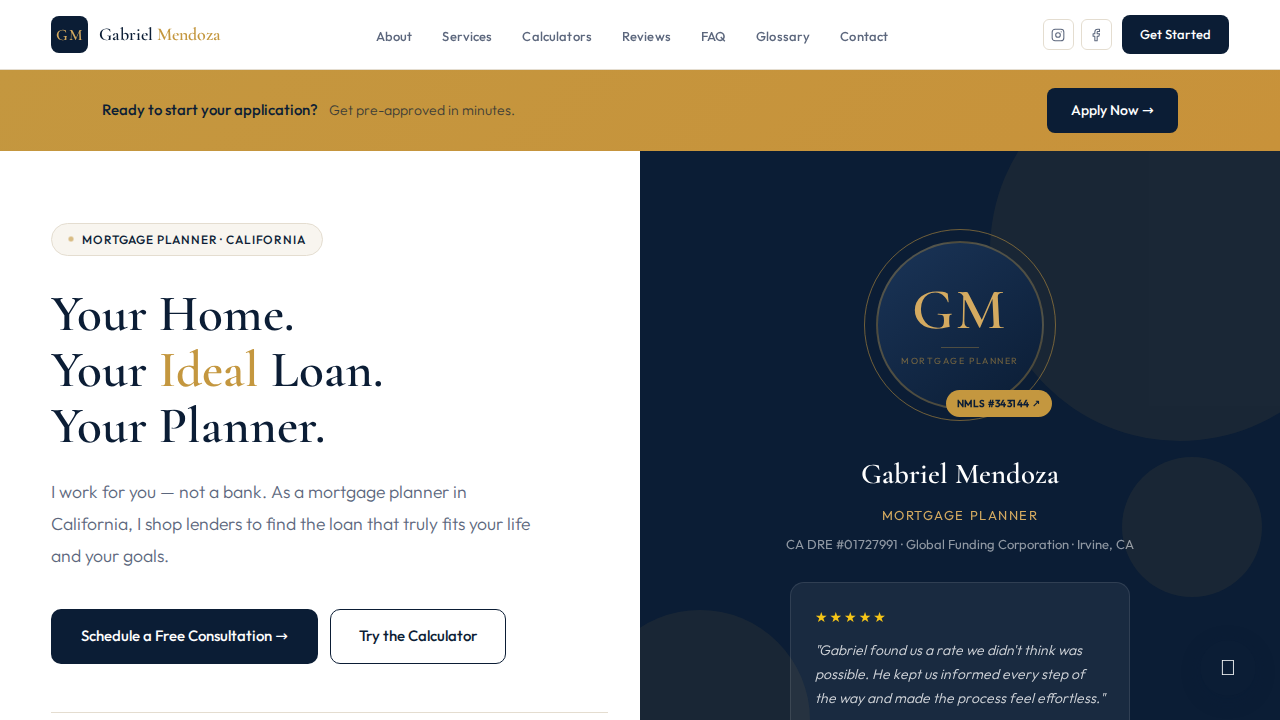
On 05/20/26 gabrielmendoza.net scored 66% — **Decent** – Overall, the site is in a good place for AI visibility, but a few credibility and content-clarity gaps are holding it back from feeling fully “confirmable.”
Executive summary
Score Breakdown (High Level)
- Discoverability: 100% - The site's discovery signals are mostly excellent with clear metadata and a standard sitemap, though it's currently missing a dedicated sitemap for images or video.
- Structured Data: 100% - This section is in excellent shape, with comprehensive schema markup and clear author attribution that helps establish real-world identity and expertise.
- AI Readiness: 67% - The site is technically well-prepared for AI crawlers with an open robots.txt and valid sitemap, though it lacks a Wikidata profile for entity validation.
- Performance: 33% - Homepage performance data was unavailable during our review, though the resource page showed strong metrics for speed and stability.
- Reputation: 58% - The brand has a clean reputation with no negative flags, but it lacks the offsite footprint—like Wikidata or recognized reviews—that generative engines look for to verify authority.
- LLM-Ready Content: 64% - The site is highly authoritative and well-chunked for readability, but it lacks the descriptive subheadings and deep introductory paragraphs needed to maximize its performance in generative search answers.

The big picture before details
What stands out most is that your onsite signals are generally easy for AI systems to interpret, but your offsite footprint doesn’t yet provide the same level of confirmable validation. A few content presentation gaps also make it harder for AI to confidently pull clean, direct answers from your pages. Below, we’ll walk through the specific areas where those visibility and trust signals didn’t fully show up. None of this is unusual—these are the kinds of details that often separate “understood” from “consistently referenced.”
Detailed Report
Discoverability
❌ Image or video sitemap not found
What we saw
We didn’t find a dedicated way for your image or video content to be listed for discovery. That can make media content easier to miss or harder to surface consistently.
Why this matters for AI SEO
When media isn’t clearly surfaced, AI systems have a harder time discovering and reusing images or videos as supporting evidence or rich results. That can limit how often your brand shows up visually in generative experiences.
Next step
Add a dedicated image and/or video listing so crawlers can reliably discover your media assets.
AI Readiness
❌ No Wikidata entity found for the brand
What we saw
We didn’t see a Wikidata entity associated with the brand in the available data. This is a common gap, but it leaves fewer “entity-level” reference points.
Why this matters for AI SEO
When a brand isn’t represented as a clearly defined entity, AI models can be less confident about identity, attributes, and associations. That can reduce how consistently your brand is understood and referenced.
Next step
Create a Wikidata entry that clearly represents the brand and aligns with your official identity.
Performance
❌ Homepage responsiveness couldn’t be verified
What we saw
We weren’t able to retrieve the homepage responsiveness data needed to assess whether interactions feel smooth. As a result, this area couldn’t be confirmed either way.
Why this matters for AI SEO
If the main entry page feels sluggish, people bounce faster—and that can indirectly reduce how much value search and AI systems assign to the page over time. It also makes it harder to confidently vouch for overall site experience.
Next step
Re-run a homepage performance capture so responsiveness can be validated with complete data.
❌ Homepage load experience couldn’t be verified
What we saw
We couldn’t retrieve the homepage load timing data needed to evaluate how quickly the main content appears. That leaves a visibility gap in how the primary landing page performs.
Why this matters for AI SEO
Slow-feeling pages tend to get less engagement, and that can make it harder for your homepage to remain a strong “starting point” for discovery and trust. AI systems also benefit from stable, reliably accessible pages when forming an understanding of your brand.
Next step
Collect complete homepage load data so this can be assessed confidently.
❌ Homepage layout stability couldn’t be verified
What we saw
We didn’t get the homepage layout stability data needed to confirm whether content shifts unexpectedly as the page loads. This means we can’t validate whether the layout stays steady for users.
Why this matters for AI SEO
Unstable layouts can create a frustrating reading experience, which can lower engagement and weaken trust signals over time. That makes it harder for both users and AI-driven experiences to treat the homepage as a reliable reference.
Next step
Capture homepage layout stability data so the user experience can be confirmed.
❌ Homepage performance score couldn’t be verified
What we saw
We weren’t able to retrieve an overall performance result for the homepage. So we can’t confirm how the main landing page stacks up as an entry point.
Why this matters for AI SEO
The homepage is often the central “source of truth” for brand context, so uncertainty here makes it harder to confidently assess visibility and trust readiness. Consistently accessible, reliable pages are easier for AI systems to interpret and reference.
Next step
Re-test the homepage to obtain a complete performance result.
Reputation
❌ Brand identity consistency wasn’t confirmed
What we saw
The data didn’t support a consistent, confirmed business address tied to the brand. That leaves your identity only partially pinned down offsite.
Why this matters for AI SEO
When identity details aren’t consistent, AI models tend to be more cautious about summarizing or recommending a business. Clear, consistent identity signals help with trust and accurate attribution.
Next step
Make sure your name, domain, and business address are consistently presented across the key places your brand appears online.
❌ No matching Wikidata entry was identified
What we saw
We didn’t find a Wikidata entity that matches the brand. That means there isn’t a widely recognized entity reference to cross-check identity.
Why this matters for AI SEO
Wikidata can help models reconcile “who you are” across sources, especially when businesses share similar names or operate in competitive categories. Without it, AI systems may rely on weaker or fragmented signals.
Next step
Establish a Wikidata entry that clearly matches the brand name and official website.
❌ Official identity anchors in Wikidata couldn’t be evaluated
What we saw
Because no Wikidata entry was found, we couldn’t confirm the presence of official identity anchors there. This leaves fewer “verified” connections between your brand and official profiles.
Why this matters for AI SEO
Identity anchors help AI models connect your website, brand name, and official profiles into one consistent entity. When those links are missing, brand understanding can be less stable.
Next step
If you add a Wikidata entry, include clear references to your official site and primary social profiles.
❌ Third-party reviews or customer feedback didn’t surface
What we saw
We didn’t see recognized offsite customer reviews tied to the brand in the available data. So there’s limited third-party feedback for models to pull from.
Why this matters for AI SEO
Independent customer feedback helps AI systems gauge legitimacy and quality beyond what a brand says about itself. When those signals are missing, recommendations tend to be more cautious or generic.
Next step
Build up a clearly attributable presence on a reputable review platform where customers can leave feedback.
❌ Review sources weren’t concrete
What we saw
No specific, verifiable review sources were identified. This makes it harder to treat any implied feedback as something a model can confidently cite.
Why this matters for AI SEO
AI summaries tend to lean on sources that are easy to name and cross-check. Concrete sources improve confidence and reduce the chance of vague or incomplete references.
Next step
Focus on earning reviews on well-known platforms that are consistently attributable to your business.
❌ No independent press or coverage was identified
What we saw
We didn’t find evidence of independent, offsite press mentions tied to the brand in the available data. That limits third-party credibility signals.
Why this matters for AI SEO
Independent mentions give AI models another way to confirm legitimacy and relevance. Without them, brand authority is more likely to rely on self-published information.
Next step
Earn a small set of independent mentions that clearly reference your brand and what you do.
LLM-Ready Content (Blog Analysis)
Heads up: this section looks at one article as a snapshot, so it’s a little more interpretive than the rest of the report and may shift slightly from run to run. Have questions? Just shoot us an email at hello@v9digital.com
❌ No HTML table found
What we saw
We didn’t detect any table-format content in the article. That means key comparisons or definitions may only exist in paragraph form.
Why this matters for AI SEO
AI systems often extract structured comparisons and “at-a-glance” facts more cleanly when information is organized into predictable formats. Without that, the content can be harder to reuse accurately.
Next step
Add a simple table where a comparison, checklist, or summary would naturally help a reader scan the key points.
❌ Subheadings weren’t consistently descriptive
What we saw
A meaningful portion of subheadings came across as too short or too generic to clearly signal what each section is answering. As a result, some sections don’t “announce” their purpose very well.
Why this matters for AI SEO
Descriptive subheadings make it easier for AI to map questions to answers and pull the right passage when generating a response. When headings are vague, content can be overlooked or misclassified.
Next step
Update subheadings so they read like clear mini-promises of what the section will explain.
❌ Key answers didn’t show up early in enough sections
What we saw
Several sections didn’t start with a substantial, information-rich opening paragraph. That can make readers (and AI systems) work harder to find the direct takeaway.
Why this matters for AI SEO
Generative results tend to favor content that gets to the point quickly, especially when a section is meant to answer a specific question. If the answer is buried, the content is less likely to be selected as a direct source.
Next step
Make sure each main section opens with a clear, standalone paragraph that states the core answer up front.
Does Anything Seem Off?
Thanks for taking our free GEO Grader for a spin. When we started this journey, the tool had a fairly long processing time to check everything we wanted both onsite and offsite, so we made a few adjustments on the backend to speed things up. As a result, there are times when the grader may not get everything 100% right. If something feels off, we recommend running the tool a second time to confirm the results. From there, you’re always welcome to reach out to us to schedule a GEO consultation, or to have your SEO provider validate the findings with a more detailed crawl and manual review.
