
Overview:
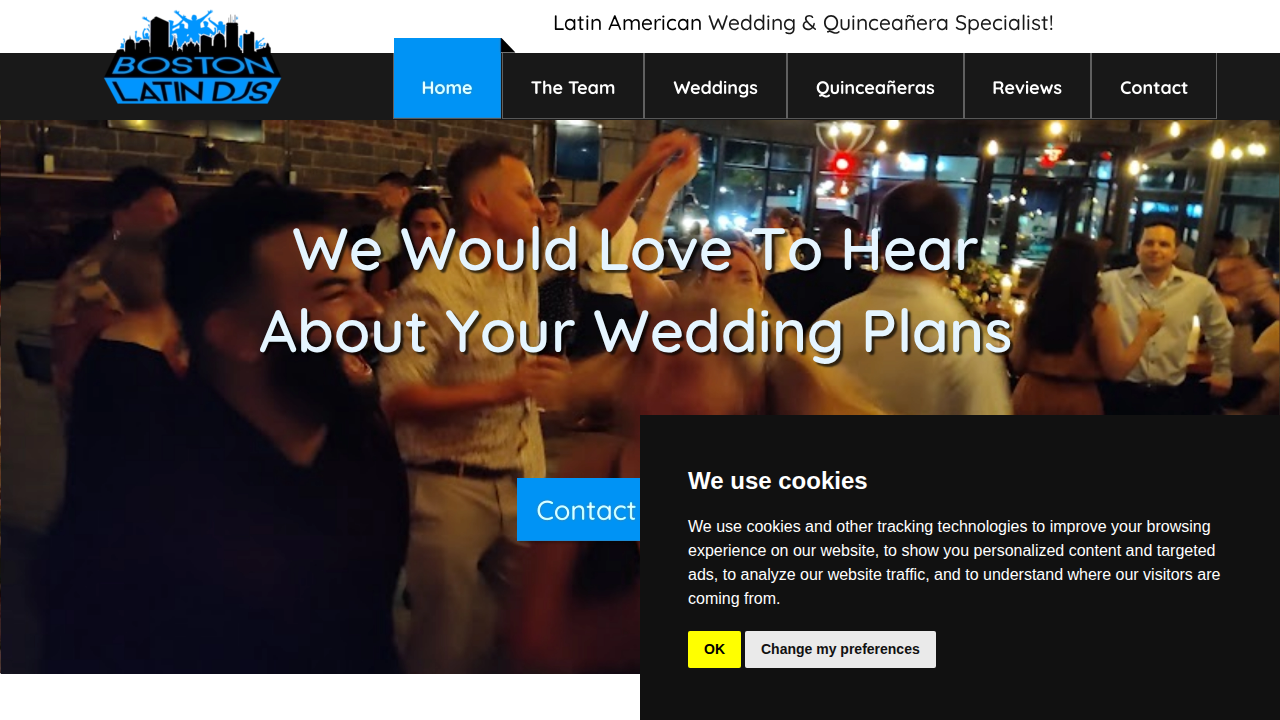
On 06/14/26 bostonlatindjs.biz scored 38% — **Weak** – Overall, the site is easy to access, but a few big gaps are keeping it from coming across as clearly and confidently as it could in AI-driven results.
Executive summary
Score Breakdown (High Level)
- Discoverability: 83% - The site's discoverability is in great shape with clear metadata and open access for crawlers, though adding a media-specific sitemap would help search engines better index your event photos and videos.
- Structured Data: 0% - The site is currently missing all forms of structured data and schema markup, which makes it much harder for generative engines to verify your business details and content authority.
- AI Readiness: 67% - The site is technically well-prepared for AI crawlers and provides clear brand context, though it lacks a Wikidata entity for official brand verification.
- Performance: 17% - While the visual stability of the site is solid, the homepage performance is significantly hindered by extremely slow load times and responsiveness issues on mobile.
- Reputation: 35% - The site looks solid in terms of avoiding negative press and maintaining social links, but it's currently missing the external entity recognition and review consensus that helps build deep trust with generative engines.
- LLM-Ready Content: 32% - The site lacks the standard heading hierarchy, data tables, and explicit author bylines needed for AI systems to efficiently parse and trust your content.

What stands out most overall
The big picture is that the site is accessible and readable, but it’s missing several of the clarity and validation signals that help AI systems understand the business with confidence. A lot of the gaps aren’t “wrong” so much as they’re hard for machines to interpret or confirm—especially around structured details, reputation signals, and content formatting. Below, we’ll walk through the specific areas where the evaluation couldn’t find what it needed, grouped by section so it’s easy to digest. None of this is unusual for smaller brands, and it’s all the kind of work that can be tackled piece by piece.
Detailed Report
Discoverability
❌ Missing image/video discovery support
What we saw
We didn’t find a dedicated image or video sitemap in the expected locations. That means visual content may not be as easy to surface or understand at scale.
Why this matters for AI SEO
Generative engines often rely on clear, consistent signals to find and interpret key assets. When visual assets aren’t clearly surfaced, it can reduce how often they’re discovered and referenced.
Next step
Create and publish an image and/or video sitemap and make sure it’s discoverable where crawlers expect to find it.
Structured Data
❌ No structured data found on the homepage
What we saw
We didn’t detect any schema markup on the homepage. As a result, core business details aren’t being provided in a structured, machine-readable format.
Why this matters for AI SEO
AI systems tend to be more confident when they can pull standardized details directly, rather than guessing from page text. Missing structured data can lead to weaker understanding and less consistent brand representation.
Next step
Add structured data to the homepage so key business details are explicitly defined for machines.
❌ No organization-type structured data present
What we saw
We didn’t find organization-related schema types (like Organization or LocalBusiness) on the homepage. That makes it harder to confirm who the business is in a standardized way.
Why this matters for AI SEO
When organization identity isn’t clearly defined, AI results can become inconsistent—especially when there are similar businesses or overlapping naming conventions.
Next step
Implement an organization-type schema on the homepage that reflects the brand’s official identity.
❌ Resource/blog structured data couldn’t be evaluated
What we saw
A resource or blog page wasn’t provided for evaluation, so we couldn’t confirm whether structured data is being used on content pages.
Why this matters for AI SEO
Content pages are often where AI pulls explanations, summaries, and citations. If those pages don’t include clear structured context, it can reduce trust and reuse.
Next step
Provide a resource/blog URL for review (or ensure your key content pages include structured data that clarifies what the page is and who wrote it).
❌ Structured data quality couldn’t be validated
What we saw
Because no structured data was detected, we couldn’t evaluate whether it’s error-free or complete. This effectively leaves the site without validated machine-readable business details.
Why this matters for AI SEO
AI engines prefer clear, consistent, and verifiable data sources. When that layer is missing entirely, it can limit confidence and reduce how often your brand details are reused.
Next step
Add structured data and validate that it’s complete and consistent across the key pages that represent the brand.
❌ Author information couldn’t be confirmed on content pages
What we saw
A resource/blog page wasn’t provided, so we couldn’t verify whether articles have clear author attribution.
Why this matters for AI SEO
When AI systems can’t see who created a piece of content, it can reduce perceived credibility and make it harder to cite or summarize confidently.
Next step
Make sure key content pages clearly identify an author (and share a representative content URL for evaluation).
❌ Author identity links couldn’t be confirmed
What we saw
Without a resource/blog page to evaluate, we couldn’t confirm whether author profiles include external identity links (like sameAs references).
Why this matters for AI SEO
External identity links help AI connect the dots between a creator and their broader footprint, which can improve trust and reduce confusion.
Next step
Ensure author profiles (where used) include consistent identity references and provide a content URL where that information is visible.
AI Readiness
❌ No Wikidata entity found for the brand
What we saw
We didn’t detect a Wikidata item ID tied to the brand. That leaves a gap in how the brand is verified in major structured knowledge sources.
Why this matters for AI SEO
Generative engines often lean on structured, third-party knowledge sources to validate identity. Without that anchor, brand recognition can be weaker or less consistent.
Next step
Create (or claim) a Wikidata entity for the brand and make sure it matches the official business identity.
Performance
❌ Slow time to main content loading
What we saw
The homepage’s main content took an unusually long time to load (measured as over 30 seconds in the evaluation). This points to a major delay before users (and crawlers simulating users) see the core page content.
Why this matters for AI SEO
If a page loads slowly, it can reduce how reliably systems can extract and interpret the content—especially on mobile-like conditions. That can limit visibility and weaken how confidently content is summarized.
Next step
Reduce the time it takes for the homepage’s main content to fully appear for a typical visitor.
❌ Interactivity delays on the homepage
What we saw
The homepage showed substantial blocking time before it became reliably interactive. In practice, this often feels like taps or clicks not responding quickly.
Why this matters for AI SEO
When interactivity is delayed, it can degrade real user experience and reduce how consistently content is accessed and processed. That can indirectly affect how strongly the site is treated as a dependable source.
Next step
Improve homepage responsiveness so the page becomes interactive quickly and consistently.
❌ Overall homepage performance is a bottleneck
What we saw
The overall performance result for the homepage came back well below a healthy baseline. Even with stable layout, the broader experience still reads as slow and heavy.
Why this matters for AI SEO
Generative engines don’t just “read” content—they also assess how reliably it can be accessed. When a page is consistently slow, it can reduce how often it’s used as a source.
Next step
Bring overall homepage performance into a more reliable range so content is easier to load and interpret.
Reputation
❌ Brand recognition is limited across AI models
What we saw
The brand was recognized by only one of the evaluated models. That’s a sign the entity footprint isn’t consistently established.
Why this matters for AI SEO
When recognition is inconsistent, AI results are less likely to surface the brand confidently or may mix it up with similar names.
Next step
Strengthen the brand’s external identity signals so it’s consistently recognized across major AI systems.
❌ Brand identity details aren’t consistently confirmed
What we saw
A verified physical address wasn’t identified from the consensus data. That leaves a gap in the core “who/where” identity signals.
Why this matters for AI SEO
Clear identity details help AI systems distinguish legitimate businesses and reduce ambiguity. When key details can’t be confirmed, trust and consistency can suffer.
Next step
Make sure the business’s official identity details are consistently available and easy to confirm across the web.
❌ No matching Wikidata entity for the brand
What we saw
No matching Wikidata entity was found for the brand. This lines up with the broader lack of structured entity presence.
Why this matters for AI SEO
Wikidata is a common reference source for entity validation. Without it, it’s harder for AI engines to confidently connect the brand to a single, canonical profile.
Next step
Create a Wikidata entity for the brand and ensure it clearly aligns with the official business identity.
❌ Missing official identity anchors in Wikidata
What we saw
Wikidata fields for an official website and external identifiers were not present (no official site listed and no identifiers found). This indicates the brand lacks structured “anchor points” in that database.
Why this matters for AI SEO
Official anchors help AI systems reconcile identity across sources. When those anchors are missing, systems have a harder time verifying which profiles and references are truly official.
Next step
Ensure the brand’s structured entity profile includes official anchors that connect it to its real-world web presence.
❌ Third-party reviews weren’t confirmed
What we saw
The evaluation didn’t affirm the existence of third-party reviews or customer feedback. In other words, there wasn’t a clear, confirmed review footprint.
Why this matters for AI SEO
Independent feedback is a common trust signal that helps AI systems judge legitimacy and quality. Without it, reputation may look self-reported.
Next step
Build and surface a verifiable third-party review presence that AI systems can clearly reference.
❌ No concrete review sources identified
What we saw
No specific, concrete review sources were identified in the consensus data. That suggests review references (if they exist) aren’t clearly connected to known platforms.
Why this matters for AI SEO
AI engines look for named, consistent sources when summarizing reputation. If the sources aren’t clear, reviews are less likely to be reflected in generative answers.
Next step
Make sure customer feedback is hosted or referenced on recognizable third-party platforms and is easy to confirm.
❌ No consensus on major social profiles
What we saw
A consistent consensus on major social profiles wasn’t established. This typically means the “official profiles” aren’t being confidently connected to the brand entity.
Why this matters for AI SEO
When official profiles aren’t clearly reconciled, AI systems may reference the wrong account—or skip social validation entirely.
Next step
Ensure the brand’s major social profiles are consistently presented and easy to verify as official.
❌ No independent press or coverage found
What we saw
No independent, offsite press mentions were identified. That leaves the brand without third-party coverage signals.
Why this matters for AI SEO
Independent coverage helps establish credibility beyond owned channels. Without it, AI systems have fewer external references to rely on.
Next step
Build a clearer footprint of independent mentions so the brand has third-party references AI can pick up.
❌ No owned press or official releases identified
What we saw
No onsite press page or official releases were identified. That means there’s no clear “official announcements” area to reference.
Why this matters for AI SEO
An official press/updates area can help AI systems confirm key claims, milestones, and updates directly from the source.
Next step
Add an official place on the site where announcements, updates, or releases can be clearly found and referenced.
LLM-Ready Content (Blog Analysis)
Heads up: this section looks at one article as a snapshot, so it’s a little more interpretive than the rest of the report and may shift slightly from run to run. Have questions? Just shoot us an email at hello@v9digital.com
❌ No clear author byline
What we saw
No visible byline or author attribution was identified on the evaluated page. As a reader, it’s not clear who created the content.
Why this matters for AI SEO
AI systems weigh credibility signals when deciding what to reuse or cite. When authorship is missing, it’s harder to treat the page as a trustworthy reference.
Next step
Add a clear, non-generic author name to the content page.
❌ Content doesn’t show a recent update
What we saw
We didn’t find an explicit modification date within the last 12 months. That makes it harder to tell whether the content is current.
Why this matters for AI SEO
Freshness helps AI systems judge whether information should be trusted “as of now.” Without a recent update signal, content may be treated as outdated.
Next step
Add and display a clear “last updated” date when meaningful changes are made.
❌ Content isn’t broken into multiple readable sections
What we saw
The page only contains one second-level heading (H2). That makes the page harder to scan and harder for automated systems to segment.
Why this matters for AI SEO
Generative engines extract meaning more reliably when content is organized into clearly separated sections. Without that structure, key points are easier to miss or misinterpret.
Next step
Restructure the page into multiple clear sections with headings that reflect the main topics.
❌ Service/package info isn’t in a standard table format
What we saw
The page doesn’t include a standard HTML table for package-style information and instead uses visual layout elements. That makes it harder for systems to extract structured “plan comparison” details.
Why this matters for AI SEO
AI systems often do better with clearly structured comparisons and lists. If the information is mostly visual, it’s more likely to be skipped or summarized incorrectly.
Next step
Present package or comparison-style information in a format that’s easy for machines to read and extract consistently.
❌ Subheadings aren’t descriptive enough to validate
What we saw
Descriptive subheadings couldn’t be validated because the heading structure was too limited. With minimal sectioning, it’s difficult to confirm that headings clearly label what each section answers.
Why this matters for AI SEO
Clear subheadings help AI map questions to answers and extract the right snippet for a specific query. When headings aren’t clear or plentiful, the content is harder to reuse.
Next step
Add descriptive subheadings that clearly communicate what each section is about.
❌ Key answers weren’t confirmed near the top
What we saw
Because section-based parsing failed, we couldn’t confirm whether key answers appear early in the content. This usually happens when the page isn’t structured in a way that makes primary takeaways easy to locate.
Why this matters for AI SEO
AI engines often prioritize pages that make the main answers easy to find quickly. If the key takeaways aren’t clearly surfaced early, the page can be less useful for quick summaries.
Next step
Make sure the most important takeaways are clearly stated near the start of the page in a way that’s easy to extract.
Does Anything Seem Off?
Thanks for taking our free GEO Grader for a spin. When we started this journey, the tool had a fairly long processing time to check everything we wanted both onsite and offsite, so we made a few adjustments on the backend to speed things up. As a result, there are times when the grader may not get everything 100% right. If something feels off, we recommend running the tool a second time to confirm the results. From there, you’re always welcome to reach out to us to schedule a GEO consultation, or to have your SEO provider validate the findings with a more detailed crawl and manual review.
