
Overview:
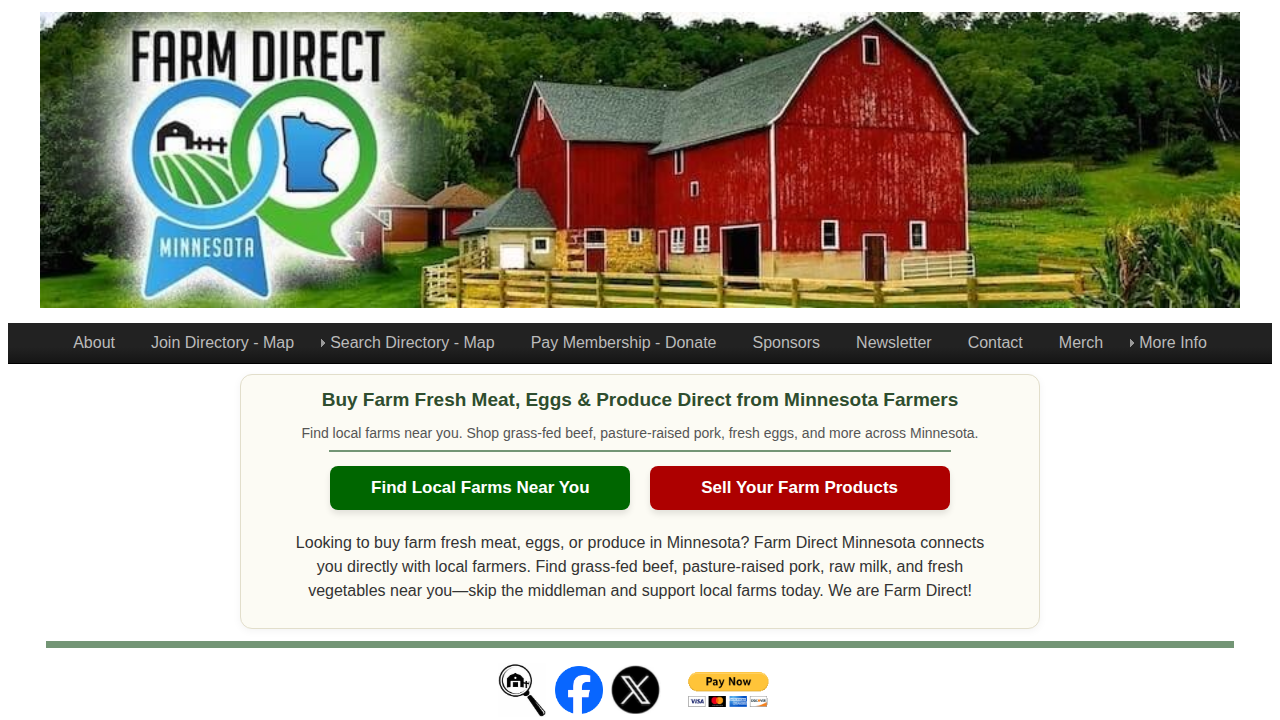
On 04/23/26 farmdirectminnesota.com/ scored 74% — **Good** – Overall, the site looks well put-together for AI visibility, with a few clarity and consistency gaps that could make it harder for systems to confidently summarize and attribute key details.
Executive summary
Score Breakdown (High Level)
- Discoverability: 100% - The site is technically very sound and easy for search engines to find, though adding a dedicated image sitemap would help round things out.
- Structured Data: 100% - Overall, the structured data on this site is in excellent shape, featuring valid organization markup and clearly identified authorship.
- AI Readiness: 67% - Overall, the site’s technical foundation is in good shape for AI crawlers, though the lack of a Wikidata entry is a notable gap for brand clarity.
- Performance: 89% - The homepage is incredibly fast and responsive, but the interactive map page hits a snag with a slow load time for its largest content.
- Reputation: 81% - The site shows strong trust signals through local press and social media, though inconsistencies in your business address and a missing Wikidata profile are holding back your full authority.
- LLM-Ready Content: 36% - This page identifies a clear author and provides helpful outbound links, but it lacks the heading structure and explicit dating required for optimal AI readability.

The big picture on visibility signals
What stands out most is that the site has strong fundamentals overall, but a few missing clarity signals make it harder for AI systems to confidently interpret and summarize the key resource content. The gaps here read less like “something’s wrong” and more like “some important details aren’t being clearly confirmed.” Below, we’ll walk through the specific areas where the evaluation flagged missing or conflicting signals, organized by section. None of this is unusual for a growing site—these are the kinds of details that often get refined over time.
Detailed Report
Discoverability
❌ Missing image or video sitemap
What we saw
We didn’t find a dedicated image or video sitemap. That means visual content may not be as clearly surfaced or categorized as it could be.
Why this matters for AI SEO
AI systems often rely on clear discovery paths to understand what content exists and what it represents. When visual content isn’t clearly mapped, it can be less likely to show up in AI-driven results and summaries.
Next step
Add a dedicated image and/or video sitemap so visual assets are easier to discover and interpret.
AI Readiness
❌ No Wikidata entity found for the brand
What we saw
We didn’t see a Wikidata entry tied to the brand. As a result, there isn’t a single, widely-recognized reference point connecting the brand name to a canonical entity.
Why this matters for AI SEO
When AI systems try to validate who a brand is, entity anchors help them be more confident about identity, attribution, and consistency. Without that kind of anchor, it’s easier for details to drift across different sources.
Next step
Create and/or claim a Wikidata entity for the brand so AI systems have a clear identity reference.
Performance
❌ Resource page main content loads too slowly
What we saw
On the resource/map page, the main content took longer than expected to fully appear for mobile users. This creates a noticeably slower “time to usefulness” compared to a typical fast-loading page.
Why this matters for AI SEO
If key content loads late, it can reduce how reliably systems capture and understand what the page is about. It can also weaken the overall experience for users coming from AI-driven discovery.
Next step
Improve how quickly the primary content on the resource/map page becomes visible and usable on mobile.
Reputation
❌ Conflicting business address signals
What we saw
We saw conflicting location information, with different sources associating the business with multiple Minnesota locations. That creates a blurry “official” identity footprint.
Why this matters for AI SEO
When identity details conflict, AI systems have a harder time building confidence in what’s correct. That can lead to inconsistent or cautious answers when your brand is summarized or cited.
Next step
Align the brand’s primary address signals across the major places they appear so there’s a single, consistent location story.
❌ No official Wikidata anchor for the brand
What we saw
We didn’t find a matching Wikidata entity that clearly and officially represents the brand. This leaves a gap in the set of offsite signals that help confirm legitimacy.
Why this matters for AI SEO
Entity anchors help AI systems connect mentions, profiles, and coverage back to one “known” thing. Without that, systems may treat the brand as less definitively established than it actually is.
Next step
Establish an official Wikidata entity so the brand has a clear external reference point.
LLM-Ready Content (Blog Analysis)
Heads up: this section looks at one article as a snapshot, so it’s a little more interpretive than the rest of the report and may shift slightly from run to run. Have questions? Just shoot us an email at hello@v9digital.com
❌ No publish or update date shown
What we saw
We didn’t see a clear publish date or last updated date displayed on the page or reflected in the page’s metadata. That makes it hard to tell how current the information is at a glance.
Why this matters for AI SEO
AI systems place a lot of weight on “is this current?” when deciding what to reuse in answers. Without a clear date, they may be less confident citing the page for time-sensitive details.
Next step
Add a clearly visible publish or last updated date and ensure it’s reflected consistently in the page metadata.
❌ Freshness can’t be verified
What we saw
Because there’s no explicit update date, we couldn’t confirm whether the content has been maintained recently. The page may be current, but it’s not easy to validate.
Why this matters for AI SEO
When freshness is unclear, AI systems may hesitate to treat the page as a reliable source for “current” listings or details. That can reduce how often it’s used for summaries and recommendations.
Next step
Make the page’s most recent update timing explicit so recency is easy to confirm.
❌ Content isn’t broken into readable sections
What we saw
The page didn’t appear to be organized into clearly labeled sections that an AI (or a skimmer) can quickly scan. Without that structure, it reads more like a single block than a guided resource.
Why this matters for AI SEO
Generative systems tend to understand and reuse content better when it’s grouped into clear topical chunks. When the structure isn’t obvious, key details are easier to miss or misinterpret.
Next step
Restructure the page so the content is clearly grouped into a few labeled sections.
❌ No descriptive subheadings
What we saw
We didn’t see subheadings that describe what each part of the page covers. That removes the “signposts” that help both people and AI quickly orient themselves.
Why this matters for AI SEO
Descriptive subheadings help AI systems extract the right piece of information for the right question. Without them, the page is harder to summarize cleanly and less likely to be pulled into targeted answers.
Next step
Add descriptive subheadings that clearly label the main topics and sections on the page.
❌ Key answers don’t surface early
What we saw
Because the page isn’t organized into clear sections, it’s harder to identify whether the most important “quick answer” information shows up near the top. The result is a weaker first-glance summary for automated readers.
Why this matters for AI SEO
AI systems often prioritize early, clearly stated information when generating answers. If the page doesn’t surface the main takeaways quickly, it may be underused or summarized too loosely.
Next step
Make sure the page’s core takeaways are clearly stated near the beginning in a way that’s easy to extract.
Does Anything Seem Off?
Thanks for taking our free GEO Grader for a spin. When we started this journey, the tool had a fairly long processing time to check everything we wanted both onsite and offsite, so we made a few adjustments on the backend to speed things up. As a result, there are times when the grader may not get everything 100% right. If something feels off, we recommend running the tool a second time to confirm the results. From there, you’re always welcome to reach out to us to schedule a GEO consultation, or to have your SEO provider validate the findings with a more detailed crawl and manual review.
