
Overview:
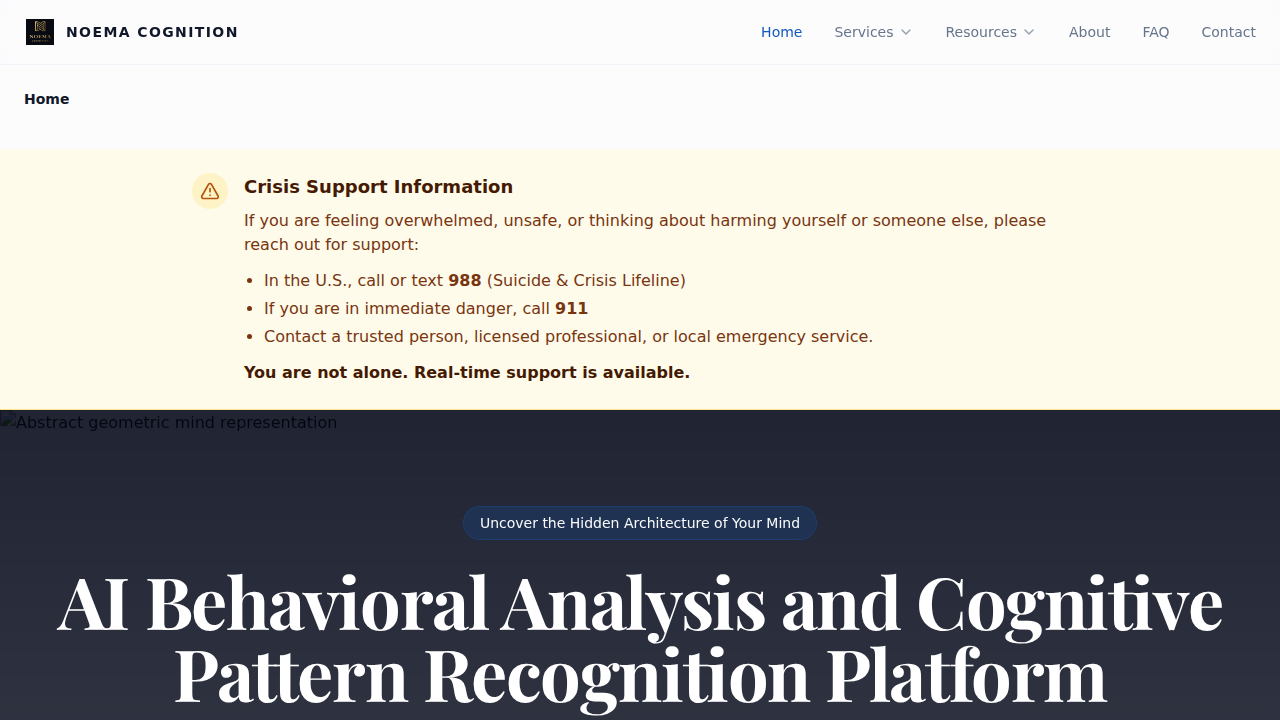
On 05/26/26 noema-cognition.com scored 76% — **Good** – Overall, the site looks well-positioned for AI visibility, with a few credibility and clarity gaps that make it harder to fully understand and verify at a glance.
Executive summary
Score Breakdown (High Level)
- Discoverability: 100% - The homepage is technically sound and easy for engines to read, but the total absence of XML sitemaps is a notable gap in your discovery setup.
- Structured Data: 92% - The site features a highly detailed schema implementation that clearly defines the organization and its services, though it misses the opportunity to link the author's profile to external sources.
- AI Readiness: 33% - The site is accessible to AI bots and includes clear brand links, but it is missing foundational discovery tools like an XML sitemap and a Wikidata connection.
- Performance: 100% - Overall, the site's mobile performance is in great shape, with both the homepage and resource pages staying well out of the poor range for speed and responsiveness.
- Reputation: 65% - The brand demonstrates a healthy offsite footprint through independent press and social media, but it currently lacks third-party reviews and a verified Wikidata presence.
- LLM-Ready Content: 80% - The site features a highly structured and credible content architecture with clear authorship and recent updates, although it lacks structured data tables and consistent subheading alignment.

What stands out most overall
The big picture is that the site is in a strong place for being understood, but a few key signals are missing that help engines confidently map the site and verify identity. These aren’t “errors” as much as visibility and confirmation gaps that can make the brand and content harder to connect across sources. Below, we’ll walk through the specific areas where that clarity broke down—mainly around discoverability/AI readiness, identity connections, offsite validation, and a couple content-structure signals. The good news is the gaps are clear and concrete, which makes them easier to reason about and prioritize.
Detailed Report
Discoverability
❌ XML sitemap not found
What we saw
A standard XML sitemap wasn’t detected, so there isn’t a clear “master list” of key URLs being provided.
Why this matters for AI SEO
When engines and assistants can’t easily map your site, they’re more likely to miss important pages or take longer to understand your overall structure.
Next step
Create and publish a standard XML sitemap that lists your important indexable pages.
❌ Image/video sitemap not found
What we saw
No specialized sitemap for image or video content was found.
Why this matters for AI SEO
If rich media isn’t clearly surfaced, it can be harder for engines to discover and correctly associate those assets with the pages and topics they support.
Next step
Add an image and/or video sitemap if those assets are a meaningful part of how your content is consumed.
Structured Data
❌ Author schema missing sameAs links
What we saw
The author is identified as a real person, but the author’s Person schema does not include sameAs links to external profiles.
Why this matters for AI SEO
External profile links help AI systems connect the author to consistent identity signals across the web, which improves confidence in attribution and expertise.
Next step
Add sameAs links in the author’s schema to the most relevant official profiles (for example, a LinkedIn profile or other credible public pages).
AI Readiness
❌ XML sitemap not found
What we saw
A standard XML sitemap wasn’t detected during the AI readiness review.
Why this matters for AI SEO
Without a reliable site map, automated systems have a harder time building a complete picture of what you publish and how pages relate.
Next step
Publish a standard XML sitemap that covers your key pages.
❌ Sitemap freshness data not available
What we saw
Because the sitemap wasn’t found, there was no “last updated” (lastmod) data available to review.
Why this matters for AI SEO
Freshness cues make it easier for AI systems to judge recency and prioritize the most current versions of your content.
Next step
Include lastmod dates in your XML sitemap so updated pages can be recognized more confidently.
❌ No Wikidata entity found for the brand
What we saw
No Wikidata item ID was associated with the brand in the available data.
Why this matters for AI SEO
A Wikidata entity can act like a shared reference point that helps generative engines confirm you’re talking about the right organization.
Next step
Create or claim a Wikidata entry for the brand and ensure it clearly matches your official identity.
Reputation & Offsite Signals
❌ Brand identity details aren’t consistently verified
What we saw
While the brand name and domain were consistent, a consensus physical address wasn’t verifiable across sources.
Why this matters for AI SEO
Inconsistent identity details make it harder for AI systems to confidently unify mentions and treat them as the same real-world entity.
Next step
Standardize the brand’s core identity details so they match consistently wherever the brand is referenced.
❌ No matching Wikidata entity for the brand
What we saw
A matching Wikidata entity wasn’t found for the brand.
Why this matters for AI SEO
Without that knowledge-base anchor, AI engines have fewer dependable ways to confirm identity and connect the brand to other trusted references.
Next step
Establish a Wikidata entity that clearly represents the brand.
❌ Wikidata identity anchors are missing
What we saw
Because there’s no Wikidata entity, there also aren’t official identity anchors available there.
Why this matters for AI SEO
Identity anchors help generative systems trust they’ve got the right organization and reduce ambiguity when summarizing or citing the brand.
Next step
Once a Wikidata entity exists, add official identity references so the entity is clearly grounded.
❌ No third-party reviews or customer feedback found
What we saw
No concrete third-party reviews or customer feedback sources were detected.
Why this matters for AI SEO
When customer sentiment isn’t visible offsite, AI systems have less evidence to draw on for trust, credibility, and real-world validation.
Next step
Build a footprint of independent customer feedback on credible third-party platforms.
❌ Review sources aren’t concrete
What we saw
No review sources could be confirmed as concrete, since no third-party reviews were identified.
Why this matters for AI SEO
AI engines typically put more weight on clearly attributable, third-party sources when forming opinions about customer experience.
Next step
Ensure reviews are collected and accessible on recognizable third-party sources that can be referenced consistently.
LLM-Ready Content (Blog Analysis)
Heads up: this section looks at one article as a snapshot, so it’s a little more interpretive than the rest of the report and may shift slightly from run to run. Have questions? Just shoot us an email at hello@v9digital.com
❌ No HTML table found (bonus)
What we saw
The evaluated page didn’t include any HTML tables for organizing information.
Why this matters for AI SEO
Tables give AI systems a clean, predictable structure for comparisons and key facts, which can make the content easier to extract and reuse accurately.
Next step
Where it fits naturally, present structured comparisons or summaries in a simple HTML table.
❌ Subheadings aren’t consistently descriptive
What we saw
Many subheadings were either very short or didn’t clearly match the focus of the section content that followed.
Why this matters for AI SEO
Clear subheadings help AI quickly confirm what each section is about, which improves skimmability, retrieval, and confidence in summarization.
Next step
Rewrite subheadings so they clearly reflect the main idea of the section in plain language.
Does Anything Seem Off?
Thanks for taking our free GEO Grader for a spin. When we started this journey, the tool had a fairly long processing time to check everything we wanted both onsite and offsite, so we made a few adjustments on the backend to speed things up. As a result, there are times when the grader may not get everything 100% right. If something feels off, we recommend running the tool a second time to confirm the results. From there, you’re always welcome to reach out to us to schedule a GEO consultation, or to have your SEO provider validate the findings with a more detailed crawl and manual review.
