
Overview:
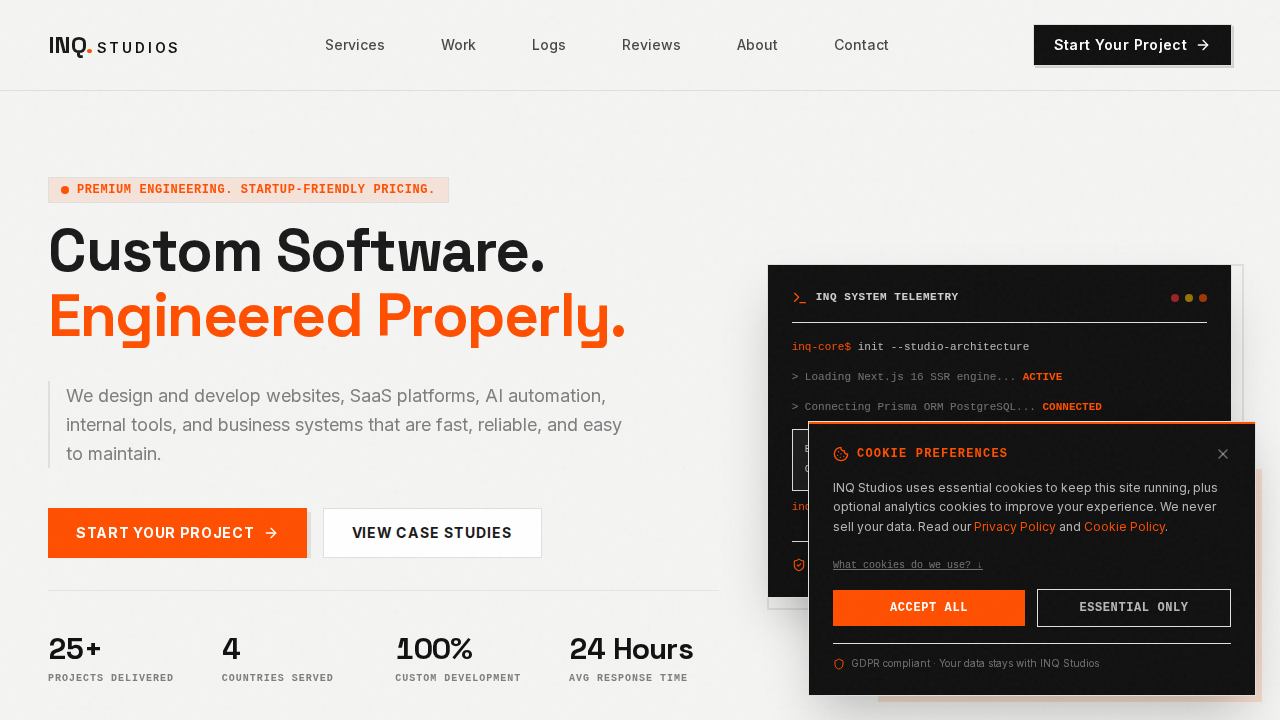
On 07/18/26 inqstudios.xyz scored 57% — **Fair** – Overall, the site has a solid baseline for AI visibility, but a few missing credibility and content signals are keeping it from feeling fully “verified” and easy to reuse.
Executive summary
Score Breakdown (High Level)
- Discoverability: 100% - The site's discoverability is in excellent shape with all core metadata and sitemaps active, though we couldn't find a dedicated sitemap for images or video.
- Structured Data: 58% - The homepage structured data is solid and error-free, but we couldn't confirm authorship or article-level schema because a resource page wasn't provided.
- AI Readiness: 67% - The site has a strong technical foundation with accessible sitemaps and no AI crawler blocks, though it lacks a Wikidata connection to solidify its brand identity.
- Performance: 67% - Overall, the homepage performance looks really solid, with all the key metrics landing well within the healthy range for mobile users.
- Reputation: 35% - While we didn't find any negative red flags, the brand lacks the external validation signals like reviews, press, and LLM recognition that help build authority.
- LLM-Ready Content: 44% - While the page features a clear author and recent update dates, it struggles with content depth and uses too many unexplained technical acronyms for optimal AI processing.

The main themes at a glance
The big picture is that your on-site foundation looks steady, but a few key signals around credibility and content reusability aren’t coming through clearly yet. Nothing here reads like a “problem” so much as missing context that makes it harder for AI systems to confidently identify the brand and pull clean answers. Below, we’ll break down the specific areas where those signals didn’t show up, organized by section so it’s easy to follow. Overall, this is the kind of gap set that’s common for growing brands and is very workable once it’s clearly mapped out.
Detailed Report
Discoverability
❌ Image or video sitemap missing
What we saw
We didn’t find an image sitemap or a video sitemap in the sitemap data that was available. That means your visual content may be harder to surface consistently through search discovery.
Why this matters for AI SEO
Generative engines and search systems often rely on clear content inventories to find and understand what a brand publishes. When visual assets aren’t clearly discoverable, they’re less likely to be pulled into AI-driven results or summaries.
Next step
Add and publish an image sitemap and/or video sitemap so your visual assets are easier to discover and interpret.
Structured Data
❌ Resource/blog page structured data couldn’t be verified
What we saw
A resource/blog page wasn’t available to evaluate, so we couldn’t confirm whether that page includes structured data. As a result, your article-level signals aren’t being clearly communicated in the areas that typically showcase expertise.
Why this matters for AI SEO
AI systems are more likely to trust and correctly interpret content when the page clearly states what it is (and who created it). If those signals aren’t present or can’t be validated, it can limit how confidently your content is summarized or cited.
Next step
Provide an accessible resource/blog page and ensure it includes clear structured data describing the page and its content.
❌ Author information on resource/blog content not confirmed
What we saw
Because no resource page was provided, we couldn’t verify that posts have a clear, non-generic author. That makes it harder to establish who is responsible for the content.
Why this matters for AI SEO
Authorship is a major trust and attribution signal for generative engines. When author details are missing or unconfirmable, the content can feel less credible and less “quotable” for AI answers.
Next step
Make sure each resource/blog post clearly identifies a specific author and that the author is consistently represented across posts.
❌ Author profile links not verifiable
What we saw
We couldn’t evaluate whether author details include corroborating profile links because the resource/blog page (and its author data) wasn’t available. This leaves the author’s identity less connected to the broader web.
Why this matters for AI SEO
Generative engines look for consistent identity signals to confirm that an author is real and credible. Without those connective signals, AI systems may be less confident attributing expertise to your content.
Next step
Add author profile details that include consistent, verifiable links to established profiles where appropriate.
AI Readiness
❌ Brand Wikidata entity not found
What we saw
We didn’t see a Wikidata entity ID associated with the brand in the provided data. That leaves a key “global reference point” for the brand unconfirmed.
Why this matters for AI SEO
Many AI systems use shared knowledge sources to disambiguate brands and verify identity. When a brand doesn’t map cleanly to a known entity, it can slow down recognition and reduce confidence in automated summaries.
Next step
Create or claim a Wikidata entry for the brand and make sure it clearly connects to your official identity.
Reputation
❌ Brand not recognized across multiple AI models
What we saw
The brand wasn’t recognized by at least two models in the results provided. This suggests the brand’s footprint may not be showing up consistently in the places AI systems commonly learn from.
Why this matters for AI SEO
When multiple AI systems independently recognize a brand, it’s a strong signal that the entity is established and well-defined. Limited recognition can make AI answers less confident or more generic.
Next step
Strengthen the brand’s presence across reputable third-party sources so it’s easier for AI systems to identify and validate.
❌ Inconsistent or unverified official brand identity
What we saw
The official name and address were missing or couldn’t be verified with consensus in the research data. That makes the “official identity” harder to confirm offsite.
Why this matters for AI SEO
Generative engines lean heavily on consistent identity signals to avoid mixing brands up or presenting inaccurate details. If core identity fields aren’t consistently confirmable, trust and precision can suffer.
Next step
Standardize and reinforce the brand’s official identity details so they match across the web wherever the business is listed.
❌ Wikidata match status not confirmed
What we saw
No Wikidata match status was found for the brand in the provided findings. In practice, that means we can’t point to a trusted entity record that clearly represents the business.
Why this matters for AI SEO
Entity matching helps AI systems connect your website to the “right” brand record and supporting sources. Without that, AI can be less consistent in how it identifies and describes you.
Next step
Establish a clear brand entity record that can be reliably matched and referenced.
❌ No official identity anchors found in Wikidata
What we saw
The research didn’t find official identifiers (like an official website reference) connected through Wikidata. That leaves fewer “hard anchors” tying the brand to a canonical identity.
Why this matters for AI SEO
AI systems rely on authoritative anchors to verify what’s official and what isn’t. When those anchors aren’t present, brand verification becomes more fragile.
Next step
Ensure official identity anchors exist and are clearly connected to the brand’s canonical record.
❌ Third-party reviews or customer feedback not found
What we saw
No third-party review signals were identified in the research data. That means there’s limited independent customer feedback for AI systems to reference.
Why this matters for AI SEO
Generative engines tend to trust brands more when there’s clear, independent validation from customers. Without that layer, it’s harder for AI to confidently describe reputation and reliability.
Next step
Build up a set of legitimate third-party review sources that clearly relate back to the brand.
❌ No concrete review sources listed
What we saw
There weren’t any concrete review sources referenced in the AI responses used for the research packet. Even if reviews exist somewhere, they weren’t identifiable here as specific, reliable sources.
Why this matters for AI SEO
AI systems do best when they can tie reputation claims to specific, recognizable sources. Vague or unlinked review mentions don’t provide the kind of verification that supports confident summaries.
Next step
Make sure review sources are clear, specific, and consistently associated with your brand.
❌ Major social profiles not confirmed by consensus
What we saw
Major social profiles couldn’t be confirmed via consensus in the research findings. That creates uncertainty around which profiles are truly official.
Why this matters for AI SEO
Official social profiles often act as identity corroboration for AI systems. When they’re unclear or inconsistent across sources, it can weaken entity confidence and brand recognition.
Next step
Reinforce the “official” social profile set so it can be consistently verified across sources.
❌ No independent press or coverage detected
What we saw
The research didn’t detect independent press mentions or coverage for the brand. That suggests limited third-party narratives about the business.
Why this matters for AI SEO
Independent coverage is one of the strongest external validation signals for generative engines. When it’s missing, AI has fewer authoritative references to draw from.
Next step
Develop verifiable third-party coverage so the brand has credible external references.
❌ No onsite press or press releases detected
What we saw
No owned press content (like press releases or a press page) was detected in the research. That reduces the amount of “official narrative” AI systems can quote from directly.
Why this matters for AI SEO
Onsite press content helps AI systems understand how a brand talks about itself in a consistent, publishable format. Without it, your official story is harder to source cleanly.
Next step
Publish a clear press/announcements area that summarizes notable company updates in a consistent format.
LLM-Ready Content (Blog Analysis)
Heads up: this section looks at one article as a snapshot, so it’s a little more interpretive than the rest of the report and may shift slightly from run to run. Have questions? Just shoot us an email at hello@v9digital.com
❌ No non-social outbound link detected
What we saw
We didn’t see any outbound links that weren’t pointing to social media or communication platforms. That means the page isn’t clearly connecting readers to independent, non-social references.
Why this matters for AI SEO
AI systems tend to trust content more when it’s situated in a wider web of credible references. Without those connections, the page can read as more self-contained and harder to corroborate.
Next step
Add at least one relevant outbound link to a credible, non-social source that supports or contextualizes the content.
❌ Sections are a bit too thin for easy reuse
What we saw
The page is broken into sections, but the average section length was around 100 words, which is shorter than the target range used for clean chunking. That can make the content feel a little “bite-sized” for models trying to extract complete answers.
Why this matters for AI SEO
Generative engines often reuse content in self-contained chunks. When sections are very short, AI may have to stitch together meaning across multiple blocks, which can reduce clarity and accuracy.
Next step
Expand key sections so each one fully answers a subtopic in a self-contained way.
❌ No table-based summary found
What we saw
No HTML table was detected on the page. That means there isn’t a compact “scan-friendly” block that quickly summarizes comparisons, steps, or key facts.
Why this matters for AI SEO
Tables can make it easier for AI systems to pull structured facts and present them cleanly in answers. Without one, important details may be more buried in narrative text.
Next step
Add a simple table where it naturally fits to summarize key comparisons or takeaways.
❌ Key answers don’t show up early enough
What we saw
None of the evaluated sections had an opening paragraph that hit the minimum length used to surface a clear “instant answer.” As a result, the content’s main point may take a little too long to become obvious.
Why this matters for AI SEO
AI systems often prioritize early, clearly stated answers when summarizing a page. If the first few lines are light on direct substance, the page can be harder to quote or summarize accurately.
Next step
Rewrite opening paragraphs so they state a direct, self-contained answer upfront before expanding into details.
❌ Acronyms reduce clarity in a few places
What we saw
We found several acronyms (like SSR, SaaS, MVP, API, SLA, IP) used without nearby explanations. That can make parts of the page harder to interpret for readers and models that aren’t assuming the same background knowledge.
Why this matters for AI SEO
Generative engines do better when language is unambiguous and definitions are close to the first mention. Unexplained acronyms can cause misreads or lower confidence in how the content is summarized.
Next step
Add short definitions the first time each acronym appears so the meaning is explicit in-context.
Does Anything Seem Off?
Thanks for taking our free GEO Grader for a spin. When we started this journey, the tool had a fairly long processing time to check everything we wanted both onsite and offsite, so we made a few adjustments on the backend to speed things up. As a result, there are times when the grader may not get everything 100% right. If something feels off, we recommend running the tool a second time to confirm the results. From there, you’re always welcome to reach out to us to schedule a GEO consultation, or to have your SEO provider validate the findings with a more detailed crawl and manual review.
