
Overview:
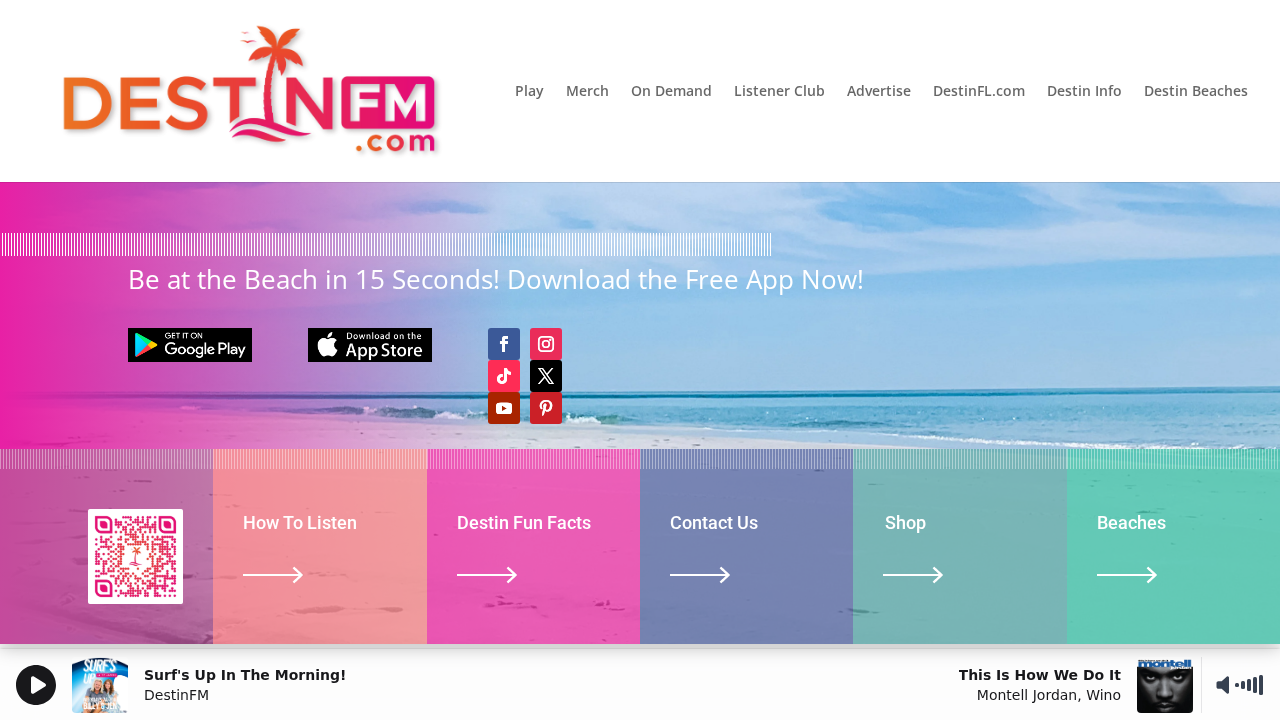
On 06/10/26 destinfm.com scored 59% — **Fair** – Overall, the site feels solid, but a few missing credibility and content cues are keeping it from showing up as clearly as it could in AI-driven results.
Executive summary
Score Breakdown (High Level)
- Discoverability: 100% - The site is technically very accessible to search engines with great metadata, though adding image-specific sitemaps would help round things out.
- Structured Data: 58% - The site has a solid foundation with valid organization schema on the homepage, but the absence of blog-level structured data and author identifiers is a notable gap.
- AI Readiness: 50% - The site has the technical basics like sitemaps and crawler access dialed in, but it's missing a clear brand context page and a Wikidata entity to help AI models truly understand the organization.
- Performance: 50% - Mobile performance is mostly solid and very stable, though the main content takes slightly longer than the 5-second limit to fully appear.
- Reputation: 54% - The brand is well-recognized by AI models and maintains a clean reputation, though its digital authority would be strengthened by a verified Wikidata presence and more consistent off-site review data.
- LLM-Ready Content: 56% - The content is frequently updated and uses descriptive subheadings, though it lacks a named author and substantive text chunks.

The big picture before we dig in
What stands out most is that the site has a solid baseline, but it’s missing a few signals that help AI systems confidently connect the brand to clear identity, reputation, and content ownership. The gaps here read more like clarity and consistency issues than anything “wrong” with the site. The detailed breakdown below walks through the specific areas where the report didn’t find what it was looking for, organized by section. None of this is unusual—these are common, fixable gaps as sites grow.
Detailed Report
Discoverability
❌ Image or video sitemap not found
What we saw
We didn’t see an image sitemap or a video sitemap in the provided data. That means AI and search systems have less direct guidance on the site’s visual media.
Why this matters for AI SEO
Generative engines often rely on clear content inventories to understand what a brand publishes and to confidently surface the right assets in results. When media isn’t as easy to map, it can reduce how consistently those assets get discovered and reused.
Next step
Add a dedicated image and/or video sitemap so your visual content is easier to find and interpret.
Structured Data
❌ Resource/blog page markup couldn’t be verified
What we saw
A resource or blog page file wasn’t provided in the inputs, so we couldn’t confirm whether those pages include the expected structured details. As a result, this part of the evaluation came back as not found.
Why this matters for AI SEO
When content pages don’t clearly identify what they are, AI systems can be less confident about summarizing or citing them. That uncertainty can limit visibility for articles and guides in generative search experiences.
Next step
Provide (or validate) a representative resource/blog page so its content identification signals can be confirmed.
❌ Clear, non-generic author on content pages not confirmed
What we saw
Because a resource/blog post page wasn’t included in the provided data, we couldn’t verify that posts show a specific, non-generic author. This left the author signal unconfirmed.
Why this matters for AI SEO
Clear authorship helps AI systems judge expertise and credibility, especially for informational content. When author details are missing or unclear, it can make the content feel less trustworthy to reuse.
Next step
Ensure a typical resource/blog post clearly credits a specific author (not just the organization) in a way that can be consistently recognized.
❌ Author identity links not confirmed
What we saw
We weren’t able to review a resource/blog page, so we couldn’t confirm whether author information includes consistent identity references across the web. This made the author verification signal incomplete in the results.
Why this matters for AI SEO
Generative engines are more likely to trust and connect content to real people when identity is consistent across sources. Without that linkage, content can be treated as less attributable and less dependable.
Next step
Confirm that author details include consistent identity references that match the author’s public profiles.
AI Readiness
❌ Brand context page not detected from the homepage
What we saw
We didn’t find a dedicated About/Company-style page linked from the homepage based on common naming patterns. That makes the brand story and “who we are” context harder to locate in a single place.
Why this matters for AI SEO
AI systems look for clear, centralized brand context to understand identity, positioning, and legitimacy. When that context isn’t easy to find, the brand can come across as less well-defined.
Next step
Add a clearly labeled brand context page and make it easy to find from the homepage.
❌ No Wikidata entity found for the brand
What we saw
No Wikidata item ID was found for the brand in the provided results. That leaves a notable gap in how the brand is validated across common knowledge sources.
Why this matters for AI SEO
Many generative engines use knowledge sources to confirm that an organization is real, distinct, and consistently described. Without a clear entity reference, it’s harder for models to “lock onto” the brand.
Next step
Establish a Wikidata entity for the brand so AI systems have a stronger verification reference point.
Performance
❌ Main content loads a bit late on the homepage
What we saw
The homepage’s main visual/content area took longer than expected to fully appear in the captured results. This suggests the initial “first impression” moment is slower than ideal.
Why this matters for AI SEO
Generative engines increasingly blend user experience signals with content understanding and trust. Slower initial loading can reduce engagement and weaken the overall confidence around the page.
Next step
Improve how quickly the homepage’s primary content becomes visible to users.
Reputation
❌ Wikidata entity not established
What we saw
The report did not find a Wikidata entity associated with the brand. This leaves the brand without one of the more commonly referenced public identity anchors.
Why this matters for AI SEO
When AI systems can’t connect a brand to a stable public entity, they have to rely on looser signals that may vary by source. That can lead to less consistent recognition and weaker authority.
Next step
Create or claim a Wikidata entry so the brand has a clear public entity reference.
❌ Wikidata identity anchors not found
What we saw
Because no Wikidata entity was found, identity “anchors” tied to that entity weren’t present in the results either. That means fewer strong cross-references connecting the brand to trusted sources.
Why this matters for AI SEO
Identity anchors help generative systems resolve ambiguity and avoid mixing similar-sounding brands. Without them, AI answers can be less confident or less specific.
Next step
Ensure the brand has consistent identity anchors connected to a recognized public entity.
❌ Third-party reviews not consistently surfaced
What we saw
Third-party reviews weren’t consistently recognized across the model outputs referenced in the report. In other words, review signals didn’t show up in a dependable way.
Why this matters for AI SEO
AI systems often lean on independent feedback to assess credibility and quality. If that feedback isn’t clearly discoverable, the brand can appear less validated from the outside.
Next step
Build a clearer footprint of third-party reviews that can be consistently found and referenced.
❌ Concrete review sources not clearly identified
What we saw
The results didn’t consistently surface specific, concrete sources for reviews. That makes it harder to validate where feedback is coming from.
Why this matters for AI SEO
Generative engines are more comfortable citing and trusting reputation signals when they can point to clear sources. Vague or inconsistent sourcing reduces confidence.
Next step
Make sure reviews are associated with well-known, easily verifiable third-party sources.
❌ Social profile consensus was low
What we saw
Even though social profiles exist, the report noted low consensus among models about the brand’s social profiles. That suggests the ecosystem of references isn’t fully aligned.
Why this matters for AI SEO
When AI systems see mixed signals about official profiles, it can reduce confidence in brand identity and make attribution messier. Consistency helps models “connect the dots.”
Next step
Strengthen consistency around which social profiles are recognized as official across the broader web.
❌ Independent press coverage not clearly present
What we saw
Independent press coverage didn’t show up clearly in the results, and when it did, it wasn’t consistently surfaced across models. That suggests limited external reporting signals.
Why this matters for AI SEO
Independent coverage can act as third-party validation that helps generative engines gauge legitimacy and authority. Without it, AI systems have fewer strong external references to lean on.
Next step
Increase the brand’s footprint in independent coverage that can be reliably discovered.
❌ Owned press coverage not clearly present
What we saw
The report did not surface a clear pattern of owned press coverage in the results. That means fewer brand-published references that act like official announcements or press-style updates.
Why this matters for AI SEO
Owned coverage helps AI systems understand official milestones, claims, and context straight from the brand. When it’s not consistently visible, models have less authoritative narrative to pull from.
Next step
Publish and maintain clear brand-owned coverage that can be referenced as official context.
LLM-Ready Content (Blog Analysis)
Heads up: this section looks at one article as a snapshot, so it’s a little more interpretive than the rest of the report and may shift slightly from run to run. Have questions? Just shoot us an email at hello@v9digital.com
❌ No specific author credited
What we saw
We didn’t see a visible or clearly defined individual author for the article; the attribution appears to be the organization name. That makes the content feel less personally owned.
Why this matters for AI SEO
AI systems tend to trust content more when it’s clearly attributable to a real person with consistent expertise signals. Without that, content can be treated as more generic and less cite-worthy.
Next step
Add a clear, specific author attribution for the article.
❌ Sections are too short to carry full answers
What we saw
The content is split into multiple sections, but the average section is very brief and reads more like quick notes than a complete explanation. That can make the page feel “thin” in places even if the topic is useful.
Why this matters for AI SEO
Generative engines pull and summarize information best when each section contains a complete, self-contained answer. Very short sections give models less to work with and can reduce how often the content gets reused.
Next step
Expand sections so each one provides a fuller, more self-contained explanation.
❌ No table-style structure found
What we saw
We didn’t find a table-style element on the page. That means the content doesn’t include an easy-to-scan structured block for comparisons or quick lookups.
Why this matters for AI SEO
Structured blocks can make key details easier for AI systems to extract accurately and reuse in summaries. Without them, models may need to infer structure from prose and lists alone.
Next step
Add a simple table where it naturally fits to summarize key information.
❌ Key answers don’t show up early in most sections
What we saw
Most sections don’t start with a substantive introductory paragraph and instead jump into short lines or lists. That can make it harder to quickly understand the main point of each section.
Why this matters for AI SEO
AI systems often prioritize early, clearly stated answers when summarizing a page. If the “main takeaway” is buried or implied, the model may miss it or summarize less precisely.
Next step
Make sure each section opens with a clear, complete lead-in that states the core answer up front.
Does Anything Seem Off?
Thanks for taking our free GEO Grader for a spin. When we started this journey, the tool had a fairly long processing time to check everything we wanted both onsite and offsite, so we made a few adjustments on the backend to speed things up. As a result, there are times when the grader may not get everything 100% right. If something feels off, we recommend running the tool a second time to confirm the results. From there, you’re always welcome to reach out to us to schedule a GEO consultation, or to have your SEO provider validate the findings with a more detailed crawl and manual review.
