
Overview:
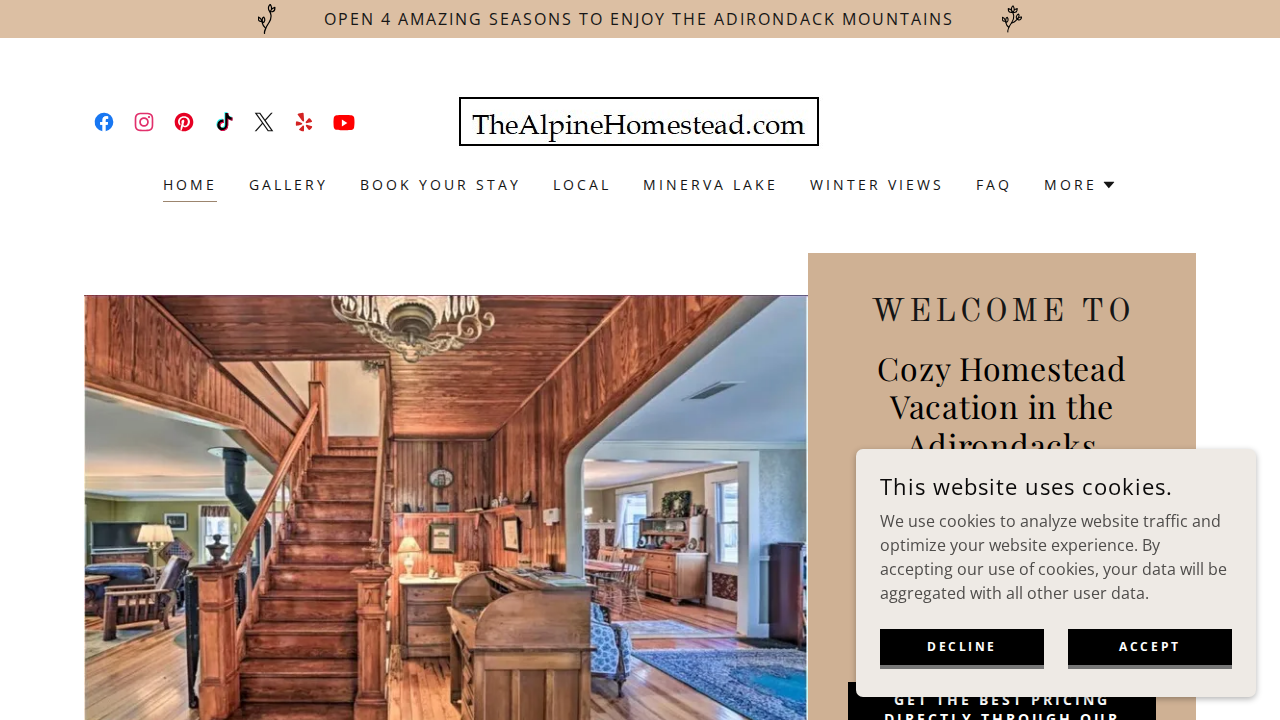
On 04/16/26 thealpinehomestead.com/ scored 51% — **Fair** – Overall, the site has a solid baseline for being found, but it’s missing some clarity and credibility signals that would make it easier for AI to confidently understand and reference.
Executive summary
Score Breakdown (High Level)
- Discoverability: 83% - Overall, this section looks to be in good shape, though we didn't see an image or video sitemap.
- Structured Data: 75% - Overall, the site features a solid technical implementation of structured data including local business schema, but it lacks specific authorship identification on its resource content.
- AI Readiness: 50% - The site is accessible to AI crawlers and has a sitemap, but it lacks lastmod timestamps and a Wikidata entity to help generative engines verify its authority and freshness.
- Performance: 22% - While the site is visually stable with no layout shifts, the overall mobile performance is struggling significantly with slow load times and high responsiveness delays.
- Reputation: 58% - Overall, the site has a solid social media presence and is widely recognized by AI models, though it lacks the independent press coverage and concrete review sources needed to fully establish offsite trust.
- LLM-Ready Content: 40% - The page is current and connects well to external resources, but it lacks specific authorship and descriptive headers to help AI systems categorize the information effectively.

What stood out across the results
The big picture is that the site is generally findable, but it doesn’t consistently “prove” who’s behind the content and brand in a way AI systems can easily validate. A lot of the gaps are more about clarity and confidence signals than anything being outright wrong. Next, we’ll walk through the specific areas where the evaluation flagged missing attribution, weaker offsite trust signals, slower page experience, and content structure that’s harder to digest. None of this is unusual—these are common gaps, and they’re very workable once you can see them clearly.
Detailed Report
Discoverability
❌ Missing image or video sitemap
What we saw
We didn’t find an image sitemap or a video sitemap in the available site data.
Why this matters for AI SEO
When visual content isn’t clearly surfaced, it can be harder for engines to consistently discover and associate those assets with the right topics and pages.
Next step
Add a dedicated image sitemap and/or video sitemap so your visual content is easier to find and understand at scale.
Structured Data
❌ Blog/resource content has a generic author
What we saw
The resource content did not show a clearly identified person or specific entity as the author. The author information appeared as the site’s domain name rather than a real, attributable author.
Why this matters for AI SEO
AI systems rely on clear attribution to judge credibility and to confidently reuse content in answers, summaries, and recommendations.
Next step
Update the resource content so the author is a specific, identifiable individual (or a clearly defined editorial entity) instead of the domain name.
❌ No author profile links connected to the author
What we saw
No author-related structured data was detected on the resource page, and there were no external profile links connected to an author.
Why this matters for AI SEO
When an author can’t be tied to real-world profiles, it’s harder for AI engines to validate the author’s identity and treat the content as confidently attributable.
Next step
Associate the author with consistent external profiles so the author identity is easier to verify.
AI Readiness
❌ Sitemap doesn’t show page update timestamps
What we saw
The sitemap information did not include update timestamps for URLs.
Why this matters for AI SEO
Freshness signals help AI-driven systems understand what’s current and reduce uncertainty about whether content is still accurate.
Next step
Include update timestamps for key URLs so engines can better interpret content recency.
❌ No Wikidata entity found for the brand
What we saw
We didn’t find a Wikidata item tied to the brand.
Why this matters for AI SEO
Entity references help generative engines confirm identity and reduce ambiguity, especially when they’re deciding which brand or source to cite.
Next step
Create or claim a Wikidata entry for the brand so identity signals are easier to corroborate.
Performance
❌ Homepage feels slow to become usable
What we saw
The homepage showed slow responsiveness, with a high amount of main-thread blocking before the page becomes reliably interactive.
Why this matters for AI SEO
When pages feel slow or heavy, users are less likely to fully engage, and AI systems can have a harder time reliably processing the page experience as a strong result.
Next step
Improve homepage responsiveness so the page becomes usable faster on mobile.
❌ Homepage main content appears late
What we saw
The largest, most important above-the-fold content on the homepage took a long time to fully appear.
Why this matters for AI SEO
If core content shows up late, it can weaken perceived quality and reduce how reliably the page communicates its purpose in time-sensitive crawls and user sessions.
Next step
Prioritize faster loading of the homepage’s main content so it appears earlier.
❌ Homepage overall performance is trailing
What we saw
The homepage’s overall performance result came back below expected levels for a smooth mobile experience.
Why this matters for AI SEO
When overall performance lags, it can drag down user satisfaction signals and make the page a weaker candidate for being surfaced and referenced.
Next step
Bring the homepage’s overall performance into a healthier range for mobile visitors.
❌ Resource page feels slow to become usable
What we saw
The resource page showed slow responsiveness, with significant blocking before interactions feel smooth.
Why this matters for AI SEO
Resource pages are often the ones AI systems draw from; if they’re sluggish, it can reduce engagement and weaken the page’s perceived quality.
Next step
Improve resource-page responsiveness so it becomes interactive faster on mobile.
❌ Resource page main content appears late
What we saw
The resource page’s primary content took a long time to fully load and display.
Why this matters for AI SEO
If the core content loads late, it can make the page less effective as a source for AI summaries and reduce user trust during real visits.
Next step
Speed up delivery of the resource page’s main content so it appears earlier in the visit.
❌ Resource page overall performance is trailing
What we saw
The resource page’s overall performance result came back below expected levels.
Why this matters for AI SEO
When performance is consistently weak across key pages, it can undercut both user experience and the likelihood that AI systems treat the site as a strong reference.
Next step
Raise overall resource-page performance so it better supports discovery and engagement.
Reputation
❌ Brand identity details didn’t confirm consistently
What we saw
A consistent physical address was not confirmed in the identity results used for the evaluation.
Why this matters for AI SEO
When key identity details aren’t consistent and confirmable, AI systems can be more cautious about treating the brand as a clearly defined entity.
Next step
Make sure the brand’s core identity details (including address, where applicable) are consistently represented across the web.
❌ No matching Wikidata entity for the brand
What we saw
The evaluation did not find a Wikidata entity that matches the brand.
Why this matters for AI SEO
Wikidata is a common external reference point that helps AI systems disambiguate and verify brand identity.
Next step
Establish a matching Wikidata entity so the brand is easier to verify as a known entity.
❌ No official identity anchors found in Wikidata
What we saw
No official identity anchors or identifiers were detected in Wikidata for the brand.
Why this matters for AI SEO
Without trusted identity anchors, AI systems have fewer dependable touchpoints to confirm “this is the official brand” versus a lookalike or partial match.
Next step
Add official identity anchors to the brand’s entity footprint so verification is more straightforward.
❌ No third-party reviews or customer feedback detected
What we saw
We didn’t see third-party reviews or customer feedback sources reflected in the data reviewed.
Why this matters for AI SEO
Independent feedback is a major trust signal, and its absence can make AI systems less confident when summarizing or recommending a brand.
Next step
Build a clearer footprint of real customer feedback on well-known third-party platforms.
❌ Review sources weren’t concrete
What we saw
No concrete review sources were identified in the research packet.
Why this matters for AI SEO
Even when sentiment exists, AI systems place more weight on feedback that can be tied back to recognizable, verifiable sources.
Next step
Make sure reviews are easy to trace to specific, recognizable third-party sources.
❌ No independent offsite press coverage detected
What we saw
The evaluation did not detect mentions of the brand in independent, offsite press sources.
Why this matters for AI SEO
Independent coverage can act like a credibility shortcut for AI systems, helping them treat a brand as established and noteworthy.
Next step
Strengthen the brand’s footprint in independent publications so AI has more third-party context to draw from.
LLM-Ready Content (Blog Analysis)
Heads up: this section looks at one article as a snapshot, so it’s a little more interpretive than the rest of the report and may shift slightly from run to run. Have questions? Just shoot us an email at hello@v9digital.com
❌ No specific author credited on the page
What we saw
The author credit on the page used the site domain name rather than a specific person or identifiable author entity.
Why this matters for AI SEO
Clear authorship helps AI systems judge credibility and understand who stands behind the information being presented.
Next step
Add a clear, non-generic author attribution for the page.
❌ Sections are too thin for easy reuse
What we saw
While the page is split into multiple sections, many sections are very short and don’t contain enough text to stand on their own.
Why this matters for AI SEO
AI systems tend to do better when sections contain complete, self-contained explanations they can quote, summarize, or reference without losing context.
Next step
Rewrite key sections so each one contains a fuller, self-contained block of information.
❌ No table-based content found
What we saw
No table-based content was detected on the page.
Why this matters for AI SEO
Tables can make it easier for AI to extract and reuse structured details (like comparisons, amenities, timelines, or policies) without misreading them.
Next step
Add a simple table where it naturally fits to present key details in a clean, scannable format.
❌ Too many generic subheadings
What we saw
Many subheadings were labeled with generic terms (for example, labels like “Video” and “Social”) instead of describing what the section actually covers.
Why this matters for AI SEO
Descriptive subheadings help AI map the page quickly and connect the right sections to the right queries and intents.
Next step
Rename subheadings so they clearly describe the topic of each section in plain language.
❌ Key information doesn’t show up early in sections
What we saw
Several sections begin with very short text or jump straight into non-text elements, instead of opening with a clear paragraph that summarizes the point.
Why this matters for AI SEO
When key answers appear early, AI systems can more reliably extract accurate takeaways without guessing what a section is trying to communicate.
Next step
Adjust section intros so each key section starts with a clear, informative paragraph.
Does Anything Seem Off?
Thanks for taking our free GEO Grader for a spin. When we started this journey, the tool had a fairly long processing time to check everything we wanted both onsite and offsite, so we made a few adjustments on the backend to speed things up. As a result, there are times when the grader may not get everything 100% right. If something feels off, we recommend running the tool a second time to confirm the results. From there, you’re always welcome to reach out to us to schedule a GEO consultation, or to have your SEO provider validate the findings with a more detailed crawl and manual review.
