
Overview:
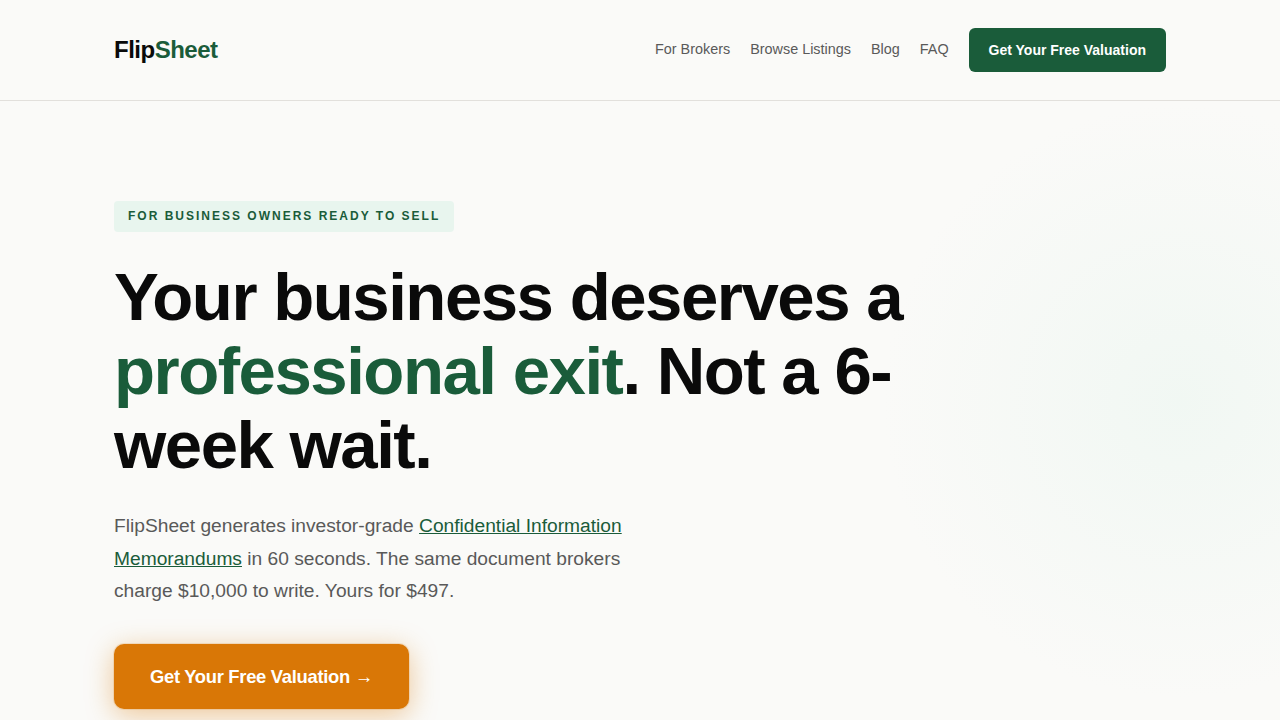
On 07/14/26 flipsheet.polsia.app scored 42% — **Below Average** – Overall, the site has a solid base, but there are some clear gaps around trust and content clarity that can hold back AI visibility.
Executive summary
Score Breakdown (High Level)
- Discoverability: 100% - The site's technical discoverability is generally strong and search-engine friendly, though it currently lacks image alt text and dedicated media sitemaps.
- Structured Data: 58% - The homepage has solid organization and software schema, but we weren't able to verify any structured data or author details for the resource pages.
- AI Readiness: 50% - The site is technically wide open for AI crawlers with a solid sitemap, but it's missing the brand context and entity data that help engines fully trust the source.
- Performance: 67% - Mobile performance generally landed well outside the 'poor' range, showing excellent responsiveness and stability across the board.
- Reputation: 23% - We weren't able to find much of an offsite footprint for the brand, including missing social links and limited recognition across LLM knowledge bases.
- LLM-Ready Content: 4% - The page lacks essential trust signals like a named author and specific dates, and its fragmented structure with unexplained acronyms makes it less than ideal for AI-driven discovery.

The main themes we’re seeing overall
The big picture is that the site’s core foundation is in place, but a lot of the signals that help AI systems trust, verify, and confidently reuse information aren’t coming through yet. Most of the gaps read less like “something’s wrong” and more like missing context around who’s behind the brand and how the content should be interpreted. The next section walks through the specific areas where those missing signals showed up, grouped by category. None of this is unusual for a newer or lower-profile brand—you just have a clearer map of what’s holding visibility back right now.
Detailed Report
Discoverability
❌ Missing image description text
What we saw
An image element on the homepage was found without any descriptive text. That leaves a small but important piece of the page unclear to crawlers that rely on text signals.
Why this matters for AI SEO
When visuals don’t have clear text context, AI systems can lose meaning that supports understanding and summarization. It can also reduce confidence when the page is interpreted out of its visual layout.
Next step
Add a clear, descriptive label for the image element so its purpose is understandable in text form.
❌ Media discovery signals not found
What we saw
We didn’t find any dedicated discovery support for image or video content. That can make media content harder to surface consistently.
Why this matters for AI SEO
Generative engines often learn about a brand through a mix of text and media, and weak media discovery signals can reduce how completely your site is understood. Over time, that can limit the variety of assets AI systems are willing to reference.
Next step
Publish dedicated discovery support for your image and/or video content so crawlers can find and index those assets more reliably.
Structured Data
❌ Resource/blog page structured data not verifiable
What we saw
No resource or blog page HTML was provided for evaluation, so we couldn’t confirm whether those pages include structured signals. As a result, the resource content is effectively “invisible” to this part of the review.
Why this matters for AI SEO
When content pages don’t surface clear structured context, AI systems can struggle to classify the page and connect it to your brand. That usually reduces how confidently content gets summarized or cited.
Next step
Make sure resource/blog pages provide the structured context needed to clearly describe the content type and its relationship to the brand.
❌ Author not clearly identified on resource content
What we saw
Because the resource/blog page data wasn’t available, we couldn’t identify a clear, non-generic author for the content. That leaves the “who wrote this?” question unanswered.
Why this matters for AI SEO
Authorship is a core trust cue for generative engines when they decide what to reuse. If the author isn’t clear, it can make the content feel less attributable and less reliable.
Next step
Ensure each resource post clearly names the author in a non-generic way so the content is attributable.
❌ Author identity links not present
What we saw
No author identity linking was available to review because author details weren’t present for the resource content. That means there’s no clear way to connect the author to verified profiles.
Why this matters for AI SEO
AI systems look for consistent identity references to build confidence that a creator is real and reputable. Without those connections, it’s harder for models to validate the source behind the writing.
Next step
Add author identity references that connect the author to consistent, verifiable profile URLs.
AI Readiness
❌ Brand context page not found from the homepage
What we saw
We couldn’t find internal links from the homepage to an “About,” “Company,” or “Team” style page. That makes it harder to quickly understand who’s behind the site.
Why this matters for AI SEO
Generative engines tend to be more confident when they can easily locate clear brand and people context. When that context isn’t easy to find, the site can feel less attributable.
Next step
Make sure there’s a clearly labeled brand context page that’s easy to reach from the homepage.
❌ No Wikidata entity found for the brand
What we saw
No Wikidata item ID was found for the brand. That means there isn’t a well-known knowledge-base entity acting as a consistent reference point.
Why this matters for AI SEO
When an entity is defined in widely used knowledge bases, it’s easier for AI systems to verify and disambiguate the brand. Without that anchor, identity confidence can be harder to establish.
Next step
Create and/or confirm a Wikidata entity for the brand so it has a stable reference in major knowledge sources.
Reputation
❌ Brand recognition is limited across AI models
What we saw
The brand wasn’t consistently recognized across multiple AI models. That suggests the offsite footprint is still fairly thin.
Why this matters for AI SEO
If models don’t consistently recognize the brand as an entity, they’re less likely to surface it confidently in answers. This can also reduce how often the brand is suggested as an option.
Next step
Strengthen the brand’s presence in well-known third-party sources so it’s more consistently recognized.
❌ Brand identity details are inconsistent
What we saw
The brand identity signals weren’t consistent, including missing basic identity details and disagreement on the official name. That creates ambiguity around what the “canonical” brand is.
Why this matters for AI SEO
AI systems need consistent identity cues to confidently tie mentions back to one entity. When identity is fuzzy, models may avoid citing the brand or mix it up with something else.
Next step
Standardize and clearly publish the brand’s official identity details so they match across key references.
❌ No Wikidata presence for reputation validation
What we saw
No matching Wikidata entry was found for the brand in the reputation checks. This removes a common third-party identity reference point.
Why this matters for AI SEO
Without a widely referenced entity record, AI systems have fewer ways to verify and “lock onto” the brand. That can weaken trust and reduce visibility in generated responses.
Next step
Establish a Wikidata entry that clearly identifies the brand and connects it to its official web presence.
❌ Missing official identity anchors in knowledge sources
What we saw
No official website or other identifiers were found as anchors in offsite knowledge data. That makes it tougher to verify “this is the real one.”
Why this matters for AI SEO
Official anchors help AI systems confirm authenticity and reduce confusion with similarly named entities. When they’re missing, models tend to be more cautious.
Next step
Ensure your official brand identifiers are consistently referenced in major third-party knowledge sources.
❌ Third-party reviews weren’t confirmed
What we saw
We didn’t see a clear signal that third-party reviews exist. From an outside perspective, that leaves social proof unclear.
Why this matters for AI SEO
Generative engines often look for independent validation when deciding what brands to recommend. When reviews aren’t discoverable, it can reduce confidence.
Next step
Build and surface third-party review presence so it’s easy to validate from outside your site.
❌ Review sources weren’t identifiable
What we saw
No verified, concrete sources were found to point to where reviews live. That makes it hard to corroborate customer sentiment.
Why this matters for AI SEO
AI systems are more comfortable referencing reputation when sources are specific and independently verifiable. Vague or missing sources limit how usable that signal is.
Next step
Make review sources explicit and easy to corroborate through recognizable third-party platforms.
❌ Social profiles weren’t consistently identified
What we saw
There wasn’t consensus on official social profile URLs. That makes it unclear which profiles (if any) represent the brand.
Why this matters for AI SEO
Clear social identity helps AI systems validate legitimacy and connect brand mentions across the web. When it’s uncertain, models may treat the brand as less established.
Next step
Align your official social profile URLs and make them easy to verify as the canonical accounts.
❌ Homepage doesn’t link to social profiles
What we saw
No links to major social platforms were found on the homepage. That removes an easy verification path for users and AI systems.
Why this matters for AI SEO
Homepage-linked profiles act like quick identity confirmations. Without them, it’s harder for generative engines to connect your site to broader brand signals.
Next step
Add clear links from the homepage to the brand’s official social profiles.
❌ No independent press coverage identified
What we saw
We didn’t see evidence of independent press mentions. That leaves a gap in third-party credibility signals.
Why this matters for AI SEO
Independent coverage helps models corroborate that a brand is real, active, and notable beyond its own site. Without it, authority is harder to confirm.
Next step
Develop independent third-party mentions that AI systems can validate as external coverage.
❌ No owned press or releases identified
What we saw
No owned press or release-style coverage was identified. That means there’s limited “official announcements” context available.
Why this matters for AI SEO
Owned announcements can help AI systems understand what the brand does, what’s new, and what’s officially true. Without this, models have fewer clear reference points.
Next step
Create a clear place for official announcements so brand updates are easy to find and reference.
LLM-Ready Content (Blog Analysis)
Heads up: this section looks at one article as a snapshot, so it’s a little more interpretive than the rest of the report and may shift slightly from run to run. Have questions? Just shoot us an email at hello@v9digital.com
❌ No clear author
What we saw
No visible author name was detected on the page, and no author information was found in structured context either. The site name was treated as a generic brand identifier rather than a specific author.
Why this matters for AI SEO
Generative engines weigh attribution heavily when deciding whether to trust and reuse content. Without a clear author, the content can feel less credible and less citable.
Next step
Add a clearly named, non-generic author for the article.
❌ No publication date
What we saw
No specific calendar publication date was found on the page. General copyright years don’t communicate when the article was published.
Why this matters for AI SEO
AI systems often use dates to judge relevance and whether information might be outdated. When no date is present, it’s harder to gauge timeliness.
Next step
Add a clear publication date in a standard format readers can recognize.
❌ No visible update/freshness signal
What we saw
No explicit update or modification date was detected. That leaves no clear freshness cue for the page.
Why this matters for AI SEO
Freshness signals help models decide what to prioritize when summarizing or recommending resources. Without them, content may be treated as potentially stale.
Next step
Include a visible “last updated” style signal when content has been reviewed or refreshed.
❌ No outbound references
What we saw
All links on the page were internal, and no external references were found. That makes the article feel more self-contained than supported.
Why this matters for AI SEO
Outbound references can help AI systems validate claims and understand context through corroboration. Without them, the content can be harder to verify.
Next step
Add a small set of relevant external references that support key points.
❌ Sections are too short for smooth reuse
What we saw
The page’s sections were quite short on average, which can make the structure feel fragmented when extracted out of the page layout. It’s harder to get complete “answer blocks” from each section.
Why this matters for AI SEO
LLMs tend to reuse content more effectively when sections contain enough context to stand on their own. Very short chunks can reduce clarity in summaries and quoted answers.
Next step
Rework sections so each one contains enough context to be understood independently.
❌ No table-based structure found
What we saw
No table structure was found in the content. That removes one of the easiest-to-extract formats for comparisons and key facts.
Why this matters for AI SEO
Structured, scannable formats can make it easier for AI systems to pull precise details without misreading nuance. Without them, content may be harder to summarize accurately.
Next step
Add at least one simple table where a comparison, checklist, or key data summary makes sense.
❌ Subheadings don’t clearly match the section content
What we saw
Some subheadings didn’t closely align with the opening lines that followed them. That makes the content harder to skim and classify.
Why this matters for AI SEO
AI systems lean on headings to understand topic shifts and to pull the right section for a query. When headings feel disconnected, extraction and summarization can get less accurate.
Next step
Tighten subheadings so they clearly reflect the key idea introduced in the first lines of each section.
❌ Key answers aren’t surfaced early in sections
What we saw
Sections didn’t begin with a substantive opening paragraph that clearly states the main point up front. That forces readers (and models) to do more work to find the takeaway.
Why this matters for AI SEO
Generative engines often prefer content that states the answer early, then elaborates. When the “answer” is buried, the content is less likely to be reused cleanly.
Next step
Adjust section openings so the main takeaway is stated clearly at the start.
Does Anything Seem Off?
Thanks for taking our free GEO Grader for a spin. When we started this journey, the tool had a fairly long processing time to check everything we wanted both onsite and offsite, so we made a few adjustments on the backend to speed things up. As a result, there are times when the grader may not get everything 100% right. If something feels off, we recommend running the tool a second time to confirm the results. From there, you’re always welcome to reach out to us to schedule a GEO consultation, or to have your SEO provider validate the findings with a more detailed crawl and manual review.
