
Overview:
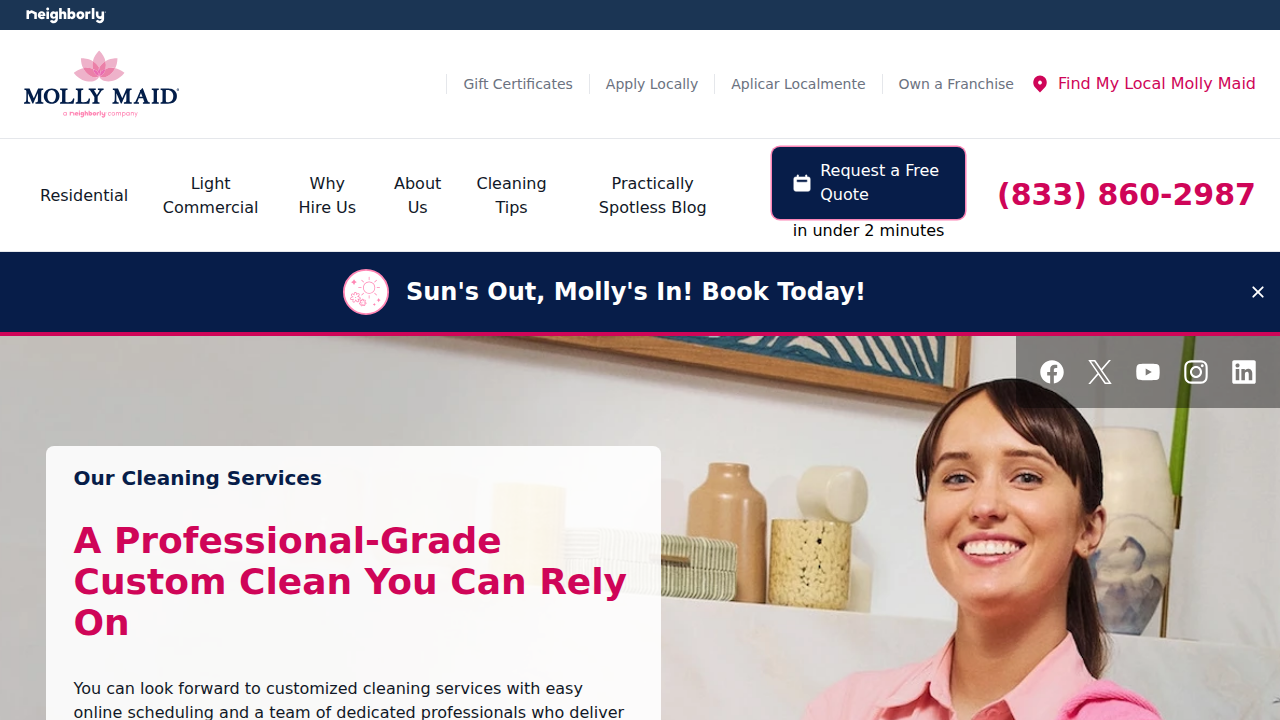
On 07/30/26 mollymaids.com scored 37% — **Weak** – Overall, the site has a few solid fundamentals, but some key signals are missing or unclear in ways that hold back AI visibility.
Executive summary
Score Breakdown (High Level)
- Discoverability: 100% - This site has a solid technical foundation with clear metadata and no index blocking, though the complete lack of XML and media sitemaps is a missed opportunity for better discovery.
- Structured Data: 0% - We weren't able to find any structured data on the homepage, and the lack of blog data means the site is missing critical markers for brand and author authority.
- AI Readiness: 33% - The biggest issue here is the missing XML sitemap, which makes it harder for AI crawlers to map out and index your content efficiently.
- Performance: 50% - The site is visually stable and responsive once loaded, but the initial load time is far too slow to be considered a good mobile experience.
- Reputation: 12% - We weren't able to verify the brand's broader reputation or offsite authority signals because most of the research data was missing from the evaluation packet.
- LLM-Ready Content: 44% - The content is well-structured for quick extraction with strong lead paragraphs, though it lacks essential authorship and dating metadata.

What stands out most overall
The big picture is that the site reads well in some core areas, but it’s missing several signals that help AI systems confidently identify the brand, understand the content, and trust what they’re pulling into answers. A lot of the gaps aren’t “errors” so much as missing clarity—especially around structured details, reputation signals, and content attribution/freshness. The sections below walk through the specific areas where the evaluation couldn’t find what it needed, so you can see exactly what’s being missed. None of this is unusual, but it does explain why visibility can feel capped right now.
Detailed Report
Discoverability
❌ XML sitemap missing
What we saw
We weren’t able to find a standard sitemap in the usual place, so there isn’t a clear “master list” of site URLs available to reference.
Why this matters for AI SEO
When discovery systems don’t have a reliable inventory of pages, it’s easier for important content to be missed or take longer to surface in AI-driven results.
Next step
Publish a standard XML sitemap and make sure it’s accessible at a consistent, expected location.
❌ Image/video sitemap not detected
What we saw
We didn’t detect any dedicated sitemap coverage for media content like images or videos.
Why this matters for AI SEO
AI experiences often pull in media as supporting context, and weaker media discovery can reduce how often those assets show up alongside your brand.
Next step
Add dedicated sitemap coverage for key media types if images or videos are a meaningful part of your content.
Structured Data
❌ No structured data detected on the homepage
What we saw
We didn’t see any structured data markup on the homepage in the material reviewed.
Why this matters for AI SEO
Without structured data, AI systems have to “guess” more about what the site represents, which can reduce confidence and consistency in how the brand is summarized.
Next step
Add structured data to the homepage so the site’s key details are easier to interpret and reuse.
❌ Organization-type structured data not found
What we saw
Because no structured data was detected, there wasn’t any clear organization-level markup to confirm the brand’s identity.
Why this matters for AI SEO
Clear identity signals help AI systems connect your site to the right brand entity and reduce mix-ups with similarly named businesses.
Next step
Include organization-focused structured data that clearly represents the brand behind the site.
❌ Resource/blog page structured data couldn’t be evaluated
What we saw
We weren’t able to review structured data on a resource or blog page because that page’s content wasn’t available in this run.
Why this matters for AI SEO
Content pages are where AI systems look for strong “about this article” context, and missing visibility here makes it harder to validate and attribute your content.
Next step
Make sure a representative resource/blog page can be evaluated so article-level signals can be confirmed.
❌ Structured data quality couldn’t be confirmed
What we saw
Since no structured data was found, there wasn’t anything to validate for completeness or errors.
Why this matters for AI SEO
If AI systems can’t rely on structured signals, they fall back to less consistent cues, which can weaken how confidently your pages are understood.
Next step
Once structured data is in place, ensure it’s consistent and error-free across key pages.
❌ Blog/resource author identity couldn’t be confirmed
What we saw
We couldn’t verify a clear, non-generic author on a resource/blog post because the resource page information wasn’t available for review.
Why this matters for AI SEO
Author clarity is a trust signal for AI summaries, especially when content is informational and might be reused or cited.
Next step
Ensure resource/blog posts clearly identify an author so attribution can be consistently understood.
❌ Author identity links couldn’t be confirmed
What we saw
We weren’t able to confirm whether author identity links were included because the resource page data wasn’t available in this run.
Why this matters for AI SEO
When author identity isn’t well connected, it’s harder for AI systems to confidently tie content to a real person or brand voice.
Next step
Provide consistent author identity information for resource/blog content so attribution is clear.
AI Readiness
❌ XML sitemap not found
What we saw
A standard XML sitemap wasn’t detected, so there’s no clear structured listing of the site’s pages.
Why this matters for AI SEO
AI discovery relies heavily on clear site inventories to find and revisit important URLs, especially as content changes.
Next step
Add a standard XML sitemap so discovery systems have a reliable source of URLs to crawl.
❌ Sitemap freshness data couldn’t be verified
What we saw
Because a sitemap wasn’t found, we couldn’t confirm whether it includes page-level freshness information.
Why this matters for AI SEO
Freshness cues help AI systems know what to revisit and what’s likely current, which can affect what gets surfaced.
Next step
Ensure the sitemap includes freshness details so updates are easier to detect.
❌ No Wikidata entity found for the brand
What we saw
We didn’t find a Wikidata entity associated with the brand.
Why this matters for AI SEO
Entity references can help AI systems disambiguate your brand and connect it to consistent identity information across the web.
Next step
Establish a Wikidata entity for the brand so it can be more consistently recognized as a distinct entity.
Performance
❌ Main content takes too long to load on the homepage
What we saw
The homepage’s primary content took a long time to fully appear during evaluation.
Why this matters for AI SEO
Slow initial rendering can limit how reliably systems access and interpret the page, and it can also hurt real user experience—both of which can reduce visibility over time.
Next step
Improve how quickly the homepage’s main content becomes visible so the page is easier to access and understand.
Reputation
❌ Negative client sentiment couldn’t be verified
What we saw
We didn’t have enough information available in this run to confirm whether there are affirmed negative client assertions about the brand.
Why this matters for AI SEO
AI systems weigh trust and sentiment heavily when deciding how confidently to recommend or describe a business.
Next step
Collect and provide clear reputation/sentiment data sources so this can be verified.
❌ Negative employee sentiment couldn’t be verified
What we saw
We didn’t have enough information available in this run to confirm whether there are affirmed negative employee assertions.
Why this matters for AI SEO
Employee sentiment is another credibility cue that can influence how AI systems describe company stability and trustworthiness.
Next step
Ensure employee reputation signals can be reviewed through accessible, verifiable sources.
❌ Brand recognition across AI systems couldn’t be confirmed
What we saw
We weren’t able to confirm broad brand recognition from the information available in this run.
Why this matters for AI SEO
If AI systems don’t reliably recognize the brand, it’s harder for them to return consistent, confident answers about it.
Next step
Make sure consistent brand identity and reputation information is available for verification.
❌ Consistent brand identity details couldn’t be validated
What we saw
We couldn’t confirm a consistent set of brand identity details (like name and other key identifiers) from the information available in this run.
Why this matters for AI SEO
When identity signals are inconsistent or missing, AI systems are more likely to confuse entities or produce vague summaries.
Next step
Provide a consistent set of brand identity signals that can be validated across sources.
❌ Wikidata match for the brand wasn’t confirmed
What we saw
A matching Wikidata record wasn’t found or couldn’t be confirmed for the brand.
Why this matters for AI SEO
Without a strong entity match, it’s harder for AI systems to connect your website to a single, well-defined brand.
Next step
Create or verify a Wikidata entity that clearly matches the brand.
❌ Official identity anchors weren’t confirmed
What we saw
We couldn’t verify official identity anchors tied to a Wikidata record for the brand.
Why this matters for AI SEO
Official identity anchors make it easier for AI systems to trust they’ve connected the right business to the right web properties.
Next step
Ensure the brand’s official identity anchors are available and consistent where entity data is referenced.
❌ Third-party reviews weren’t verified
What we saw
We weren’t able to confirm the presence of third-party reviews or customer feedback from the available information in this run.
Why this matters for AI SEO
Independent feedback helps AI systems assess credibility and reduces the chance of the brand being treated as “unknown.”
Next step
Make sure third-party review signals can be found and validated.
❌ Review sources weren’t clearly established
What we saw
We didn’t have enough information to confirm that review sources are concrete and attributable.
Why this matters for AI SEO
AI systems tend to trust reputation signals more when they’re tied to recognizable, verifiable sources.
Next step
Ensure review sources are clearly identifiable so they can be validated.
❌ Consensus on major social profiles couldn’t be confirmed
What we saw
We couldn’t confirm broader consensus about the brand’s primary social profiles from the information available in this run.
Why this matters for AI SEO
When social identity isn’t consistently confirmed, AI systems can be less certain about which profiles represent the official brand.
Next step
Make sure official social profiles are consistently identifiable across brand references.
❌ Independent press or coverage wasn’t verified
What we saw
We didn’t have enough information to confirm independent (offsite) press or coverage.
Why this matters for AI SEO
Independent coverage is a strong trust signal that helps AI systems gauge legitimacy and prominence.
Next step
Ensure any independent coverage can be discovered and attributed to the brand.
❌ Onsite press or press releases weren’t verified
What we saw
We weren’t able to confirm whether there are owned/onsite press items or press releases.
Why this matters for AI SEO
Clear brand announcements and documentation can provide helpful context that AI systems reuse when describing the business.
Next step
Make sure any onsite press content is clearly accessible and identifiable.
LLM-Ready Content (Blog Analysis)
Heads up: this section looks at one article as a snapshot, so it’s a little more interpretive than the rest of the report and may shift slightly from run to run. Have questions? Just shoot us an email at hello@v9digital.com
❌ No clear author shown on the article
What we saw
We didn’t see a specific author identified on the page in a clear, attributable way.
Why this matters for AI SEO
AI systems lean on author signals to judge credibility and to understand who is responsible for the information.
Next step
Add a clear author attribution to the article so it’s easy to identify who wrote it.
❌ No publication or update date detected
What we saw
We didn’t find a visible publication date or “last updated” date in the content or metadata reviewed.
Why this matters for AI SEO
Dates help AI systems judge timeliness, which affects whether content is treated as current and safe to reuse.
Next step
Include a clear publish date and/or last updated date on the article.
❌ Content recency couldn’t be confirmed
What we saw
Because no update date was detected, we couldn’t confirm whether the content has been refreshed recently.
Why this matters for AI SEO
When recency is unclear, AI systems may be more hesitant to prioritize the content for answers that depend on up-to-date info.
Next step
Make content freshness clearly visible so recency can be confidently interpreted.
❌ Sections are chunked, but too short for depth
What we saw
The page uses headings, but the average section length is relatively brief and doesn’t provide much depth per subsection.
Why this matters for AI SEO
Short sections can make it harder for AI systems to extract complete answers, since each chunk may lack enough context to stand on its own.
Next step
Expand key sections so each one provides a fuller, more self-contained explanation.
❌ No table found for quick scanning
What we saw
We didn’t find a table element on the page.
Why this matters for AI SEO
Tables can make key details easier to interpret and reuse, especially for comparisons, steps, or feature breakdowns.
Next step
Add a simple table where it naturally helps summarize key information.
Does Anything Seem Off?
Thanks for taking our free GEO Grader for a spin. When we started this journey, the tool had a fairly long processing time to check everything we wanted both onsite and offsite, so we made a few adjustments on the backend to speed things up. As a result, there are times when the grader may not get everything 100% right. If something feels off, we recommend running the tool a second time to confirm the results. From there, you’re always welcome to reach out to us to schedule a GEO consultation, or to have your SEO provider validate the findings with a more detailed crawl and manual review.
