
Overview:
On 07/10/26 genisystek.com scored 48% — **Below Average** – overall, the site has some solid fundamentals, but key identity and content signals aren’t coming through consistently for AI visibility.
Executive summary
Score Breakdown (High Level)
- Discoverability: 100% - The site is technically very accessible and well-indexed, though it lacks specialized sitemaps for visual content.
- Structured Data: 0% - We weren't able to find any schema markup or structured data on the site, which is a major gap for helping search engines understand your business details.
- AI Readiness: 50% - This section looks mostly solid thanks to a healthy sitemap and open crawler access, but we didn't see a clear 'About' link or a Wikidata connection to help establish brand identity.
- Performance: 67% - The homepage mobile performance is outstanding, showing very fast load speeds and perfect visual stability.
- Reputation: 38% - The brand has a solid foundation of reviews and press mentions, but fragmented identity signals and a lack of social media links on the homepage are currently limiting its authority.
- LLM-Ready Content: 40% - The page lacks the heading structure and recent updates that AI engines use to verify and categorize content effectively.

What stands out most overall
The big picture is that the site has a solid base for being found and loading smoothly, but it’s not giving AI systems enough consistent context about the business and its content. The gaps showing up here are mostly about clarity and verification signals, not “something being wrong.” Below, we’ll walk through the specific areas where the report couldn’t find (or confirm) the information AI tools typically rely on. Once you see the patterns, the path to a cleaner, more consistent brand story becomes a lot more straightforward.
Detailed Report
Discoverability
❌ Missing image or video sitemap
What we saw
We didn’t detect an image sitemap or a video sitemap in the standard locations. That means visual content may not be as clearly surfaced for indexing.
Why this matters for AI SEO
Generative engines rely on clear signals to understand and pull in visual assets confidently. When those signals aren’t present, your images and videos are more likely to be underrepresented in AI-driven discovery and results.
Next step
Add a dedicated image sitemap and/or video sitemap so your visual content is easier for crawlers to find and understand.
Structured Data
❌ No schema markup found on the homepage
What we saw
We didn’t find any schema markup on the homepage. As a result, there isn’t a clear structured “label” describing what the business is.
Why this matters for AI SEO
Structured data is one of the cleanest ways to help search engines and AI tools interpret your site without guesswork. When it’s missing, AI systems have to infer basic facts from page copy alone.
Next step
Add schema markup on the homepage so your business can be categorized more confidently.
❌ Organization-type schema not present
What we saw
No organization-related schema was found on the homepage. This leaves key brand identity details less explicit than they could be.
Why this matters for AI SEO
When AI systems can’t find a clear business identity layer, they’re more likely to be inconsistent about who you are and what you offer. That can reduce confidence when summarizing or recommending your brand.
Next step
Include organization-type schema that clearly describes the business entity.
❌ Resource/blog page schema could not be evaluated
What we saw
The resource/blog page HTML wasn’t provided for analysis, so we couldn’t confirm whether structured data is present there. In this evaluation, that results in a fail for the resource/blog schema check.
Why this matters for AI SEO
Blog and resource pages are often what generative engines pull from for answers and summaries. If those pages aren’t clearly described in a consistent, structured way, it can limit how reliably AI understands and uses them.
Next step
Make sure your resource/blog pages include structured data that helps AI systems interpret the content type and key details.
❌ Schema quality could not be validated
What we saw
Because no schema markup was detected, there was nothing to evaluate for errors or completeness. The check fails when schema is absent.
Why this matters for AI SEO
Even when schema is present, accuracy and consistency are what make it useful. Without it, AI systems lose a strong source of structured truth about the page.
Next step
Implement schema markup and validate it so it can be reliably interpreted.
❌ Resource/blog author could not be confirmed
What we saw
The resource/blog page HTML wasn’t provided, so we couldn’t determine whether the post has a clear, non-generic author. That means the author signal couldn’t be verified here.
Why this matters for AI SEO
Clear authorship is a helpful trust and attribution cue for AI systems, especially when content is summarized or cited. If authorship isn’t consistently identifiable, that can weaken how confidently content is reused.
Next step
Ensure each resource/blog post clearly identifies an author in a way that’s easy to interpret.
❌ Author profile connections could not be verified
What we saw
Because the resource/blog page HTML wasn’t provided, we couldn’t verify whether author information includes profile connections (like sameAs links). This check fails without the page data.
Why this matters for AI SEO
When AI can connect authors to consistent profiles, it reduces ambiguity and improves trust. Without those connections, the author entity can be harder to validate and reconcile.
Next step
Add consistent author profile connections that help AI systems confirm the author’s identity.
AI Readiness
❌ No clear About/brand context link found on the homepage
What we saw
We didn’t detect an internal homepage link that clearly points to an About or brand context page (like “about,” “company,” or “team”). That makes it harder to quickly find a dedicated brand explanation from the homepage.
Why this matters for AI SEO
AI systems look for obvious, centralized brand context to understand identity and legitimacy. When that context isn’t clearly surfaced, the model may rely on scattered cues that are less consistent.
Next step
Add a clearly labeled About/Company-style destination that’s easy to find from the homepage.
❌ No Wikidata entity found for the brand
What we saw
No Wikidata item ID was associated with the brand in the provided results. That leaves a gap in widely referenced, structured brand identity sources.
Why this matters for AI SEO
Generative engines often use structured identity sources to “connect the dots” across the web. When that anchor is missing, it can be harder for AI systems to reconcile your brand consistently.
Next step
Create or claim a Wikidata entity for the brand so AI systems have a stronger identity anchor.
Reputation
❌ Negative employee feedback was detected
What we saw
The off-site reputation snapshot included negative employee assertions in the reconciled results. This can show up in brand narratives that AI models pick up.
Why this matters for AI SEO
Generative engines blend on-site and off-site signals when forming a trust picture. Negative employee sentiment can influence how confidently a brand is described or recommended.
Next step
Review the specific sources behind the employee feedback theme and address any accuracy or perception gaps.
❌ Brand recognition across AI models could not be confirmed
What we saw
The provided data packet didn’t include the field needed to confirm recognition across multiple AI models. Because that confirmation wasn’t available, this item failed.
Why this matters for AI SEO
Consistency across AI sources helps reinforce that a brand is established and understood. When recognition can’t be confirmed, it’s harder to rely on stable brand interpretation.
Next step
Validate and document consistent brand recognition across major AI surfaces so your identity is less ambiguous.
❌ Brand identity consistency could not be validated
What we saw
The identity consensus/conflict fields weren’t present in the data packet, so we couldn’t confirm consistency for core brand details. This resulted in a failed check.
Why this matters for AI SEO
AI systems tend to trust brands more when core identity information is consistent across references. When consistency can’t be verified, it increases the risk of mixed or incomplete brand descriptions.
Next step
Confirm that your brand name and core identity details are consistently represented across your major web properties.
❌ Wikidata match status was unavailable
What we saw
Wikidata match status wasn’t found or wasn’t available in the provided results. That means we couldn’t confirm a matching Wikidata entity for the brand.
Why this matters for AI SEO
A verified structured identity source helps reduce confusion when AI systems aggregate information. Without that match, the brand’s “entity” may be weaker or less stable.
Next step
Establish a Wikidata entity and ensure it clearly matches the brand’s official identity.
❌ Wikidata identity anchors could not be confirmed
What we saw
Fields related to official website and identifier anchors weren’t available in the Wikidata portion of the results. As a result, we couldn’t confirm those anchors exist.
Why this matters for AI SEO
Identity anchors help AI systems verify that different references point to the same real-world organization. If those anchors aren’t present or can’t be confirmed, entity confidence tends to be lower.
Next step
Ensure your Wikidata presence includes clear official identity anchors that align with your brand.
❌ Social profile consensus could not be confirmed
What we saw
The data needed to confirm consensus on major social profiles wasn’t present in the packet. That means we couldn’t validate a consistent set of official profiles.
Why this matters for AI SEO
Official social profiles are commonly used by AI systems as supporting identity and activity signals. If those profiles aren’t consistently confirmed, it can weaken brand verification.
Next step
Make sure your official social profiles are consistent and clearly attributable to the brand.
❌ No major social profile links found on the homepage
What we saw
We didn’t find homepage links pointing to major social platforms (like LinkedIn, X/Twitter, Facebook, Instagram, YouTube, or TikTok). That removes a quick on-site verification path for brand presence.
Why this matters for AI SEO
Generative engines use cross-site consistency to build trust. When social profiles aren’t clearly connected from the site, it can be harder for AI systems to confirm what’s official.
Next step
Add clearly labeled homepage links to your official social profiles so your brand footprint is easier to verify.
LLM-Ready Content (Blog Analysis)
Heads up: this section looks at one article as a snapshot, so it’s a little more interpretive than the rest of the report and may shift slightly from run to run. Have questions? Just shoot us an email at hello@v9digital.com
❌ Content doesn’t appear recently updated
What we saw
The only visible date reference was a 2018 copyright notice. That doesn’t read as recently maintained content.
Why this matters for AI SEO
AI systems tend to lean on signals of freshness when deciding what to trust and reuse, especially for topics that change over time. Older-looking pages can get treated as less reliable or less relevant.
Next step
Update the page so it reflects current information and clearly communicates its most recent update timing.
❌ Content isn’t chunked into clear sections
What we saw
The page contains zero H2 headings, so it doesn’t break the content into scannable sections. That makes the page feel like one continuous block.
Why this matters for AI SEO
Generative engines do better when content is clearly segmented into digestible parts. Without clear structure, it’s harder for AI to extract and reuse specific answers accurately.
Next step
Restructure the page so it’s clearly divided into distinct sections with helpful headings.
❌ No table was found (bonus format signal)
What we saw
No HTML table element was detected in the content. This removes a common “quick extraction” format for comparisons or structured facts.
Why this matters for AI SEO
Well-structured formats can make it easier for AI to lift accurate details without reinterpreting them. Without them, key information may be less reusable.
Next step
Where it fits naturally, include a small table that summarizes key options, features, or comparisons.
❌ Subheadings can’t be evaluated for clarity
What we saw
Because there are no H2 headings, there weren’t subheadings available to evaluate for descriptiveness. This makes the content’s outline less explicit.
Why this matters for AI SEO
Clear subheadings help AI systems quickly map what a page covers and where specific answers live. When headings are missing, the page is harder to interpret at a glance.
Next step
Add descriptive subheadings that reflect the questions and topics the page is actually answering.
❌ Key answers don’t surface early
What we saw
The evaluation couldn’t confirm that key answers appear early in the page because the content didn’t have H2-defined sections to assess. Practically, this suggests the page isn’t organized around quick, direct takeaways.
Why this matters for AI SEO
AI-generated answers tend to favor pages that make the “so what” clear quickly. If the main points aren’t easy to find, the content is less likely to be pulled into summaries.
Next step
Rework the opening of the page and each major section so the main takeaway is obvious right away.
❌ Readability and cohesion signals are weaker than expected
What we saw
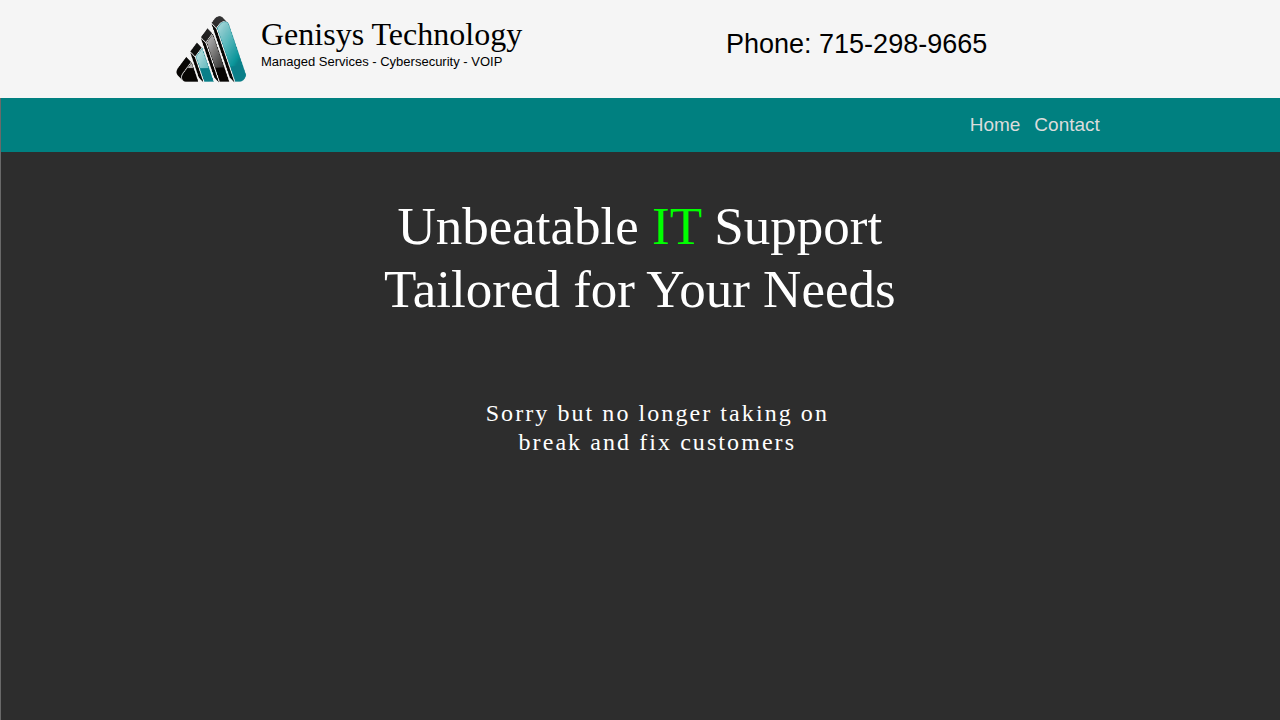
The page includes 4 unexplained ALL-CAPS tokens (IT, VOIP, LLC, WI), which exceeded the allowed threshold in this evaluation. That can make the content feel more jargon-heavy than it needs to be.
Why this matters for AI SEO
When language is easier to parse, AI systems are more likely to interpret it consistently and summarize it cleanly. Unexplained acronyms and shorthand can increase ambiguity.
Next step
Spell out or briefly define acronyms and shorthand so the page reads clearly to both humans and AI.
Does Anything Seem Off?
Thanks for taking our free GEO Grader for a spin. When we started this journey, the tool had a fairly long processing time to check everything we wanted both onsite and offsite, so we made a few adjustments on the backend to speed things up. As a result, there are times when the grader may not get everything 100% right. If something feels off, we recommend running the tool a second time to confirm the results. From there, you’re always welcome to reach out to us to schedule a GEO consultation, or to have your SEO provider validate the findings with a more detailed crawl and manual review.
