
Overview:
On 09/16/26 polarisailabs.com scored 46% — **Below Average** – Overall, the site has some solid fundamentals, but a few key clarity and credibility signals aren’t coming through consistently for AI.
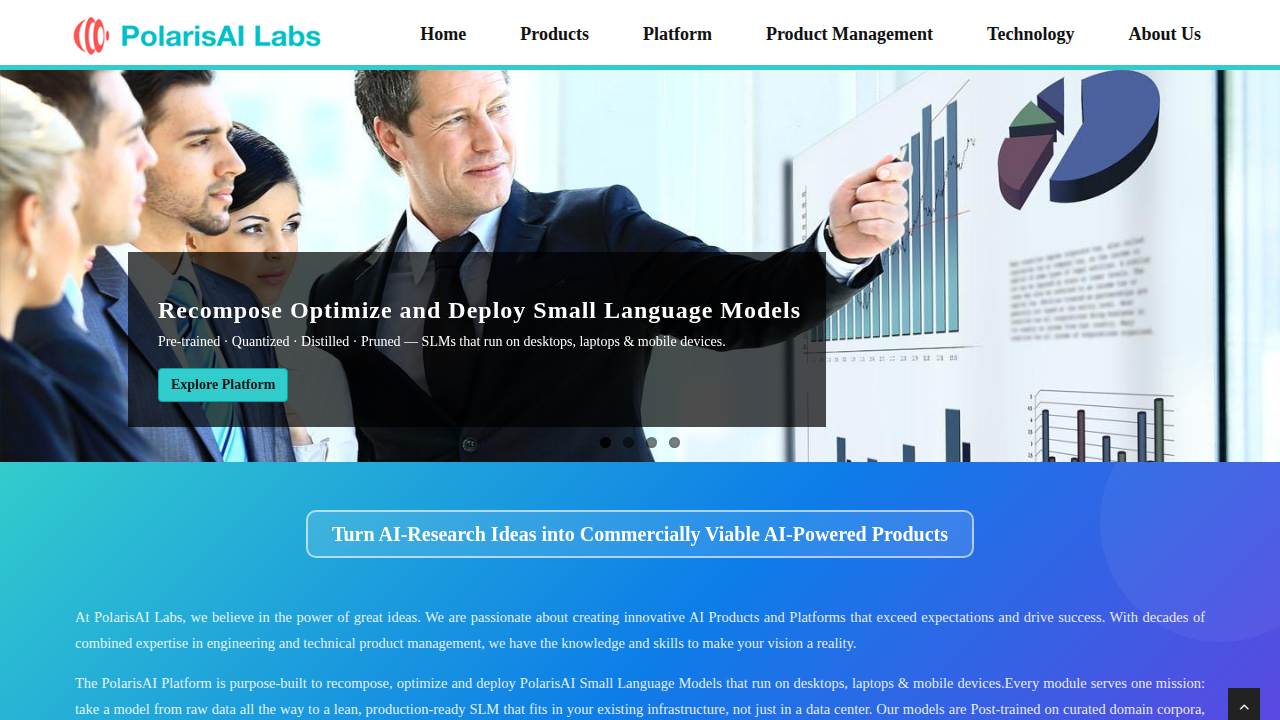
Executive summary
Score Breakdown (High Level)
- Discoverability: 100% - The site's technical foundation for discovery is solid, though it's currently missing specialized sitemaps for media and has an empty meta description.
- Structured Data: 0% - We weren't able to find any schema markup or author details on the site, which makes it harder for AI engines to connect your content to your brand.
- AI Readiness: 67% - The site is technically open to AI discovery and features a well-maintained sitemap, though it currently lacks a formal Wikidata entity for the brand.
- Performance: 50% - The site's mobile performance is generally solid and stable, though the initial loading speed for the main content is currently running a bit slow.
- Reputation: 35% - The brand is recognized by multiple AI models, but the lack of external validation like reviews, press coverage, or active social links creates a significant trust gap.
- LLM-Ready Content: 36% - The site is technically up-to-date and links to high-quality external resources, but the lack of standard heading structures and specific authorship makes it less ready for AI extraction.

The big picture before details
The big takeaway is that the site has a workable baseline, but it’s not consistently sending the strongest signals about identity, credibility, and content structure to AI systems. Most of the gaps are more about clarity and verification than anything being “wrong.” The next section breaks down the specific areas where those signals were missing, grouped by category so it’s easy to scan. None of this is unusual—these are common blind spots, and now you’ve got a clear map of what’s getting in the way.
Detailed Report
Discoverability
❌ Image or video discovery support missing
What we saw
We didn’t find a dedicated way for search engines to consistently pick up and catalog image or video content from the site.
Why this matters for AI SEO
When visual content is harder to discover, it’s less likely to be surfaced and understood as part of your overall brand and topic coverage.
Next step
Add a standard way for your images and/or videos to be systematically discoverable alongside your existing crawlable pages.
Structured Data
❌ Schema markup not present on the homepage
What we saw
We didn’t see any schema markup on the homepage in the evaluated HTML.
Why this matters for AI SEO
Without structured signals, AI systems have to infer what the business is, how the site is organized, and what to trust—often with less consistency.
Next step
Add clear, homepage-level schema that describes the brand and the site’s primary context.
❌ Organization-level structured identity missing
What we saw
No organization-type schema (like an Organization or LocalBusiness block) was found on the homepage.
Why this matters for AI SEO
When brand identity isn’t explicitly stated, it’s harder for AI engines to connect your site to a consistent “who we are” profile across the web.
Next step
Include organization-level structured data that clearly defines the brand’s identity.
❌ Resource/blog page schema could not be evaluated
What we saw
The resource/blog page HTML wasn’t available in the evaluation, so schema presence on that page couldn’t be confirmed.
Why this matters for AI SEO
If structured signals aren’t present (or can’t be verified) on content pages, AI systems may miss important context about the content type, ownership, and reuse-ready details.
Next step
Ensure resource/blog pages include structured data and that they can be reliably evaluated as part of your content footprint.
❌ Schema quality checks couldn’t run
What we saw
Because no schema was detected, there wasn’t anything to validate for completeness or errors.
Why this matters for AI SEO
AI systems benefit most when structured data is not only present, but also consistent and dependable across key pages.
Next step
Add structured data in a way that can be validated for basic completeness and reliability.
❌ Blog/resource author identity wasn’t identifiable
What we saw
The blog/resource page couldn’t be reviewed for a clear, non-generic author, since the page itself wasn’t available in the structured data evaluation.
Why this matters for AI SEO
When author identity isn’t clear, it’s harder for AI engines to assess expertise and attribute content confidently.
Next step
Make author identity clear and consistently attributable on resource/blog content.
❌ No author sameAs identity links detected
What we saw
We didn’t see author schema with identity links (sameAs) in the evaluated data.
Why this matters for AI SEO
Without consistent identity references, AI systems have a harder time connecting an author to a broader footprint of credibility and published work.
Next step
Add consistent author identity references so the author can be recognized beyond a single page.
AI Readiness
❌ No Wikidata entity found for the brand
What we saw
A Wikidata entity for the brand wasn’t found in the evaluated results.
Why this matters for AI SEO
Knowledge graph identifiers help AI systems consistently disambiguate and trust brand identity across different sources.
Next step
Establish a consistent knowledge-graph identity reference for the brand.
Performance
❌ Main page content appears too slowly on mobile
What we saw
The homepage’s primary content took longer than expected to fully appear on mobile.
Why this matters for AI SEO
When key content shows up late, it can reduce how reliably systems capture and interpret the most important on-page information.
Next step
Reduce the time it takes for the homepage’s primary content to appear for mobile visitors.
Reputation
❌ Core identity anchors are missing off-site
What we saw
There was no Wikidata entity found, and there wasn’t a clear, consistent business address signal in the analyzed data.
Why this matters for AI SEO
When identity anchors are incomplete, AI engines have a harder time confirming “this is the same brand” across different sources.
Next step
Strengthen the brand’s off-site identity signals so they reconcile consistently.
❌ Third-party reviews weren’t found
What we saw
No third-party reviews or customer feedback signals were detected.
Why this matters for AI SEO
Independent feedback helps AI systems calibrate trust and understand how the market talks about your brand.
Next step
Build a review footprint that can be independently referenced beyond your own site.
❌ Press mentions weren’t found
What we saw
No press coverage signals were identified in the analyzed data.
Why this matters for AI SEO
Press coverage adds third-party validation that helps AI engines understand prominence and credibility.
Next step
Create a stronger trail of third-party mentions that can be associated with the brand.
❌ Social links appear to be placeholders
What we saw
The homepage social media icons didn’t link to actual profiles.
Why this matters for AI SEO
When social profiles can’t be verified, it removes an easy cross-platform confirmation signal for brand legitimacy and continuity.
Next step
Connect social icons to real, active brand profiles so they can be used for verification.
LLM-Ready Content (Blog Analysis)
Heads up: this section looks at one article as a snapshot, so it’s a little more interpretive than the rest of the report and may shift slightly from run to run. Have questions? Just shoot us an email at hello@v9digital.com
❌ Author attribution is generic
What we saw
The page didn’t show a clear human byline, and the author reference appeared to be a generic placeholder rather than a specific person.
Why this matters for AI SEO
When authorship isn’t clear, it can weaken how confidently AI systems attribute expertise and reuse the content in answers.
Next step
Add a clear, non-generic author attribution that represents a real person.
❌ Content isn’t broken into machine-readable sections
What we saw
The article didn’t include the expected section structure to help systems quickly interpret the content as distinct, scannable chunks.
Why this matters for AI SEO
AI engines rely on clear sectioning to extract the right passages, map key points, and reuse content accurately.
Next step
Restructure the article so it’s clearly divided into logical, consistently labeled sections.
❌ No HTML table found
What we saw
We didn’t find a table element that summarizes key information in a structured format.
Why this matters for AI SEO
Tables can make important details easier for AI systems to extract and represent accurately, especially for comparisons and definitions.
Next step
Add a simple table where it naturally helps summarize or compare the article’s key points.
❌ Descriptive subheadings couldn’t be validated
What we saw
Because the expected section structure wasn’t present, the subheadings couldn’t be evaluated as clear, descriptive signposts.
Why this matters for AI SEO
When subheadings don’t clearly telegraph what’s underneath, AI systems have a harder time locating and reusing the best excerpt for a specific question.
Next step
Use subheadings that clearly describe the takeaway of each section in plain language.
❌ Key answers weren’t surfaced early in sections
What we saw
The lack of the expected section structure meant we couldn’t confirm that key answers or summaries appear early where readers (and AI) look first.
Why this matters for AI SEO
AI systems tend to prioritize content that makes the main answer easy to find quickly, which improves extraction and reduces ambiguity.
Next step
Ensure each section leads with a clear, direct takeaway that can stand on its own.
Does Anything Seem Off?
Thanks for taking our free GEO Grader for a spin. When we started this journey, the tool had a fairly long processing time to check everything we wanted both onsite and offsite, so we made a few adjustments on the backend to speed things up. As a result, there are times when the grader may not get everything 100% right. If something feels off, we recommend running the tool a second time to confirm the results. From there, you’re always welcome to reach out to us to schedule a GEO consultation, or to have your SEO provider validate the findings with a more detailed crawl and manual review.
