
Overview:
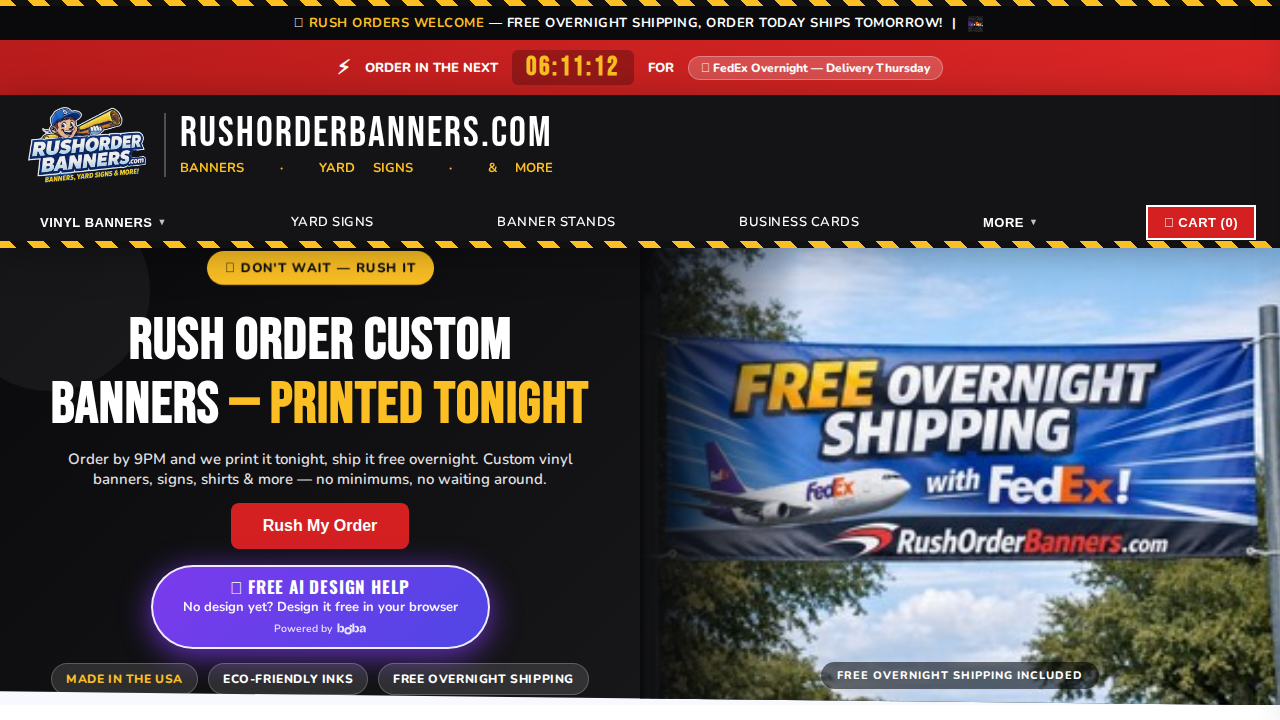
On 10/27/26 rushorderbanners.com scored 61% — **Decent** – Overall, the fundamentals are mostly in place, but a few credibility and content clarity gaps are keeping the site from showing up as strongly as it could in AI-driven results.
Executive summary
Score Breakdown (High Level)
- Discoverability: 83% - Overall, this section looks to be in good shape, though we weren't able to find an image or video sitemap.
- Structured Data: 58% - The homepage features robust and error-free organization schema, but the lack of verifiable author and article markup on a resource page is a notable gap in the site's structured data profile.
- AI Readiness: 67% - The site has a strong technical foundation for AI engines, though it's currently missing a Wikidata entity to help anchor the brand's identity.
- Performance: 67% - Mobile performance is in good shape, with responsiveness and stability metrics all landing safely outside the poor range.
- Reputation: 23% - The brand is widely recognized and has solid review data, but the presence of negative client feedback and a lack of verified identity anchors like Wikidata limit the overall impact of this section.
- LLM-Ready Content: 84% - The site features well-organized content with clear authorship and recent updates, though some section introductions could be more substantial to better serve AI-driven summaries.

The big picture on AI visibility
The main takeaway is that your onsite foundation looks fairly solid, but the site is missing some key signals that help AI systems confidently verify identity and summarize the brand. Most of the gaps read less like “something is wrong” and more like “some important context isn’t fully connected or easy to confirm.” Next, the detailed breakdown walks through the specific areas where visibility and trust signals were missing, unclear, or not verifiable from what we reviewed. None of this is unusual, and it’s the kind of cleanup that tends to make AI-facing results more consistent over time.
Detailed Report
Discoverability
❌ Image or video sitemap missing
What we saw
We didn’t detect an image sitemap or video sitemap. That means your visual assets aren’t being clearly surfaced as their own crawlable set.
Why this matters for AI SEO
AI-driven discovery increasingly pulls from visual results and product imagery, and missing visual discovery signals can reduce how often those assets get found and understood. When visuals are harder to inventory, it can also limit how confidently engines connect images to your products and brand.
Next step
Add a dedicated image (and/or video) sitemap that lists your key visual assets you want indexed.
Structured Data
❌ Resource/blog structured data couldn’t be confirmed
What we saw
We weren’t able to review structured data for a resource or blog page in the provided snapshot. Because that page data wasn’t available, we couldn’t confirm whether it includes content-specific markup.
Why this matters for AI SEO
When informational content doesn’t present clear, machine-readable context, AI systems have to guess more about what the page is and how it should be categorized. That can reduce consistency in how content gets summarized, cited, or matched to intent.
Next step
Ensure your main resource/blog templates include structured data that clearly describes the content type.
❌ Author clarity on resource/blog content wasn’t verified
What we saw
We couldn’t identify a clear, non-generic author for a resource/blog post because the resource/blog page data wasn’t provided for evaluation. As a result, author attribution for informational content wasn’t confirmed.
Why this matters for AI SEO
Author context is a big part of whether AI systems treat informational content as reliable and quotable. If authorship is missing or unclear, engines can be more cautious about using the content to answer questions.
Next step
Make sure each informational piece clearly shows a specific author (not a generic label) and that this is also represented in structured data.
❌ Author identity links (sameAs) weren’t verified
What we saw
We weren’t able to confirm author identity links because author structured data on the resource/blog content couldn’t be validated from the snapshot provided. This left no verified set of authoritative profile references for the author.
Why this matters for AI SEO
Identity links help AI systems connect an author to consistent, real-world profiles, which supports trust and reduces ambiguity. Without that connective tissue, it’s harder for engines to confidently reconcile “who wrote this” across the wider web.
Next step
Add author identity links that point to the author’s official profiles where appropriate.
AI Readiness
❌ No Wikidata entity found for the brand
What we saw
We couldn’t find a Wikidata item ID associated with the brand. This is a common gap, especially for smaller brands, but it means there’s no clear entity reference in that source.
Why this matters for AI SEO
Entity references help AI systems verify brand identity and reduce confusion with similarly named businesses. When this anchor is missing, engines have one less place to confirm “who you are” at a glance.
Next step
Create and/or claim a Wikidata entity for the brand so it can be consistently referenced.
Reputation
❌ Negative customer feedback surfaced in research snapshots
What we saw
We found affirmed negative customer feedback flagged in research snapshots, with themes including delivery delays and product quality issues. This creates a trust headwind in how the brand gets characterized.
Why this matters for AI SEO
Generative engines tend to reflect broad sentiment when summarizing brands, especially when users ask “is this company legit?” or “what are reviews like?” Negative narratives can show up directly in AI answers and influence click-through.
Next step
Audit the recurring complaint themes showing up in third-party feedback so you have a clear handle on what’s being associated with the brand.
❌ Brand recognition across models wasn’t confirmed
What we saw
The report couldn’t confirm that the brand is consistently recognized across multiple models based on the provided packet. That leaves uncertainty around how often the brand is “known” versus treated as unfamiliar.
Why this matters for AI SEO
When brand recognition is inconsistent, AI summaries can be thinner, less confident, or more error-prone. Strong recognition tends to correlate with more stable brand descriptions across answers.
Next step
Collect and centralize the main brand references you expect engines to recognize (official name, domain, and key profile sources) so they’re easy to validate.
❌ Brand identity consistency wasn’t verified
What we saw
We weren’t able to confirm consistent identity details (like official name and address alignment) from the provided reconciliation data. That made it hard to verify a single, consistent brand footprint.
Why this matters for AI SEO
AI systems rely on consistent identifiers to avoid mixing brands, locations, or similarly named entities. If consistency can’t be verified, engines may be more cautious when presenting definitive business details.
Next step
Confirm that your official brand identity details are consistently represented across your main web properties.
❌ Wikidata presence and matching details weren’t verified
What we saw
No matching Wikidata entity was found for the brand, so there was nothing to validate against for identity matching. This also meant official identity anchors within Wikidata couldn’t be confirmed.
Why this matters for AI SEO
A verified entity record can act like a reference point for “this is the official version of this brand.” Without it, engines have fewer independent ways to confirm identity and official attributes.
Next step
Establish a Wikidata entity for the brand and ensure it reflects the brand’s official identity details.
❌ Review source clarity wasn’t confirmed
What we saw
While third-party reviews were noted as existing, the report couldn’t verify that the review sources were captured concretely in the provided packet. That leaves the review landscape less “anchored” in the evaluation output.
Why this matters for AI SEO
AI systems tend to trust and reference reviews more when the sources are clear and consistently attributable. When sources aren’t clearly pinned down, it’s harder for engines to confidently summarize reputation.
Next step
Document the primary review platforms you want associated with the brand so they can be consistently referenced.
❌ Social profile consensus wasn’t verified
What we saw
The evaluation couldn’t confirm a consistent set of major social profiles based on the provided consensus data. That makes the brand’s “official profiles” less clear in the output.
Why this matters for AI SEO
Official social profiles often function as trust and identity references in AI summaries. If engines can’t confidently identify the canonical profiles, they may omit them or, worse, confuse them with unofficial pages.
Next step
Standardize which social profiles are considered official and make sure those are consistently represented wherever the brand is described.
❌ Homepage didn’t verify major social links
What we saw
We didn’t find direct homepage links that clearly point to major social profiles in a way that could be verified for users and crawlers. Social profiles may have been mentioned elsewhere, but they weren’t confirmed through clear homepage linking.
Why this matters for AI SEO
Clear, verifiable links help engines connect your site to your official brand presence across the web. When those connections are hard to validate, identity confidence and trust signals can be weaker.
Next step
Add clear, direct homepage links to the brand’s official social profiles.
❌ Independent press or coverage wasn’t verified
What we saw
The report couldn’t verify independent coverage or press mentions from the fields included in the provided packet. This leaves a gap in third-party validation signals.
Why this matters for AI SEO
Independent coverage can act as an external trust reference that AI systems may lean on when describing legitimacy and notability. When that’s missing or unverified, brand summaries can skew toward only reviews and first-party claims.
Next step
Compile any independent coverage the brand has earned so it can be consistently recognized as part of the brand footprint.
❌ Onsite press or press releases weren’t verified
What we saw
Owned press content (like a press page or press releases) couldn’t be confirmed from the data provided. That means there wasn’t a verified onsite place for announcements or brand milestones.
Why this matters for AI SEO
When AI systems look for authoritative brand background, a dedicated press/updates area can provide clear, dated context they can reference. Without it, brand timelines and claims can be harder to substantiate.
Next step
Create a clear, dedicated place on the site for brand announcements and updates so it’s easy to reference.
LLM-Ready Content (Blog Analysis)
Heads up: this section looks at one article as a snapshot, so it’s a little more interpretive than the rest of the report and may shift slightly from run to run. Have questions? Just shoot us an email at hello@v9digital.com
❌ No table-based content found
What we saw
We didn’t see any table-format content on the evaluated page. That means information that could be naturally summarized in rows/columns wasn’t presented in a highly extractable format.
Why this matters for AI SEO
Tables can make it easier for AI systems to pull precise comparisons, specs, or options without guessing. When everything is in paragraph form, details can be harder to extract cleanly.
Next step
Add a simple table where it naturally fits (for example, options, turnaround times, sizes, or feature comparisons).
❌ Key answers don’t reliably appear early in sections
What we saw
Some sections start with short opening paragraphs that don’t fully answer the obvious question right away. In practice, that can make the “main point” of a section slower to identify.
Why this matters for AI SEO
Generative engines often look for quick, self-contained answers at the start of a content block. If the initial lines are light, the system may pull a less complete summary or skip to another source.
Next step
Rewrite section openings so the first paragraph clearly states the main takeaway in a fuller, more self-contained way.
❌ Acronyms appear without nearby explanations
What we saw
We saw several technical acronyms (like DPI, SSL, EST, RGB, CMYK, PCI) used without quick, plain-English clarification nearby. That can create small comprehension gaps for non-expert readers.
Why this matters for AI SEO
AI systems generally do better when terms are defined in-context, because it reduces ambiguity and improves extraction accuracy. Unexplained acronyms can lead to less confident summaries or slightly off interpretations.
Next step
Add short inline definitions the first time each acronym appears so both humans and AI can follow cleanly.
Does Anything Seem Off?
Thanks for taking our free GEO Grader for a spin. When we started this journey, the tool had a fairly long processing time to check everything we wanted both onsite and offsite, so we made a few adjustments on the backend to speed things up. As a result, there are times when the grader may not get everything 100% right. If something feels off, we recommend running the tool a second time to confirm the results. From there, you’re always welcome to reach out to us to schedule a GEO consultation, or to have your SEO provider validate the findings with a more detailed crawl and manual review.
