
Overview:
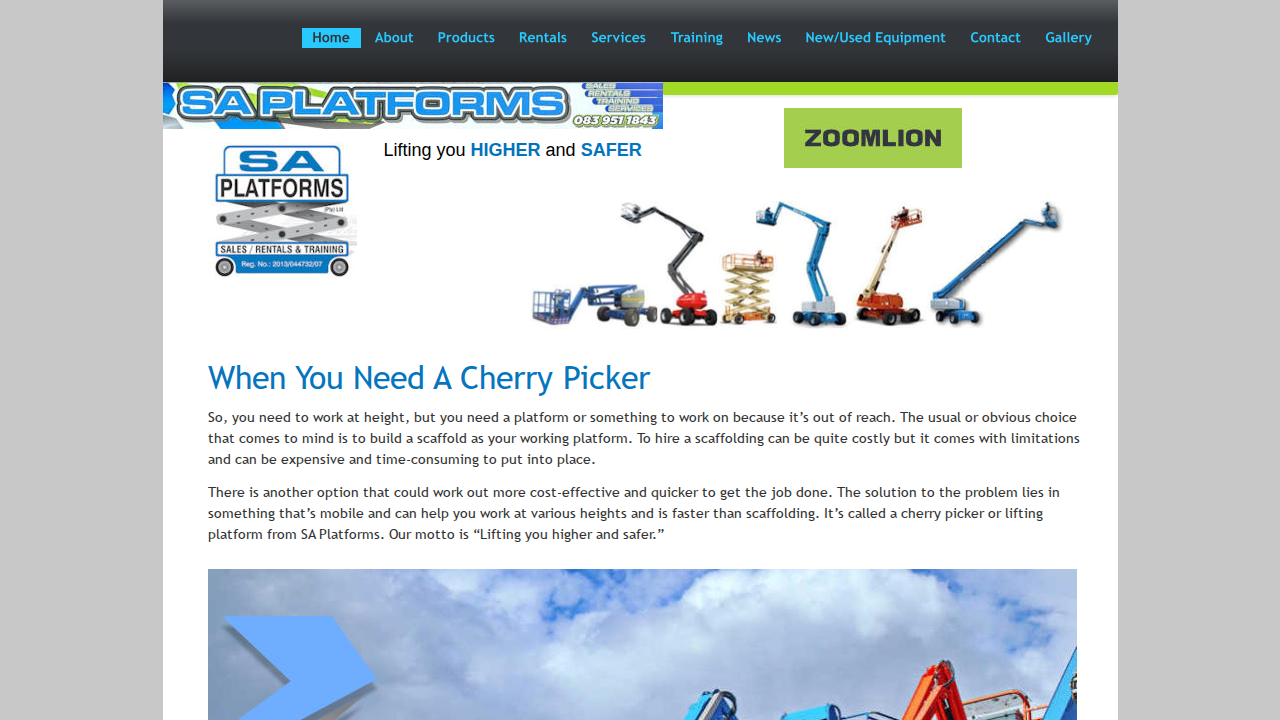
On 10/27/26 saplatforms.co.za/index.htm scored 51% — **Fair** – Overall, the site has some solid fundamentals, but a few key visibility and credibility signals are coming through inconsistently.
Executive summary
Score Breakdown (High Level)
- Discoverability: 100% - The site has a very solid technical foundation for discovery with clear metadata and a healthy crawl status, though it lacks specialized sitemaps for media.
- Structured Data: 0% - We weren't able to find any schema markup or structured data on the pages we reviewed, which is a major gap for search engine visibility.
- AI Readiness: 67% - The site's technical foundation is in great shape with a clean sitemap and open access for AI crawlers, though it's currently missing a formal Wikidata presence.
- Performance: 50% - The homepage loads with great stability and responsiveness, though the initial loading speed for the largest content elements is currently lagging behind the recommended thresholds.
- Reputation: 50% - The brand's digital reputation is currently hindered by significant identity conflicts across search models and a lack of basic offsite signals like social media integration and verified entity records.
- LLM-Ready Content: 44% - The content is frequently updated and well-linked, but the lack of a named author and the very short text sections limit its effectiveness for AI comprehension.

The main takeaway at a glance
The big picture is that your site is generally readable and accessible, but some of the strongest “confidence signals” for AI systems aren’t coming through consistently. Most of what’s missing shows up as clarity gaps—around structured context, consistent brand identity offsite, and how the content is packaged for easy reuse and attribution. The next sections break down the specific areas where those gaps appeared, so you can see exactly what’s getting in the way. None of this is unusual, and it’s all the kind of stuff that can be tightened up with focused updates.
Detailed Report
Discoverability
❌ Missing image/video sitemap support
What we saw
We didn’t find an image sitemap or video sitemap available for the site. That means visual assets don’t have a dedicated feed that helps platforms interpret and surface them.
Why this matters for AI SEO
AI and search experiences increasingly rely on clear, structured signals to understand what media exists and what it represents. When those signals are missing, your photos and videos can be harder to discover and reuse in visual results.
Next step
Add support for an image sitemap and/or video sitemap so your key media assets are easier to find and interpret.
Structured Data
❌ No schema markup detected on the homepage
What we saw
We didn’t detect any valid schema markup on the homepage (no JSON-LD, Microdata, or RDFa). As a result, key business details aren’t being explicitly provided in a machine-friendly format.
Why this matters for AI SEO
When AI systems can’t rely on structured context, they have to infer basics like who the business is and what it does from page text alone. That can lead to weaker understanding and less consistent representation across generative results.
Next step
Add a schema block to the homepage that clearly describes the business.
❌ Organization details not provided in structured form
What we saw
Because there’s no schema markup on the homepage, we also didn’t find organization-type structured data that spells out core identity details in a standardized way.
Why this matters for AI SEO
Organization-level structured details help AI systems connect your site to a specific real-world entity. Without it, it’s easier for business identity and contact context to be interpreted inconsistently.
Next step
Include organization-focused structured data so your brand identity is clearer to AI systems.
❌ Resource/blog page structured data couldn’t be evaluated
What we saw
The resource/blog page HTML was not provided or was empty, so we couldn’t confirm whether any schema markup exists there.
Why this matters for AI SEO
If AI systems can’t reliably extract structured context from content pages, it’s harder for them to summarize, attribute, and reuse that content accurately.
Next step
Make sure the resource/blog page is available for evaluation and includes clear structured context.
❌ Schema error validation couldn’t be performed
What we saw
Since no schema was detected, there wasn’t anything to validate for major schema errors.
Why this matters for AI SEO
Structured data only helps when it’s both present and interpretable. If it’s missing entirely, AI systems lose a consistent, reusable layer of context.
Next step
Add schema markup first, then confirm it’s clean and interpretable.
❌ Author identity not confirmed for a resource/blog post
What we saw
Because the resource/blog page data was missing, we couldn’t identify whether the content has a clear, non-generic author.
Why this matters for AI SEO
Author context helps AI systems understand who is behind a piece of content and whether it should be trusted or cited. When that’s unclear, attribution and credibility signals tend to be weaker.
Next step
Ensure the resource/blog content includes a clear author identity that can be recognized.
❌ Author sameAs identity links not present
What we saw
No author schema was found, so we couldn’t confirm any sameAs links that connect an author to known profiles elsewhere.
Why this matters for AI SEO
When AI systems can connect an author to consistent external identities, it reduces ambiguity and strengthens trust signals around expertise.
Next step
Add author structured details that link the author to consistent external profiles.
AI Readiness
❌ No Wikidata entity found for the brand
What we saw
We didn’t find a Wikidata entry for the brand (the Wikidata item ID was empty). That means there isn’t a widely-used public entity reference point tied to the business.
Why this matters for AI SEO
AI systems often lean on trusted entity databases to confirm “who’s who.” Without that anchor, brand identity can be easier to confuse or misattribute across generative experiences.
Next step
Create and/or claim a Wikidata entity for the brand so AI systems have a clearer identity reference.
Performance
❌ Main content loads too slowly on mobile
What we saw
The main content took too long to fully appear on mobile, based on the Largest Contentful Paint result observed for the homepage.
Why this matters for AI SEO
When pages feel slow to deliver the primary content, fewer users (and some systems) reach the point where they can actually consume and trust what’s on the page. That can reduce how consistently your content gets used as a source.
Next step
Reduce the time it takes for the homepage’s primary content to render on mobile.
Reputation
❌ Brand identity is inconsistent across AI/search sources
What we saw
The reconciled results show disagreement about the brand’s core identity, including conflicting descriptions and mismatched identifying details.
Why this matters for AI SEO
If systems can’t agree on who you are, they’re less likely to confidently surface your site for the right searches—or they may describe the business inaccurately when they do.
Next step
Standardize your brand identity details across the places AI systems commonly reference.
❌ No Wikidata identity anchor
What we saw
No matching entity was found in Wikidata, leaving the brand without a widely-recognized structured reference point.
Why this matters for AI SEO
Wikidata often acts like an “identity shortcut” for AI systems trying to confirm an entity quickly. Without it, identity confusion is more likely to persist.
Next step
Establish a Wikidata entry so your brand has a consistent external identity anchor.
❌ Social presence isn’t clearly connected to the site
What we saw
The homepage doesn’t link out to major social platforms, and the available signals don’t consistently confirm official profiles.
Why this matters for AI SEO
Clear social profile connections help AI systems corroborate that a brand is real, active, and consistently represented. When that connection is missing, trust and identity verification can be weaker.
Next step
Add clear, direct links from the homepage to the brand’s official social profiles.
❌ Press and coverage signals weren’t confirmed
What we saw
We weren’t able to confirm independent press mentions or a consistent owned press history from the data provided.
Why this matters for AI SEO
Third-party mentions help AI systems validate that a brand is established and accurately described outside its own website. When those references aren’t clear, reputation signals tend to be thinner.
Next step
Collect and surface verifiable press or coverage references that independently describe the business.
LLM-Ready Content (Blog Analysis)
Heads up: this section looks at one article as a snapshot, so it’s a little more interpretive than the rest of the report and may shift slightly from run to run. Have questions? Just shoot us an email at hello@v9digital.com
❌ Author is missing or too generic
What we saw
No specific person or clear editorial entity was identified as the author for the content. The only attribution we saw was a web design firm credit.
Why this matters for AI SEO
AI systems look for clear ownership and accountability when deciding what to trust and reuse. When authorship is vague, it can reduce confidence in citing or summarizing the content.
Next step
Add a clear, non-generic author (person or editorial team) that owns the content.
❌ Sections are too thin to build context
What we saw
The content is split into very short sections, with average section length well below what AI systems typically need to form a complete understanding.
Why this matters for AI SEO
Short, fragmented blocks can make it harder for AI to extract accurate answers with enough supporting detail. That often leads to weaker summaries and less reliable reuse.
Next step
Expand the main sections so each one provides enough detail to stand on its own.
❌ No table-based content detected
What we saw
We didn’t detect a content-bearing HTML table on the page.
Why this matters for AI SEO
Tables can make key comparisons and specs easier for AI to extract cleanly and present accurately. Without that structure, important details may be harder to pull out consistently.
Next step
Add a simple table where it naturally helps summarize key options, specs, or comparisons.
❌ Subheadings aren’t descriptive enough
What we saw
Many subheadings were very short or generic labels, rather than clearly stating what the next section answers or covers.
Why this matters for AI SEO
AI systems rely heavily on headings to understand structure and to map sections to specific questions. Generic headings can lead to weaker extraction and less precise summaries.
Next step
Rewrite section headings so they clearly describe the specific topic or question each section addresses.
Does Anything Seem Off?
Thanks for taking our free GEO Grader for a spin. When we started this journey, the tool had a fairly long processing time to check everything we wanted both onsite and offsite, so we made a few adjustments on the backend to speed things up. As a result, there are times when the grader may not get everything 100% right. If something feels off, we recommend running the tool a second time to confirm the results. From there, you’re always welcome to reach out to us to schedule a GEO consultation, or to have your SEO provider validate the findings with a more detailed crawl and manual review.
