
Overview:
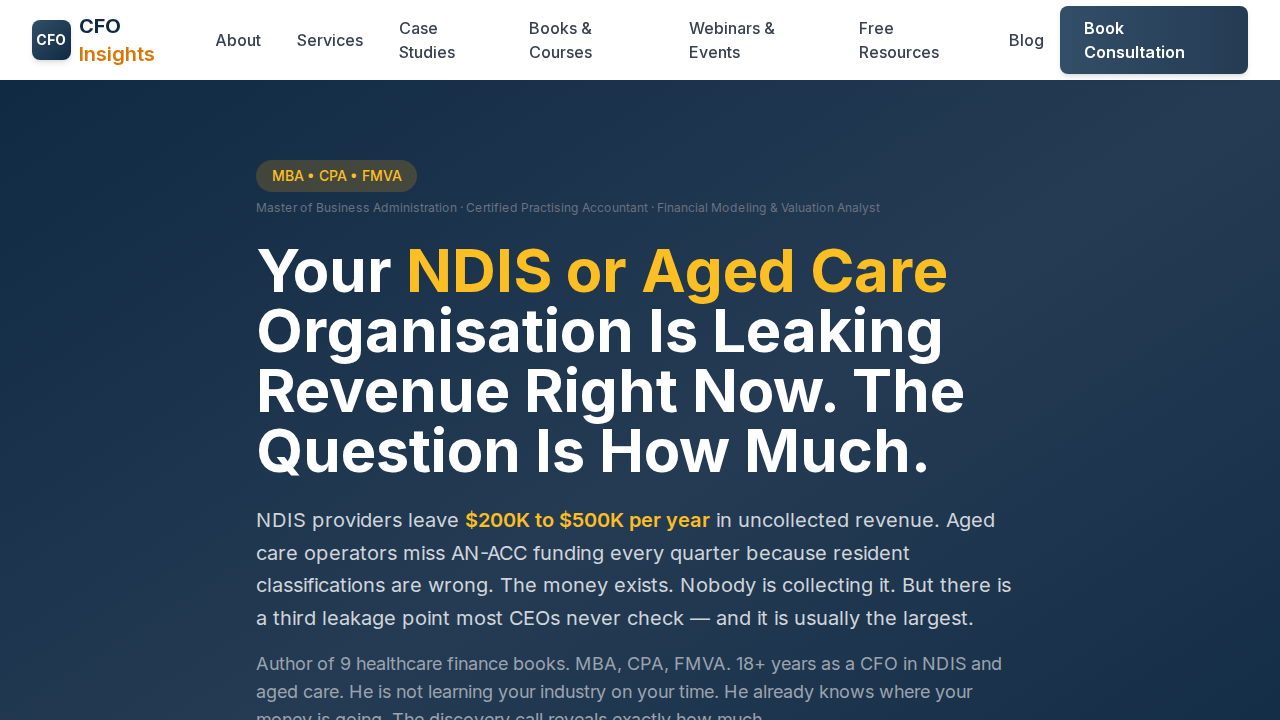
On 04/22/26 cfoinsights.au/ scored 62% — **Decent** – Overall, the site looks solid for AI visibility, with a few noticeable gaps around deeper content signals and external credibility.
Executive summary
Score Breakdown (High Level)
- Discoverability: 100% - The site’s basic discoverability is in great shape with a solid technical setup, though adding an image or video sitemap would help round things out.
- Structured Data: 58% - The homepage has excellent organization and personal schema in place, though we weren't able to verify if that same level of detail is being applied to individual blog posts or resource pages.
- AI Readiness: 67% - The site's technical foundation is in great shape with accessible sitemaps and open crawl paths, though we didn't see an external Wikidata entity for the brand.
- Performance: 67% - Mobile performance is in excellent shape, with the homepage delivering top-tier speed and a perfectly stable layout.
- Reputation: 58% - The brand has a strong foundation with high AI recognition and a clean record, but it currently lacks the third-party reviews and consistent address data needed to maximize authority signals.
- LLM-Ready Content: 44% - The site demonstrates strong professional authority through its author profile and external links, but it lacks the specific dates and structured data elements that help AI systems parse and trust information more effectively.

Where things feel less verified
The big picture is that your core foundation reads well, but a few signals that help AI fully verify and contextualize the brand and its content are coming through as incomplete. None of this looks like a “problem” so much as missing confirmation points that make it harder for systems to be fully confident. The sections below walk through the specific areas where the evaluation couldn’t find what it needed, grouped by category. Once those gaps are clearer, the overall story the site tells becomes much easier for AI to trust and repeat.
Detailed Report
Discoverability
❌ Image or video sitemap not found
What we saw
We didn’t find an image sitemap or a video sitemap in the information provided. This means media content may not be as clearly surfaced for discovery as it could be.
Why this matters for AI SEO
AI systems often rely on clear, consistent discovery signals to understand and re-use a site’s assets confidently. When media isn’t well-signposted, it can be easier for important visuals or videos to get overlooked.
Next step
Add a dedicated image and/or video sitemap so your media assets are easier to discover and interpret.
Structured Data
❌ Structured data on resource/blog page couldn’t be confirmed
What we saw
The resource/blog page file used for this review was missing or empty, so we couldn’t verify whether structured data is present on deeper content pages. As a result, the signals that typically help clarify what an article is (and who it’s for) weren’t observable.
Why this matters for AI SEO
AI engines do better when they can consistently interpret not just the homepage, but also the content that answers specific questions. If those deeper pages aren’t clearly described, it can reduce confidence in how the content should be categorized and cited.
Next step
Make sure your resource/blog pages are accessible for evaluation and include clear structured data that describes the page and its content.
❌ Blog post author wasn’t identifiable
What we saw
Because the resource/blog page content wasn’t available, we couldn’t identify a clear, non-generic author for that post. That leaves a key credibility detail unconfirmed at the article level.
Why this matters for AI SEO
AI systems lean heavily on authorship to judge expertise and context, especially for informational content. When the author isn’t clearly tied to a piece, the content can be harder to trust and summarize accurately.
Next step
Ensure each resource/blog post clearly names a real author and that the author information is consistently presented.
❌ Author sameAs links couldn’t be verified
What we saw
We couldn’t verify whether the author includes sameAs profile links because the resource/blog page data wasn’t available. This leaves the author’s identity less anchored across the wider web.
Why this matters for AI SEO
AI engines are more confident when they can reconcile an author to consistent, external profiles. Without those confirmations, it’s easier for an author identity to be treated as ambiguous.
Next step
Add and confirm author profile references that connect the author to their established public profiles.
AI Readiness
❌ No Wikidata entity found for the brand
What we saw
We didn’t find a verified Wikidata record associated with this domain in the provided data. In other words, there wasn’t a clear knowledge-graph style entity reference to confirm the brand.
Why this matters for AI SEO
AI experiences often use entity records to confirm “who is who” and reduce ambiguity about a brand. When that anchor is missing, it can make identity reconciliation less certain across different AI surfaces.
Next step
Create and verify an official Wikidata entity for the brand so AI systems have a stable reference point.
Reputation
❌ Brand identity details weren’t fully consistent
What we saw
The brand name and domain appeared consistent, but the data showed a conflict between two different Sydney addresses (Lime Street vs. York Street). That inconsistency makes it harder to land on one “confirmed” business identity.
Why this matters for AI SEO
AI systems look for consensus across sources to verify a real-world organization. When key identity details don’t line up, it can reduce confidence in the brand profile and what information should be treated as authoritative.
Next step
Standardize the official business address across the web so third-party sources align on one consistent location.
❌ Wikidata presence for the brand was missing
What we saw
No Wikidata entity was found for the brand in the reconciled data. This leaves a notable gap in long-term, third-party identity anchoring.
Why this matters for AI SEO
Wikidata is one of the clearer public references AI systems can use to confirm entity identity. Without it, brand verification can rely more heavily on less consistent signals.
Next step
Establish a Wikidata entity that matches the brand’s official identity.
❌ Official identity anchors on Wikidata couldn’t be confirmed
What we saw
Because a Wikidata entity wasn’t found, we couldn’t confirm the presence of official identity anchors there. That means key “official” confirmations weren’t available in that channel.
Why this matters for AI SEO
When AI engines can tie an entity to official anchors, it strengthens trust and reduces confusion with similarly named organizations. Missing anchors can make the brand’s reference footprint feel thinner than it needs to be.
Next step
Add official identity anchors to the brand’s Wikidata entity so it clearly maps back to the real organization.
❌ Third-party reviews or customer feedback weren’t clearly established
What we saw
We didn’t find a clear consensus that verified customer reviews exist for the brand in the provided data. One model suggested possible sources, but most did not confirm them.
Why this matters for AI SEO
Independent feedback helps AI systems gauge legitimacy and real-world experience beyond what a brand says about itself. When reviews aren’t clearly verifiable, trust signals can feel less complete.
Next step
Build a stronger, verifiable footprint of third-party customer feedback that AI systems can consistently recognize.
❌ Review sources weren’t concrete enough to verify
What we saw
Even where reviews may exist, the sources weren’t consistently identifiable in a way that could be confirmed across the data. That makes the review story feel uncertain from an external perspective.
Why this matters for AI SEO
AI systems prefer sources that are stable, specific, and easy to reference. If review sources are vague or inconsistent, the signal is less likely to be trusted or surfaced.
Next step
Ensure review sources are clearly attributable and consistently discoverable as independent references.
❌ Independent press or offsite coverage wasn’t found
What we saw
We weren’t able to identify independent, offsite press mentions or media coverage for the brand in the provided packet. That leaves a gap in third-party authority signals.
Why this matters for AI SEO
Independent coverage gives AI systems external validation that a brand is recognized beyond its own channels. Without it, visibility can skew toward owned sources only.
Next step
Secure and document independent coverage that provides third-party references to the brand.
LLM-Ready Content (Blog Analysis)
Heads up: this section looks at one article as a snapshot, so it’s a little more interpretive than the rest of the report and may shift slightly from run to run. Have questions? Just shoot us an email at hello@v9digital.com
❌ No publish or update date was found
What we saw
No visible publish date or “last updated” date was identified in the page content or metadata. That makes it hard to tell when the page was written or refreshed.
Why this matters for AI SEO
AI systems often look for clear timeliness cues when deciding how to summarize or prioritize information. When dates are missing, content can look less verifiable or less current than it actually is.
Next step
Add a clear publish date and/or last-updated date that’s visible on the page.
❌ Freshness couldn’t be confirmed within the last year
What we saw
No explicit modification date was found that would confirm the content was updated within the last 12 months. As a result, freshness is unclear from the signals available.
Why this matters for AI SEO
When AI can’t confirm recency, it may be more cautious about treating the content as current—especially in topics where guidance and best practices evolve. Clear freshness signals help reduce that uncertainty.
Next step
Make the page’s most recent update date easy to identify and consistent.
❌ One section was too long to scan cleanly
What we saw
The FAQ section was very long (over the limit used in this evaluation), which makes the content feel less “chunked” and harder to parse quickly. This can reduce clarity when someone (or something) is trying to extract direct answers.
Why this matters for AI SEO
AI systems tend to do best when content is broken into smaller, clearly separated sections that map to distinct questions or topics. When a section runs long, it increases the chance that key points get blended together or missed.
Next step
Break the long FAQ section into smaller, clearly separated sections so each part focuses on one tight idea.
❌ No table-based structure was detected
What we saw
No HTML table elements were detected on the page. That means there wasn’t an at-a-glance structure for comparing options, summarizing criteria, or presenting structured reference info.
Why this matters for AI SEO
When information is presented in clearly structured formats, it’s often easier for AI to extract, restate, and validate. Without that structure, important details may remain buried in narrative text.
Next step
Where it fits naturally, add a simple table to present key comparisons or summaries in a clearly structured way.
Does Anything Seem Off?
Thanks for taking our free GEO Grader for a spin. When we started this journey, the tool had a fairly long processing time to check everything we wanted both onsite and offsite, so we made a few adjustments on the backend to speed things up. As a result, there are times when the grader may not get everything 100% right. If something feels off, we recommend running the tool a second time to confirm the results. From there, you’re always welcome to reach out to us to schedule a GEO consultation, or to have your SEO provider validate the findings with a more detailed crawl and manual review.
