
Overview:
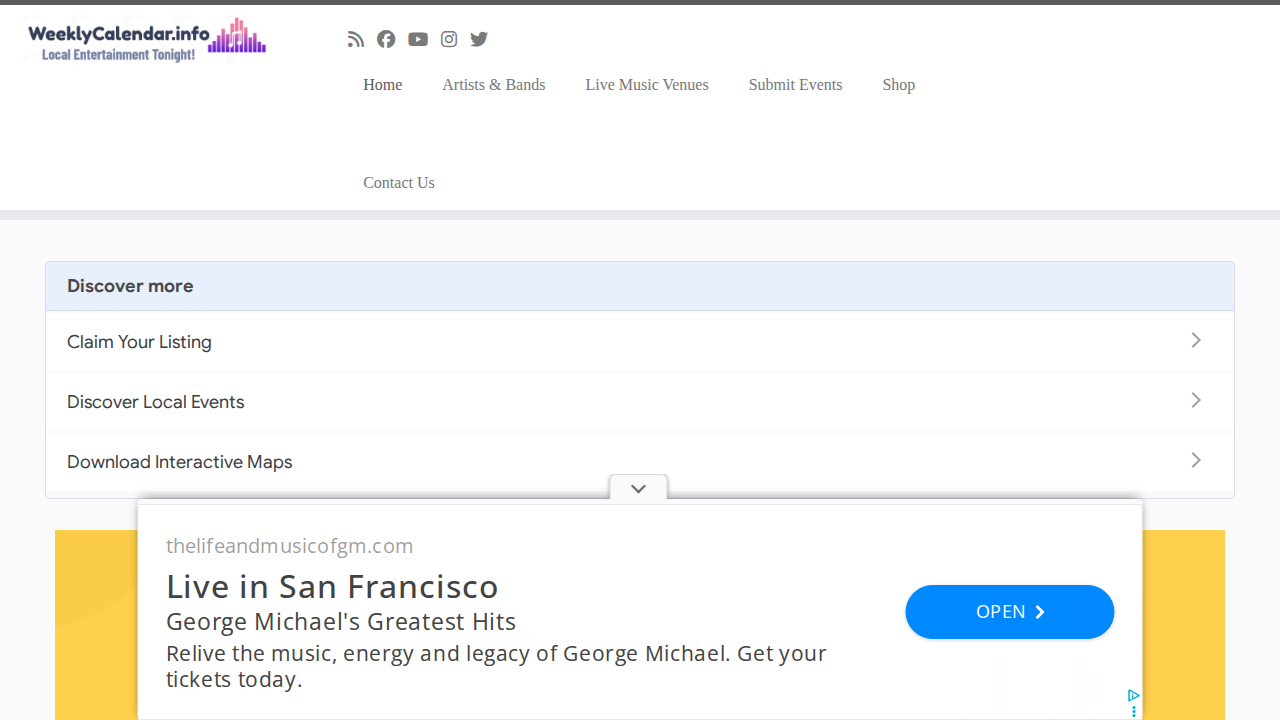
On 09/20/26 weeklycalendar.info/ scored 55% — **Fair** – Overall, the site has a workable foundation for AI visibility, but a few clarity and credibility gaps are making it harder for systems to confidently understand and validate the brand.
Executive summary
Score Breakdown (High Level)
- Discoverability: 92% - The site is in great shape for discovery with a solid XML sitemap and clear metadata, though it’s currently missing a dedicated sitemap for images.
- Structured Data: 67% - The site successfully uses valid event-specific schema and clear authorship, but lacks the organization-level markup needed to fully define the brand entity.
- AI Readiness: 50% - While your sitemap and crawler access are in great shape, the lack of an 'About' page and a Wikidata presence makes it harder for AI engines to verify your brand's identity.
- Performance: 50% - The site is quick to respond to interactions, but it suffers from very slow visual loading and high layout instability on mobile devices.
- Reputation: 46% - The brand is generally well-regarded with no negative signals and good social linking, but it lacks the external validation from reviews, press, and Wikidata that search engines look for to establish high trust.
- LLM-Ready Content: 48% - The page does a good job with authorship and freshness, but the lack of multiple subheadings and chunked sections makes it harder for AI to extract specific answers.

The main takeaway before the details
What stands out most is that the site has strong event-focused information, but some core brand and credibility signals aren’t coming through clearly to AI systems. A lot of this isn’t “wrong,” it’s just missing context that helps engines confirm who you are and confidently reuse what you publish. The sections below walk through the specific areas where clarity drops—across identity/trust, page experience, and how the resource content is structured. None of it is unusual for an event-heavy site, and it’s all understandable once you see it laid out.
Detailed Report
Discoverability
❌ No image or video sitemap detected
What we saw
We didn’t find an image sitemap or video sitemap available in the site data.
Why this matters for AI SEO
For sites that lean heavily on visual content, missing these supporting signals can make it harder for engines to fully understand and surface visual assets in AI-driven results.
Next step
Create and publish an image and/or video sitemap that reflects the site’s key visual content.
Structured Data
❌ Missing organization-level structured data on the homepage
What we saw
No structured data using an organization-type (like Organization or LocalBusiness) was detected on the homepage.
Why this matters for AI SEO
Without a clear, top-level “who we are” signal, generative engines may struggle to connect the site’s content to a single, well-defined brand entity.
Next step
Add organization-level structured data on the homepage so the brand is clearly defined beyond individual event listings.
❌ Author structured data missing profile links
What we saw
An author is referenced, but we didn’t see an author/person structured data block that includes “sameAs” links to external profiles.
Why this matters for AI SEO
When author identity isn’t easy to verify, AI systems have fewer confidence signals to rely on when deciding whether to trust and reuse content.
Next step
Add author/person structured data that includes “sameAs” links pointing to the author’s verified external profiles.
AI Readiness
❌ No clear “About” or brand context page found from the homepage
What we saw
We didn’t find an internal link on the homepage that clearly points to an About/Company/Team-style page.
Why this matters for AI SEO
If a site doesn’t clearly explain who’s behind it, generative engines have a harder time building confidence in the brand and contextualizing the content.
Next step
Add a clearly labeled About/Company/Team page and ensure it’s easy to reach from the homepage.
❌ No Wikidata entity found for the brand
What we saw
No Wikidata item ID was found for this brand.
Why this matters for AI SEO
Without a recognized entity reference, it can be harder for generative engines to verify the brand as distinct and consistently defined across the broader web.
Next step
Establish a Wikidata entity for the brand so it has a stable, verifiable identity reference.
Performance
❌ Main content takes too long to appear on the homepage
What we saw
The primary content on the homepage took a long time to load and become visible.
Why this matters for AI SEO
When key content is slow to appear, engines and users may get an incomplete or delayed view of the page, which can reduce how reliably the page is understood and surfaced.
Next step
Improve how quickly the homepage’s main content becomes visible, especially on mobile.
❌ Homepage layout shifts noticeably while loading
What we saw
The page layout moved around significantly as elements loaded.
Why this matters for AI SEO
A shifting layout makes it harder to reliably interpret what content is most important and can weaken the overall experience signals that AI systems factor in.
Next step
Stabilize the homepage layout so content stays in place as the page loads.
❌ Main content takes too long to appear on the resource/blog page
What we saw
The resource/blog page’s primary content also took a long time to load and become visible.
Why this matters for AI SEO
If informational content is slow to show up, it’s harder for engines to quickly extract and trust the page’s key takeaways.
Next step
Improve how quickly the resource/blog page’s main content becomes visible, especially on mobile.
❌ Resource/blog page layout shifts noticeably while loading
What we saw
The resource/blog page showed significant layout movement during load.
Why this matters for AI SEO
When the page structure isn’t stable, it can be harder for systems to consistently identify and prioritize the main sections and answers.
Next step
Stabilize the resource/blog page layout so the reading experience is consistent from the start.
Reputation
❌ Brand identity details aren’t consistently established
What we saw
The brand’s physical address wasn’t present in the available data, and the official name didn’t show strong consistency across sources.
Why this matters for AI SEO
When basic identity details are fuzzy, generative engines have a harder time confirming the brand as a real, grounded entity.
Next step
Make sure the brand’s official name and physical address are clearly stated in public-facing brand references.
❌ No Wikidata match or identity anchors
What we saw
No Wikidata entry was found for the brand, and there were no Wikidata anchors tying the entity to official identifiers.
Why this matters for AI SEO
Without a stable, third-party identity reference, it’s harder for AI systems to reconcile the brand confidently across the web.
Next step
Create and connect a Wikidata entity that includes the brand’s official website and identifiers.
❌ No third-party reviews detected
What we saw
We didn’t find evidence of consumer reviews tied to the brand, and no concrete review sources were identified.
Why this matters for AI SEO
Without independent feedback, AI systems have fewer outside signals to validate reputation beyond what the brand says about itself.
Next step
Build a review footprint on reputable third-party platforms that can be referenced consistently.
❌ Offsite social profile verification isn’t clear
What we saw
Even though social links exist on the site, the offsite data didn’t show a verified consensus on the brand’s social profiles.
Why this matters for AI SEO
If profiles can’t be confidently matched to the brand, AI systems may treat them as weaker trust signals.
Next step
Strengthen offsite consistency so the brand’s official social profiles are easier to verify across sources.
❌ No independent press coverage found
What we saw
No independent media mentions were identified in the reconciled data.
Why this matters for AI SEO
Independent coverage is one of the stronger credibility signals for generative engines because it provides external validation and context.
Next step
Develop a track record of independent mentions that clearly reference the brand and what it does.
❌ No owned press or newsroom content detected
What we saw
We didn’t see evidence of owned press releases or a newsroom-style section.
Why this matters for AI SEO
When there’s no central place for official updates, it’s harder for engines to find definitive, brand-approved statements and milestones.
Next step
Publish a dedicated area for official announcements that can be referenced as the brand’s source of record.
LLM-Ready Content (Blog Analysis)
Heads up: this section looks at one article as a snapshot, so it’s a little more interpretive than the rest of the report and may shift slightly from run to run. Have questions? Just shoot us an email at hello@v9digital.com
❌ Content isn’t broken into clear, scannable sections
What we saw
The page couldn’t be parsed into multiple readable sections because it only included a single H2 heading.
Why this matters for AI SEO
When content isn’t naturally sectioned, AI systems have a harder time pulling out specific, reusable answers and associating them with clear subtopics.
Next step
Rework the article structure so it’s divided into multiple clearly labeled sections.
❌ No table-based summary found
What we saw
No HTML table was present in the content.
Why this matters for AI SEO
Tables can make key details easier to extract and reuse, especially for schedules, comparisons, and quick-look references.
Next step
Add a simple table where it would naturally help summarize key information from the page.
❌ Subheadings aren’t descriptive enough to evaluate
What we saw
Because the page structure didn’t include enough major sections, the subheading descriptiveness check couldn’t be meaningfully assessed.
Why this matters for AI SEO
Clear, descriptive subheadings help AI systems understand what each section is about and where to pull answers from.
Next step
Add more descriptive subheadings that make each section’s purpose obvious at a glance.
❌ Key answers early in the page couldn’t be confirmed
What we saw
With only one major section detected, the evaluation couldn’t verify whether the most important answers are surfaced early in the content.
Why this matters for AI SEO
If the main takeaways aren’t easy to find quickly, generative engines may miss or underweight what the page is actually trying to answer.
Next step
Make sure the page’s main takeaways are stated clearly near the top and reinforced in well-labeled sections.
❌ Several acronyms appear without nearby explanations
What we saw
The content included multiple acronyms (like VFW, RSS, ICS, GMT, and UTC) without nearby definitions.
Why this matters for AI SEO
Unexplained shorthand can reduce clarity, which makes it harder for AI systems (and readers) to confidently interpret and reuse the content.
Next step
Add brief expansions or definitions the first time each acronym appears.
Does Anything Seem Off?
Thanks for taking our free GEO Grader for a spin. When we started this journey, the tool had a fairly long processing time to check everything we wanted both onsite and offsite, so we made a few adjustments on the backend to speed things up. As a result, there are times when the grader may not get everything 100% right. If something feels off, we recommend running the tool a second time to confirm the results. From there, you’re always welcome to reach out to us to schedule a GEO consultation, or to have your SEO provider validate the findings with a more detailed crawl and manual review.
