
Overview:
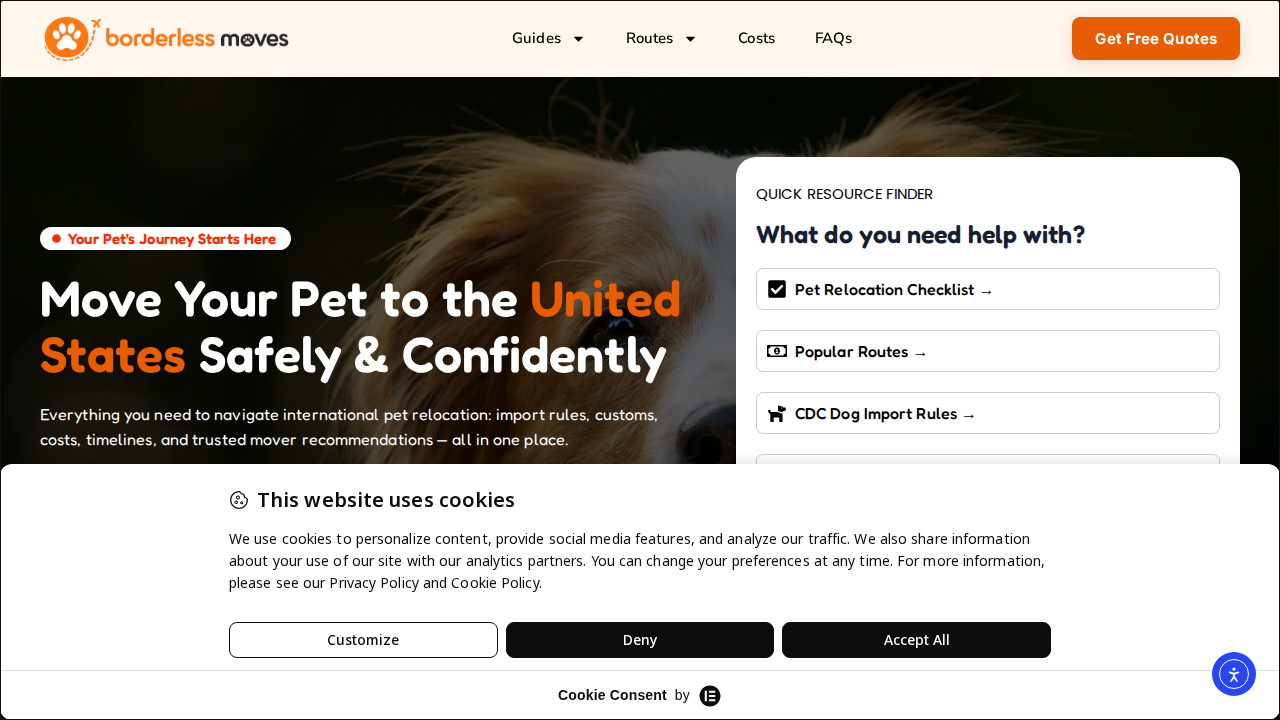
On 07/28/26 borderlessmoves.com scored 43% — **Below Average** – Overall, the site has some solid fundamentals, but a few key gaps are making it harder for AI systems to confidently understand and validate the brand.
Executive summary
Score Breakdown (High Level)
- Discoverability: 100% - Discoverability is generally solid, with all technical crawl signals passing, although the lack of specialized sitemaps for images or video is a minor gap.
- Structured Data: 58% - The site has a solid foundation with error-free organization schema on the homepage, but we weren't able to confirm any authorship or article-level details because no resource pages were available for analysis.
- AI Readiness: 50% - The site has a solid technical foundation for AI crawlers, but it's missing the internal brand links and Wikidata presence needed to establish strong identity and authority.
- Performance: 50% - Mobile performance generally landed outside the 'poor' range, though the main page content takes a bit too long to fully load.
- Reputation: 0% - We weren't able to confirm the site's reputation signals because the structured brand data was missing and the social profiles mentioned in the footer aren't actually linked.
- LLM-Ready Content: 44% - The page is highly organized and recently updated, but it lacks external citations and uses a generic system-generated author profile.

The big picture before the details
What stands out most is that the site is generally easy to find and navigate, but it’s not sending enough consistent signals that help AI systems confidently validate the brand and reuse the content. A lot of what’s showing up here isn’t “wrong” so much as unclear or hard to confirm, especially around reputation and credibility. The breakdown below walks through the specific areas where the evaluation couldn’t find what it needed, section by section. Once you see those gaps in plain English, the path to tightening things up tends to feel pretty straightforward.
Detailed Report
Discoverability
❌ Missing image/video discovery support
What we saw
We didn’t find an image sitemap or a video sitemap in the site data we reviewed. That makes it harder to confirm that visual content is being consistently surfaced and understood.
Why this matters for AI SEO
AI systems often lean on strong content discovery signals to find and reuse the most relevant assets. When visual content is harder to discover, it’s less likely to show up in AI-driven results and summaries.
Next step
Create and publish dedicated image and/or video discovery files and make sure they’re available alongside your existing site discovery setup.
Structured Data
❌ Content-page structured data couldn’t be confirmed
What we saw
No resource or blog page was provided for review, so we couldn’t verify whether content pages include the same kind of structured clarity as the homepage. As a result, this part of the evaluation was treated as missing.
Why this matters for AI SEO
AI engines don’t just evaluate the brand—they also evaluate individual articles and guides. If content pages don’t clearly describe what they are (and who created them), they’re less likely to earn visibility and trust on their own.
Next step
Provide (or validate) a representative blog/resource URL so the content-page signals can be properly assessed and consistently supported.
❌ No clear, non-generic author on content pages
What we saw
Because no resource/blog page was included, we weren’t able to confirm that posts show a clear, specific author name rather than something generic. This left authorship signals unverified.
Why this matters for AI SEO
When authorship is unclear, it’s harder for AI systems to treat a piece of content as attributable to a real expert or accountable publisher. That can reduce confidence in using the content as a reference.
Next step
Ensure blog/resource pages clearly identify a real author (person or editorial team) in a consistent, human-readable way.
❌ Author identity links weren’t verifiable
What we saw
Since author details on a resource/blog page weren’t available to review, we couldn’t confirm whether the author includes any verifiable identity references. This makes the author harder to validate.
Why this matters for AI SEO
AI systems tend to trust authors more when they can connect them to consistent, corroborating identity signals. Without those, content can be treated as less attributable.
Next step
Add verifiable identity references for authors where appropriate so their presence is easier to confirm across the web.
AI Readiness
❌ Brand context page wasn’t discoverable from the homepage
What we saw
We didn’t see a clear internal link from the homepage that points to an About/Company-style page. That makes basic brand context harder to confirm quickly.
Why this matters for AI SEO
AI engines look for clear, easy-to-find context to understand who you are and what you do. When that context isn’t obvious, it can weaken confidence in brand-level summaries and recommendations.
Next step
Make sure there’s a clearly labeled internal path from the homepage to a page that explains the organization and its background.
❌ No Wikidata entity found for the brand
What we saw
A Wikidata item ID wasn’t found for the brand in the evaluation. That suggests the brand isn’t currently represented there in a way that’s easy to validate.
Why this matters for AI SEO
Many AI systems rely on well-known entity sources to disambiguate brands and connect them to consistent identity signals. Without that kind of entity reference, brand recognition can be less stable.
Next step
Confirm whether the brand has an accurate Wikidata entry and, if not, establish one that matches your official identity.
Performance
❌ Main content loads slowly on mobile
What we saw
On mobile, the largest primary content element on the homepage took about 5.4 seconds to fully appear. This indicates the initial “I can see the main thing” moment is slower than ideal.
Why this matters for AI SEO
Slower load experiences can reduce engagement and make it harder for both users and automated systems to reliably access the content quickly. Over time, that can limit how consistently your pages get surfaced.
Next step
Prioritize reducing the time it takes for the primary above-the-fold content to fully render on mobile.
Reputation
❌ Negative-sentiment checks weren’t verifiable
What we saw
In the information reviewed, we didn’t have enough structured reputation data to confirm whether there are (or aren’t) any meaningful negative client or employee narratives associated with the brand. This portion came back as unverified.
Why this matters for AI SEO
When AI systems can’t confidently validate overall sentiment, they tend to be more cautious in how strongly they recommend or summarize a brand. That uncertainty can limit visibility.
Next step
Gather and standardize the brand’s reputation and sentiment signals so they can be consistently validated.
❌ Brand recognition wasn’t confirmed
What we saw
The report packet didn’t include confirmation that the brand is consistently recognized across multiple AI systems. As a result, brand recognition signals couldn’t be established here.
Why this matters for AI SEO
If recognition is inconsistent, AI responses may vary from run to run, and the brand may be omitted from comparisons or recommendations more often. Stable recognition typically supports more reliable inclusion.
Next step
Strengthen and document the brand’s core identity signals so recognition is easier to confirm across sources.
❌ Consistent brand identity signals weren’t confirmed
What we saw
We weren’t able to verify consistent, consensus-level identity information (like a matching name/domain/address footprint) from the data provided. That left identity consistency unclear in this run.
Why this matters for AI SEO
AI systems build confidence when brand identity is consistent and easy to reconcile across references. When it’s unclear, engines can hesitate or mix details with similarly named entities.
Next step
Make sure your official brand identity details are consistently represented wherever your brand is referenced.
❌ Wikidata-based reputation anchors weren’t available
What we saw
A matching Wikidata entity wasn’t found, and the report didn’t surface supporting identity anchors tied to that entity. This removed a common external verification point.
Why this matters for AI SEO
Entity anchors help AI systems resolve “which brand is this?” quickly and consistently. Without them, the brand can be harder to validate at a glance.
Next step
Establish or confirm a Wikidata entry that includes official identity anchors aligned to the brand.
❌ Third-party reviews weren’t confirmed
What we saw
We didn’t see validated evidence of third-party reviews or customer feedback in the report data available for this run. Review presence and sources couldn’t be confirmed.
Why this matters for AI SEO
Independent feedback is one of the clearest trust signals AI systems can lean on when summarizing a brand. When it’s missing or unverified, confidence tends to drop.
Next step
Compile a clear set of reputable third-party review sources that can be consistently referenced and validated.
❌ Social profile verification signals were weak
What we saw
Although social platforms are mentioned in the footer, we didn’t find clickable homepage links pointing to official social profiles. We also couldn’t confirm broader consensus on which profiles are the brand’s primary accounts.
Why this matters for AI SEO
AI systems use official social profiles as quick trust and identity references. If those channels aren’t clearly linked and corroborated, it’s harder to verify what’s “official.”
Next step
Make sure the homepage clearly links out to the brand’s official social profiles in a way that’s easy to validate.
❌ Independent and onsite press signals weren’t confirmed
What we saw
The report packet didn’t confirm independent offsite coverage or onsite press/press-release content for the brand. This left press signals unverified in both directions.
Why this matters for AI SEO
Press and coverage help AI systems understand real-world prominence and legitimacy. When those signals aren’t present or can’t be validated, the brand may come across as harder to substantiate.
Next step
Create a clear, verifiable footprint of press mentions and (where applicable) onsite press resources tied to the brand.
LLM-Ready Content (Blog Analysis)
Heads up: this section looks at one article as a snapshot, so it’s a little more interpretive than the rest of the report and may shift slightly from run to run. Have questions? Just shoot us an email at hello@v9digital.com
❌ Generic author identity on the article
What we saw
The author was listed as “suppbm231,” which reads like a system-generated handle rather than a clear person or accountable editorial identity.
Why this matters for AI SEO
AI systems look for credible attribution when deciding whether to reuse or cite content. A generic author label can make the content feel less trustworthy or harder to validate.
Next step
Update the article so the author is presented as a real person or an editorial team with a clear name.
❌ No external reference links in the body
What we saw
We didn’t find outbound links to non-social, external sources in the main content. That leaves readers (and AI systems) without obvious references to corroborate key claims.
Why this matters for AI SEO
When content includes clear references, AI systems can more confidently interpret it as grounded and reliable. Without them, the page can be harder to treat as a dependable source.
Next step
Add a small set of relevant external citations or references that support the core points in the article.
❌ Sections are too short to build context
What we saw
While the page is broken into many sections, the average section length was about 85 words, which is too thin to fully explain each subtopic.
Why this matters for AI SEO
AI systems tend to do better when each section contains enough context to stand on its own. Short, fragmented sections can reduce clarity and make it harder to extract complete answers.
Next step
Expand key sections so each one provides enough self-contained explanation to answer the section’s main question.
❌ No table-based summary for key info
What we saw
No HTML table was detected on the page. That removes an easy-to-parse format for timelines, costs, steps, or requirements.
Why this matters for AI SEO
Structured summaries make it easier for AI systems to pull accurate details without misreading long paragraphs. When a quick “at a glance” format is missing, answers can be less precise.
Next step
Add a simple table that summarizes the most important requirements, steps, or timelines covered in the article.
❌ Key answers don’t show up early in most sections
What we saw
Most sections begin with very short fragments, icon grids, or lists, rather than a substantive opening paragraph (at least 25 words) that immediately explains the point of the section.
Why this matters for AI SEO
AI systems often pull answers from the first lines of a section to form summaries. If the opening doesn’t clearly state the takeaway, the engine may miss the intended meaning.
Next step
Rewrite section openers so they start with a clear, plain-English mini-answer before the supporting lists or visual blocks.
Does Anything Seem Off?
Thanks for taking our free GEO Grader for a spin. When we started this journey, the tool had a fairly long processing time to check everything we wanted both onsite and offsite, so we made a few adjustments on the backend to speed things up. As a result, there are times when the grader may not get everything 100% right. If something feels off, we recommend running the tool a second time to confirm the results. From there, you’re always welcome to reach out to us to schedule a GEO consultation, or to have your SEO provider validate the findings with a more detailed crawl and manual review.
