
Overview:
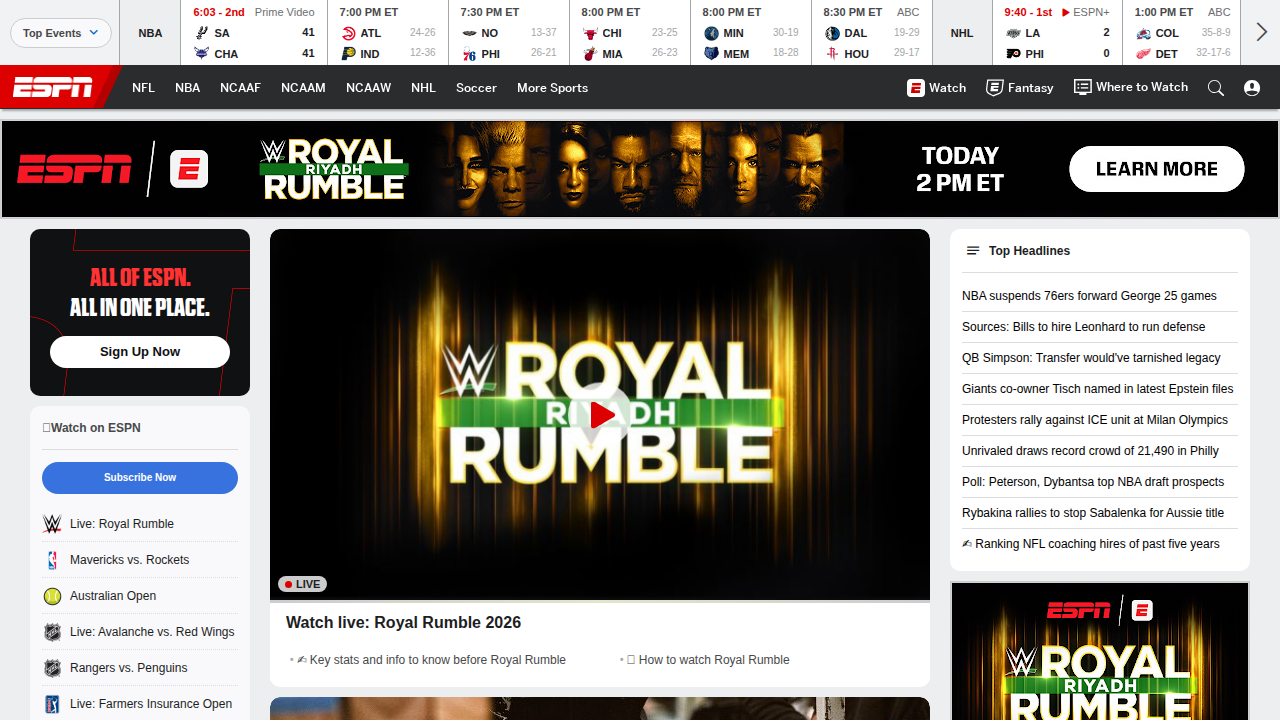
On 01/31/26 espn.com/ scored 37% — **Weak** – Overall, the site is easy to discover, but several key signals that help AI systems understand and trust it are coming through as incomplete or unclear
Executive summary
Score Breakdown (High Level)
- Discoverability: 92% - Overall, this section looks mostly solid with all the core metadata and standard sitemaps in place, though we didn't see specialized sitemaps for images or video.
- Structured Data: 58% - The homepage has a strong structured data foundation, but we weren't able to review any resource-level markup or authorship details.
- AI Readiness: 17% - This section ran into several issues, most notably the explicit blocking of major AI crawlers and a lack of update timestamps in the sitemap.
- Performance: 17% - This section ran into significant issues with mobile loading speeds and responsiveness, though layout stability remains a clear strength.
- Reputation: 12% - A lack of expected data fields in the audit packet prevented us from verifying most reputation signals, although social media links were successfully identified on the homepage.
- LLM-Ready Content: 56% - The site shows strong authority and real-time updates, but its fragmented feed structure and generic headings create a bottleneck for AI systems attempting to synthesize deep meaning.

What stands out most overall
The big picture is that discovery basics are mostly in place, but several core signals tied to AI access, site experience, and brand trust aren’t coming through cleanly. A lot of what’s showing up here looks less like “bad SEO” and more like missing or inconsistent context that makes it harder for AI systems to confidently interpret what they’re seeing. The breakdown below walks through the specific areas where the evaluation flagged gaps, section by section. None of this is unusual for large, content-heavy sites—it’s just the set of items most likely to affect AI visibility and understanding right now.
Detailed Report
Discoverability
❌ Image or video sitemap not found
What we saw
We didn’t see evidence of an image sitemap or video sitemap in the site data that was evaluated.
Why this matters for AI SEO
For visually driven brands, missing media discovery signals can make it harder for systems to reliably find and understand the full depth of your visual content.
Next step
Confirm whether dedicated image/video discovery coverage exists and is being surfaced consistently.
Structured Data
❌ Resource or blog page structured data couldn’t be verified
What we saw
A resource/blog page file wasn’t available in the provided data, so we couldn’t confirm whether the resource-level markup is present.
Why this matters for AI SEO
When AI systems can’t reliably read structured context at the content level, it can reduce how confidently they interpret what a specific article is and how it should be referenced.
Next step
Provide a representative resource/blog URL (or page sample) so the resource-level structured context can be validated.
❌ Clear, non-generic author on a resource post couldn’t be confirmed
What we saw
Because the resource/blog page sample wasn’t provided, we couldn’t verify whether the content has a clear, specific author.
Why this matters for AI SEO
Author clarity is a key trust cue for AI systems when deciding whether to rely on and reuse content.
Next step
Share a live example of an article/news page so author attribution can be checked directly.
❌ Author identity references (sameAs) couldn’t be verified
What we saw
The resource/blog page data wasn’t available, so we couldn’t confirm whether the author is connected to recognized identity references.
Why this matters for AI SEO
Without consistent author identity signals, AI systems may be less confident about who created the content and how it connects to known entities.
Next step
Provide a representative resource/blog page sample so author identity references can be validated.
AI Readiness
❌ Major AI crawlers are explicitly blocked
What we saw
The robots rules explicitly disallow several major AI crawlers (including GPTBot and Google-Extended).
Why this matters for AI SEO
If AI crawlers can’t access the site, it becomes much harder for AI systems to discover, interpret, and cite your content.
Next step
Decide whether these AI crawlers should have access, and align the crawl permissions with that decision.
❌ Sitemap update timestamps weren’t present
What we saw
A sitemap was detected, but it did not include update timestamps.
Why this matters for AI SEO
Freshness and update context help AI systems understand what’s current versus outdated, especially on sites with frequent changes.
Next step
Ensure the sitemap includes update timing information so content recency is clearer.
❌ About/company context link wasn’t detected from the homepage
What we saw
We didn’t detect a clear internal link on the homepage pointing to an About/Company/Team-style page.
Why this matters for AI SEO
When brand context is hard to find, AI systems may have less confidence in summarizing who you are and what the site represents.
Next step
Make sure there’s an obvious path from the homepage to a page that explains brand identity and context.
❌ Brand Wikidata entity wasn’t available in the provided data
What we saw
The data provided didn’t include a Wikidata identifier for the brand.
Why this matters for AI SEO
Entity references can help AI systems disambiguate a brand and connect it to consistent identity information across the web.
Next step
Confirm whether the brand has a Wikidata entry and ensure it’s consistently referenced where appropriate.
Performance
❌ Homepage responsiveness was poor during load
What we saw
The homepage showed high input delay while loading, meaning it may not respond to user actions quickly during that window.
Why this matters for AI SEO
When pages feel unresponsive, users bounce faster and engagement signals tend to weaken, which can limit how well content gets discovered and trusted over time.
Next step
Review what’s causing the homepage to stay “busy” during load so it becomes interactive sooner.
❌ Homepage main content appeared very slow to load
What we saw
The primary content on the homepage took an unusually long time to appear in the test results.
Why this matters for AI SEO
Slow-loading primary content can reduce real user reach and weaken how effectively your most important pages support AI-driven discovery.
Next step
Identify why the main homepage content is delayed and prioritize reducing that time to first meaningful view.
❌ Overall homepage performance rating came back low
What we saw
The overall performance assessment for the homepage landed below the expected baseline.
Why this matters for AI SEO
When the overall experience is sluggish, it can limit crawl efficiency, reduce engagement, and make it harder for content to consistently surface in AI-driven contexts.
Next step
Run a focused performance review on the homepage experience and address the biggest contributors.
Reputation
❌ Negative client assertions couldn’t be evaluated
What we saw
The report data didn’t include the trust inputs needed to confirm whether negative client sentiment is present or absent.
Why this matters for AI SEO
If AI systems don’t have clear, verifiable reputation context, they may be more cautious when summarizing or recommending a brand.
Next step
Ensure the brand trust/reputation inputs are available so client sentiment can be validated.
❌ Negative employee assertions couldn’t be evaluated
What we saw
The report data was missing the inputs needed to assess whether negative employee sentiment is present or absent.
Why this matters for AI SEO
Employment reputation can influence overall brand trust signals that AI systems lean on when forming an impression.
Next step
Provide the necessary reputation inputs so employee sentiment can be checked consistently.
❌ Recognition across multiple AI systems couldn’t be confirmed
What we saw
The provided data didn’t include confirmation fields showing whether the brand is consistently recognized across multiple models.
Why this matters for AI SEO
Stronger, consistent recognition increases the likelihood of accurate brand mentions and fewer confusing or mixed summaries.
Next step
Make sure recognition/brand validation data is captured so consistency can be assessed.
❌ Brand identity consistency couldn’t be validated
What we saw
The data needed to confirm consistent brand identity details (and detect conflicts) wasn’t available in the packet.
Why this matters for AI SEO
When identity signals aren’t clearly corroborated, AI systems can struggle with entity matching and may describe the brand less confidently.
Next step
Ensure the data used for identity consistency checks is available and up to date.
❌ Wikidata match status wasn’t available to verify
What we saw
We couldn’t confirm whether a Wikidata entity exists and matches the brand based on the data provided.
Why this matters for AI SEO
Entity verification helps reduce ambiguity and supports more reliable AI summaries and references.
Next step
Validate whether a matching Wikidata entity exists and include that verification in the brand trust dataset.
❌ Official identity anchors in Wikidata couldn’t be confirmed
What we saw
The packet didn’t include information confirming whether the brand’s Wikidata entity contains official identity anchors (like an official website reference).
Why this matters for AI SEO
Official anchors make it easier for AI systems to connect the brand to the correct “source of truth” across the web.
Next step
Confirm official identity anchors are present and ensure that confirmation is captured in the evaluation data.
❌ Third-party reviews or feedback couldn’t be verified
What we saw
The data needed to confirm whether third-party reviews or customer feedback exist wasn’t included.
Why this matters for AI SEO
Independent feedback is a common trust signal that helps AI systems gauge credibility and real-world usage.
Next step
Compile and provide verifiable review/feedback references so they can be evaluated.
❌ Review source specificity couldn’t be checked
What we saw
We didn’t receive the fields needed to confirm whether review sources are concrete and countable.
Why this matters for AI SEO
Vague or unverified review context is harder for AI systems to trust, which can weaken the brand’s perceived authority.
Next step
Ensure review sources are clearly documented and included in the data used for evaluation.
❌ Consensus on major social profiles couldn’t be confirmed
What we saw
The packet didn’t include the consensus data needed to confirm that major social profiles are consistently recognized.
Why this matters for AI SEO
When official profiles are unambiguous, AI systems are more likely to attribute content and brand signals correctly.
Next step
Provide the consensus/verification data that ties the brand to its official profiles.
❌ Independent press or coverage couldn’t be verified
What we saw
The provided data didn’t include confirmation of independent, offsite press mentions.
Why this matters for AI SEO
Independent coverage is another strong credibility cue that helps AI systems feel confident about describing a brand’s prominence.
Next step
Collect and provide independent coverage references so they can be validated.
❌ Owned press or press releases couldn’t be verified
What we saw
We weren’t able to confirm the presence of owned press mentions or press releases based on the data provided.
Why this matters for AI SEO
A clear, verifiable record of official announcements helps AI systems understand key brand milestones and authoritative statements.
Next step
Ensure owned press/announcement sources are available and included in the evaluation dataset.
LLM-Ready Content (Blog Analysis)
Heads up: this section looks at one article as a snapshot, so it’s a little more interpretive than the rest of the report and may shift slightly from run to run. Have questions? Just shoot us an email at hello@v9digital.com
❌ Content isn’t chunked into substantial, readable sections
What we saw
Most sections were very short and leaned heavily on headlines and link snippets rather than fuller, self-contained blocks of content.
Why this matters for AI SEO
AI systems tend to do better when each section carries enough context to stand on its own, making it easier to extract accurate summaries and citations.
Next step
Rework the page structure so key sections include enough explanatory text to be understood without clicking out.
❌ No HTML table was detected (bonus)
What we saw
No table element appeared in the provided HTML for the sampled page.
Why this matters for AI SEO
Structured presentation formats can make it easier for AI systems to interpret comparisons, stats, and quick-reference information.
Next step
Where it fits naturally, add a simple structured block that summarizes key information in a scannable format.
❌ Many subheadings are generic category labels
What we saw
A noticeable share of subheadings were broad labels (like league/category buckets) rather than topic-specific descriptors.
Why this matters for AI SEO
Generic labels reduce semantic clarity, which can make it harder for AI systems to identify what each section is actually about.
Next step
Use more specific, descriptive section labels that reflect the key question or takeaway in that block.
❌ Key answers don’t appear early in the page
What we saw
The page leaned on snippets and lists, and we didn’t see substantial early paragraphs that clearly answer the “what is this about?” question.
Why this matters for AI SEO
When early context is thin, AI systems may miss the central narrative and treat the page more like a directory than a source.
Next step
Add a short, topic-setting intro that explains what the page covers and what readers should expect.
❌ Readability and cohesion are reduced by unexplained acronyms
What we saw
The content included many acronyms (e.g., BPI, QBR, CFP, ICYMI) without nearby definitions.
Why this matters for AI SEO
Unexplained shorthand can lower comprehension for both users and AI systems, increasing the chance of inaccurate summaries or missed context.
Next step
Define acronyms on first use (or provide a brief inline explanation) so the meaning is unambiguous.
Does Anything Seem Off?
Thanks for taking our free GEO Grader for a spin. When we started this journey, the tool had a fairly long processing time to check everything we wanted both onsite and offsite, so we made a few adjustments on the backend to speed things up. As a result, there are times when the grader may not get everything 100% right. If something feels off, we recommend running the tool a second time to confirm the results. From there, you’re always welcome to reach out to us to schedule a GEO consultation, or to have your SEO provider validate the findings with a more detailed crawl and manual review.
