
Overview:
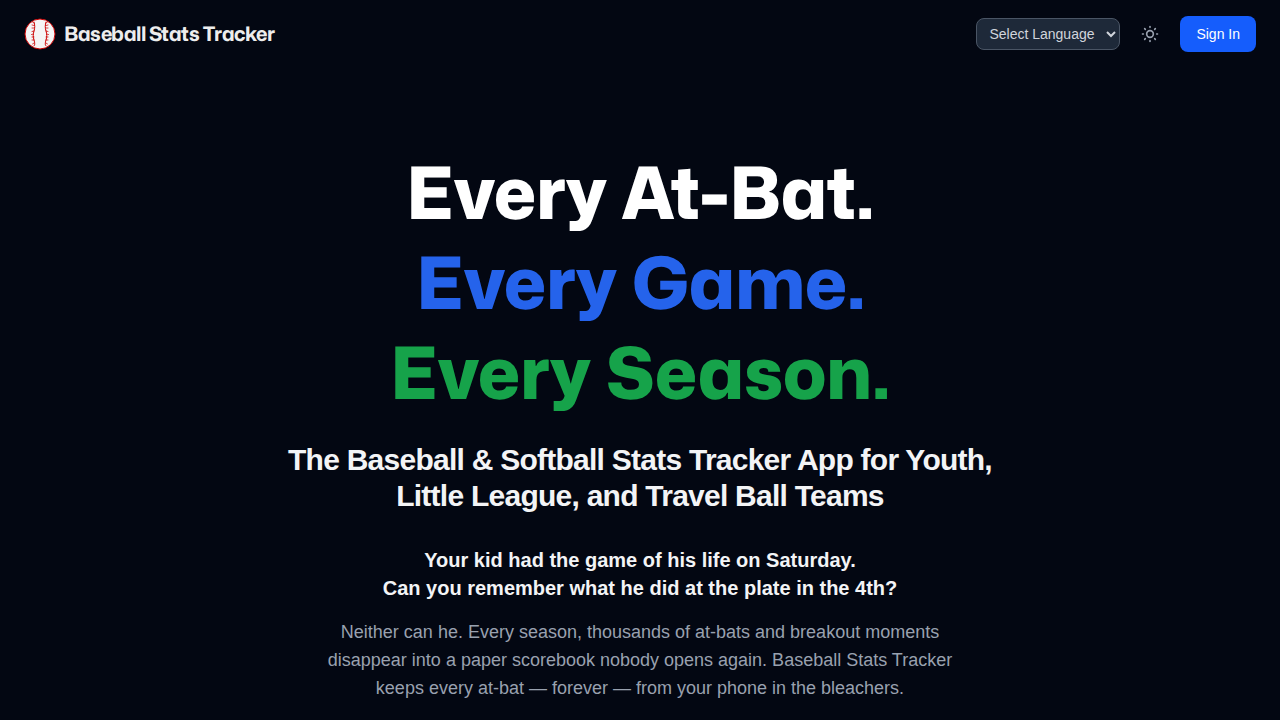
On 06/23/26 baseballstatstracker.com scored 53% — **Fair** – Overall, the site is in a workable place for AI visibility, but a few credibility and content-context gaps are holding it back from feeling fully “understood” offsite.
Executive summary
Score Breakdown (High Level)
- Discoverability: 100% - The site is technically very accessible to search engines, though adding a dedicated image sitemap would help round out its discoverability.
- Structured Data: 58% - The homepage features a solid set of organizational and application schema, but we weren't able to find any structured data or author information for the resource pages.
- AI Readiness: 50% - The site has a solid technical foundation with accessible sitemaps and open crawling, but it's missing the dedicated brand context pages and Wikidata presence that help AI engines verify the entity.
- Performance: 67% - Mobile performance is looking very solid across the board, with quick load times and high responsiveness that stay well clear of any "poor" range.
- Reputation: 23% - The site is free of negative signals but currently has almost no offsite footprint or brand recognition across AI models and third-party platforms.
- LLM-Ready Content: 52% - The content is well-structured and easy to read, but it lacks critical authority markers like a named author and a visible update date.

The main takeaway before the breakdown
The big picture is that the site is readable and accessible, but it’s missing some key context and credibility signals that help AI systems confidently describe who you are and why you’re trustworthy. None of this looks like a “problem” so much as a visibility and verification gap, especially around brand identity, offsite footprint, and content attribution. The next section walks through the specific areas where the evaluation couldn’t find those signals, organized by category. Once those gaps are clearer, it’s usually straightforward to decide what’s most important to firm up first.
Detailed Report
Discoverability
❌ No image or video sitemap found
What we saw
We didn’t detect any dedicated image or video sitemap in the available site data. This is a small but noticeable gap if visual assets are an important part of how people discover your product.
Why this matters for AI SEO
AI-driven search experiences often pull in screenshots, visuals, and demos when they’re easy to find and clearly organized. When visual content is harder to discover, it’s less likely to show up in visual-heavy results.
Next step
Publish an image sitemap and/or video sitemap that lists your key visual assets (like screenshots and demos) and make sure it’s discoverable alongside your other site discovery files.
Structured Data
❌ Resource/blog page markup couldn’t be verified
What we saw
The resource/blog page file used for evaluation was missing or empty, so we couldn’t find any structured markup on that page. As a result, resource-level signals weren’t available to review.
Why this matters for AI SEO
When AI systems summarize or cite content, they lean on consistent, machine-readable page context to understand what the page is and how it should be attributed. If that context isn’t available (or can’t be found), confidence and reuse can drop.
Next step
Make sure your resource/blog pages reliably publish the full page content and include structured markup that clearly describes the page.
❌ Author info on resource/blog content wasn’t found
What we saw
Because the resource/blog page file was missing or empty, we couldn’t confirm a clear, non-generic author on that content. That leaves author attribution effectively unverified in the evaluation.
Why this matters for AI SEO
Clear authorship helps AI systems decide whether content should be trusted, quoted, or used as a source. When author information isn’t present (or can’t be validated), the content can feel less attributable.
Next step
Ensure each resource/blog page displays a specific author name and makes that author information consistently available on the page.
❌ Author profile links (sameAs) weren’t found
What we saw
The resource/blog page file was missing or empty, so we couldn’t verify any author profile links that connect the author to known profiles elsewhere. This left the evaluation unable to confirm those identity connections.
Why this matters for AI SEO
AI systems use consistent identity connections to reduce ambiguity and build confidence in who created the content. Without those links, it’s harder to firmly connect the author to a broader, verifiable presence.
Next step
Add author identity links that point to the author’s official profiles so the author can be more easily validated.
AI Readiness
❌ No clear “About” / brand context link detected
What we saw
We didn’t detect an internal homepage link that clearly points to an “About,” “Company,” or “Team” style page. That makes brand context harder to confirm from the most prominent entry point.
Why this matters for AI SEO
AI engines look for straightforward, first-party context to understand who’s behind a site and what the organization is. When that context isn’t easy to find, the brand can feel less defined in AI summaries.
Next step
Add a clearly labeled page that explains who you are and link to it in a prominent, easy-to-spot place.
❌ No Wikidata entity found for the brand
What we saw
No Wikidata item ID was found for the brand in the evaluation results. This is a common identity gap for newer or less-referenced brands.
Why this matters for AI SEO
Many AI systems cross-reference known entity sources to resolve brand identity and reduce confusion. Without a recognized entity record, it’s harder for AI to confidently “map” your brand as a distinct organization.
Next step
Create and validate a Wikidata entry for the brand that matches your official name and identity details.
Reputation
❌ Limited recognition across major AI models
What we saw
The results indicated the brand was only recognized by one of the evaluated AI models, which suggests your overall footprint is still pretty small. This reads more like “not widely known yet” than anything negative.
Why this matters for AI SEO
When generative engines aren’t consistently familiar with a brand, they tend to be more cautious about surfacing it as a recommended option or citing it as a trusted source. Broader recognition helps reduce uncertainty.
Next step
Build consistent brand references across trusted, public sources so AI systems have more places to corroborate who you are.
❌ Brand identity details weren’t consistent/verified
What we saw
We were unable to find a consistent physical address for the business in the evaluation results. That removes a common “anchor” AI systems use to verify identity.
Why this matters for AI SEO
AI engines look for stable identity references to connect a brand to a real-world entity. When key identity details are missing or inconsistent, it’s harder to confidently validate the business behind the site.
Next step
Standardize your official brand identity details (including a consistent address where applicable) across your primary web properties.
❌ No matching Wikidata entity for reputation verification
What we saw
No matching Wikidata entity was found for the brand in the reputation review. The results also noted missing “official identity anchors” within Wikidata.
Why this matters for AI SEO
Wikidata is one of the reference points AI systems often use to reconcile brand names, official sites, and identity signals. Without it, offsite verification becomes more fragmented.
Next step
Create a matching Wikidata entity and connect it to official identity references (like your official site and brand identifiers).
❌ No third-party reviews or customer feedback found
What we saw
We didn’t find evidence of third-party reviews or customer feedback in the evaluation results, and the review sources could not be confirmed as concrete. In practice, that means there’s not much independent sentiment for AI to reference.
Why this matters for AI SEO
Generative engines tend to trust a brand more when they can corroborate real user experiences from independent sources. Without that, AI summaries may have less confidence when describing quality or adoption.
Next step
Establish a presence on credible third-party review platforms and make sure those profiles clearly represent your brand.
❌ Social profile presence wasn’t confirmed
What we saw
The results did not find consensus on major social profiles for the brand, and the homepage did not link to major social profiles. That leaves a gap in publicly visible, brand-owned identity touchpoints.
Why this matters for AI SEO
Established social profiles can act as corroborating identity signals and help AI systems connect brand mentions to a single, verified entity. When those links aren’t clear, the brand’s offsite presence can look thinner than it really is.
Next step
Claim and standardize your primary social profiles and ensure your site clearly references the official ones.
❌ No independent press or coverage found
What we saw
We didn’t see evidence of independent offsite press/coverage in the evaluation results, and we also didn’t see onsite press or press releases. That means there aren’t many third-party narratives AI can pull from.
Why this matters for AI SEO
Independent coverage gives AI systems additional sources to validate what a company does and how it’s perceived. Without it, AI often has fewer trusted references to summarize or cite.
Next step
Build a documented footprint of third-party and/or owned press mentions that clearly and consistently describe the brand.
LLM-Ready Content
❌ Author name appears generic
What we saw
The only author identified was the brand name, which was treated as generic for authorship. There wasn’t a clear individual or specific accountable author presented.
Why this matters for AI SEO
When AI systems reuse or cite content, clear authorship helps establish accountability and credibility. Generic attribution can make the content feel less verifiable as a source.
Next step
Assign a specific, non-generic author to the content and display that author clearly on the page.
❌ No publish or update date found
What we saw
No visible publish date or update date was found on the page, and no date could be confirmed via page markup. That leaves content freshness unclear.
Why this matters for AI SEO
AI systems often look for dates to assess whether information is current enough to include in summaries and recommendations. When recency is unknown, the content can be treated more cautiously.
Next step
Add a clear publish date and/or “last updated” date that’s visible to readers and consistently included on the page.
❌ Recency couldn’t be confirmed
What we saw
Because there wasn’t an explicit publish or modified date available, the evaluation couldn’t confirm whether the page was updated within the last year. This is more of a “can’t verify” issue than a content-quality issue.
Why this matters for AI SEO
When AI can’t confirm recency, it may prioritize other sources that more clearly signal freshness—especially for topics where details change over time. That can reduce how often your page is surfaced.
Next step
Make the page’s most recent update date explicit so recency can be confidently understood.
❌ No HTML table detected
What we saw
No HTML table element was detected on the page, even though some content is presented in a comparison-style layout. The information may still be readable for humans, but it isn’t structured in a way that’s as straightforward to extract.
Why this matters for AI SEO
AI systems often extract and reuse neatly structured comparisons more reliably when the content is presented in simple, consistent structures. When the structure is less explicit, key details can be missed or misread.
Next step
Where you present comparisons or grids of data, add an HTML table version when it fits the content.
❌ Several acronyms aren’t defined nearby
What we saw
The content includes multiple baseball acronyms (for example: SLG, OPS, IP, ERA, RBI) that aren’t spelled out close to where they first appear. That can make sections harder to interpret for readers who aren’t already deep in the terminology.
Why this matters for AI SEO
AI systems do better when key terms are defined in plain language right where they’re introduced. Unexplained acronyms increase ambiguity and can reduce how accurately the content is summarized.
Next step
Spell out acronyms the first time they appear and include a short plain-English definition nearby.
Does Anything Seem Off?
Thanks for taking our free GEO Grader for a spin. When we started this journey, the tool had a fairly long processing time to check everything we wanted both onsite and offsite, so we made a few adjustments on the backend to speed things up. As a result, there are times when the grader may not get everything 100% right. If something feels off, we recommend running the tool a second time to confirm the results. From there, you’re always welcome to reach out to us to schedule a GEO consultation, or to have your SEO provider validate the findings with a more detailed crawl and manual review.
