
Overview:
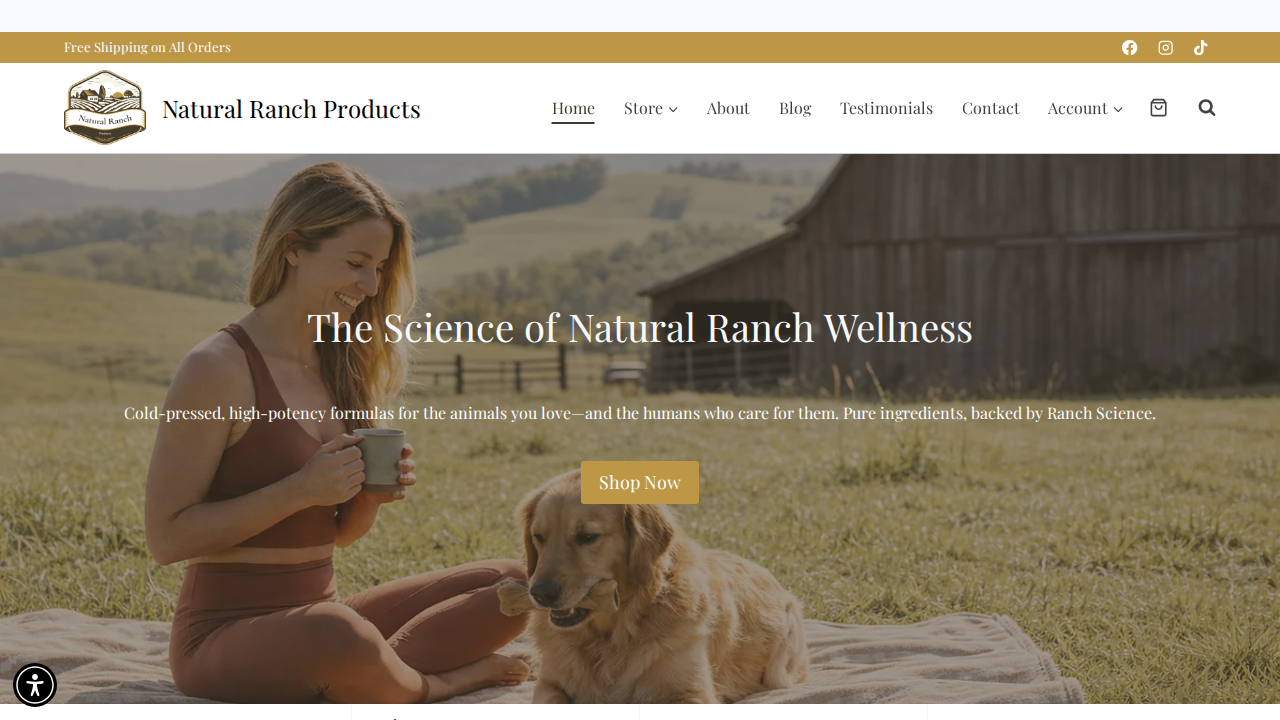
On 05/31/26 naturalranchproducts.com/ scored 45% — **Below Average** – Overall, the site is easy to find, but it doesn’t come across as consistently clear and well-established for AI visibility yet
Executive summary
Score Breakdown (High Level)
- Discoverability: 100% - The site’s technical foundation is solid and search-engine friendly, though adding image and video sitemaps would help maximize the visibility of its product media.
- Structured Data: 58% - The homepage has a strong foundation with clean Organization schema, though we couldn't verify author-level details since no blog or resource page was provided for review.
- AI Readiness: 67% - The site is in good technical shape for AI discovery, though it lacks the formal brand authority of a Wikidata entity.
- Performance: 17% - Mobile performance for the homepage currently lands in the poor range due to slow loading speeds and responsiveness issues.
- Reputation: 12% - Overall, the site links to social profiles correctly, but it’s missing the broader off-site signals—like Wikidata, press coverage, and multi-LLM recognition—that define a strong brand reputation.
- LLM-Ready Content: 52% - We found that while the site is excellent at providing author and update transparency, the thin content structure and brief subheadings make it harder for generative engines to extract detailed answers.

The main themes we’re seeing
The big picture is that the site covers some core fundamentals, but a few key signals still aren’t coming through clearly enough for strong AI visibility. Most of the gaps read less like “something is wrong” and more like missing clarity around trust, consistency, and how the content is structured and delivered. Next, the report breaks down the specific areas where that clarity wasn’t found, organized by section so it’s easy to scan. None of this is unusual—these are common gaps, and they’re the kind that can be addressed once they’re clearly identified.
Detailed Report
Discoverability
❌ Missing image/video discovery support
What we saw
We didn’t find a dedicated way for search engines to consistently pick up image or video content across the site. That means some visual assets may be harder to surface reliably.
Why this matters for AI SEO
Generative engines often pull from the same discovery layer as search, and visual content can play a role in how a brand and its offerings are understood. When that content is harder to find, it’s easier for AI summaries to miss helpful context.
Next step
Add a clear, supported way for engines to discover your image and/or video content at scale.
Structured Data
❌ Resource/blog page markup wasn’t found
What we saw
We couldn’t validate structured data on a resource or blog page because that page content wasn’t available in the evaluation snapshot. As a result, we can’t confirm those pages are described as clearly as your homepage.
Why this matters for AI SEO
When AI systems pull information from articles and resources, clear page-level details help them interpret what the content is and how it should be attributed. If that clarity isn’t present (or can’t be confirmed), content may be reused less confidently.
Next step
Make sure your key resource/blog templates include structured data consistently, not just the homepage.
❌ Author details couldn’t be confirmed on resource content
What we saw
We weren’t able to confirm a clear, non-generic author on a resource/blog post because the resource page content wasn’t available in the data. That leaves attribution unclear for that part of the site.
Why this matters for AI SEO
AI answers tend to lean on content that’s easy to attribute to a real person or accountable source. When authorship isn’t clear, it can reduce trust and reusability.
Next step
Ensure resource/blog posts consistently show a specific author identity that can be understood by machines.
❌ Author identity links weren’t present/verified
What we saw
We couldn’t find confirming author identity links associated with author information on the resource/blog content in the dataset provided. This makes it harder to connect an author to known profiles elsewhere.
Why this matters for AI SEO
Generative engines are more confident when they can connect an author to consistent, corroborating identity signals across the web. Without that, the author may be treated as less verifiable.
Next step
Add consistent author identity references that help connect authors to their established profiles.
AI Readiness
❌ No Wikidata entity found for the brand
What we saw
We didn’t see a Wikidata entry associated with the brand in the evaluation results. That leaves a notable gap in third-party entity confirmation.
Why this matters for AI SEO
AI systems often look for reliable, external entity references to confirm a brand is real and consistently defined. When that’s missing, it can limit confidence in brand-level understanding.
Next step
Create and/or verify a Wikidata entity for the brand so it can be referenced consistently.
Performance
❌ Homepage responsiveness lag during initial load
What we saw
The homepage showed signs of being slow to respond while it was loading, especially on mobile. This can make the page feel “stuck” before it becomes usable.
Why this matters for AI SEO
If a page is slow to become interactive, it can reduce the reliability of crawling and rendering and may limit how consistently key content is processed. Over time, that can affect how confidently content is surfaced or summarized.
Next step
Reduce the amount of work happening during initial load so the homepage becomes responsive sooner.
❌ Main content appears too late on mobile
What we saw
The main content on the homepage took a long time to show up on mobile in the performance snapshot. That delay creates a slow first impression for both users and systems trying to interpret the page.
Why this matters for AI SEO
Generative engines benefit from pages that reveal primary content quickly and clearly. When core content loads late, it increases the chance that key context is missed or deprioritized.
Next step
Prioritize the homepage’s primary content so it renders much earlier in the load sequence.
❌ Overall homepage performance fell short
What we saw
In the evaluation snapshot, the homepage’s overall performance rating landed below the expected baseline. This aligns with the slow and heavy initial load behavior noted elsewhere.
Why this matters for AI SEO
When performance is inconsistent, it can make content less reliably accessible and understandable at scale. That can indirectly impact how frequently and accurately the site shows up in AI-driven results.
Next step
Bring the homepage’s overall performance into a consistently strong range for mobile visitors.
Reputation
❌ Negative client feedback status couldn’t be confirmed
What we saw
We didn’t have enough information in the results to confirm whether notable negative client claims exist or not. This isn’t the same as finding negatives—it’s simply unclear from the available signals.
Why this matters for AI SEO
When AI systems assess trust, clarity around brand sentiment helps reduce ambiguity. Missing sentiment context can make brand summaries less confident.
Next step
Compile and validate a clear picture of client sentiment using dependable, third-party sources.
❌ Negative employee feedback status couldn’t be confirmed
What we saw
The report data didn’t include enough information to confirm whether notable negative employee claims exist or not. The outcome here is uncertainty, not a judgment.
Why this matters for AI SEO
AI models often weigh reputational context when describing companies, especially in “is this trustworthy?” moments. When the sentiment picture is incomplete, it can weaken confidence.
Next step
Make sure credible employment-related sentiment sources are discoverable and attributable.
❌ Not recognized broadly across AI models (in this snapshot)
What we saw
The results did not confirm that the brand is consistently recognized across multiple AI systems yet. That typically shows up when a brand has more widely corroborated references.
Why this matters for AI SEO
When recognition is limited, AI answers may omit the brand or describe it in a more generic way. Stronger recognition generally leads to more consistent brand inclusion.
Next step
Strengthen the brand’s presence in sources that are commonly referenced across the web.
❌ Brand identity consistency couldn’t be verified
What we saw
We couldn’t confirm consistent brand identity details in the reputation results (like the core identity fields lining up cleanly). This usually indicates the off-site identity footprint isn’t fully established or wasn’t captured in the snapshot.
Why this matters for AI SEO
AI systems work best when a brand has one consistent “entity profile” across sources. If identity signals are incomplete or inconsistent, it becomes harder to generate accurate brand summaries.
Next step
Align your brand’s key identity details across the most visible third-party profiles and references.
❌ Wikidata entity match wasn’t confirmed
What we saw
The reputation results did not include a confirmed Wikidata entity that matches the brand. This removes one of the cleaner third-party identity anchors AI can lean on.
Why this matters for AI SEO
Wikidata can act like a neutral “source of truth” that helps AI connect names, websites, and identifiers. Without it, entity matching often relies on noisier signals.
Next step
Establish a matching Wikidata entity and ensure it clearly references the official brand identity.
❌ Official identity anchors weren’t found in Wikidata
What we saw
We didn’t see evidence of official identity anchors tied to a Wikidata entity in the results. That typically includes confirming references that connect an entity to official brand properties.
Why this matters for AI SEO
Identity anchors help AI systems reduce confusion between similar names and improve confidence in attribution. When those anchors are missing, brand verification gets harder.
Next step
Make sure the brand’s primary identifiers are represented in the most trusted entity sources.
❌ Third-party reviews weren’t confirmed
What we saw
The results didn’t confirm the presence of third-party reviews or customer feedback tied to the brand. This leaves a gap in independent validation.
Why this matters for AI SEO
Reviews and independent feedback can help AI systems gauge legitimacy and customer experience at a glance. When those signals aren’t present, AI may have less to go on.
Next step
Ensure review profiles exist in well-known places and clearly connect back to the brand.
❌ Review sources weren’t clearly attributable
What we saw
Where reviews might exist, the results didn’t provide clear, concrete sources that could be cited or referenced. That makes the review footprint harder to validate.
Why this matters for AI SEO
AI systems prefer signals that are easy to trace back to recognizable sources. If sources aren’t clear, they may be ignored or discounted.
Next step
Consolidate customer feedback into recognizable, clearly branded third-party profiles.
❌ Social profile consensus wasn’t confirmed
What we saw
The report didn’t confirm that major social profiles are consistently identified and agreed upon in the broader web footprint. Even if links exist onsite, the external consensus wasn’t visible here.
Why this matters for AI SEO
When AI systems can confidently connect a brand to its primary profiles, it improves entity understanding and reduces misattribution. Missing consensus can make those connections weaker.
Next step
Make sure your primary social profiles are consistently referenced across the most visible brand citations.
❌ Independent press/coverage wasn’t found
What we saw
We didn’t see evidence of independent press or third-party coverage in the evaluation results. That leaves limited outside context for AI to draw from.
Why this matters for AI SEO
Independent coverage is one of the cleaner ways AI systems triangulate legitimacy and relevance. Without it, brand narratives can be thin or overly reliant on owned sources.
Next step
Build a stronger footprint of independent references that clearly mention and describe the brand.
❌ Onsite press/press releases weren’t found
What we saw
The results didn’t find owned press content (like press releases) that AI could use as a structured source of company updates. That can limit how easily milestones and announcements are understood.
Why this matters for AI SEO
Even though owned content isn’t the same as independent validation, it can still help AI systems assemble a coherent brand timeline and set of claims. Without it, brand context can be harder to summarize.
Next step
Publish a clear, easy-to-reference press or news area that captures notable company updates.
LLM-Ready Content (Blog Analysis)
Heads up: this section looks at one article as a snapshot, so it’s a little more interpretive than the rest of the report and may shift slightly from run to run. Have questions? Just shoot us an email at hello@v9digital.com
❌ Sections are too thin for easy AI reuse
What we saw
Most sections were very short, which makes the page feel more like a set of quick snippets than fully formed explanations. That structure can leave key ideas underdeveloped.
Why this matters for AI SEO
AI systems summarize and cite content more confidently when each section contains enough substance to stand on its own. Thin sections make it harder to extract complete, accurate answers.
Next step
Expand sections so each one delivers a complete, self-contained explanation of the subtopic.
❌ No table-based information found
What we saw
We didn’t find any table-style formatting that summarizes key details in a structured way. The content appears to rely mostly on standard paragraphs and headings.
Why this matters for AI SEO
Structured summaries can make it easier for AI to extract comparisons, specs, steps, or quick takeaways without missing context. Without them, important details can be scattered.
Next step
Add a compact table where it naturally helps summarize or compare the key information in the article.
❌ Subheadings don’t consistently explain what follows
What we saw
Several subheadings read more like short labels than descriptive signposts, which makes it harder to anticipate what each section covers. A couple were descriptive, but many weren’t.
Why this matters for AI SEO
Clear subheadings help AI map the page into topics and pull the right section for the right question. When headings are vague, the content is harder to interpret and reuse accurately.
Next step
Rewrite subheadings so they clearly summarize the main point of each section in plain language.
❌ Key answers aren’t surfaced early in most sections
What we saw
Most sections didn’t start with an introductory paragraph that quickly states the main takeaway. That pushes the “answer” deeper into each section (or leaves it implied).
Why this matters for AI SEO
Generative engines look for clear, early statements they can treat as the direct answer or summary. When those aren’t present, the model has to infer more—and that can reduce accuracy.
Next step
Add a clear opening paragraph to each section that states the main answer up front.
Does Anything Seem Off?
Thanks for taking our free GEO Grader for a spin. When we started this journey, the tool had a fairly long processing time to check everything we wanted both onsite and offsite, so we made a few adjustments on the backend to speed things up. As a result, there are times when the grader may not get everything 100% right. If something feels off, we recommend running the tool a second time to confirm the results. From there, you’re always welcome to reach out to us to schedule a GEO consultation, or to have your SEO provider validate the findings with a more detailed crawl and manual review.
