
Overview:
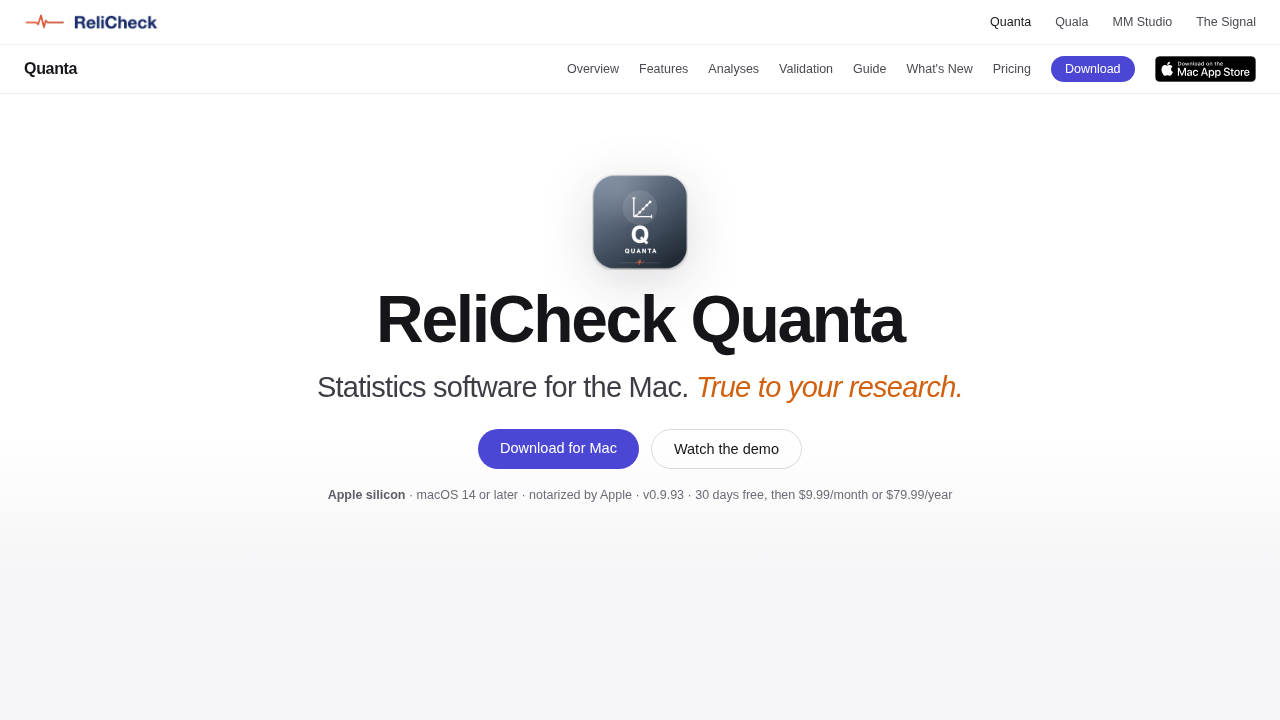
On 09/18/26 relicheck.com/quanta scored 49% — **Below Average** – Overall, the site has a solid baseline for being found, but a few credibility and clarity gaps are keeping it from showing up as confidently in AI answers.
Executive summary
Score Breakdown (High Level)
- Discoverability: 100% - Overall, the site’s technical foundation for discovery is in great shape, though we didn't see a dedicated sitemap for images or video.
- Structured Data: 58% - The homepage schema is technically sound and includes organization details, but we weren't able to verify author or resource-level markup in this data set.
- AI Readiness: 50% - The site's technical foundation for AI crawling is solid with a healthy sitemap and open robots.txt, but it's missing the direct brand context links and Wikidata presence that help establish authority.
- Performance: 0% - We weren't able to find the necessary performance data to confirm if the site meets mobile speed and stability standards.
- Reputation: 42% - The brand is recognized by multiple models and has verified review sources, but a negative client assertion and a lack of social and press signals limit the overall reputation score.
- LLM-Ready Content: 60% - The page is highly organized and uses descriptive headings, but it lacks a named author and relies on brief sections with several unexplained technical acronyms.

Where things stand overall
The big picture is that the site is generally understandable, but a few key signals around credibility, identity, and content attribution aren’t coming through cleanly. Most of the gaps read less like “something is wrong” and more like missing context that makes it harder for AI systems to be confident. The sections below walk through the specific areas where the review couldn’t confirm important details or found trust-related concerns. Once you see them laid out, the focus areas should feel pretty clear and manageable.
Detailed Report
Discoverability
❌ Image or video sitemap not found
What we saw
We didn’t detect an image sitemap or a video sitemap for the site. Everything else in basic discovery looked accessible, but this piece wasn’t present.
Why this matters for AI SEO
When media content isn’t clearly surfaced, it can be harder for search and AI systems to reliably discover and reuse images or videos tied to your brand. That can limit how often rich assets get pulled into AI-driven results.
Next step
Publish an image and/or video sitemap (where relevant) and make sure it’s discoverable alongside your main sitemap.
Structured Data
❌ Resource/blog page markup couldn’t be verified
What we saw
We weren’t able to evaluate structured details on a resource/blog page because the resource page content wasn’t available in this review. As a result, we couldn’t confirm whether those pages include clear machine-readable context.
Why this matters for AI SEO
AI systems rely on consistent, page-level context to understand what a specific article is about and how it relates to your brand. When that context can’t be confirmed on resource pages, it can reduce how confidently content is summarized or cited.
Next step
Ensure your resource/blog pages include structured details that describe the page and its content in a consistent, machine-readable way.
❌ Blog/resource author wasn’t clearly identified
What we saw
No clear, non-generic individual author could be verified for the resource/blog content in this review. Without the resource page content available, we also couldn’t confirm whether author information appears on-page.
Why this matters for AI SEO
When authorship is unclear, it’s harder for AI engines to assess who created the content and whether it should be trusted or reused. Clear authorship can also help reduce ambiguity when similar topics appear across multiple sources.
Next step
Add a clearly named individual author to resource/blog posts and make that author consistently identifiable.
❌ Author profile links weren’t available to validate
What we saw
We couldn’t find author-related profile links connected to the resource/blog author information in this review. This was tied to the missing resource page content used for evaluation.
Why this matters for AI SEO
AI systems tend to trust author identities more when they’re connected to consistent profiles across the web. Without those connecting links, it’s harder to confirm that an author is real, consistent, and credible.
Next step
For each author, include consistent profile links that connect their identity across reputable platforms.
AI Readiness
❌ No clear About/company context page was found
What we saw
We didn’t find a clear internal link from the homepage pointing to an About, Company, Team, or similar brand context page. That means the “who we are” story isn’t as easy to pick up from the main entry point.
Why this matters for AI SEO
AI engines do better when they can quickly understand who’s behind a site and what the organization is. When brand context isn’t easy to locate, the site can be treated as more ambiguous than it needs to be.
Next step
Make sure there’s a clearly labeled About/company page that’s easy to find from the homepage.
❌ No Wikidata entity was found for the brand
What we saw
We didn’t find a Wikidata entry associated with the brand during this review. That leaves a gap in third-party identity confirmation.
Why this matters for AI SEO
Many generative systems lean on established knowledge sources to confirm that a brand is real and consistently described. Without that anchor, it can be harder for AI to reconcile identity details confidently.
Next step
Create or claim a Wikidata entry for the brand and ensure it reflects your official identity.
Performance
❌ Homepage responsiveness couldn’t be verified
What we saw
We weren’t able to pull the data needed to confirm the homepage’s responsiveness in this run. The result is simply “unknown” right now, rather than clearly good or clearly bad.
Why this matters for AI SEO
When performance can’t be confirmed, it creates uncertainty around whether users (and crawlers) experience the site smoothly enough to engage with it. That uncertainty can hold back confidence in surfacing the site.
Next step
Re-check the homepage performance with a fresh run so responsiveness data is available and verifiable.
❌ Homepage load experience couldn’t be verified
What we saw
We couldn’t retrieve the data needed to confirm the homepage’s loading experience. Because of that, we can’t validate whether the page consistently loads at an acceptable level.
Why this matters for AI SEO
If AI systems can’t confirm a reliable user experience, they may be less confident sending users to the page or using it as a primary reference. It’s a visibility and trust issue more than a “one-page” issue.
Next step
Run a new performance check to make sure the homepage load data is available and stable.
❌ Homepage layout stability couldn’t be verified
What we saw
We weren’t able to access the data needed to confirm whether the homepage layout stays stable as it loads. That makes this area unverified in the current results.
Why this matters for AI SEO
A stable experience supports user trust and reduces friction, which indirectly supports how confidently a page can be recommended or referenced. When it’s unknown, it’s harder to treat the page as a dependable destination.
Next step
Re-run the measurement so the homepage stability data is available for review.
❌ Overall homepage performance rating was unavailable
What we saw
We couldn’t retrieve the overall homepage performance outcome in this run due to missing data. This is primarily a verification gap rather than a confirmed performance problem.
Why this matters for AI SEO
When a key quality signal can’t be validated, it can dampen confidence in the page as a source that should be highlighted. AI systems tend to prefer sources that are both understandable and dependable.
Next step
Confirm the homepage performance result is consistently available by re-running the check under normal conditions.
Reputation
❌ Negative client feedback was detected
What we saw
Offsite information included a negative client assertion related to the accuracy of background check data and follow-up. This shows up as a meaningful trust concern in the brand’s wider footprint.
Why this matters for AI SEO
Generative engines weigh trust heavily when deciding what to recommend or cite. Even a small set of pointed negative claims can influence how confidently the brand is presented in AI answers.
Next step
Review the surfaced negative claim(s) and ensure your public-facing responses and supporting information address the specific concern.
❌ Brand identity details weren’t fully consistent
What we saw
The brand’s official identity details weren’t fully reconciled or were missing within the available offsite signals for this review. That leaves room for confusion about “what’s official.”
Why this matters for AI SEO
When identity details vary, AI systems may hedge, blend details incorrectly, or avoid strong statements about the brand. Consistency helps models connect the dots across sources.
Next step
Make sure your core identity details are consistently represented across major third-party and owned profiles.
❌ No Wikidata presence was found
What we saw
We didn’t find a matching Wikidata entity associated with the brand. This left a notable gap in third-party identity grounding.
Why this matters for AI SEO
Wikidata can act as a neutral reference point that helps AI systems confirm an entity and its key attributes. Without it, identity verification leans more heavily on scattered sources.
Next step
Establish a Wikidata presence for the brand so AI systems have a stronger identity anchor.
❌ Third-party identity anchors weren’t available via Wikidata
What we saw
Because no Wikidata entity was found, we also couldn’t confirm key identity anchors there (like an official website reference or identifiers). That means those confirmations aren’t currently available in that channel.
Why this matters for AI SEO
Identity anchors help AI systems connect your brand to the right web properties and reduce mix-ups with similarly named entities. Missing anchors can lead to weaker or less confident brand associations.
Next step
If you create/claim a Wikidata entry, include the key official references that clearly tie it back to your brand.
❌ Major social profiles weren’t clearly established
What we saw
We didn’t see a clear, agreed-upon set of major social media profiles associated with the brand in this review. That leaves your offsite footprint feeling incomplete.
Why this matters for AI SEO
Social profiles can serve as consistent, widely recognized identity touchpoints. When they’re unclear or missing, it becomes harder for AI systems to verify brand legitimacy and continuity.
Next step
Align your official social profile set so it’s consistently discoverable and attributable to the brand.
❌ No social links were found on the homepage
What we saw
We didn’t find links from the homepage to standard social platforms. This removes a quick, on-site way to confirm official profiles.
Why this matters for AI SEO
When official profiles aren’t easy to locate, AI systems have fewer dependable paths to validate identity and brand activity. That can reduce trust signals around “this is the real brand.”
Next step
Add clear links on the homepage to the brand’s official social profiles.
❌ No independent press coverage was identified
What we saw
We didn’t identify independent offsite press mentions or coverage in the reviewed signals. That suggests the brand footprint may be limited to owned properties and review sites.
Why this matters for AI SEO
Independent mentions help AI systems corroborate legitimacy and significance beyond your own site. Without that layer, it’s harder to build strong third-party confidence around the brand.
Next step
Compile and validate any independent coverage you do have so it’s clearly attributable to the brand.
LLM-Ready Content (Blog Analysis)
Heads up: this section looks at one article as a snapshot, so it’s a little more interpretive than the rest of the report and may shift slightly from run to run. Have questions? Just shoot us an email at hello@v9digital.com
❌ No individual author was identified
What we saw
The article didn’t list a specific person as the author, and it appears to be attributed to the organization instead. That makes authorship feel more generic than it needs to be.
Why this matters for AI SEO
AI systems tend to trust and reuse content more confidently when they can connect it to a real person with recognizable expertise. When authorship is vague, the content can be treated as less attributable.
Next step
Add a named individual author to the article and keep that attribution consistent wherever the content is published.
❌ Sections were too short for deep reuse
What we saw
While the content is broken into many sections, the average section length was quite short. That can make the page feel more like quick notes than fully developed explanations.
Why this matters for AI SEO
Short sections can reduce how much usable context AI systems can extract from each subtopic. The result is often weaker summaries, less precise quoting, or fewer “liftable” passages.
Next step
Expand the key sections so each one provides enough standalone context to be understood without extra guesswork.
❌ No HTML table was found
What we saw
We didn’t find a table on the page. That means any comparisons, specs, or structured takeaways are presented only in paragraph form.
Why this matters for AI SEO
Tables can make key facts easier for AI systems to parse and restate accurately, especially for comparisons and step-by-step decision points. Without them, important details can be harder to extract cleanly.
Next step
Where it makes sense, add a simple table to present core comparisons or key reference details in a structured way.
Does Anything Seem Off?
Thanks for taking our free GEO Grader for a spin. When we started this journey, the tool had a fairly long processing time to check everything we wanted both onsite and offsite, so we made a few adjustments on the backend to speed things up. As a result, there are times when the grader may not get everything 100% right. If something feels off, we recommend running the tool a second time to confirm the results. From there, you’re always welcome to reach out to us to schedule a GEO consultation, or to have your SEO provider validate the findings with a more detailed crawl and manual review.
