
Overview:
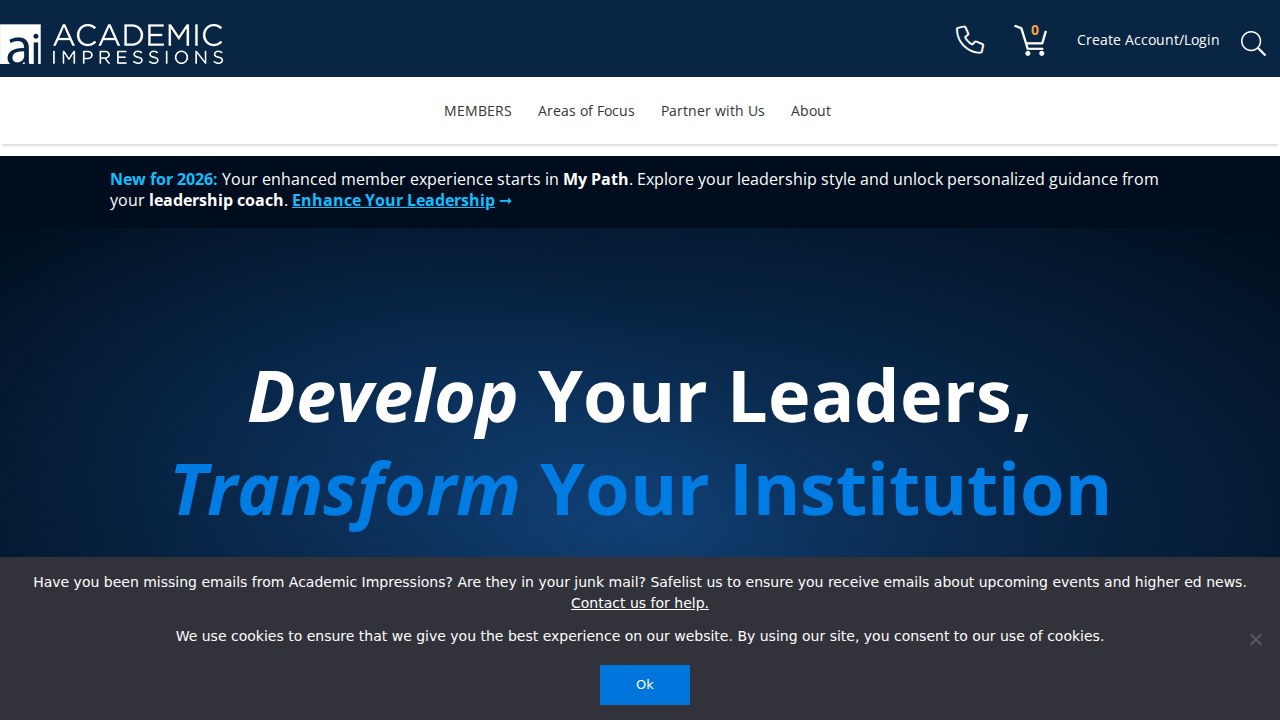
On 01/22/26 academicimpressions.com/ scored 53% — **Fair** – Overall, the fundamentals are in place, but a few key clarity and credibility signals are still inconsistent.
Executive summary
Score Breakdown (High Level)
- Discoverability: 92% - The site checked nearly every box for basic discoverability, but we didn't see a dedicated image or video sitemap in the data.
- Structured Data: 67% - Schema markup was found and valid on both the homepage and blog post, but there’s no organization-type schema on the homepage and the blog post author is missing a sameAs link.
- AI Readiness: 67% - We didn’t see a Wikidata entity for Academic Impressions, but the key technical GEO elements like sitemaps and crawler access are in place.
- Performance: 44% - The homepage had a significant issue with Largest Contentful Paint, but all other measured performance criteria—including resource page metrics—were within acceptable ranges.
- Reputation: 42% - We didn’t see affirmed client issues, but confirmed negative employee reviews and missing homepage links to social profiles were the biggest gaps for reputation and offsite trust signals.
- LLM-Ready Content: 36% - We found schema markup, author info, and recent dates, but key structural elements like subheadings, external links, and audience signals were missing.

What stands out most overall
The big picture is that the site is easy to access and understand at a baseline level, but it’s missing several signals that help AI systems confidently connect identity, credibility, and extractable content structure. A lot of what’s showing up here isn’t “wrong” so much as it’s less explicit than it could be, which can limit how consistently the brand and pages get summarized. The next section walks through the specific areas that didn’t show up in the review, along with why each one matters for AI visibility. None of these are unusual gaps, and they’re the kind of items teams commonly tighten up over time.
Detailed Report
❌ No image or video sitemap was found
What we saw
We weren’t able to find a dedicated sitemap that helps surface image or video content. The main sitemap appears to be present, but media-specific discovery signals didn’t show up.
Why this matters for AI SEO
Generative engines and AI-driven search rely on clear, consistent signals to discover and interpret rich media. When those signals are missing, visual content can be easier to overlook or misattribute.
Next step
Add a clear way for search engines to discover your key image and video content at scale.
❌ Organization details weren’t clearly defined in structured data
What we saw
We didn’t see organization-type structured data on the homepage that clearly describes the business itself. As a result, the site’s formal business identity isn’t being reinforced in that format.
Why this matters for AI SEO
When AI systems try to summarize or recommend a brand, they look for strong, unambiguous identity cues. Clear business definitions help reduce confusion and improve consistency across answers.
Next step
Make sure the homepage clearly defines the organization in a way that can be consistently interpreted by search and AI systems.
❌ Author profile wasn’t connected to external identity references
What we saw
The resource/blog post includes an author, but we didn’t see any external profile references tied to that author. That means the author’s identity isn’t being reinforced beyond the site.
Why this matters for AI SEO
AI-generated results lean heavily on trust and identity continuity when attributing expertise. External identity references help systems feel more confident about who wrote the content.
Next step
Connect the author identity to a small set of consistent, public-facing profiles.
❌ No Wikidata entity was found for the brand
What we saw
We weren’t able to find a Wikidata entity for the brand. This suggests the brand may be less represented in the broader knowledge ecosystem.
Why this matters for AI SEO
Knowledge sources help AI systems confirm that a brand is real, distinct, and consistently described. When that footprint is missing, brand understanding can be thinner or less reliable.
Next step
Establish a consistent brand presence in widely used knowledge sources.
❌ The homepage loaded slowly in a way that can delay the main content
What we saw
The homepage showed a slow load for the primary on-page content. Other performance signals looked okay, but this specific slowdown stood out on the homepage.
Why this matters for AI SEO
If the main content shows up late, both users and crawlers can have a harder time reaching the page’s core message quickly. That can reduce how reliably the homepage is understood and reused in AI-driven contexts.
Next step
Improve how quickly the homepage’s main content becomes available and readable.
❌ Negative employee experience signals were present
What we saw
We saw confirmed negative employee experience assertions in at least one source. While this isn’t about clients, it can still shape the overall perception of the brand.
Why this matters for AI SEO
Generative engines often blend reputation context into summaries and recommendations. Negative signals can introduce hesitation or reduce confidence in brand trust.
Next step
Review and address the publicly visible narratives about employee experience so the broader story is clearer and more consistent.
❌ Brand Wikidata identity could not be confirmed
What we saw
We weren’t able to confirm a matching Wikidata entity for the brand. This leaves a gap in third-party identity verification.
Why this matters for AI SEO
When AI systems can’t confirm a brand in recognized knowledge sources, they may be more cautious or less consistent in how they describe it. That can lead to thinner or fragmented brand summaries.
Next step
Ensure your brand’s identity is represented in a way that can be independently matched and verified.
❌ Official identity anchors weren’t present in Wikidata
What we saw
We didn’t see signals indicating that Wikidata includes official identity anchors for the brand (like a verified official site reference and related identifiers). This reduces the strength of that external identity footprint.
Why this matters for AI SEO
Identity anchors help AI systems connect the dots between a brand name, its official site, and other references. Without them, it’s easier for brand information to be incomplete or mismatched.
Next step
Strengthen the brand’s external identity footprint so it can be confidently tied back to official sources.
❌ The homepage didn’t link to major social profiles
What we saw
We didn’t find outbound links from the homepage to major social profiles. Even if profiles exist, they weren’t clearly connected from the main brand hub.
Why this matters for AI SEO
Generative engines use consistent profile connections to confirm identity and reduce ambiguity. Clear linking helps systems trust they’ve found the right official accounts.
Next step
Make your official social profiles easy to confirm directly from the main site experience.
❌ Independent offsite press coverage wasn’t confirmed
What we saw
We weren’t able to confirm independent press or third-party coverage for the brand in the sources reviewed. This leaves fewer external validation signals.
Why this matters for AI SEO
Independent mentions can act like third-party corroboration when AI systems summarize credibility and notability. Without them, AI may have less context to draw on beyond your own site.
Next step
Build a clearer footprint of independent, third-party references that validate your brand’s presence and work.
❌ The content didn’t include any outbound external links
What we saw
On the content we reviewed, we didn’t see any qualifying outbound links to external sources. The links that were present appeared to stay internal or were not treated as external references.
Why this matters for AI SEO
External references can help AI systems understand context and corroborate claims. Without them, the content may read as less grounded or harder to validate.
Next step
Add a small number of relevant external references where they naturally support the content.
❌ No question-based subheadings were present
What we saw
We didn’t see any subheadings in the content that could be evaluated as question-style headings. In fact, the page didn’t appear to use the subheading structure needed for this check.
Why this matters for AI SEO
Question-style sections make it easier for AI systems to map content to user intents and extract direct answers. Without that structure, useful information can be harder to lift cleanly.
Next step
Organize the content using clear section headings that reflect the questions readers are trying to answer.
❌ Subheadings weren’t descriptive because sections weren’t clearly structured
What we saw
We couldn’t evaluate whether headings were descriptive because the content didn’t include the subheading structure needed to assess it. That makes the page feel more like a single block than a set of clear sections.
Why this matters for AI SEO
Descriptive sections help AI systems quickly understand what each part of the page is about. When the structure isn’t clear, summarization and selective quoting become less reliable.
Next step
Use clear, descriptive section headings so each part of the content is easier to interpret on its own.
❌ Section length couldn’t be evaluated because sections weren’t defined
What we saw
We couldn’t check whether sections were appropriately sized because there weren’t clear sections to measure. Without section breaks, it’s hard to tell where one idea ends and the next begins.
Why this matters for AI SEO
AI systems tend to work best when content is chunked into digestible, self-contained units. Missing structure can make it harder to extract the best parts accurately.
Next step
Break the content into clear sections so each segment can stand on its own.
❌ Section structure wasn’t consistent across the content
What we saw
We didn’t see enough clear sections to evaluate whether the structure was consistent throughout the page. That usually indicates the content isn’t organized into repeatable, scannable patterns.
Why this matters for AI SEO
Consistent structure helps AI systems predict where key information is likely to appear. When structure is inconsistent or missing, extraction quality can drop.
Next step
Format the content so it follows a consistent, easy-to-scan pattern from top to bottom.
❌ Key answers weren’t clearly positioned early within sections
What we saw
We couldn’t evaluate whether key answers appeared early in each section because the page didn’t have the section structure needed to review that pattern. This makes it harder to confirm where the “main point” shows up.
Why this matters for AI SEO
Generative engines often prefer content that gets to the point quickly within a section. When that pattern isn’t clear, important details may be underused in AI summaries.
Next step
Make sure each main section leads with its core takeaway so it’s easy to extract and reuse.
❌ The content didn’t clearly state who it’s for
What we saw
We didn’t see explicit audience/intent phrasing in the content (for example, language that clearly signals who the page is meant to help). That makes the targeting feel implied rather than stated.
Why this matters for AI SEO
AI systems look for clear audience cues to match content to the right query and user context. When the intended reader isn’t stated, relevance can be harder to determine.
Next step
Add clear language that signals the intended audience and the situation the content is meant to support.
❌ No HTML table was present
What we saw
We didn’t see a table element in the content reviewed. That means the page doesn’t provide a structured, scannable data block in that format.
Why this matters for AI SEO
Tables can make comparisons, definitions, and lists easier for AI systems to interpret and reuse accurately. Without them, structured takeaways may be harder to extract cleanly.
Next step
Where it fits naturally, include a simple structured comparison or summary in a table format.
Does Anything Seem Off?
Thanks for taking our free GEO Grader for a spin. When we started this journey, the tool had a fairly long processing time to check everything we wanted both onsite and offsite, so we made a few adjustments on the backend to speed things up. As a result, there are times when the grader may not get everything 100% right. If something feels off, we recommend running the tool a second time to confirm the results. From there, you’re always welcome to reach out to us to schedule a GEO consultation, or to have your SEO provider validate the findings with a more detailed crawl and manual review.
