
Overview:
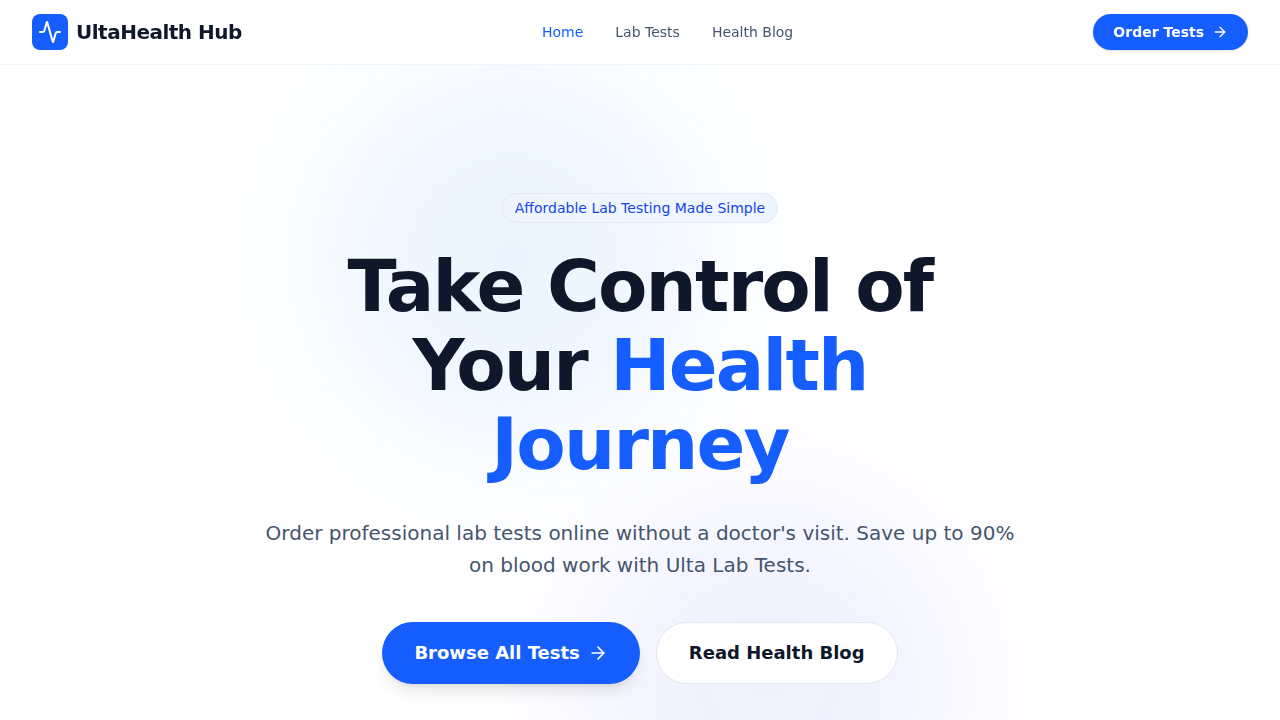
On 04/21/26 ultaclinicallabtestsreview.com/ scored 51% — **Fair** – Overall, the site has a solid base, but some key signals around trust, identity, and content clarity are holding back AI visibility.
Executive summary
Score Breakdown (High Level)
- Discoverability: 100% - The site is technically accessible and easy for search engines to crawl, though it is currently missing specialized sitemaps for images and videos.
- Structured Data: 0% - We couldn't find any schema markup or clear author names on the site, which is a major gap if you're trying to prove to engines that this health info is authoritative.
- AI Readiness: 50% - The site has a strong technical start with an accessible sitemap and no crawler blocks, but it’s missing key brand signals like an "About" page and a Wikidata entity.
- Performance: 100% - Mobile performance is in excellent shape, with lightning-fast load times and perfect visual stability on both the homepage and blog content.
- Reputation: 23% - We weren't able to find any offsite signals like reviews, social profiles, or press coverage, leaving the brand largely unrecognized by the major AI models we checked.
- LLM-Ready Content: 48% - The page is structurally sound with helpful data tables and recent updates, but lacks author transparency and clear acronym definitions.

The big picture before the details
What stands out most is that the site looks strong in some baseline areas, but it’s missing several signals that help AI systems confidently understand who’s behind the content and why it should be trusted. The gaps read less like “something is wrong” and more like the brand and content aren’t fully legible to AI in the places where credibility and identity matter most. The next section breaks down the specific failed areas across discoverability, structured data, AI readiness, reputation, and LLM-ready content. None of this is unusual, but it does explain why AI visibility may feel a bit inconsistent right now.
Detailed Report
Discoverability
❌ No image or video sitemap found
What we saw
We didn’t detect an image sitemap or a video sitemap. That means visual content doesn’t have a dedicated discovery path in the data we reviewed.
Why this matters for AI SEO
When AI-powered experiences pull in visual results or cite media, they often rely on clear, consistent signals that help them find and understand those assets. Without that extra layer of visibility, your images and videos are easier to miss.
Next step
Add an image sitemap and/or video sitemap so your visual assets have a clear, searchable inventory.
Structured Data
❌ No schema markup detected on the homepage
What we saw
We didn’t find any schema.org markup on the homepage in the formats we typically see. As a result, the page doesn’t provide explicit machine-readable context about what it represents.
Why this matters for AI SEO
Generative engines use these structured cues to “connect the dots” quickly and consistently. When they’re missing, the site can be harder to categorize and summarize with confidence.
Next step
Add schema.org markup to the homepage to clearly describe the site and what it offers.
❌ No organization-level schema found
What we saw
We didn’t find organization-related schema types on the homepage. That leaves the brand identity less explicit in the structured signals available.
Why this matters for AI SEO
For AI systems, clear organization identity helps with trust, attribution, and entity matching. When it’s not spelled out, it’s easier for the brand to blend in or be treated as ambiguous.
Next step
Include organization-type schema that clearly identifies the brand behind the site.
❌ No schema markup detected on the resource/blog page
What we saw
We didn’t detect any schema.org markup on the evaluated resource/blog page. That page is relying on visible content alone to communicate what it is.
Why this matters for AI SEO
Resource pages are often what AI systems pull from when answering questions. Without structured signals, it’s harder for them to reliably interpret the page type and how to attribute it.
Next step
Add schema.org markup to key resource/blog pages to make their purpose and context unambiguous.
❌ No schema available to validate for errors
What we saw
Because no schema was present, there wasn’t anything to evaluate for completeness or correctness. In practice, this means the structured layer is missing entirely.
Why this matters for AI SEO
This removes a key source of consistent, machine-readable context that helps AI engines extract accurate facts. It also increases the odds that your content is interpreted inconsistently across systems.
Next step
Implement baseline schema.org markup so your structured signals exist and can be validated over time.
❌ Resource/blog post lacks a clear author
What we saw
We didn’t find an identifiable author (a specific individual or entity) for the evaluated health guide. The page doesn’t clearly say who wrote the content.
Why this matters for AI SEO
For health-related topics especially, AI systems look for clear attribution to understand expertise and credibility. Missing author information makes it harder to trust and reuse the content.
Next step
Add a clear author name to the resource/blog post so attribution is obvious to both users and AI systems.
❌ No author schema with identity links
What we saw
We didn’t see author schema or identity links (like sameAs references) tied to an author entity. That leaves the author’s footprint disconnected from recognizable profiles.
Why this matters for AI SEO
AI engines are more confident when they can reconcile “who wrote this” with an identifiable entity. Without those linking signals, author credibility is harder to establish.
Next step
Add author schema and include identity links that point to the author’s known profiles.
AI Readiness
❌ No About/Company-style page linked from the homepage
What we saw
We didn’t find a homepage link that clearly points to an About, Company, Team, or Who-we-are style page. That makes it harder to quickly understand who’s behind the site.
Why this matters for AI SEO
AI systems lean on clear brand context to interpret content and assign trust. When identity and purpose aren’t easy to confirm, the site can be treated as less authoritative.
Next step
Publish and prominently link a brand context page that clearly explains who you are and what you do.
❌ No Wikidata entity found for the brand
What we saw
No Wikidata item ID was associated with the brand in the information reviewed. That leaves the brand without a strong, centralized identity reference.
Why this matters for AI SEO
Wikidata often acts as a common “anchor” that helps models verify entities and relationships. Without it, brand verification can be less consistent.
Next step
Create (or claim, if it already exists) a Wikidata entity that clearly represents the brand.
Reputation
❌ Limited brand recognition in AI results
What we saw
The brand didn’t show strong recognition in the sources used for this assessment. In practice, the brand is showing up as “not well established” in the broader ecosystem.
Why this matters for AI SEO
When AI systems don’t recognize a brand, they’re less likely to treat it as a default source. That can reduce how often your site is surfaced, cited, or summarized.
Next step
Strengthen your brand’s external presence so it’s easier for AI systems to recognize and validate.
❌ Brand identity appears inconsistent or incomplete
What we saw
We couldn’t confirm a verified physical address, and there wasn’t a strong consensus on the official brand name across sources. That creates ambiguity around the entity.
Why this matters for AI SEO
Identity ambiguity makes it harder for AI systems to confidently match your site to the right brand entity. That can reduce trust and lead to weaker attribution.
Next step
Make your official brand identity details consistent and easy to verify across public-facing sources.
❌ No Wikidata presence supporting the brand
What we saw
A matching Wikidata entity wasn’t found for the brand. This leaves a key identity anchor missing from the knowledge graph layer.
Why this matters for AI SEO
Wikidata can help generative engines resolve who you are and connect related information accurately. Without it, your brand can be harder to validate.
Next step
Establish a clear Wikidata entity for the brand and ensure it aligns with your public identity.
❌ No third-party reviews detected
What we saw
We didn’t detect third-party reviews or clear review sources associated with the brand. That means there’s little independent validation visible in the data reviewed.
Why this matters for AI SEO
AI systems tend to trust brands more when independent feedback is easy to find and corroborate. Without reviews, credibility signals look thinner.
Next step
Build a consistent footprint on reputable third-party review platforms relevant to your space.
❌ Social footprint not clearly established
What we saw
No major social media profiles were clearly identified, and the homepage didn’t link out to common social platforms. As a result, social identity signals appear missing.
Why this matters for AI SEO
Established social profiles can reinforce that a brand is real, active, and consistently represented. When those signals aren’t present, AI systems have fewer ways to verify the entity.
Next step
Ensure the brand has clearly identifiable official social profiles and that they’re easy to find.
❌ No independent press or owned press presence detected
What we saw
We didn’t see evidence of independent press coverage or owned press releases validating the brand’s expertise or market presence. That leaves a gap in third-party confirmation.
Why this matters for AI SEO
Press and editorial mentions are strong signals that help AI systems gauge legitimacy and authority. Without them, the brand can appear less established.
Next step
Develop a track record of credible mentions that clearly tie back to the brand.
LLM-Ready Content (Blog Analysis)
Heads up: this section looks at one article as a snapshot, so it’s a little more interpretive than the rest of the report and may shift slightly from run to run. Have questions? Just shoot us an email at hello@v9digital.com
❌ No visible author attribution
What we saw
We didn’t find a visible author name or a clearly identified individual tied to the article. That makes the content feel more anonymous than it needs to be.
Why this matters for AI SEO
AI systems weigh attribution heavily when deciding what content is credible enough to reuse, especially in health-related topics. Missing authorship can limit trust and citation potential.
Next step
Add a clear, non-generic author name to the article so expertise and ownership are explicit.
❌ Uneven content chunking in the main guide
What we saw
One major section of the guide runs as a very large block of text, making the structure feel lopsided. Even with subheadings, the core section is harder to scan and parse cleanly.
Why this matters for AI SEO
LLMs tend to handle well-bounded sections more reliably than oversized blocks. When chunking is uneven, the model may miss, compress, or mis-prioritize details.
Next step
Break the largest guide section into smaller, clearly separated sections so each topic is easier to interpret.
❌ Key answers don’t consistently show up early
What we saw
Many sections begin with very short, generic opening lines rather than a helpful, descriptive lead-in. As a result, the most important takeaways aren’t consistently surfaced near the top of each section.
Why this matters for AI SEO
When the main point appears early, AI systems are more likely to extract and reuse it accurately. Thin intros can make sections feel vague, which reduces clarity in summaries and citations.
Next step
Rewrite section openers so each one starts with a clear, descriptive lead that states the key takeaway.
Does Anything Seem Off?
Thanks for taking our free GEO Grader for a spin. When we started this journey, the tool had a fairly long processing time to check everything we wanted both onsite and offsite, so we made a few adjustments on the backend to speed things up. As a result, there are times when the grader may not get everything 100% right. If something feels off, we recommend running the tool a second time to confirm the results. From there, you’re always welcome to reach out to us to schedule a GEO consultation, or to have your SEO provider validate the findings with a more detailed crawl and manual review.
