
Overview:
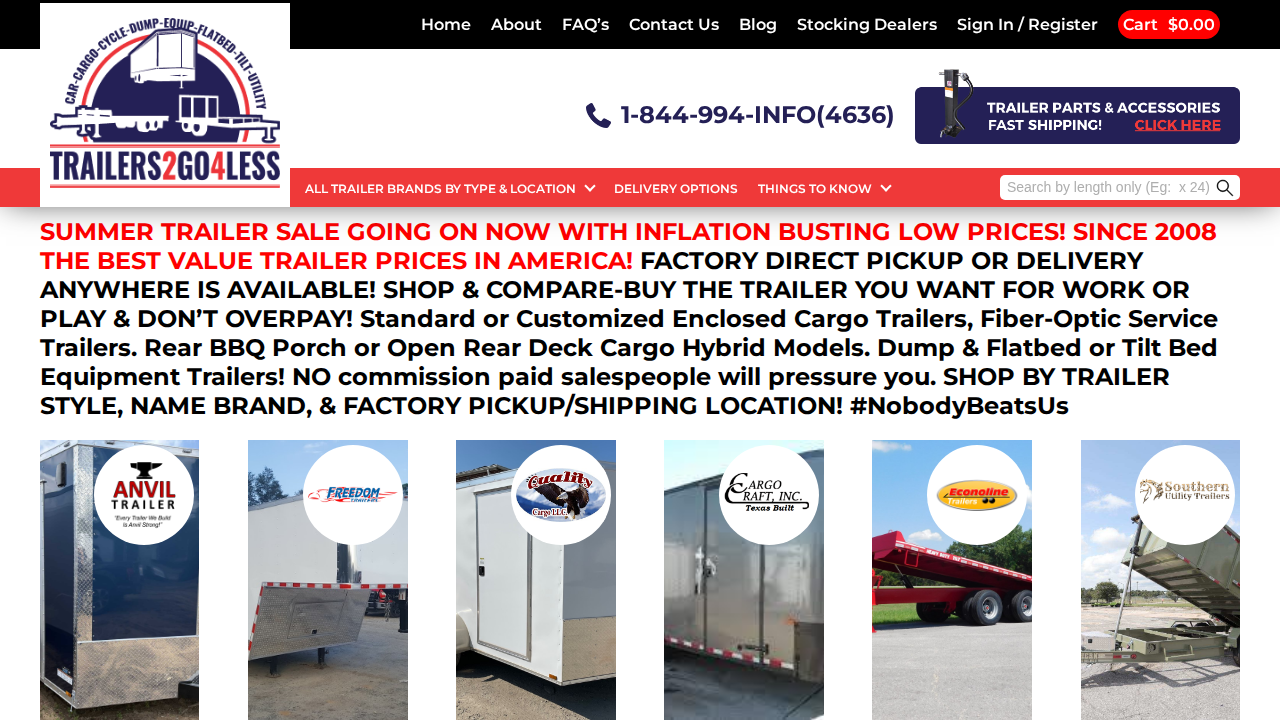
On 06/30/26 trailers2go4less.com scored 61% — **Decent** – Overall, the site is in a solid place for being found and understood, but a few credibility and content clarity gaps are holding back stronger AI visibility.
Executive summary
Score Breakdown (High Level)
- Discoverability: 100% - The site’s technical discoverability is in great shape with solid metadata and sitemaps, though we didn't find specific files for image or video indexing.
- Structured Data: 58% - The homepage schema is correctly configured with organization details, but the lack of resource-page data prevented us from verifying author-level trust signals.
- AI Readiness: 67% - The site has a rock-solid technical foundation with accessible crawlers and detailed sitemaps, though it's currently missing a formal Wikidata entity to tie the brand together.
- Performance: 50% - Mobile performance is generally solid in terms of stability and responsiveness, though the initial loading of main content is quite slow.
- Reputation: 58% - The site has a strong offsite presence and is well-recognized, but conflicting address info and some negative feedback are holding the reputation score back.
- LLM-Ready Content: 52% - The page has excellent technical metadata and fresh update dates, but it lacks an identified author and the chunked structure that AI systems prefer.

Where things stand overall
The big picture is that the site is generally easy to discover and understand, but a few core signals around trust, identity, and content formatting are coming through as incomplete. These aren’t “bad” flags as much as places where the site’s story and credibility aren’t as clearly reinforced as they could be across sources and on-page structure. Below, we’ll walk through the specific areas that were flagged so you can see exactly what was missing or inconsistent. Overall, this is a manageable set of gaps, and the report makes them pretty straightforward to pinpoint.
Detailed Report
Discoverability
❌ Missing image or video sitemap
What we saw
We didn’t find an image sitemap or a video sitemap in the provided data. That means rich media on the site may not be getting the same level of visibility support as the rest of the content.
Why this matters for AI SEO
AI-driven discovery often leans on clear, well-organized signals to understand what a site offers. When visual assets aren’t clearly surfaced, it can limit how confidently systems connect your products and pages to relevant queries.
Next step
Add a dedicated image sitemap and/or video sitemap so your visual content is easier to surface and understand.
Structured Data
❌ No structured data verified on a resource/blog page
What we saw
We weren’t able to review a resource/blog page in the evaluation packet, so we couldn’t confirm whether that page includes structured data. As a result, content-level signals beyond the homepage weren’t verifiable here.
Why this matters for AI SEO
When AI systems interpret content, they rely on consistent, repeatable cues across the site—not just the homepage. If deeper content pages don’t clearly describe what they are, it can reduce how confidently that content gets categorized and reused.
Next step
Make sure your resource/blog content pages include structured data that describes the page and its key details.
❌ Blog/resource author not confirmed
What we saw
Because a resource/blog page wasn’t included in the provided data, we couldn’t verify that the content has a clear, non-generic author. That leaves a gap in how authorship and accountability are communicated.
Why this matters for AI SEO
Authorship is one of the quickest ways for AI systems (and users) to understand “who is behind this.” When that’s unclear, it can make content feel less attributable and harder to trust.
Next step
Ensure each resource/blog post clearly identifies a specific author (not a generic label).
❌ Author identity links not confirmed
What we saw
We couldn’t confirm that author profiles include external identity links (like consistent profile references) because the resource/blog page wasn’t provided in the evaluation data. This leaves the author’s online identity less connected.
Why this matters for AI SEO
AI systems build confidence when a person or brand can be connected across multiple consistent sources. Without those connectors, it’s harder for systems to be sure they’re referencing the same real-world entity.
Next step
Add consistent identity/profile links to author information so authors are easier to validate across the web.
AI Readiness
❌ No Wikidata entity found for the brand
What we saw
We didn’t find a Wikidata item ID for the brand in the provided data. That means there isn’t a widely recognized public “entity record” to anchor brand identity.
Why this matters for AI SEO
AI engines often look for strong, consistent identity references to confirm who a brand is. When that identity anchor isn’t present, it can make brand understanding less certain in AI-generated results.
Next step
Create or claim a Wikidata entity for the brand and connect it to official brand references.
Performance
❌ Main homepage content is slow to appear
What we saw
The homepage’s primary content took a long time to fully load on mobile in the evaluation data. That creates a noticeable delay before users (and some systems) can get to the core information.
Why this matters for AI SEO
If key content is slow to show up, it can reduce how consistently it’s experienced and interpreted, especially for mobile-first discovery. Slower experiences also increase the chance that visitors don’t reach the parts of the page that establish relevance and trust.
Next step
Improve the time it takes for the homepage’s main content to appear for mobile visitors.
Reputation
❌ Negative client feedback was flagged
What we saw
The offsite evaluation data flagged negative client assertions as present. This suggests there are notable critical signals in the broader conversation about the brand.
Why this matters for AI SEO
AI systems pull from a mix of sources to summarize reputation and reliability. When negative client sentiment is prominent, it can influence how confidently the brand is portrayed in AI answers.
Next step
Review the flagged client feedback sources and document the themes that are coming through most clearly.
❌ Negative employee feedback was flagged
What we saw
The offsite evaluation data flagged negative employee assertions as present. This indicates the employer-side reputation signals may not be uniformly positive.
Why this matters for AI SEO
AI summaries don’t always separate customer experience from workplace sentiment. Negative employee narratives can still shape how a brand is described, especially in high-level overviews.
Next step
Identify the sources driving employee sentiment and summarize the recurring issues being cited.
❌ Brand identity details conflict across sources
What we saw
A conflict was detected in the business address data provided by different models (Yakima, WA vs Miami, FL). That inconsistency makes the brand’s “who/where” signals feel less locked in.
Why this matters for AI SEO
When identity details don’t align across sources, AI systems have a harder time confidently associating information to the right brand. That can lead to uncertainty in brand summaries and references.
Next step
Standardize the brand’s core identity details so the same location information shows up consistently.
❌ No matching Wikidata entity confirmed
What we saw
No matching Wikidata entity was found for the brand in the provided data. This aligns with the missing entity signal seen elsewhere in the report.
Why this matters for AI SEO
Wikidata is a common reference layer used to reconcile brand identity across the web. Without a matching entity, it’s harder for AI to confidently “pin” the brand to an authoritative record.
Next step
Create or validate a Wikidata entry that clearly matches the brand’s real-world identity.
❌ Wikidata identity anchors not detected
What we saw
No official identity anchors were detected in Wikidata for the brand in the provided data (like an official website reference). That leaves fewer “hard links” connecting the brand to authoritative sources.
Why this matters for AI SEO
Identity anchors help AI systems confirm they’re referencing the right organization. When those anchors are missing, brand association can be weaker or more ambiguous.
Next step
Add official brand identity anchors to Wikidata so it clearly points to the brand’s verified sources.
LLM-Ready Content (Blog Analysis)
Heads up: this section looks at one article as a snapshot, so it’s a little more interpretive than the rest of the report and may shift slightly from run to run. Have questions? Just shoot us an email at hello@v9digital.com
❌ No clear author shown on the article
What we saw
We didn’t see a clear, non-generic author listed on the page (either visibly or in the page’s supporting data). That makes it harder to attribute the content to a real person or accountable source.
Why this matters for AI SEO
AI systems are more likely to trust and reuse content when authorship is clear. When the author isn’t obvious, the content can look less attributable and less credible.
Next step
Add a specific author name to the article so it’s easy to understand who created it.
❌ Content is only lightly sectioned
What we saw
The article was broken into only two main sections, which makes the structure feel a bit flat. There aren’t enough distinct sections to help readers (and AI) quickly scan and extract key points.
Why this matters for AI SEO
Clear sectioning helps AI systems identify topic boundaries and pull the right snippet for the right question. When structure is thin, content can be harder to parse and summarize accurately.
Next step
Expand the article into more clearly defined sections so each major idea has its own home.
❌ No table-based information found
What we saw
No data tables were detected on the page. That means any specs, comparisons, or structured details are likely presented only in paragraph form.
Why this matters for AI SEO
Tables make it easier for AI to pull clean, structured facts and comparisons. Without them, information extraction can be less reliable, especially for spec-driven topics.
Next step
Add a simple table where a structured comparison or list of key details would help clarify the content.
❌ Key answers don’t show up early in sections
What we saw
The sections didn’t start with substantial introductory paragraphs that quickly explain the point of the section. As a result, readers have to work a bit harder to get to the “so what?”
Why this matters for AI SEO
AI systems tend to favor content that gets to the point quickly and states answers clearly. When the early part of each section doesn’t provide that clarity, it can reduce how easily the content is summarized.
Next step
Make sure each main section opens with a short, clear paragraph that states the takeaway up front.
Does Anything Seem Off?
Thanks for taking our free GEO Grader for a spin. When we started this journey, the tool had a fairly long processing time to check everything we wanted both onsite and offsite, so we made a few adjustments on the backend to speed things up. As a result, there are times when the grader may not get everything 100% right. If something feels off, we recommend running the tool a second time to confirm the results. From there, you’re always welcome to reach out to us to schedule a GEO consultation, or to have your SEO provider validate the findings with a more detailed crawl and manual review.
