
Overview:
On 07/26/26 omegalocksmith.com scored 70% — **Decent** – Overall, the site looks pretty solid for AI visibility, with a few clear gaps around brand trust signals and how some content is packaged for quick understanding.
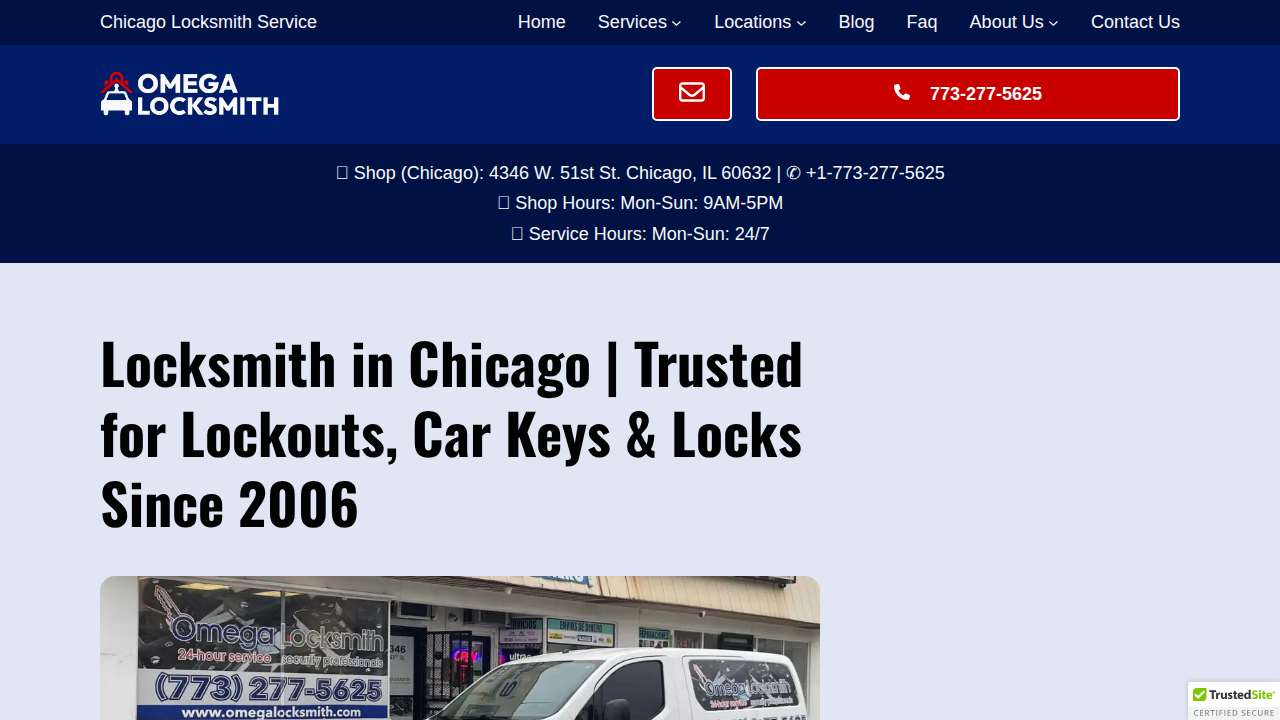
Executive summary
Score Breakdown (High Level)
- Discoverability: 100% - The site is very easy for search engines to find and index, though adding a dedicated image sitemap would be a nice final touch.
- Structured Data: 58% - The homepage setup is technically solid with detailed business and organization markup, though we weren't able to verify authorship or content-specific schema because no resource page was provided.
- AI Readiness: 67% - The site is technically very ready for AI engines with open crawling and clear brand pages, though it is missing a Wikidata entry to anchor its authority.
- Performance: 67% - Mobile performance is exceptionally strong, with the homepage hitting a perfect Lighthouse score and showing zero blocking time.
- Reputation: 54% - The brand shows a healthy social presence and recognized customer reviews, but identified negative feedback and a lack of offsite authority markers like Wikidata are currently limiting the reputation score.
- LLM-Ready Content: 84% - The site is well-optimized for generative engines, featuring clear professional authorship and a recently updated structure that prioritizes direct answers.

What stands out before the deep dive
The big picture is that your onsite foundation reads clearly, but a few key trust and identity signals around the brand are coming through inconsistently. None of this looks like a “something’s wrong” situation—it’s more that some important details aren’t as easy for AI systems to verify or connect across sources. Below, we’ll walk through the specific areas where clarity was missing, organized by section so you can see exactly what showed up where. Overall, this is a manageable set of gaps, and the details should make the path forward feel pretty straightforward.
Detailed Report
Discoverability
❌ Visual content discoverability signal missing
What we saw
We didn’t find any dedicated support for helping search engines discover image or video content across the site. That means visual assets may be harder to surface reliably through automated systems.
Why this matters for AI SEO
Generative engines lean on clear discovery pathways to find and understand what media exists and how it relates to your pages. When that visibility is limited, your visual content is less likely to show up in AI-driven answers and summaries.
Next step
Add a clear, crawlable way for search engines to discover your image and/or video content at scale.
Structured Data
❌ Resource/blog page structured data couldn’t be verified
What we saw
A resource/blog page wasn’t available in the evaluation snapshot, so we couldn’t confirm whether those pages include the same kind of structured details as the homepage. As a result, there’s a blind spot around how article-level pages are being interpreted.
Why this matters for AI SEO
AI systems are more confident when they can consistently classify and contextualize content across page types, not just the homepage. If deeper pages aren’t clearly described, they’re easier to misunderstand or skip.
Next step
Confirm that your blog/resource templates include clear, consistent structured details that describe the page and its content.
❌ Article author clarity couldn’t be confirmed
What we saw
Because a resource/blog post wasn’t provided for review, we couldn’t verify whether article pages consistently show a clear, non-generic author. That makes it harder to validate authorship signals on the content that’s meant to earn trust.
Why this matters for AI SEO
Authorship is one of the simplest ways for AI tools to understand who is speaking and whether content should be trusted or cited. When author details aren’t clearly available, AI may rely on weaker cues.
Next step
Make sure each resource/blog post displays a specific author that can be recognized as a real person or accountable entity.
❌ Author profile cross-references couldn’t be confirmed
What we saw
A blog/resource post wasn’t available to validate whether author profiles include consistent external references that help confirm identity. This leaves uncertainty around whether author entities are easy to reconcile across the web.
Why this matters for AI SEO
Generative engines do better when they can connect the same author across multiple trusted locations. Without those connections, it’s harder for AI to confidently attribute expertise and reuse content.
Next step
Ensure author profiles are consistently tied to the same public identity references wherever they appear.
AI Readiness
❌ Brand entity reference not found
What we saw
We didn’t see a recognized public entity reference for the brand in the data we reviewed. That creates a bit of ambiguity around tying your brand to a single, stable identity.
Why this matters for AI SEO
AI models rely on strong identity anchors to reduce confusion between similarly named businesses and to confidently merge information from different sources. When that anchor is missing, brand understanding can be less consistent.
Next step
Establish a clear, public-facing brand entity reference that unambiguously matches your business.
Reputation
❌ Negative client feedback surfaced
What we saw
We saw negative client feedback associated with the brand in the available offsite signals. This stands out as a trust friction point.
Why this matters for AI SEO
Generative engines often summarize reputational themes when people ask “is this company good?” or “can I trust them?” Negative sentiment can shape those summaries quickly.
Next step
Review the main negative themes showing up publicly and ensure your brand narrative and customer-facing responses are consistent.
❌ Brand identity consistency looks unclear
What we saw
We saw signs that key identity details weren’t consistently confirmed across sources, including conflicting or incomplete business identity information. That makes it harder to get one clean “source of truth” about the brand.
Why this matters for AI SEO
When AI systems see mismatched brand details, they can hesitate, merge you with another entity, or present outdated information. Consistent identity signals directly affect trust and accuracy.
Next step
Align core brand identity details across the main places your business is referenced online.
❌ Public brand entity entry not found
What we saw
We didn’t find a matching public entity entry for the brand in the signals reviewed. This limits how easily AI systems can confirm who you are.
Why this matters for AI SEO
Entity-level references help AI models connect your website, reviews, and mentions into one coherent profile. Without that, your brand can be harder to “lock in.”
Next step
Create or claim a public brand entity entry that clearly represents your business.
❌ Brand identity anchors weren’t present
What we saw
We didn’t see strong public identity anchors tied to an official brand entity entry (like an official website reference or consistent identifiers). That reduces confidence in automated identity matching.
Why this matters for AI SEO
AI systems use anchors to validate that an entity and a website belong together. When anchors aren’t available, AI may rely on weaker signals that are easier to get wrong.
Next step
Make sure your primary brand entity references include clear anchors that point back to your official web presence.
❌ Official social profile set couldn’t be confirmed
What we saw
We couldn’t confirm a consistent, reconciled set of official social profiles across sources. That can create uncertainty around which profiles are authoritative.
Why this matters for AI SEO
Social profiles are commonly used as supporting identity signals. If the “official set” isn’t clear, AI may pick the wrong profile or avoid using them as trusted references.
Next step
Standardize the official social profiles associated with the brand across your key public listings and references.
❌ Independent press coverage not found
What we saw
We didn’t find independent, third-party press mentions associated with the brand in the signals reviewed. That leaves a gap in external validation.
Why this matters for AI SEO
Independent mentions help AI systems gauge legitimacy and notability beyond your owned channels. Without them, AI has fewer neutral references to pull from.
Next step
Build a clearer footprint of independent third-party mentions that reference your brand consistently.
LLM-Ready Content (Blog Analysis)
Heads up: this section looks at one article as a snapshot, so it’s a little more interpretive than the rest of the report and may shift slightly from run to run. Have questions? Just shoot us an email at hello@v9digital.com
❌ Sections are a bit too short to fully land context
What we saw
The page is broken into many sections, but the average section length came in on the short side. That can make the content feel more like quick notes than fully developed explanations.
Why this matters for AI SEO
AI engines tend to perform better when each section contains enough context to stand on its own. Short sections can limit how confidently a model can summarize or reuse a specific part of the page.
Next step
Combine or expand the shorter sections so each one provides a fuller, self-contained explanation of its subtopic.
❌ No table-based summary found
What we saw
We didn’t see a table used anywhere in the content. That means there isn’t a compact, structured summary for quick scanning.
Why this matters for AI SEO
Tables can make key comparisons and definitions easier for AI systems to extract accurately. Without that structure, important details may be interpreted more loosely.
Next step
Add a simple table where it would naturally help summarize options, steps, comparisons, or key takeaways.
Does Anything Seem Off?
Thanks for taking our free GEO Grader for a spin. When we started this journey, the tool had a fairly long processing time to check everything we wanted both onsite and offsite, so we made a few adjustments on the backend to speed things up. As a result, there are times when the grader may not get everything 100% right. If something feels off, we recommend running the tool a second time to confirm the results. From there, you’re always welcome to reach out to us to schedule a GEO consultation, or to have your SEO provider validate the findings with a more detailed crawl and manual review.
