
Overview:
On 05/30/26 noema-cognition.com scored 71% — **Good** – Overall, most of the fundamentals are in place, with a few clarity and credibility gaps keeping the site from being as easy for AI systems to interpret and trust as it could be.
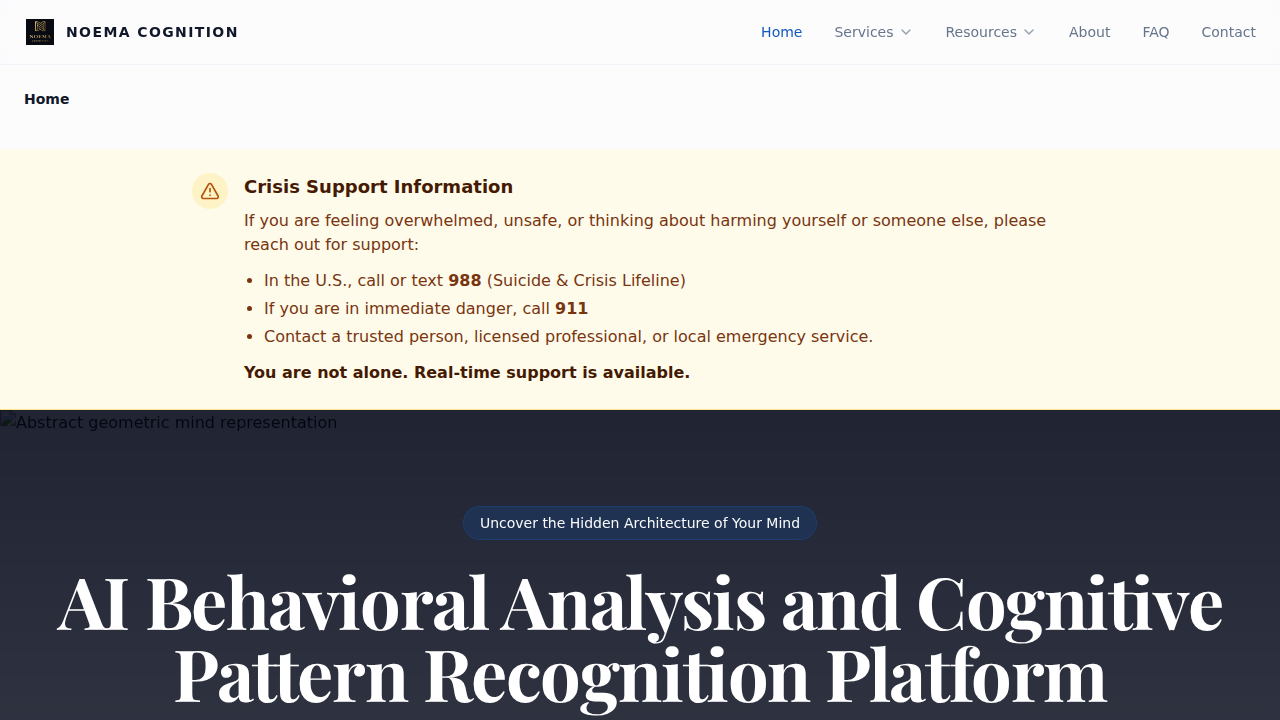
Executive summary
Score Breakdown (High Level)
- Discoverability: 100% - The site is technically very accessible to search engines with all core discovery signals correctly implemented, though it lacks specialized media sitemaps.
- Structured Data: 42% - The homepage features a good foundation of organizational schema, but a broken script tag and the absence of data for resource pages prevent a higher score.
- AI Readiness: 67% - The site’s technical foundation is in great shape for AI crawlers, though establishing a Wikidata presence would further solidify the brand's identity in knowledge graphs.
- Performance: 67% - Mobile performance generally landed outside the 'poor' range, showing solid responsiveness and stability.
- Reputation: 65% - The brand is well-recognized and has solid press coverage, but it currently lacks critical independent trust anchors like verified reviews and a Wikidata profile.
- LLM-Ready Content: 84% - The site is highly accessible for AI systems thanks to its clear authorship and descriptive headings, although it lacks HTML tables and features sections that are slightly shorter than the ideal range for content chunking.

The main themes behind the results
What stands out most is that the site is broadly understandable, but a few key signals are either inconsistent or not reliably readable, which can make AI systems hesitate. The gaps here read less like “something is wrong” and more like “some important context isn’t as clear or verifiable as it could be,” especially around brand identity and how content is packaged. Next, the report breaks down the specific areas where those clarity and trust signals fell short, section by section. None of this is unusual—these are common, fixable patterns as brands mature their AI visibility.
Detailed Report
Discoverability
❌ Image or video sitemap not found
What we saw
We didn’t find an image sitemap or a video sitemap available for the site. Everything else in this area looked straightforward, but this specific piece wasn’t present.
Why this matters for AI SEO
When media content is easier to discover and catalog, it’s more likely to show up consistently in AI-generated answers that pull from multiple sources. Missing media discovery signals can reduce visibility for image- and video-based content.
Next step
Add a dedicated image and/or video sitemap (if you publish meaningful media) and make sure it’s discoverable alongside your standard sitemap.
Structured Data
❌ Resource/blog structured data couldn’t be verified
What we saw
We weren’t able to review the resource/blog page content that was needed for this check, so we couldn’t confirm whether structured data is present there. As a result, this part of the site’s content packaging is effectively “unknown” from the report’s perspective.
Why this matters for AI SEO
AI systems tend to trust content more when they can clearly understand what a page is (and how it relates to your brand) in a consistent, machine-readable way. If resource pages don’t send clear signals, it can be harder for AI to interpret and reuse that content confidently.
Next step
Confirm your resource/blog templates include structured data consistently and ensure the key fields for those pages are present.
❌ Major structured data error on the homepage
What we saw
A structural issue on the homepage caused the main structured data block to break, which can lead systems to ignore it. In plain terms: the page includes the right kind of information, but it isn’t reliably readable in its current form.
Why this matters for AI SEO
If structured data can’t be parsed cleanly, AI and search systems may discard it instead of partially using it. That makes it harder for them to validate key brand facts and connect your site to the right entity.
Next step
Fix the homepage structured data so it parses without errors and can be consistently understood by crawlers.
❌ Blog/resource author clarity couldn’t be confirmed
What we saw
Because the resource/blog page file wasn’t available for review, we couldn’t verify that the author is clearly identified there and not generic. This leaves uncertainty around authorship signals on content pages.
Why this matters for AI SEO
Clear authorship helps AI systems decide what to trust and what to cite, especially for informational content. If author information is missing or vague, it can weaken how confidently your content is summarized or reused.
Next step
Make sure each resource/blog post clearly names a real author in a consistent way across your content.
❌ Author identity links couldn’t be confirmed
What we saw
We couldn’t validate whether author identity links (like consistent profile references) were included for blog/resource content because the necessary page file wasn’t provided. That means the report can’t confirm a stable “identity trail” for authors.
Why this matters for AI SEO
When author identities can be connected across the web, AI systems have an easier time attributing expertise and avoiding confusion with similarly named people. Without that connective tissue, trust and attribution can be weaker.
Next step
Ensure author profiles include consistent identity links that help confirm the author across trusted sources.
AI Readiness
❌ No Wikidata entity found for the brand
What we saw
We didn’t find a Wikidata entity connected to the brand. That means there isn’t a clear, centralized public reference point that many systems use for entity verification.
Why this matters for AI SEO
Generative engines often lean on structured knowledge sources to confirm “who is who” and reduce ambiguity. Without that kind of anchor, brand identity can be harder to validate consistently.
Next step
Establish a matching Wikidata entity for the brand and ensure it aligns with your official identity details.
Reputation
❌ Brand identity appears inconsistent across sources
What we saw
Different sources surfaced conflicting physical address information for the brand, with locations reported in both California and Arizona. That inconsistency makes it difficult to establish a single “official” business profile.
Why this matters for AI SEO
When key brand facts vary across the web, AI systems may hedge, omit details, or merge information incorrectly. Consistency is a major factor in whether a brand is represented cleanly in generated answers.
Next step
Align your official business address details across the primary places your brand is referenced online.
❌ No matching Wikidata entity for reputation validation
What we saw
A matching Wikidata entity wasn’t found for the brand in the reputation review. This leaves the brand without a widely recognized external reference point that helps confirm identity.
Why this matters for AI SEO
Without a reliable third-party “source of truth,” AI systems can have a harder time reconciling brand facts across multiple sources. That can lead to inconsistent outputs, especially around business identity details.
Next step
Create or claim a Wikidata entry that clearly represents the brand and matches your official name, site, and identity info.
❌ Wikidata identity anchors not present
What we saw
Because there was no confirmed Wikidata entity, we also couldn’t verify the presence of official identity anchors there (the kinds of references that help confirm the brand). This leaves a gap in how easily systems can “lock in” the correct entity.
Why this matters for AI SEO
Identity anchors help generative engines connect your brand to the right online footprint and reduce mix-ups. Without them, AI may rely on weaker signals that are more prone to inconsistency.
Next step
Make sure the brand’s key official references are represented in a centralized entity profile that AI systems commonly use.
❌ Third-party customer reviews weren’t found
What we saw
We weren’t able to find a clear consensus of third-party customer reviews or feedback for the brand. Social profiles were present, but independent review coverage didn’t show up in a concrete way.
Why this matters for AI SEO
AI systems often look for independent validation to support trust and credibility. When review signals are thin or missing, the brand may be described more cautiously or with less detail.
Next step
Build a clearer footprint of third-party customer feedback on reputable, independent review platforms.
❌ Review sources weren’t concrete
What we saw
Even where feedback was implied, we didn’t see strong, verifiable review sources that AI systems typically treat as reliable references. That makes it hard to treat customer sentiment as an established signal.
Why this matters for AI SEO
Concrete, consistent sources help AI models summarize reputation with confidence. Without them, generated answers may avoid mentioning customer satisfaction, ratings, or adoption signals.
Next step
Strengthen review visibility by ensuring customer feedback is clearly hosted and attributable on well-known third-party platforms.
LLM-Ready Content
❌ Content sections were too short to carry full context
What we saw
The content was broken into sections that, on average, were shorter than expected for a single topic to be fully developed. That can make the page feel a bit “fragmented” when a system tries to summarize it.
Why this matters for AI SEO
AI models tend to do better when each section contains enough complete context to stand on its own. When sections are very small, important nuance can get scattered and lost during extraction or summarization.
Next step
Rework section grouping so each section covers a complete thought with enough supporting detail to stay coherent on its own.
❌ No HTML table found
What we saw
We didn’t find any HTML tables on the page. That means the content didn’t include an easy-to-scan, structured layout for comparisons or quick reference.
Why this matters for AI SEO
Tables can make it easier for AI systems to pull out specific facts and relationships without guessing. Without them, systems may rely more heavily on narrative interpretation, which can be less precise.
Next step
Where it fits naturally, add a simple table that summarizes key comparisons, definitions, or takeaways from the article.
Does Anything Seem Off?
Thanks for taking our free GEO Grader for a spin. When we started this journey, the tool had a fairly long processing time to check everything we wanted both onsite and offsite, so we made a few adjustments on the backend to speed things up. As a result, there are times when the grader may not get everything 100% right. If something feels off, we recommend running the tool a second time to confirm the results. From there, you’re always welcome to reach out to us to schedule a GEO consultation, or to have your SEO provider validate the findings with a more detailed crawl and manual review.
