
Overview:
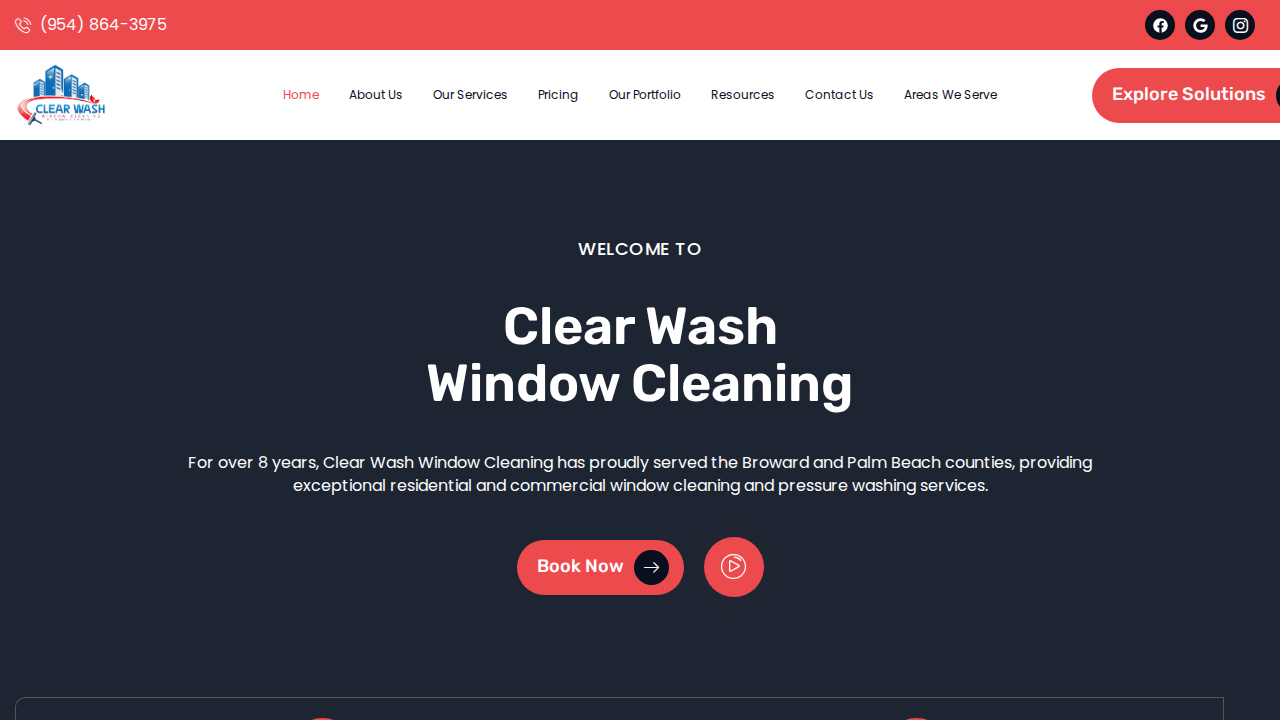
On 04/23/26 clearwashwindows.com scored 65% — **Decent** – Overall, this site looks fairly easy for AI systems to interpret, but a few clear content and credibility gaps are keeping it from feeling fully “buttoned up.”
Executive summary
Score Breakdown (High Level)
- Discoverability: 100% - The site’s technical discoverability is generally solid with clear metadata and open crawling, though it lacks dedicated sitemaps for images and videos.
- Structured Data: 58% - The homepage features solid organization-level schema, but the absence of resource page data prevented us from confirming authorship or blog-specific structured data.
- AI Readiness: 67% - The site has a strong technical foundation for AI discovery and crawling, though it currently lacks a Wikidata entity to anchor its brand identity.
- Performance: 67% - The homepage mobile performance looks great, with all core speed and stability metrics comfortably passing our checks.
- Reputation: 73% - The brand shows strong recognition and a clean reputation, but it's held back by a lack of Wikidata presence and inconsistent business address data.
- LLM-Ready Content: 40% - The content is current and readable, but it lacks specific authorship and the substantial section depth needed for optimal AI indexing.

The big picture before details
What stands out most is that the site has a solid baseline for visibility and brand recognition, but it’s missing a few signals that help AI feel confident about attribution and identity. These gaps read less like “something is wrong” and more like the site isn’t giving AI enough clear, reusable context in a couple of important places. Below, we’ll walk through the specific areas where information was missing or couldn’t be confirmed, organized by section. None of this is unusual—once these themes are visible, they’re straightforward to tackle intentionally.
Detailed Report
Discoverability
❌ Media-specific discoverability is missing
What we saw
We didn’t find dedicated indexing support for image or video content. That means visual assets may be harder to surface consistently when platforms look beyond standard pages.
Why this matters for AI SEO
Generative engines often pull supporting visuals and media references when they can confidently find and interpret them. When that pathway isn’t clear, your visual content is less likely to show up in AI-driven results.
Next step
Create and publish dedicated image and/or video discovery feeds so visual content is easier to find and reuse.
Structured Data
❌ Resource/blog page structured info couldn’t be verified
What we saw
A resource or blog page wasn’t available in the evaluation packet, so we couldn’t confirm whether content-level structured information exists there. This leaves a blind spot around how individual articles/pages are described.
Why this matters for AI SEO
When AI systems summarize or cite content, they rely on clear page-level signals to understand what a piece of content is and how to attribute it. If those signals can’t be confirmed, the content is easier to misread or overlook.
Next step
Provide (or ensure availability of) a representative resource/blog page so its content-level structured information can be validated.
❌ Author information on content pages couldn’t be confirmed
What we saw
Because a resource/blog page wasn’t provided in the structured-data review, we couldn’t verify whether posts have a clear, non-generic author attached. As a result, authorship signals are effectively unknown.
Why this matters for AI SEO
Authorship is one of the simplest ways for AI to connect content to real expertise and consistent accountability. When author details aren’t present (or can’t be verified), trust and attribution can weaken.
Next step
Make sure each article has a clear human author that can be consistently identified.
❌ Author identity links couldn’t be confirmed
What we saw
We couldn’t verify whether author profiles include consistent identity links across the web, since the relevant content page wasn’t available for review. That makes it harder to confirm the author as a distinct entity.
Why this matters for AI SEO
Generative engines tend to be more confident when they can connect a creator to consistent references across trusted platforms. Without that connection, content may feel less attributable.
Next step
Add consistent external identity references to author profiles so attribution is easier to verify.
AI Readiness
❌ Brand entity wasn’t found in Wikidata
What we saw
We weren’t able to find a Wikidata entity associated with the brand in the provided dataset. That means there isn’t a clear, standardized entity record tying the brand to a widely recognized knowledge source.
Why this matters for AI SEO
AI systems use entity records to confirm “who is who” and to reduce ambiguity when summarizing or answering questions. Without that anchor, brand verification can be less definitive.
Next step
Create or claim a Wikidata entity for the brand so AI systems have a stronger verification reference.
Reputation
❌ Business identity details aren’t consistent across sources
What we saw
The brand’s official business address information appeared conflicting or incomplete across different sources. This didn’t match the location information presented on the site.
Why this matters for AI SEO
When AI systems see mismatched identity details, they often reduce confidence in factual answers like location, service area, and business legitimacy. That can limit how often the brand is shown or cited.
Next step
Standardize the brand’s core business identity details across key listings and references so they reconcile cleanly.
❌ Wikidata presence is missing
What we saw
No matching Wikidata entity was found for the brand. This aligns with the broader verification gap flagged elsewhere in the report.
Why this matters for AI SEO
Wikidata is a common reference point for entity validation, and missing coverage can make it harder for AI systems to confidently connect the brand to a single “official” record.
Next step
Establish a Wikidata entity that accurately represents the brand.
❌ Independent third-party coverage wasn’t detected
What we saw
We didn’t see evidence of mentions in independent third-party news or high-authority media outlets in the analyzed signals. That leaves the brand leaning more on owned channels and reviews.
Why this matters for AI SEO
Independent coverage can act like a “credibility shortcut” for AI systems when they’re deciding which brands to cite or trust. Without it, authority can be harder to establish for broader or more competitive queries.
Next step
Build a clearer footprint of independent third-party mentions so authority signals aren’t solely self-referential.
LLM-Ready Content (Blog Analysis)
Heads up: this section looks at one article as a snapshot, so it’s a little more interpretive than the rest of the report and may shift slightly from run to run. Have questions? Just shoot us an email at hello@v9digital.com
❌ No clear human author identified
What we saw
We didn’t find a visible human author name tied to the content, and authorship wasn’t clearly represented in supporting page signals. The content reads as brand-authored only.
Why this matters for AI SEO
AI systems tend to trust and reuse content more readily when they can attribute it to a real person with clear accountability. Without that, the content may come across as less “grounded.”
Next step
Add a clear, human author name to the page and make sure it’s consistently represented.
❌ Content sections are too thin for strong reuse
What we saw
The page relies heavily on short marketing-style blurbs, with sections that are very brief. That makes the overall structure feel skimpy even if the writing is readable.
Why this matters for AI SEO
Generative engines work best when they can extract self-contained blocks of meaning from a page. If sections don’t carry enough detail, the page is harder to summarize accurately or cite confidently.
Next step
Expand key sections so each one contains enough substance to stand on its own.
❌ No table-based information found
What we saw
We didn’t find a table on the page. That means there isn’t an obvious “at-a-glance” structure for comparisons, service breakdowns, or quick reference info.
Why this matters for AI SEO
Structured presentation formats can make it easier for AI systems to extract precise details without guessing. Without them, key specifics can be harder to pull out cleanly.
Next step
Include a simple table where it naturally fits (for example, service options, FAQs, or key specs).
❌ Subheadings don’t clearly match the section content
What we saw
Many subheadings function more like short labels than descriptive summaries. As a result, the connection between headings and the text underneath is weaker than it should be.
Why this matters for AI SEO
AI systems use headings to map the page and understand what each section is “about.” When headings aren’t descriptive, it’s easier for content to be misclassified or underused.
Next step
Rewrite headings so they clearly preview what the section is going to explain.
❌ Key answers aren’t surfaced early in most sections
What we saw
Only a small portion of sections start with a strong, informative opening paragraph. In most places, the first lines don’t provide enough immediate context.
Why this matters for AI SEO
Generative engines often weigh early section text heavily when deciding what a section contains and whether it’s worth using. If the “answer” arrives late (or stays vague), extraction quality drops.
Next step
Lead each section with a clear, informative opener that states the main point upfront.
Does Anything Seem Off?
Thanks for taking our free GEO Grader for a spin. When we started this journey, the tool had a fairly long processing time to check everything we wanted both onsite and offsite, so we made a few adjustments on the backend to speed things up. As a result, there are times when the grader may not get everything 100% right. If something feels off, we recommend running the tool a second time to confirm the results. From there, you’re always welcome to reach out to us to schedule a GEO consultation, or to have your SEO provider validate the findings with a more detailed crawl and manual review.
