
Overview:
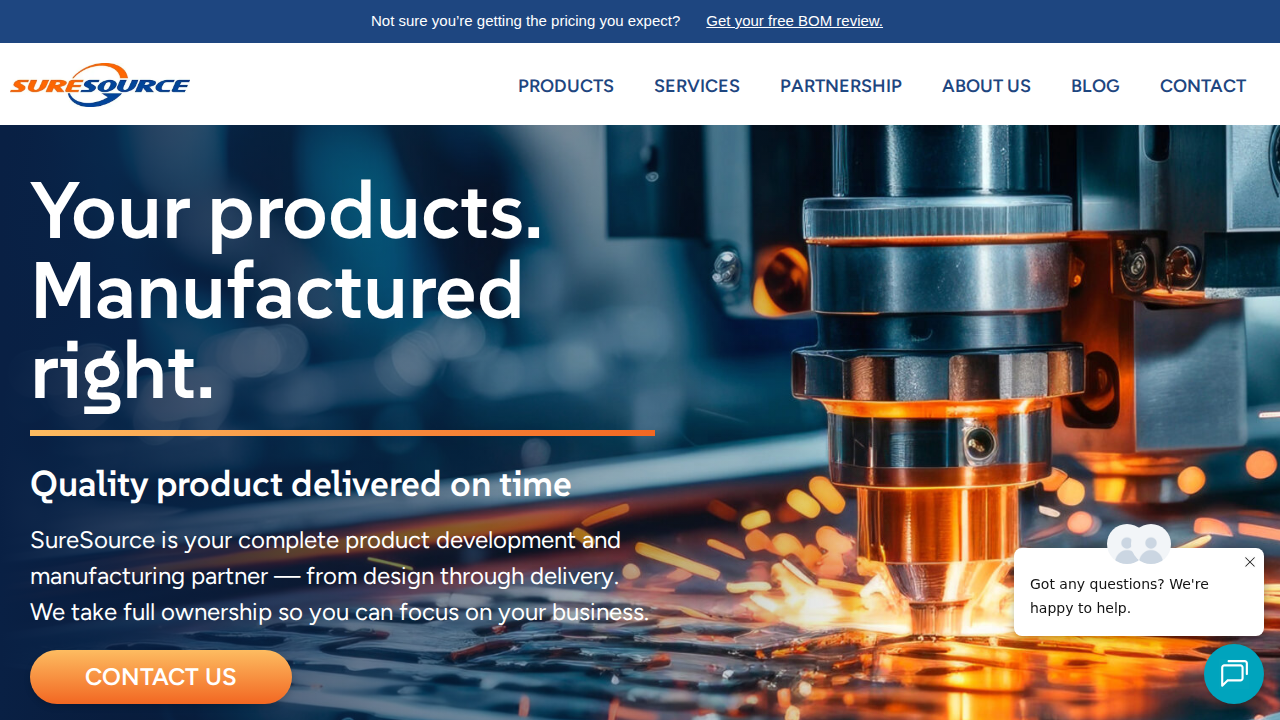
On 05/18/26 sure-source.com/ scored 52% — **Fair** – Overall, the site has some strong foundational signals, but a few visibility and trust gaps are making it harder for AI systems to confidently understand and represent the brand.
Executive summary
Score Breakdown (High Level)
- Discoverability: 100% - The site’s discoverability is in great shape with clear metadata and open access, though missing a visual sitemap is a small but notable gap.
- Structured Data: 58% - The homepage features a solid and error-free Organization schema, but we weren't able to verify author or article-level markup since the resource page data wasn't available.
- AI Readiness: 67% - The site is technically well-prepared with accessible sitemaps and brand context, though it currently lacks a Wikidata record.
- Performance: 17% - While the site's layout stability is in good shape, the mobile experience is currently held back by significant loading delays and high responsiveness times.
- Reputation: 42% - The site demonstrates solid brand recognition and review history, but its reputation score is held back by negative client feedback and a lack of social media integration.
- LLM-Ready Content: 52% - The page is up-to-date and uses excellent descriptive headings, but the content blocks are too brief and rely on unexplained acronyms for optimal AI comprehension.

The big picture on AI visibility
What stands out most is that the foundation is there, but several signals that help AI systems confidently interpret the site are either missing or coming through inconsistently. The gaps mostly show up as clarity and trust issues—how the brand is validated offsite, how quickly the main page becomes usable, and how easily a page’s content can be summarized. Below, we’ll walk through the specific areas where the evaluation flagged missing or unclear signals, organized by section. None of this is unusual, but tightening up these weak spots tends to make AI visibility feel a lot more predictable.
Detailed Report
Discoverability
❌ No image or video sitemap found
What we saw
We didn’t find an image sitemap or a video sitemap available for the site. That means visual content may not be getting the same level of exposure and clarity as the rest of the pages.
Why this matters for AI SEO
AI systems often rely on consistent, well-organized discovery paths to understand what content exists and how it connects. When visual assets aren’t surfaced as clearly, they’re less likely to be found and reused in AI-driven results.
Next step
Publish an image and/or video sitemap that surfaces your key visual assets in a crawlable way.
Structured Data
❌ Blog/resource structured data couldn’t be verified
What we saw
We weren’t able to review structured data for a blog or resource page because a resource page file wasn’t provided in the evaluation packet. As a result, this part of the structured data picture is effectively unknown from this run.
Why this matters for AI SEO
For AI systems, blog/resource pages are often where topical authority and “who wrote this” context get established. If that information isn’t visible or can’t be confirmed, it can limit how confidently the content gets summarized or referenced.
Next step
Provide a representative blog/resource page for evaluation and ensure it includes clear structured data coverage.
❌ Resource/blog author wasn’t confirmed as a clear, non-generic person
What we saw
The resource/blog page needed to confirm author clarity wasn’t available in the provided dataset. Because of that, we couldn’t verify whether posts show a specific author rather than a generic byline.
Why this matters for AI SEO
Authorship is one of the simplest ways for AI to understand expertise and accountability on informational pages. When author signals are missing or can’t be validated, trust and reusability typically take a hit.
Next step
Make sure blog/resource pages clearly identify the author in a way that can be consistently recognized.
❌ Author identity links (sameAs) weren’t confirmed
What we saw
We couldn’t verify whether author profiles include identity links because the blog/resource page wasn’t included in the evaluation dataset. That leaves a gap in how strongly individual authors can be connected to known profiles.
Why this matters for AI SEO
When AI can connect an author to consistent public identity signals, it’s easier to attribute expertise and avoid ambiguity. Without those anchors, the author may read as less verifiable.
Next step
Ensure author profiles include clear identity links that connect the author to their established presence online.
AI Readiness
❌ No Wikidata entity found for the brand
What we saw
We didn’t detect a Wikidata entity associated with the brand. That leaves one common “identity reference point” missing from the broader brand footprint.
Why this matters for AI SEO
AI models often use widely recognized entity sources to confirm that a company is real, distinct, and consistently described. When that entity connection isn’t present, it can make brand verification less straightforward.
Next step
Create and/or connect a Wikidata entity that clearly matches the brand’s official identity.
Performance
❌ Responsiveness was flagged as slow
What we saw
The homepage showed signs of being slow to respond to user interactions while loading. In practice, this usually shows up as a page that feels “busy” before it becomes fully usable.
Why this matters for AI SEO
When pages are slow to respond, both users and automated systems may struggle to reliably access and process the content. That can reduce how consistently the page gets understood and surfaced.
Next step
Reduce the amount of work the page has to do during initial load so it becomes interactive faster.
❌ Primary content loaded very late
What we saw
The main content on the homepage took a long time to appear. This suggests the page’s “first meaningful view” is delayed more than it should be.
Why this matters for AI SEO
If the primary content shows up late, it can weaken the consistency of how the page is experienced and interpreted. That can also limit how effectively AI systems extract and summarize what the page is actually about.
Next step
Prioritize loading the core page content earlier so it becomes visible sooner.
❌ Overall performance assessment landed below expectations
What we saw
The homepage’s overall performance assessment came back in a weak range. This lines up with the slow loading and responsiveness concerns observed on the page.
Why this matters for AI SEO
Performance affects how reliably content can be accessed, rendered, and reused across different environments. When performance is inconsistent, visibility and extraction quality can suffer.
Next step
Audit the heaviest parts of the homepage experience and streamline what’s slowing down initial rendering.
Reputation
❌ Negative client assertions were identified
What we saw
The evaluation surfaced negative client-related assertions in offsite references. This is one of the biggest factors dragging down the overall trust picture.
Why this matters for AI SEO
AI systems tend to weigh credibility signals heavily when deciding what to recommend or cite. Negative claims can introduce hesitation and reduce how confidently the brand is presented.
Next step
Review the specific negative assertions being surfaced in search-facing sources and address them with clear, public-facing context.
❌ Brand identity details weren’t consistent (physical address)
What we saw
A consistent physical address couldn’t be established across the model-derived brand data. That inconsistency makes the “who/where is this company” story less stable.
Why this matters for AI SEO
When identity details vary across sources, AI systems are more likely to treat the brand as ambiguous or less verifiable. Consistency helps models resolve the brand cleanly.
Next step
Standardize the brand’s physical address across the main places it appears online.
❌ No Wikidata match or official identity anchors
What we saw
No matching Wikidata entry was found for the brand, and related identity anchors weren’t available. That removes a common third-party reference point that can help validate brand facts.
Why this matters for AI SEO
Entity anchors help AI systems reconcile brand details across sources without guessing. When those anchors aren’t present, the brand’s “known entity” footprint can be weaker.
Next step
Establish a Wikidata presence that includes clear official identity references.
❌ Social profiles weren’t consistently verified
What we saw
The models did not return a consistent set of major social profiles for the brand. That suggests the offsite identity picture isn’t being “confirmed” the same way across sources.
Why this matters for AI SEO
Verified social profiles often act as easy trust and identity anchors. When those aren’t clear, AI systems have fewer reliable signals to connect the brand to its official presence.
Next step
Clarify the brand’s official social profiles so they’re consistently recognized as the canonical accounts.
❌ Homepage didn’t link to major social profiles
What we saw
No links to major social platforms were found on the homepage. This removes a straightforward on-site confirmation point for what the official accounts are.
Why this matters for AI SEO
When a site directly points to official profiles, it helps AI systems resolve identity and reduce confusion with lookalikes. Without that, models may be less certain about which accounts are legitimate.
Next step
Add clear homepage links to the brand’s primary, official social profiles.
❌ Independent press or coverage wasn’t consistently identified
What we saw
Independent press mentions weren’t consistently surfaced across models. Even if some coverage exists, it isn’t showing up as a stable, repeatable signal here.
Why this matters for AI SEO
Third-party coverage is a common way AI systems gauge external validation. When it’s missing or inconsistent, it can limit how strongly the brand is “endorsed” in AI summaries.
Next step
Build a clearer footprint of credible third-party coverage that can be reliably associated with the brand.
LLM-Ready Content (Blog Analysis)
Heads up: this section looks at one article as a snapshot, so it’s a little more interpretive than the rest of the report and may shift slightly from run to run. Have questions? Just shoot us an email at hello@v9digital.com
❌ No clear author attribution
What we saw
A specific author wasn’t clearly attributed in the visible content or in the structured information associated with the page. Names in the footer were present, but they weren’t identified as the content creator.
Why this matters for AI SEO
AI systems look for clear “who wrote this” signals to evaluate credibility and cite content responsibly. When authorship is unclear, the content can be treated as less attributable and less trustworthy.
Next step
Add a clear, non-generic author attribution that is consistently associated with the article.
❌ Sections are too thin for deeper extraction
What we saw
The page is visually broken up, but the text within many sections is quite short. That makes it harder to pull complete, self-contained meaning from each section.
Why this matters for AI SEO
AI extraction works best when each section carries enough context to stand on its own. When sections are very thin, models have less to work with and may miss nuance.
Next step
Expand key sections so they include enough context to be understood without relying on surrounding sections.
❌ No HTML table found
What we saw
We didn’t detect any HTML table elements on the page. This means there isn’t a structured, scannable way to present comparisons or key specs.
Why this matters for AI SEO
Structured formatting can make it easier for AI systems to extract precise details and relationships. Without it, important information may remain “buried” in paragraphs.
Next step
Add a table where it naturally fits (e.g., definitions, comparisons, requirements, or summaries).
❌ Key answers don’t show up early enough
What we saw
Many sections don’t start with a substantive opening paragraph that quickly explains the point. As a result, the page often delays the “answer” until later in each section.
Why this matters for AI SEO
AI models tend to prioritize content that clearly states the main takeaway early, especially when summarizing. If the key point is delayed, the extracted summary can be thinner or less accurate.
Next step
Rewrite section openers so each one starts with a clear, information-rich statement of the main point.
❌ Acronyms are used without definitions
What we saw
The content includes multiple unexplained acronyms (for example, BOM, PO, A/V, CE, UL) without nearby definitions. That can make the writing feel clear to insiders but ambiguous to broader readers.
Why this matters for AI SEO
When abbreviations aren’t defined, AI systems can misinterpret them or lose confidence in the meaning of a section. Defining terms improves clarity and reduces confusion in summaries.
Next step
Define acronyms the first time they appear (or add a short glossary-style section).
Does Anything Seem Off?
Thanks for taking our free GEO Grader for a spin. When we started this journey, the tool had a fairly long processing time to check everything we wanted both onsite and offsite, so we made a few adjustments on the backend to speed things up. As a result, there are times when the grader may not get everything 100% right. If something feels off, we recommend running the tool a second time to confirm the results. From there, you’re always welcome to reach out to us to schedule a GEO consultation, or to have your SEO provider validate the findings with a more detailed crawl and manual review.
