
Overview:
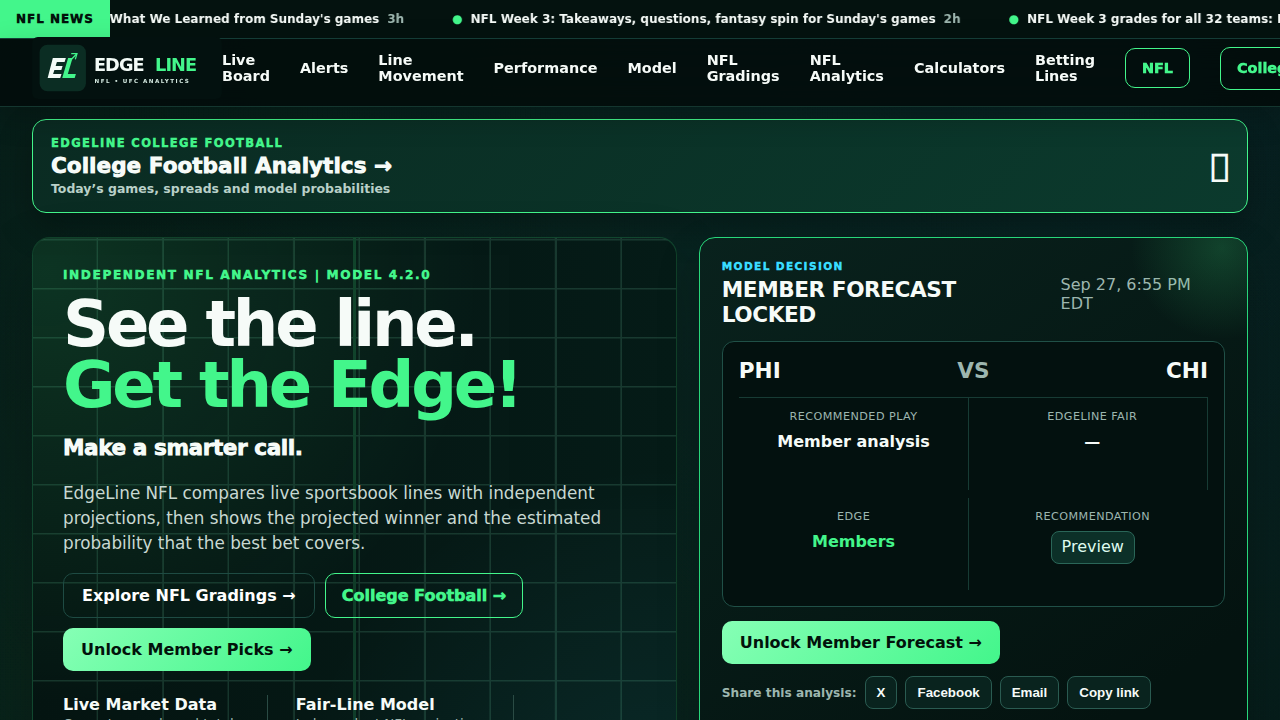
On 09/27/26 edgelinenfl.com scored 47% — **Below Average** – Overall, the basics are there, but the site is missing some key trust and content clarity signals that tend to hold back AI visibility.
Executive summary
Score Breakdown (High Level)
- Discoverability: 100% - The site's technical foundation for discovery is excellent, with the only real missing piece being specialized sitemaps for images or video.
- Structured Data: 58% - The homepage has a solid technical foundation with valid organization and FAQ schema, but the lack of resource-page data prevents us from verifying author-level trust signals.
- AI Readiness: 67% - The site has a very strong technical foundation for AI readiness, though it is currently missing a Wikidata entity to solidify its brand identity.
- Performance: 67% - Mobile performance looks solid overall, with the homepage clearing all of our core speed and stability thresholds.
- Reputation: 0% - We weren't able to find the necessary off-site trust signals or social media links to verify your brand's reputation and authority.
- LLM-Ready Content: 36% - The page is exceptionally current and well-linked, but it lacks individual author attribution and has a fragmented structure that makes it harder for AI models to parse deeply.

The big picture before details
What stands out most is that the site reads as technically present, but it’s not consistently supported by strong, verifiable reputation and identity signals. A lot of the gaps aren’t “errors” so much as missing clarity about who’s behind the brand and how the content should be trusted and interpreted. Below, we’ll walk through the specific areas where information was missing, unconfirmed, or hard for AI systems to confidently use. The good news is these are all understandable visibility gaps, not foundational dealbreakers.
Detailed Report
Discoverability
❌ Visual content discovery support is missing
What we saw
We didn’t see any dedicated listing that helps image or video content get picked up consistently. If you publish visual assets, this can make them harder to surface reliably.
Why this matters for AI SEO
Generative engines often pull supporting visuals when they understand what media exists and how it relates to your pages. When that connection isn’t clear, your visual content is less likely to be found and reused.
Next step
Add a clear, crawlable way for search and AI systems to discover your image and/or video content at scale.
Structured Data
❌ Blog/resource page structured details couldn’t be evaluated
What we saw
We weren’t able to review any blog or resource page structured details because the page data wasn’t included in the evaluation packet. That left a blind spot for how individual articles are described.
Why this matters for AI SEO
AI systems rely on consistent, machine-readable page context to understand what a piece of content is and how to categorize it. When that context isn’t available (or can’t be confirmed), it’s harder to earn confident inclusion.
Next step
Provide a representative blog/resource URL (and its page data) so this area can be evaluated and confirmed.
❌ A clear, non-generic author couldn’t be confirmed for a resource post
What we saw
We couldn’t verify whether a resource/blog post shows a specific, individual author because the resource page wasn’t provided for review. As a result, author attribution on content couldn’t be confirmed.
Why this matters for AI SEO
Clear authorship helps AI systems decide whether information is coming from a real, accountable expert versus an anonymous source. When author signals are missing or unverified, trust is harder to establish.
Next step
Make sure each resource/blog post clearly identifies an individual author and that this is available for evaluation.
❌ Author identity links couldn’t be verified
What we saw
Because the resource/blog page wasn’t available, we couldn’t confirm whether the author information includes outbound identity references (for example, official profile links). This is one of those details that’s either present on the page or it isn’t—and we couldn’t check.
Why this matters for AI SEO
AI models tend to trust authors more when they can connect them to consistent, real-world identity references. Without those connections, content can look less attributable and less credible.
Next step
Ensure author profiles include clear, consistent identity references and that the resource/blog page can be reviewed.
AI Readiness
❌ No Wikidata entity was identified for the brand
What we saw
We weren’t able to identify a Wikidata item ID for the brand in the data provided. In practice, that means there’s no clear match we can point to as an authoritative “who is this brand?” record.
Why this matters for AI SEO
Generative engines often use well-known public knowledge sources to verify brand identity and reduce ambiguity. When that anchor isn’t present, it can be harder for AI to confidently connect your site to a single, trusted entity.
Next step
Create or confirm a Wikidata entity for the brand and make sure it’s clearly associated with your official brand identity.
Reputation
❌ Negative client assertions couldn’t be verified
What we saw
The report packet didn’t include the reconciled information needed to confirm whether there are affirmed negative client claims tied to the brand. So we couldn’t validate this either way.
Why this matters for AI SEO
AI systems weigh reputation and risk when deciding what to surface. When sentiment signals can’t be confirmed, the brand may come across as less “verified” in reputation terms.
Next step
Gather and provide the offsite reputation data needed to verify whether any affirmed negative client assertions exist.
❌ Negative employee assertions couldn’t be verified
What we saw
We didn’t have the required reconciled inputs in the provided data to confirm whether there are affirmed negative employee claims. This wasn’t something we could evaluate from the site content alone.
Why this matters for AI SEO
Employment-related reputation can influence how trustworthy a brand appears in summary-style AI answers. If those signals are missing or unverified, confidence can drop.
Next step
Provide the necessary offsite reputation inputs so this can be checked accurately.
❌ Brand recognition across LLMs couldn’t be confirmed
What we saw
The data needed to verify whether multiple AI systems consistently recognize the brand wasn’t available in the report packet. That left this as an unconfirmed area.
Why this matters for AI SEO
Consistent brand recognition helps generative engines feel confident they’re talking about the right entity. When that consistency can’t be validated, visibility can be harder to earn.
Next step
Collect and include the brand recognition/consensus signals needed to validate this category.
❌ Brand identity consistency couldn’t be verified
What we saw
We couldn’t confirm consistent identity details (like matching business name, domain, and address) because the needed identity fields weren’t available in the data provided. Separately, we also couldn’t find a business address referenced in the homepage content that was reviewed.
Why this matters for AI SEO
AI systems lean on consistent identity anchors to avoid mixing your brand up with others. When identity details are missing or can’t be confirmed, trust and attribution can suffer.
Next step
Make sure the brand’s core identity details are consistently available and verifiable from the site and supporting sources.
❌ No matching Wikidata entity was found
What we saw
No matching Wikidata entity for the brand was found in the provided data, which prevented verification at that layer. This aligns with the missing Wikidata reference noted elsewhere in the report.
Why this matters for AI SEO
Wikidata is a common “source of truth” used to confirm entity identity. Without a match, AI systems have fewer reliable ways to validate who you are.
Next step
Create or claim an accurate Wikidata entry for the brand and connect it to your official identity.
❌ Official identity anchors in Wikidata couldn’t be confirmed
What we saw
Because no Wikidata entity was found for the brand, we also couldn’t confirm the presence of official identity anchors there. This is essentially blocked until an entity exists.
Why this matters for AI SEO
Official identity anchors help AI systems connect your brand’s name to the right web properties. When those anchors aren’t present, it’s harder to build consistent trust.
Next step
Ensure the brand’s Wikidata presence includes official identity references once the entity exists.
❌ No third-party reviews or customer feedback were found
What we saw
We didn’t see evidence of third-party reviews or customer feedback in the provided data. That doesn’t mean none exist—just that it wasn’t detectable in what we reviewed.
Why this matters for AI SEO
Generative engines tend to trust brands more when there’s independent feedback they can reference. Without that visibility, the brand can feel harder to validate.
Next step
Make third-party customer feedback easier to discover and verify from reputable sources.
❌ Review sources weren’t concrete in the available data
What we saw
Since no third-party reviews were detected, we also couldn’t confirm any specific, concrete sources for reviews. This leaves the “where are people saying good things?” question unanswered.
Why this matters for AI SEO
AI systems are more likely to reuse reputation signals when they can tie them back to recognizable sources. Without clear sources, reputation becomes vague and less usable.
Next step
Establish clearly attributable review sources that can be referenced consistently.
❌ Social profile consensus couldn’t be verified
What we saw
The report didn’t include enough reconciled data to confirm consistent “official profile” mappings across major social platforms. In addition, the homepage scan didn’t surface direct links to official social profiles.
Why this matters for AI SEO
When AI can confidently identify your official profiles, it’s easier to treat the brand as real and established. Missing or unverified connections can weaken those trust signals.
Next step
Make your official social identities unambiguous and consistently referenced across your web presence.
❌ Homepage doesn’t link to official social profiles
What we saw
While the homepage included share buttons, we didn’t find direct links pointing to official social media profile pages. That makes it harder to confirm which accounts are yours.
Why this matters for AI SEO
Direct links to official profiles act like identity “connective tissue” for AI systems. Without them, AI has fewer reliable cues to validate the brand’s public footprint.
Next step
Add clear homepage links that point directly to your official social profile URLs.
❌ No independent press or coverage was detected
What we saw
We didn’t see evidence of independent offsite press or coverage in the data provided. That means we couldn’t confirm any third-party editorial mentions.
Why this matters for AI SEO
Independent coverage is a strong trust signal because it suggests others consider the brand notable enough to reference. When it’s missing or undiscoverable, authority can be harder to establish.
Next step
Surface and document any legitimate third-party coverage so it’s easier to verify.
❌ No onsite press or press releases were detected
What we saw
We didn’t detect any onsite press or press releases in the provided data. If you do have announcements, they weren’t visible in what was evaluated.
Why this matters for AI SEO
Press and announcements help AI systems understand what’s new, notable, and official from the brand. Without that layer, it’s harder to build a narrative of credibility and momentum.
Next step
Create a clear, accessible place on the site where official announcements or press updates can live and be referenced.
LLM-Ready Content (Blog Analysis)
Heads up: this section looks at one article as a snapshot, so it’s a little more interpretive than the rest of the report and may shift slightly from run to run. Have questions? Just shoot us an email at hello@v9digital.com
❌ No individual author was clearly identified
What we saw
We didn’t see a visible or clearly attributed individual author for the article, and it appeared to be credited to the brand name instead. That makes it tough to tell who’s actually behind the analysis.
Why this matters for AI SEO
AI systems are more likely to trust and reuse content when it can be tied to a real person with consistent expertise. When authorship is vague, the content can read as less accountable.
Next step
Add a clear, individual author name to the article and keep it consistent across similar content.
❌ Sections are broken into very short snippets
What we saw
The content was split into sections that averaged roughly a short paragraph each, which can make the piece feel more like fragments than fully developed points. The overall structure is scannable, but the sections don’t consistently land a complete idea.
Why this matters for AI SEO
Generative engines tend to extract and reuse content in coherent chunks. If sections are too thin, AI has less self-contained material to quote or summarize confidently.
Next step
Expand each section so it captures a complete, stand-alone thought before moving on.
❌ No table-format content was detected
What we saw
We didn’t detect any table-based presentation of key information on the page. For data-heavy content, that’s a missed chance to make the core facts easier to parse.
Why this matters for AI SEO
Structured, well-organized data is easier for AI systems to interpret and reuse accurately. When everything is only in paragraph form, key details can be harder to extract reliably.
Next step
Add a simple table wherever it naturally fits to summarize the most important data points.
❌ Subheadings weren’t consistently descriptive
What we saw
Most subheadings didn’t clearly reflect what the following section was actually about. That makes the page harder to skim and harder for automated systems to map section topics.
Why this matters for AI SEO
AI systems use headings as signposts to understand and segment content. If headings are vague, the model has to guess what each section contains, which reduces clarity.
Next step
Rewrite subheadings so each one plainly previews the key point of its section.
❌ Sections don’t consistently start with a clear “key answer”
What we saw
Only a portion of sections began with a substantive opening paragraph that clearly states the main takeaway. Several sections ease in too quickly, which can bury the lead.
Why this matters for AI SEO
Generative engines often look for early, direct answers they can reuse in summaries. When the key point isn’t stated upfront, AI may miss it or paraphrase it less accurately.
Next step
Start each section with a clear, plain-English lead sentence that states the takeaway before adding supporting detail.
Does Anything Seem Off?
Thanks for taking our free GEO Grader for a spin. When we started this journey, the tool had a fairly long processing time to check everything we wanted both onsite and offsite, so we made a few adjustments on the backend to speed things up. As a result, there are times when the grader may not get everything 100% right. If something feels off, we recommend running the tool a second time to confirm the results. From there, you’re always welcome to reach out to us to schedule a GEO consultation, or to have your SEO provider validate the findings with a more detailed crawl and manual review.
