
Overview:
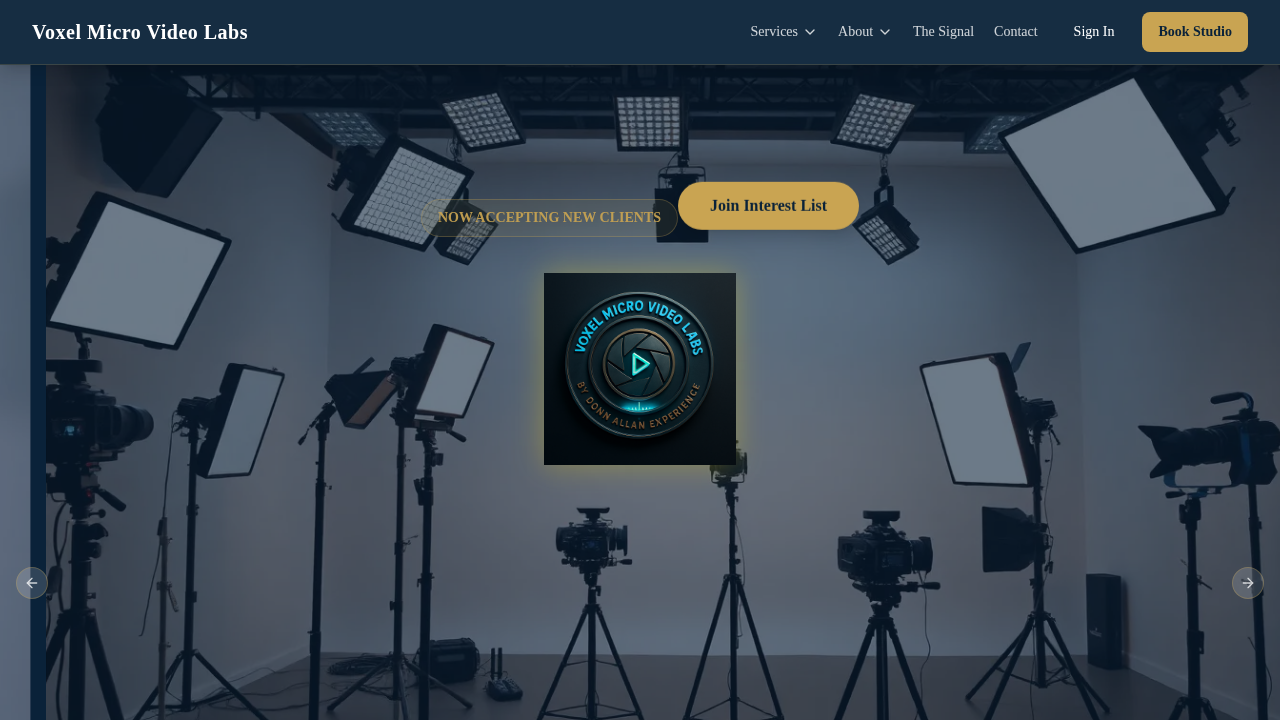
On 07/09/26 voxelmicrovideolabs.com scored 57% — **Fair** – Overall, the site has a solid baseline for AI visibility, but a few gaps in clarity and offsite confidence are holding it back.
Executive summary
Score Breakdown (High Level)
- Discoverability: 100% - Overall, this section is in great shape, as the site provides all the necessary technical signals for search engines to find and index your content without any friction.
- Structured Data: 75% - The site has a strong technical foundation with valid organization schema on the homepage, but it's currently missing specific author identification and social proof on the blog content.
- AI Readiness: 67% - The site is technically well-prepared for AI discovery with open crawler access and detailed sitemaps, though it lacks a Wikidata entity to formally verify the brand's identity.
- Performance: 67% - The site is quite responsive to user interaction, but slow main content loading and layout jumps on the blog create a bottleneck for mobile users.
- Reputation: 35% - Overall, the site has a clean reputation with no negative assertions, but it currently lacks the broader digital footprint and third-party validation that AI engines look for to establish trust.
- LLM-Ready Content: 36% - The page maintains technical freshness and good linking habits, but it lacks the deep structural signals and expert attribution needed to perform well in generative search results.

What stands out most overall
The big picture is that the site is generally easy to surface and interpret, but it’s not consistently earning strong confidence signals around who’s behind the content and how the brand is validated offsite. A lot of what’s showing up reads less like “something is wrong” and more like “AI systems don’t have enough clear, consistent context to lean on.” The next section breaks down the specific areas where that lack of clarity shows up—especially around authorship, brand/entity validation, reputation signals, and the mobile reading experience. None of this is unusual for growing brands, and it’s all workable once you can see it laid out.
Detailed Report
Structured Data
❌ Resource / blog post has a clear, non-generic author
What we saw
On the resource/blog page, we didn’t see a clearly identified individual author, and the author attribution appears to be set to the company name instead.
Why this matters for AI SEO
When content is tied to a real person, it’s easier for AI systems to understand who created it and to weigh credibility appropriately. Brand-only attribution can make expertise feel harder to verify.
Next step
Add a visible, named author to the resource/blog content so authorship is unambiguous.
❌ Author details include connected profile links
What we saw
We didn’t find author-specific details that connect the author to official profiles (since an individual author wasn’t present, those connected links weren’t available to evaluate).
Why this matters for AI SEO
Connected profile links help AI systems corroborate who the author is and reduce ambiguity about identity and expertise.
Next step
Include clear author profile connections so the author’s identity can be consistently understood across the web.
AI Readiness
❌ Brand has a Wikidata entity
What we saw
No Wikidata entity was detected for the brand.
Why this matters for AI SEO
A recognized entity record can act like a reliable “anchor” that helps AI systems confirm the brand’s identity and reduce confusion with similarly named entities.
Next step
Create and/or verify a Wikidata entity for the brand so AI systems have a clearer identity reference.
Performance
❌ Homepage is slow to show main content on mobile
What we saw
The homepage took a very long time to display its main content on mobile.
Why this matters for AI SEO
When pages feel slow to load, users are more likely to abandon them, which can limit engagement and downstream sharing or citation. It also makes it harder for AI-driven experiences to rely on the page as a good user destination.
Next step
Reduce the time it takes for the homepage’s main content to appear on mobile.
❌ Resource/blog page is slow to show main content on mobile
What we saw
The resource/blog page also struggled to load its main content quickly on mobile.
Why this matters for AI SEO
If the page is a key content destination, slow load experiences can reduce how often people stick around to read, share, or reference it. That can limit the page’s practical usefulness as a source.
Next step
Improve how quickly the resource/blog content becomes visible on mobile.
❌ Resource/blog page has noticeable layout shifts
What we saw
As the resource/blog page loads, elements shift around enough to make the reading experience feel unstable—especially on a phone.
Why this matters for AI SEO
A jumpy layout makes it harder for users to comfortably consume content, which can reduce trust and time-on-page. That, in turn, can make the page less likely to be treated as a reliable destination when surfaced in AI experiences.
Next step
Stabilize the resource/blog page layout so content doesn’t shift while loading.
Reputation
❌ Brand is recognized broadly across AI models
What we saw
The brand was only recognized by one of the major AI models referenced in the evaluation.
Why this matters for AI SEO
If AI systems don’t reliably recognize the brand, it’s harder for them to confidently include it in answers, recommendations, or comparisons.
Next step
Strengthen the brand’s offsite presence so it’s more consistently recognized.
❌ Brand identity is consistent across name, domain, and address
What we saw
While the domain was recognized, the evaluation didn’t find a consistent, confirmed physical business address in the broader data used by AI systems.
Why this matters for AI SEO
Consistent identity signals help AI systems confidently “pin down” who the business is, especially when names can overlap or be interpreted in multiple ways.
Next step
Ensure the brand’s core identity details (including a consistent address) are represented consistently across the web.
❌ Wikidata entity exists and matches the brand
What we saw
No matching Wikidata entry was found for the brand.
Why this matters for AI SEO
Without an entity-style reference, it’s harder for AI systems to validate the brand and connect it to the right identity signals.
Next step
Create and confirm a matching Wikidata entry so the brand has a stronger identity anchor.
❌ Wikidata includes official identity anchors
What we saw
Because no Wikidata presence was detected, there weren’t official identity anchors available there to confirm things like the brand’s canonical identity details.
Why this matters for AI SEO
Official anchors help reduce confusion and improve consistency when AI systems summarize or cite a business.
Next step
Make sure the brand has a Wikidata presence that includes official identity anchors.
❌ Third-party reviews or customer feedback exist
What we saw
No concrete third-party customer reviews or feedback sources were identified in the evaluation.
Why this matters for AI SEO
Independent customer feedback is one of the clearest ways for AI systems to validate real-world credibility beyond what a site says about itself.
Next step
Build a clearer trail of third-party customer feedback that can be independently referenced.
❌ Review sources are concrete and verifiable
What we saw
The evaluation did not surface specific review sources that AI systems could point to as clear, concrete references.
Why this matters for AI SEO
When sources aren’t concrete, AI systems have less to rely on when deciding whether to treat reputation claims as trustworthy.
Next step
Establish review sources that are easy to verify and reference.
❌ AI models agree on the brand’s official social profiles
What we saw
The evaluation found a lack of consensus among AI models about which social profiles are the brand’s official accounts.
Why this matters for AI SEO
If AI systems aren’t sure which accounts are “official,” they’re less likely to use those profiles to verify identity or pull supporting context.
Next step
Reinforce which social profiles are official so they’re consistently recognized.
❌ Independent (offsite) press or coverage exists
What we saw
No independent press mentions or coverage were identified in the evaluation.
Why this matters for AI SEO
Third-party coverage helps AI systems validate legitimacy and understand why a brand might matter in its category.
Next step
Earn and document independent coverage that AI systems can reference.
❌ Owned/onsite press or press releases exist
What we saw
The evaluation didn’t find evidence of an onsite press area or press releases.
Why this matters for AI SEO
Even when third-party coverage is limited, a clear onsite press trail can help AI systems find consistent, citeable brand milestones and claims.
Next step
Publish an onsite press area or press releases to create a clearer narrative trail.
LLM-Ready Content (Blog Analysis)
Heads up: this section looks at one article as a snapshot, so it’s a little more interpretive than the rest of the report and may shift slightly from run to run. Have questions? Just shoot us an email at hello@v9digital.com
❌ Non-generic author is clearly identified
What we saw
We didn’t see a named individual author on the evaluated page; attribution appears limited to the brand rather than a specific person.
Why this matters for AI SEO
Clear authorship helps AI systems connect expertise to a real entity and improves how confidently the content can be reused or cited.
Next step
Add a clear, human author name to the page so authorship is explicit.
❌ Content is chunked into readable sections
What we saw
The page reads more like an index/listing with short intro text, rather than a resource broken into substantial, scannable sections.
Why this matters for AI SEO
AI systems extract and summarize more reliably when content is organized into clear sections that each carry a distinct point.
Next step
Restructure the page so the content is presented in clearly separated, meaningful sections.
❌ Helpful table is included (bonus)
What we saw
No table-style content was detected on the page.
Why this matters for AI SEO
Tables can make comparisons, definitions, and quick reference details easier for AI systems to extract accurately.
Next step
Add a simple table where it naturally helps summarize key information.
❌ Subheadings are descriptive (not generic)
What we saw
Several subheadings were generic labels (for example, category-style headings) that don’t clearly communicate what the section actually covers.
Why this matters for AI SEO
Descriptive subheadings give AI systems stronger “handles” for understanding the content and pulling the right parts into answers.
Next step
Rewrite generic subheadings so they clearly describe the information underneath them.
❌ Key answers appear early within sections
What we saw
The sections didn’t lead with early, detailed paragraphs that quickly explain the main point; the page is mostly a visual grid of links.
Why this matters for AI SEO
Answer-first structure helps AI systems quickly identify the “best snippet” of meaning, which improves how often content is surfaced and summarized.
Next step
Add clearer, answer-forward opening paragraphs so the main takeaways are easy to extract.
Does Anything Seem Off?
Thanks for taking our free GEO Grader for a spin. When we started this journey, the tool had a fairly long processing time to check everything we wanted both onsite and offsite, so we made a few adjustments on the backend to speed things up. As a result, there are times when the grader may not get everything 100% right. If something feels off, we recommend running the tool a second time to confirm the results. From there, you’re always welcome to reach out to us to schedule a GEO consultation, or to have your SEO provider validate the findings with a more detailed crawl and manual review.
