
Overview:
On 10/20/26 craftedrunesstudio.com scored 55% — **Fair** – Overall, the site shows a solid baseline for being found, but the content and brand context come through as a bit light for AI summaries and recommendations.
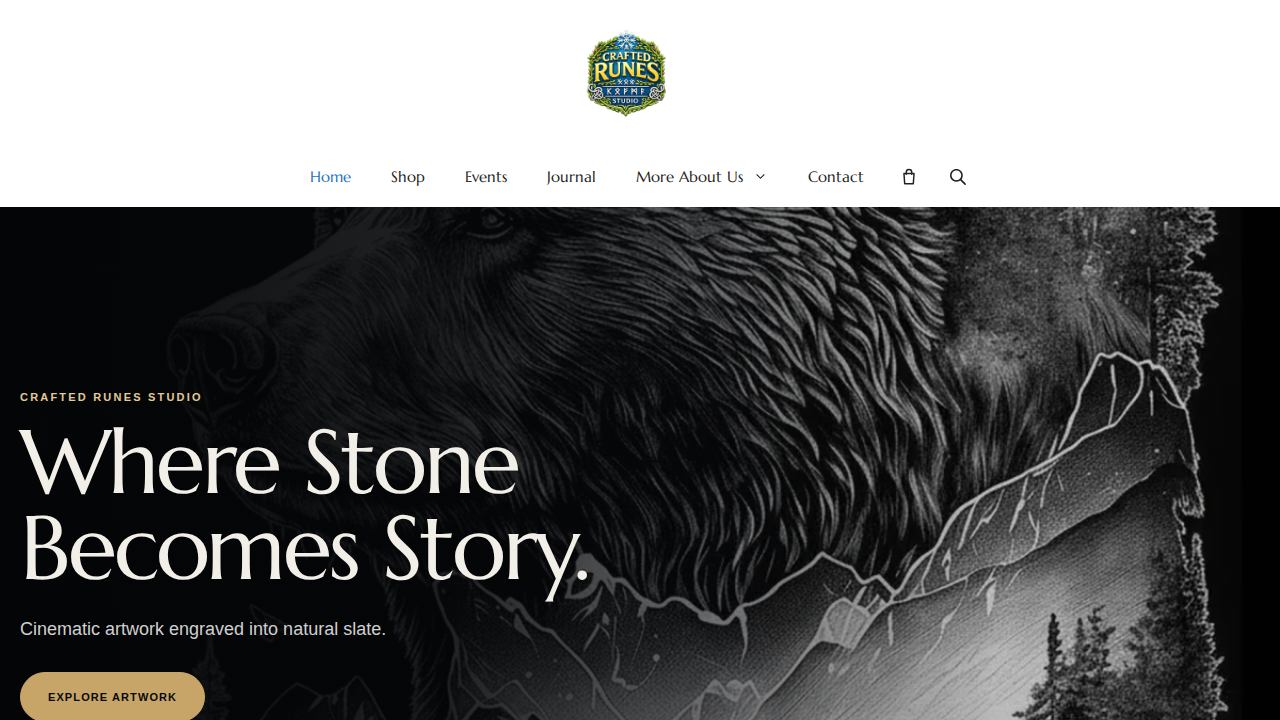
Executive summary
Score Breakdown (High Level)
- Discoverability: 100% - The site's technical foundation is solid and search-engine friendly, though adding an image sitemap would be a smart move to make sure that cinematic artwork gets the attention it deserves.
- Structured Data: 58% - The homepage schema is clean and professional, but we’re missing the resource-level data and author signals needed to really round out the site's technical profile.
- AI Readiness: 67% - The site has a strong technical foundation with healthy sitemaps and open crawler access, but it lacks a Wikidata entity to anchor its brand identity in the knowledge graph.
- Performance: 50% - Mobile performance looks mostly solid with great responsiveness and stability, though the main content load time is currently a bit sluggish.
- Reputation: 73% - The brand maintains a positive reputation and clear social presence, but lacks the third-party press and structured data anchors like Wikidata that help solidify authority in generative engines.
- LLM-Ready Content: 8% - The page is visually driven but lacks the structured text, dates, and authorship markers that help AI systems verify and summarize content effectively.

What stands out most overall
The big picture is that the site has a solid foundation for being discovered, but it’s not giving AI systems enough consistent context to confidently describe the brand and reuse the content. A lot of what’s missing comes down to clarity signals—who’s behind the content, when it was published or updated, and enough on-page substance for clean summarization. The next section breaks down the specific areas where those gaps showed up across content, brand/entity presence, and a couple of supporting visibility checks. None of this is unusual for visually driven brands, but it does explain why AI visibility may feel a bit inconsistent today.
Detailed Report
Discoverability
❌ Image or video sitemap not found
What we saw
No dedicated image or video sitemap was detected. This means visual assets aren’t being clearly surfaced through a dedicated discovery layer.
Why this matters for AI SEO
AI systems and search features often rely on stronger content discovery signals to understand and reuse visual media correctly. When those signals are thin, your visual work is easier to miss or harder to classify.
Next step
Add dedicated image and/or video sitemap support so your visual assets can be discovered and understood more consistently.
Structured Data
❌ Resource/blog page structured data could not be confirmed
What we saw
A resource or blog page wasn’t available in the provided evaluation materials. Because of that, we couldn’t verify structured data coverage beyond the homepage.
Why this matters for AI SEO
AI engines tend to build stronger understanding from content pages where topics, authorship, and context are spelled out clearly. If those pages aren’t providing consistent structured context, the site’s topical depth can be harder to “read.”
Next step
Make sure key resource/blog pages are included in evaluation and have structured data that clearly describes the page and its content.
❌ Clear, non-generic author not verified on a post
What we saw
Because a resource/blog post wasn’t provided, we couldn’t confirm that posts identify a real, specific author. As a result, author attribution on content pages is effectively unverified here.
Why this matters for AI SEO
Authorship is a common trust cue for AI-generated answers, especially when summarizing or citing content. When author identity isn’t clear, systems have less to anchor to when deciding whether and how to reuse the content.
Next step
Ensure each resource/blog post clearly names a specific author in a way that’s easy to recognize and attribute.
❌ Author identity links not verified
What we saw
No author-related structured data could be evaluated for posts because the resource page was missing. That means we couldn’t confirm any consistent identity references tied to the author.
Why this matters for AI SEO
When author identity is supported by consistent references, it’s easier for AI systems to connect content back to a real person and maintain attribution consistency. Without those signals, content can feel more anonymous than it should.
Next step
Add consistent author identity references on content pages so author attribution can be validated across the web.
AI Readiness
❌ No Wikidata entity found for the brand
What we saw
No Wikidata item ID was found for the brand in the available results. In practice, that leaves the brand without a widely-used public entity reference point.
Why this matters for AI SEO
AI systems often rely on entity-level references to disambiguate brands and verify identity. When that entity footprint is missing, it can be harder for AI to confidently connect mentions, profiles, and information back to the same brand.
Next step
Establish a Wikidata entity for the brand so AI systems have a clear, structured identity anchor.
Performance
❌ Main content loads slowly on mobile
What we saw
The page’s primary visual content took longer than expected to fully render on mobile. Everything may still be usable, but the “main moment” of the page arrives late.
Why this matters for AI SEO
When the main content is slower to appear, both users and automated systems can end up seeing less context earlier in the visit. That can reduce how consistently the page’s core message and visuals get picked up and interpreted.
Next step
Prioritize faster rendering of the page’s primary above-the-fold content on mobile so the main message appears sooner.
Reputation
❌ Brand identity consistency could not be fully confirmed
What we saw
The available results couldn’t confirm a physical business address for the brand. That leaves the brand’s formal identity profile feeling incomplete.
Why this matters for AI SEO
AI systems are more confident when they can match a brand to stable identity details across sources. When key identity details are missing or unconfirmed, it can weaken trust and make entity matching less reliable.
Next step
Make sure your public-facing brand identity details are complete and consistently presented where appropriate.
❌ No Wikidata entity found
What we saw
A matching Wikidata entity (QID) wasn’t found for the brand. This limits the brand’s footprint in common linked-data ecosystems.
Why this matters for AI SEO
Wikidata frequently functions as a central reference point for entity resolution across AI systems. Without it, it’s harder for machines to confidently “lock onto” the brand as a distinct entity.
Next step
Create or claim a Wikidata entity so the brand can be referenced consistently across knowledge sources.
❌ Missing Wikidata identity anchors
What we saw
Because there’s no Wikidata entity, the brand also lacks structured identity anchors that typically connect official properties (like the official site) within knowledge graphs.
Why this matters for AI SEO
Identity anchors help AI systems connect the dots between your website, brand name, and other canonical references. Without those anchors, brand association can be weaker or more error-prone.
Next step
Add structured identity anchors via a Wikidata entity so official brand properties are clearly connected.
❌ Independent press coverage not found
What we saw
The available results didn’t surface mentions of the brand in independent, third-party news or media publications. That leaves the brand’s external validation footprint relatively limited.
Why this matters for AI SEO
Independent coverage can act like a credibility signal that helps AI systems corroborate legitimacy and notability. When it’s missing, AI has fewer third-party references to lean on.
Next step
Build a clearer trail of third-party mentions so the brand has more independent references for AI systems to validate.
LLM-Ready Content (Blog Analysis)
Heads up: this section looks at one article as a snapshot, so it’s a little more interpretive than the rest of the report and may shift slightly from run to run. Have questions? Just shoot us an email at hello@v9digital.com
❌ No clear author shown
What we saw
We didn’t see a visible individual author identified on the page. We also didn’t see an author clearly defined in a way that could be recognized as the content owner.
Why this matters for AI SEO
AI systems look for straightforward attribution so they can judge credibility and keep citations consistent. When authorship is unclear, content can be treated as less authoritative or harder to reference.
Next step
Add a clear author name to the content so attribution is unambiguous.
❌ No publish or update date shown
What we saw
No publication date or modified date markers were found in the page content. That makes it hard to tell how current the information is.
Why this matters for AI SEO
Freshness and recency cues help AI systems decide what to trust and what to surface for time-sensitive queries. Without dates, content can be harder to rank in relevance and harder to summarize confidently.
Next step
Add a visible publish date and (when applicable) a last-updated date to the page.
❌ Content recency could not be confirmed
What we saw
Because there wasn’t an explicit modified date present, we couldn’t confirm whether the content has been updated within the last year. From a reader’s perspective, it simply reads as undated.
Why this matters for AI SEO
AI systems often prefer content that signals it’s maintained and current. When recency can’t be determined, the content may be treated as less reliable for summarization.
Next step
Surface a clear “last updated” signal on the page when meaningful changes are made.
❌ No non-social external reference links
What we saw
Outbound links were limited to social media and technical/infrastructure destinations. We didn’t find external reference-style links that add supporting context.
Why this matters for AI SEO
Thoughtful external references can help AI systems understand what your content is grounded in and how it relates to the broader topic space. Without them, the page can feel more self-contained and less verifiable.
Next step
Include at least one relevant, non-social external reference link where it naturally supports the content.
❌ Content is too thin for reliable extraction
What we saw
The page’s sections were extremely short on average, leaving very little descriptive text for each area. Visually it may scan fine, but text-wise there isn’t much to pull meaning from.
Why this matters for AI SEO
Generative systems need enough written context to accurately summarize, classify, and quote a page. When sections are too sparse, AI can miss key details or produce vague summaries.
Next step
Expand key sections with more descriptive copy so each section stands on its own with clear context.
❌ No table-based information found
What we saw
No table elements were found on the page. That means there’s no structured, scan-friendly way to present quick facts or comparisons.
Why this matters for AI SEO
Tables make it easier for AI to extract precise details (like specs, options, pricing ranges, or comparisons) without guessing. Without them, those details may be harder to identify reliably.
Next step
Add a simple table where it makes sense to summarize key details in a consistent format.
❌ Subheadings aren’t descriptive enough
What we saw
Subheadings were present but were too brief or too generic to clearly describe what each section covers. As a result, sections don’t have strong “labels” that match their content.
Why this matters for AI SEO
AI systems use headings to understand page structure and map topics to sections. When headings are vague, it becomes harder for AI to pull the right snippet or build an accurate summary.
Next step
Rewrite section subheadings to be more specific and reflective of what the section actually explains.
❌ Key answers don’t appear early in sections
What we saw
Sections didn’t include a clear lead paragraph that quickly explains the main point. That leaves readers (and AI) without an immediate “what this section is about” anchor.
Why this matters for AI SEO
AI extraction tends to favor pages where the main idea is stated early and clearly. When sections start without context, systems may skip over them or summarize them too generally.
Next step
Add short lead-ins at the start of key sections so the main takeaway is obvious right away.
Does Anything Seem Off?
Thanks for taking our free GEO Grader for a spin. When we started this journey, the tool had a fairly long processing time to check everything we wanted both onsite and offsite, so we made a few adjustments on the backend to speed things up. As a result, there are times when the grader may not get everything 100% right. If something feels off, we recommend running the tool a second time to confirm the results. From there, you’re always welcome to reach out to us to schedule a GEO consultation, or to have your SEO provider validate the findings with a more detailed crawl and manual review.
