
Overview:
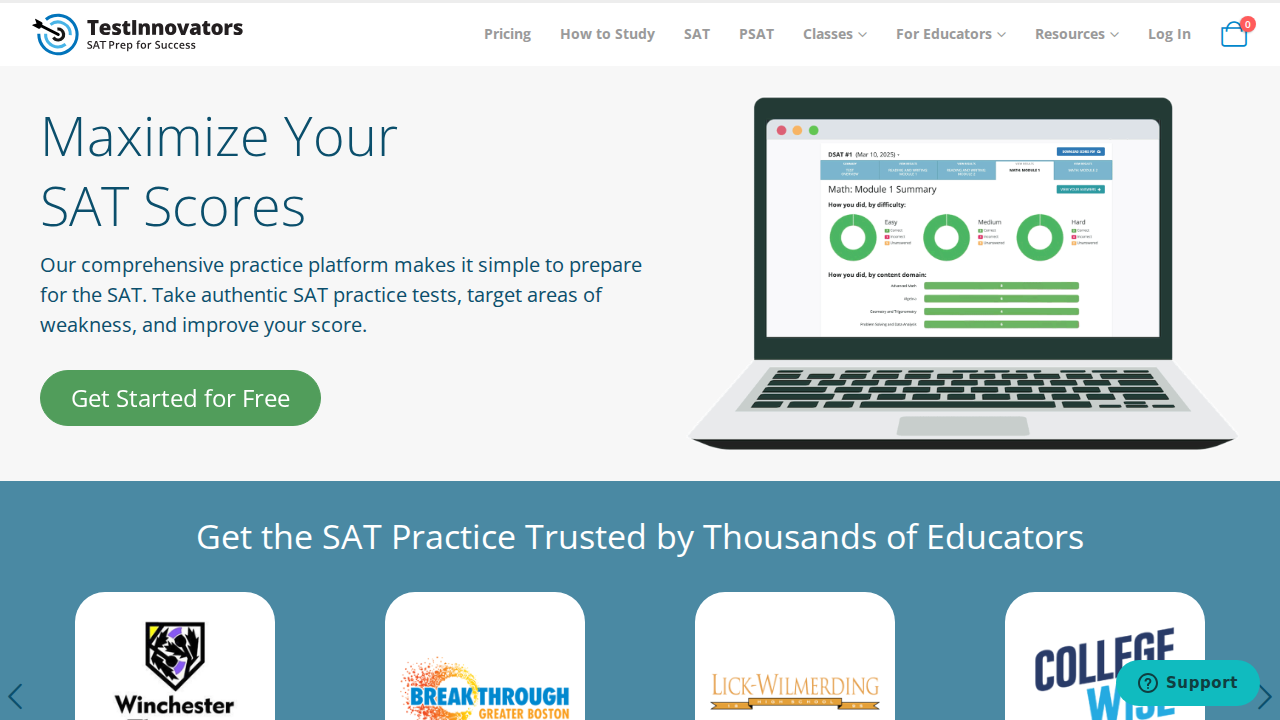
On 01/28/26 testinnovators.com/sat/ scored 58% — **Fair** – Overall, the site feels pretty solid, but a few identity, trust, and content clarity gaps are keeping it from showing up as strongly as it could in AI-driven results.
Executive summary
Score Breakdown (High Level)
- Discoverability: 100% - The site’s technical discovery signals are in great shape, though we weren’t able to find any dedicated image or video sitemaps.
- Structured Data: 33% - The homepage has a solid technical schema foundation, but the site lacks the organizational and author-level markup necessary to fully establish brand authority.
- AI Readiness: 67% - Overall, this section looks to be in good shape, though we couldn't find a Wikidata entry to anchor the brand's identity.
- Performance: 50% - The site is generally stable and responsive to user input, but the initial load time for the main content is currently in the poor range.
- Reputation: 69% - The brand is well-recognized by AI models and has solid press coverage, though some conflicting identity data and a negative client mention on a major review site are notable gaps.
- LLM-Ready Content: 36% - The page is current and well-linked, though the generic author attribution and fragmented section structure may limit its performance in generative AI environments.

The big picture before details
What stands out most is that the site has a solid baseline for being found, but it’s missing some of the credibility and clarity cues that help AI systems confidently describe the brand and reuse its content. These aren’t “errors” so much as places where the signals are either incomplete, inconsistent, or hard to interpret at a glance. The sections below break down the specific areas where those gaps showed up, so you can see exactly what’s getting in the way. Overall, this is a manageable set of issues—and the report makes it clear where the biggest friction points are.
Detailed Report
Discoverability
❌ Image or video sitemap not found
What we saw
We didn’t find a dedicated image sitemap or video sitemap in the provided site data.
Why this matters for AI SEO
When visual content isn’t clearly mapped, it can be harder for discovery systems to consistently find and understand that media at scale.
Next step
Add a dedicated image and/or video sitemap and make sure it’s accessible where crawlers can reliably discover it.
Structured Data
❌ Organization information not clearly defined
What we saw
We didn’t detect organization-focused structured data on the homepage that clearly states who is behind the site.
Why this matters for AI SEO
If systems can’t confidently connect the site to a defined organization, it can limit how strongly they attribute authority and trust to the brand.
Next step
Add organization-focused structured data that clearly represents the brand behind the website.
❌ Resource/blog structured data couldn’t be verified
What we saw
A resource/blog page file wasn’t available in the dataset, so we couldn’t confirm whether those pages include structured data.
Why this matters for AI SEO
When article and resource pages don’t provide consistent structured context, AI systems have a harder time reusing the content confidently and attributing it correctly.
Next step
Ensure your resource/blog pages are available for crawling and include structured data that represents the content.
❌ Clear, non-generic author couldn’t be confirmed
What we saw
Because resource/blog page data wasn’t available, we couldn’t verify whether posts show a clear, specific author.
Why this matters for AI SEO
When authorship isn’t clearly established, it can reduce confidence in who created the content and whether it reflects real expertise.
Next step
Make sure blog/resource posts consistently display a specific author identity (not a generic label).
❌ Author identity links couldn’t be verified
What we saw
We didn’t find author-related structured data (and related identity links) because the resource/blog page wasn’t available for review.
Why this matters for AI SEO
Without clear identity references for authors, it’s harder for AI systems to connect content back to a real person across the web.
Next step
Add author structured data on articles and include consistent identity references where appropriate.
AI Readiness
❌ Brand entity not confirmed in Wikidata
What we saw
We didn’t detect a Wikidata item ID for the brand in the provided dataset.
Why this matters for AI SEO
When there’s no consistent external entity reference, AI systems may have more trouble validating the brand’s identity across sources.
Next step
Create or claim a Wikidata entry for the brand and ensure it matches your official brand identity.
Performance
❌ Main page content appears slowly
What we saw
The page’s primary content took a long time to fully appear during loading.
Why this matters for AI SEO
If content is slow to surface, it can create friction for systems trying to quickly access and understand what the page is about.
Next step
Prioritize reducing the time it takes for the main page content to appear during load.
Reputation
❌ Negative client assertion detected
What we saw
One evaluation model reported a negative client assertion tied to concerns about test accuracy and service responsiveness.
Why this matters for AI SEO
Negative claims can become a sticky narrative for generative systems, especially when they relate to trust and customer outcomes.
Next step
Review where this negative claim may be showing up publicly and ensure your customer-facing story is clear and well-supported.
❌ Brand identity details are inconsistent across sources
What we saw
Conflicting physical addresses were detected across different sources, creating ambiguity around the brand’s canonical location.
Why this matters for AI SEO
When key identity details don’t match, it can reduce confidence in entity-level understanding and make verification harder.
Next step
Standardize your official address across major platforms and authoritative references so the brand’s identity is consistent.
❌ Wikidata entity not found for the brand
What we saw
No matching Wikidata entity was found for the brand.
Why this matters for AI SEO
Without that anchor, AI systems can have a harder time resolving your brand as a distinct entity (especially when similar names or details exist).
Next step
Create or claim a Wikidata entity and align it with the brand name, site, and other official profiles.
❌ No official identity anchors available via Wikidata
What we saw
Because there’s no Wikidata record, there were no official identity anchors available there for the brand.
Why this matters for AI SEO
Official anchors help generative systems connect the dots between your website and trusted third-party references.
Next step
Add and maintain official identity references within a Wikidata entry so third-party systems can validate the brand.
LLM-Ready Content (Blog Analysis)
Heads up: this section looks at one article as a snapshot, so it’s a little more interpretive than the rest of the report and may shift slightly from run to run. Have questions? Just shoot us an email at hello@v9digital.com
❌ Author name is generic
What we saw
The author was listed as “admin,” rather than a specific person.
Why this matters for AI SEO
Generic attribution makes it harder for AI systems to connect the content to a credible, accountable source.
Next step
Update the article to show a real, specific author name.
❌ Content sections are too fragmented
What we saw
Sections were very short on average, which can make the page feel choppy and harder to follow.
Why this matters for AI SEO
When ideas are broken into tiny pieces, AI systems can struggle to extract complete answers and understand the full context.
Next step
Rewrite or consolidate sections so each one fully explains a single idea before moving on.
❌ No table used to summarize key info
What we saw
We didn’t find an HTML table on the page.
Why this matters for AI SEO
Tables can make important comparisons and takeaways easier for AI systems to capture accurately and reuse.
Next step
Add a simple table where it naturally helps summarize or compare the most important information.
❌ Subheadings aren’t clearly tied to section content
What we saw
Many subheadings didn’t clearly match what the section actually opens by discussing.
Why this matters for AI SEO
If headings don’t accurately signal what’s inside a section, AI systems have a harder time finding and citing the right part of the page.
Next step
Refine subheadings so they plainly describe the specific point each section is about.
❌ Key answers don’t show up early in sections
What we saw
A lot of sections didn’t start with a clear opening paragraph that quickly explains the main point.
Why this matters for AI SEO
AI systems tend to reward pages where the “answer” is easy to spot and extract without piecing together scattered context.
Next step
Update sections so the first paragraph quickly states the main takeaway before adding supporting detail.
Does Anything Seem Off?
Thanks for taking our free GEO Grader for a spin. When we started this journey, the tool had a fairly long processing time to check everything we wanted both onsite and offsite, so we made a few adjustments on the backend to speed things up. As a result, there are times when the grader may not get everything 100% right. If something feels off, we recommend running the tool a second time to confirm the results. From there, you’re always welcome to reach out to us to schedule a GEO consultation, or to have your SEO provider validate the findings with a more detailed crawl and manual review.
