
Overview:
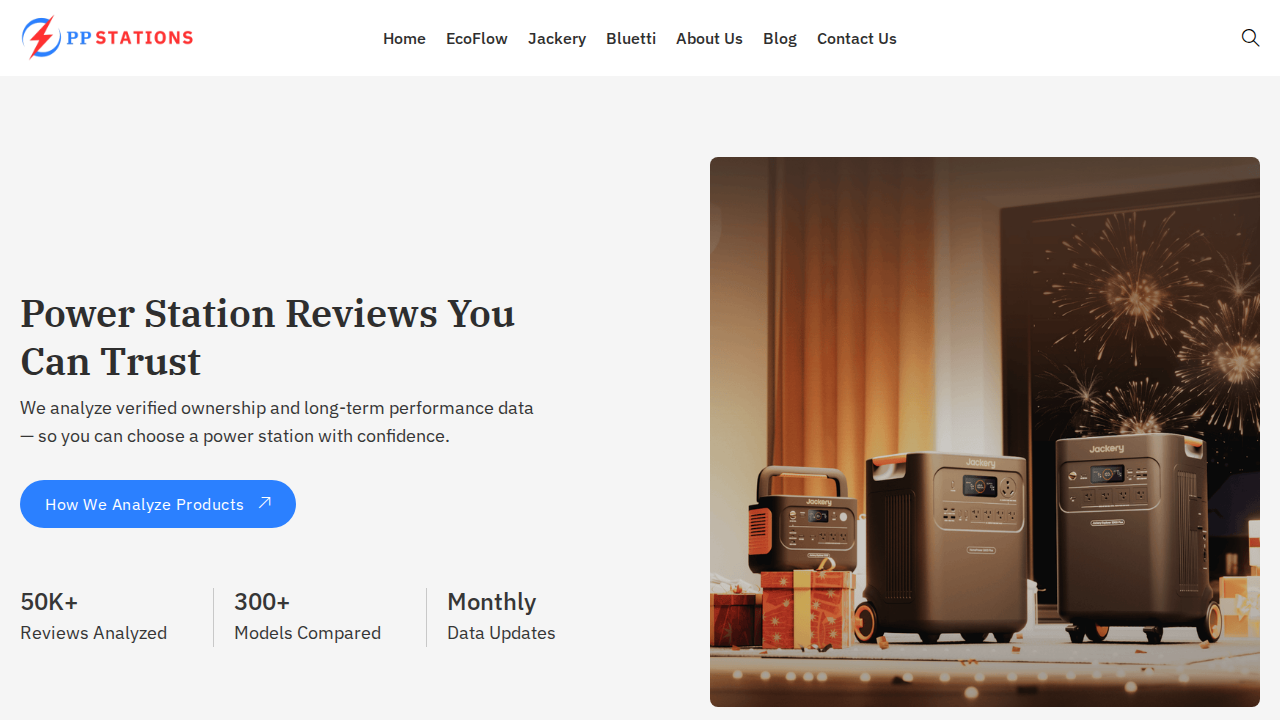
On 02/09/26 portablepowerstations.info scored 46% — **Below Average** – Overall, the site has a few solid foundations, but some clear visibility and credibility gaps are limiting how confidently AI systems can surface it.
Executive summary
Score Breakdown (High Level)
- Discoverability: 67% - The site is currently signaling search engines to ignore it via a 'noindex' tag and lacks descriptive metadata like a unique title or meta description.
- Structured Data: 58% - The homepage schema is technically sound and correctly identifies the organization, but the absence of article-level markup and author verification is a clear gap for GEO.
- AI Readiness: 67% - The site has a solid technical foundation with accessible sitemaps and crawler access, though it lacks a formal brand entity in major databases like Wikidata.
- Performance: 50% - Mobile performance is mostly solid with great responsiveness and stability, though the initial load time is currently running quite slow.
- Reputation: 23% - This site has a very limited digital footprint and lacks the offsite signals, like reviews or press mentions, that build authority with generative engines.
- LLM-Ready Content: 36% - This section looks solid for data freshness, but it misses the mark on individual author authority and structured data formats like HTML tables.

The main takeaway at a glance
The big picture is that some baseline signals are present, but the site still reads as harder to find, harder to verify, and harder for AI to summarize cleanly. Most of the gaps are about clarity and confidence rather than anything “wrong” with the topic itself. The detailed sections below break down where those gaps showed up across discoverability, reputation, performance, and content structure. It’s a manageable set of themes once you see them laid out.
Detailed Report
Discoverability
❌ Homepage is set to be ignored
What we saw
The homepage includes a directive that tells engines not to include it in their index. That effectively blocks the main entry point of the site from being surfaced.
Why this matters for AI SEO
If the homepage isn’t eligible to be included, generative engines have a much harder time discovering, understanding, and trusting what the site is about. It also limits how often supporting pages get found through normal crawling paths.
Next step
Remove the “do not index” directive from the homepage so it can be included and understood normally.
❌ Missing page summary text
What we saw
We didn’t find a meta description on the homepage. That leaves engines without a clean, intentional summary of what the page represents.
Why this matters for AI SEO
When AI systems don’t get a clear “here’s what this page is” summary, they’re more likely to rely on partial or inconsistent cues. That can reduce relevance and confidence when the brand is referenced.
Next step
Add a clear, plain-English page summary for the homepage that reflects what the site does and who it’s for.
❌ Homepage title is too generic
What we saw
The homepage title appears to be generic (“Home |”) rather than describing the brand and topic. That gives engines very little context at a glance.
Why this matters for AI SEO
AI discovery depends heavily on clear topical and brand signals, especially at the homepage level. A generic title makes it harder to connect the site to the right queries and comparisons.
Next step
Update the homepage title so it clearly reflects the brand and what the site focuses on.
❌ No image or video sitemap detected
What we saw
We didn’t detect a dedicated image or video sitemap. That can make it less obvious what visual assets exist and where they live.
Why this matters for AI SEO
Generative engines increasingly use visual context to understand products, comparisons, and credibility cues. When visual assets are harder to discover, you lose some of that supporting context.
Next step
Publish an image and/or video sitemap (if the site uses those media types in a meaningful way) to make those assets easier to discover.
Structured Data
❌ Resource/blog page markup couldn’t be confirmed
What we saw
A resource or blog page file wasn’t provided for evaluation, so we couldn’t verify whether that content includes structured markup. This leaves a blind spot in how well individual articles are described.
Why this matters for AI SEO
Generative engines often rely on consistent page-level structure to identify what’s an article, what’s a comparison, and what’s a brand statement. If that layer isn’t present (or isn’t consistent), reuse and summarization can be less reliable.
Next step
Provide a representative resource/blog page for review and ensure it includes clear article-level structured markup.
❌ Article author identity couldn’t be verified
What we saw
Because a resource/blog post wasn’t provided, we couldn’t confirm whether posts have a clear, non-generic author. That means the author layer is effectively unknown from the data we had.
Why this matters for AI SEO
When authorship is unclear, it’s harder for AI systems to associate content with a real, consistent expert identity. That can reduce confidence in citations and summaries.
Next step
Make sure each resource/blog post includes a specific author name that is consistent across the site.
❌ Author validation links weren’t confirmed
What we saw
We couldn’t check whether author profiles include identity-verification links because the resource/blog content wasn’t available. As a result, there’s no confirmable connection to a broader author footprint.
Why this matters for AI SEO
AI systems weigh consistency and confirmability when deciding whether to trust an author as a real person with expertise. Without those anchors, the author identity can look thin or ambiguous.
Next step
Add consistent identity links to author profiles so engines can connect the author to the same person across the web.
AI Readiness
❌ No Wikidata entity found for the brand
What we saw
No Wikidata item ID was found for the brand in the data provided. That means there isn’t an obvious, standardized entity record to reference.
Why this matters for AI SEO
Generative engines use external entity sources to disambiguate brands and verify identity details. Without that entity record, the brand can be harder to validate and easier to confuse with similar names.
Next step
Create (or claim, if it already exists) a Wikidata entity for the brand and connect it to consistent identity details.
Performance
❌ Main content loads too slowly at first
What we saw
The homepage’s largest above-the-fold content took a long time to fully load (over 10 seconds). That points to a slow initial visual completion for users.
Why this matters for AI SEO
Slow initial loading can reduce crawl efficiency and user engagement signals, especially when engines are trying to quickly assess page quality and usefulness. It can also make it harder for systems to capture a clean “first impression” of the page.
Next step
Reduce what’s required for the main above-the-fold content to fully render so the page reaches its primary view faster.
Reputation
❌ The brand isn’t recognized by major LLMs
What we saw
The brand was not recognized by the major LLMs referenced in the report packet. This suggests the brand doesn’t yet exist as a familiar entity in those systems.
Why this matters for AI SEO
When AI systems don’t “know” a brand, they tend to treat it cautiously and rely more heavily on outside confirmation. That can limit how often the site is cited or trusted in answers.
Next step
Build clearer third-party and entity signals that consistently reference the same brand name and site.
❌ Brand identity details aren’t consistent
What we saw
There was no model consensus around basic identity details like an official legal name or physical address. In practice, the brand reads more like an anonymous site than a verifiable entity.
Why this matters for AI SEO
Generative engines look for stable identity markers to determine if a source is real and accountable. Inconsistency makes it harder to attach trust to the brand.
Next step
Standardize and publish consistent brand identity details across the site and external profiles.
❌ No Wikidata match supporting the brand
What we saw
No Wikidata entry was found that matches the brand. That removes a common external reference point for entity verification.
Why this matters for AI SEO
Without an authoritative entity record, it’s harder for AI to confidently connect mentions of the brand across different sources. That lowers certainty in brand-level summaries.
Next step
Create or connect a Wikidata entry that clearly represents the brand and its canonical web presence.
❌ No identity anchors to validate the entity
What we saw
The report packet didn’t find identity anchors tied to a verified entity record. This leaves the brand without strong “this is the same organization everywhere” signals.
Why this matters for AI SEO
Identity anchors help AI systems reconcile conflicting details and reduce ambiguity. Without them, engines may avoid citing the brand or may misattribute information.
Next step
Add consistent, verifiable identity anchors that connect the brand to the same real-world entity across platforms.
❌ No third-party reviews found
What we saw
We didn’t find evidence of third-party reviews tied to the brand. That means there’s little outside validation of quality or trustworthiness.
Why this matters for AI SEO
Independent feedback is one of the easiest ways for generative engines to gauge real-world trust. When it’s missing, the brand can look unproven.
Next step
Establish a presence on credible third-party review platforms where real feedback can be referenced.
❌ No concrete review sources were identified
What we saw
Beyond the lack of reviews, there weren’t recognizable sources where reviews typically live. So even a “where would I verify this?” path is unclear.
Why this matters for AI SEO
AI systems are more comfortable summarizing brands that have clear, checkable third-party footprints. Without recognizable sources, confidence and citation likelihood drop.
Next step
Create consistent review-source footprints that clearly tie back to the brand name and domain.
❌ No consensus on official social profiles
What we saw
There was no model consensus on official social profiles for the brand. This makes the brand’s “official channels” look unclear.
Why this matters for AI SEO
Social profiles can function as lightweight identity verification and community proof. If engines can’t confidently identify official accounts, trust signals stay thin.
Next step
Maintain a consistent set of official social profiles that clearly identify the brand.
❌ Homepage social icons don’t link to real profiles
What we saw
The homepage includes social icons, but the links appear to be placeholders (not pointing to real profile URLs). That prevents users and crawlers from verifying those channels.
Why this matters for AI SEO
When outbound social links don’t resolve to real profiles, it undercuts credibility and makes the brand look less established. It also removes an easy verification path for AI systems.
Next step
Replace placeholder social links with the brand’s real, active profile URLs.
❌ No independent press coverage found
What we saw
We didn’t find evidence of independent press coverage referencing the brand. That leaves a gap in external validation.
Why this matters for AI SEO
Independent coverage is a strong trust accelerator for generative engines because it’s third-party and editorially controlled. Without it, the brand can look self-referential.
Next step
Build a track record of independent mentions that clearly reference the brand and what it does.
❌ No owned press/release footprint detected
What we saw
We didn’t find an owned press or releases footprint tied to the brand in the report data. That limits how clearly the brand’s milestones and official statements are documented.
Why this matters for AI SEO
Official announcements can help AI systems confirm timelines, product launches, partnerships, and positioning. Without them, it’s harder to establish a dependable brand narrative.
Next step
Create a consistent place for official announcements so brand updates are easy to find and reference.
LLM-Ready Content (Blog Analysis)
Heads up: this section looks at one article as a snapshot, so it’s a little more interpretive than the rest of the report and may shift slightly from run to run. Have questions? Just shoot us an email at hello@v9digital.com
❌ Author is listed as a generic team
What we saw
The article attributes the content to “Editorial Team” rather than a specific person. That makes the expertise behind the piece feel anonymous.
Why this matters for AI SEO
AI systems look for clear authorship to judge credibility and reuse content with confidence. Generic attribution makes it harder to connect the content to a consistent expert identity.
Next step
Attribute the article to a specific author name that is used consistently across content.
❌ Sections are too thin for strong context
What we saw
Most sections are very short, averaging well below the depth typically needed to fully explain a point. The structure reads more like quick fragments than complete mini-explanations.
Why this matters for AI SEO
When sections don’t carry enough context, AI has less material to confidently summarize, quote, or compare. That can reduce how often the page shows up as a useful source.
Next step
Expand sections so each one delivers a complete, self-contained explanation of the subtopic.
❌ Comparison content isn’t in a standard table
What we saw
The comparison area uses visual layout blocks rather than a standard HTML table. That makes the information harder to extract cleanly.
Why this matters for AI SEO
AI systems are more reliable when they can pull structured comparisons in a predictable format. When the structure is purely visual, details can get missed or misread.
Next step
Present comparison data in a standard table format where rows and columns clearly map to attributes and products.
❌ Subheadings don’t clearly telegraph the content
What we saw
Many subheadings are too short or vague relative to the sections they introduce. As a result, the outline doesn’t do much “signposting” for what each block contains.
Why this matters for AI SEO
Clear, descriptive subheadings help AI understand topic boundaries and pull the right snippet for the right question. Vague headings increase the chance of muddy summaries.
Next step
Rewrite subheadings so they describe the specific question or takeaway each section answers.
❌ Key answers don’t show up early in sections
What we saw
Sections tend to jump straight into cards or compact blocks without a clear opening paragraph that states the main point. That makes the primary takeaway harder to catch quickly.
Why this matters for AI SEO
Generative engines often look for early, direct answers to decide what a section “is about.” When the takeaway is buried or implied, it’s less likely to be reused accurately.
Next step
Start each section with a short, direct paragraph that states the core answer or takeaway up front.
Does Anything Seem Off?
Thanks for taking our free GEO Grader for a spin. When we started this journey, the tool had a fairly long processing time to check everything we wanted both onsite and offsite, so we made a few adjustments on the backend to speed things up. As a result, there are times when the grader may not get everything 100% right. If something feels off, we recommend running the tool a second time to confirm the results. From there, you’re always welcome to reach out to us to schedule a GEO consultation, or to have your SEO provider validate the findings with a more detailed crawl and manual review.
