
Overview:
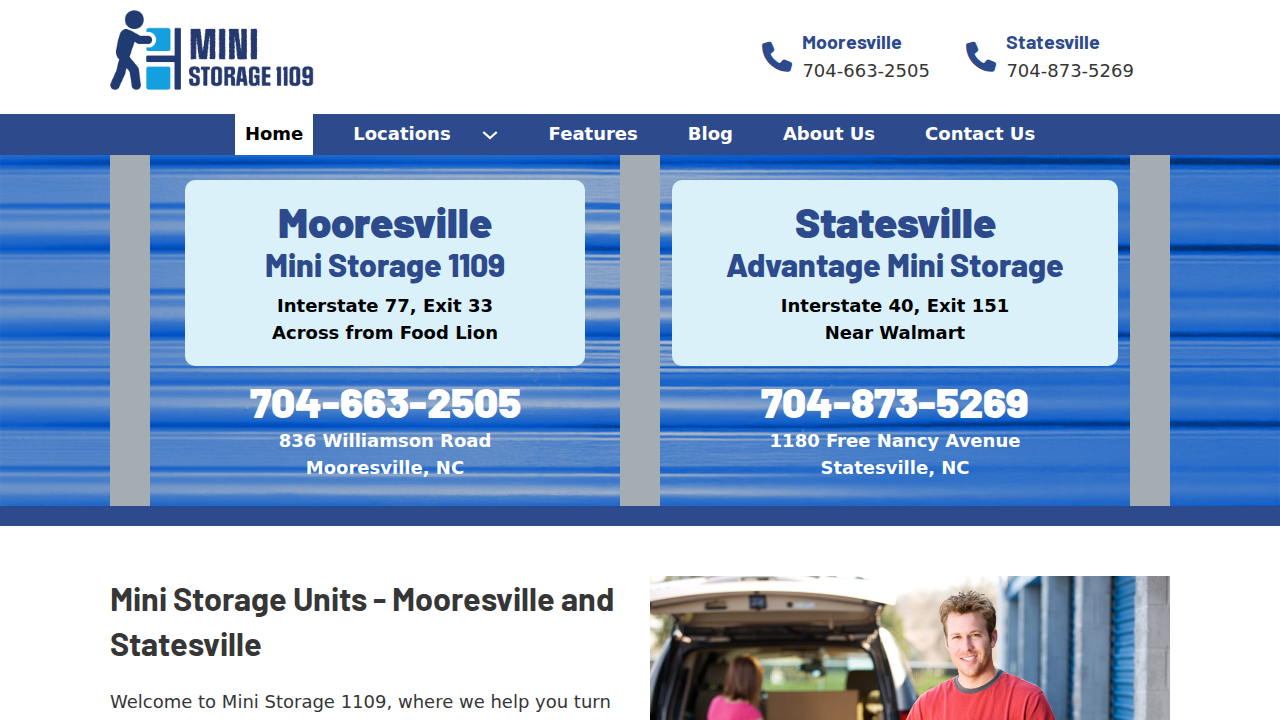
On 05/29/26 ministorage1109.com scored 45% — **Below Average** – Overall, the site shows some solid fundamentals, but a few visibility and credibility signals are coming through as inconsistent or incomplete.
Executive summary
Score Breakdown (High Level)
- Discoverability: 75% - The site is technically accessible and easy to index, but it's held back by missing sitemaps and a lack of descriptive text for its images.
- Structured Data: 58% - The homepage schema is well-implemented and clearly identifies the organization, but we weren't able to verify the blog-specific markup since no resource page was provided.
- AI Readiness: 33% - The site is open to AI crawlers and includes a clear 'About Us' page, but it's currently missing an XML sitemap and a Wikidata entity to help with broader brand recognition.
- Performance: 50% - The homepage has significant loading delays, though layout stability and responsiveness are solid.
- Reputation: 23% - While the brand is free of negative assertions, it's currently missing the essential offsite signals—like social links, review consensus, and independent press—that help generative engines trust and recommend a business.
- LLM-Ready Content: 52% - The page lacks a standard H2 heading structure, which prevents content from being effectively chunked for AI systems, though metadata for authorship and updates is well-maintained.

What stands out most overall
The big picture is that the site has some clear on-page context, but it’s missing several signals that help systems confidently discover, interpret, and verify the brand. A lot of what came up isn’t about “bad” content—it’s more that key details aren’t packaged in a way that machines can consistently rely on. The next sections break down the specific areas where clarity dropped off, from discovery cues to brand trust and how resource content is structured. None of this is unusual, and it’s the kind of cleanup that tends to make a noticeable difference once it’s addressed.
Detailed Report
Discoverability
❌ Core metadata missing for images
What we saw
Images on the homepage didn’t include descriptive alt text. That means there’s less on-page context explaining what those visuals represent.
Why this matters for AI SEO
When key page elements aren’t clearly described, AI systems can miss useful details and interpret the page with less confidence. It also reduces how well the page can be understood when visuals carry important meaning.
Next step
Add clear, descriptive alt text to homepage images so the visuals contribute meaningfully to the page’s overall message.
❌ No standard sitemap found
What we saw
A standard sitemap wasn’t accessible at the expected location. As a result, there isn’t a clear “master list” of URLs readily available for discovery.
Why this matters for AI SEO
When automated systems can’t easily find a complete set of important pages, they may miss content or take longer to build a reliable picture of what the site covers. That can limit visibility for deeper pages that aren’t strongly linked.
Next step
Make sure a standard sitemap is available and accessible so crawlers have a clear map of the site’s key URLs.
❌ No image or video sitemap detected
What we saw
We didn’t detect an image or video sitemap. That leaves media content without an explicit discovery layer.
Why this matters for AI SEO
AI systems increasingly use media to understand and represent brands, locations, and offerings. When media isn’t easy to discover and interpret at scale, it can reduce how much of that context gets picked up.
Next step
Provide an accessible media sitemap if images or videos are an important part of how the site communicates value.
Structured Data
❌ Blog/resource structured data could not be evaluated
What we saw
The resource/blog page content needed for this check was missing or empty in the provided data. That meant we couldn’t confirm whether that section includes the same identity and content signals found elsewhere.
Why this matters for AI SEO
If content sections like resources or blogs don’t carry clear structured context, AI systems may treat them as less attributable or harder to classify. That can reduce how often those pages get used as trusted sources.
Next step
Confirm that your resource/blog pages include complete, readable structured data so those pages are as easy to interpret as the homepage.
❌ Resource/blog post author clarity not confirmed
What we saw
Because the resource/blog page was missing or empty in the provided data, we couldn’t verify that posts have a clear, non-generic author attached.
Why this matters for AI SEO
Author attribution helps AI systems assess credibility and connect content to a real entity. When author signals are missing or unclear, content can be treated as less trustworthy or less reusable.
Next step
Ensure each resource/blog post clearly names a specific author so the content has stronger attribution.
❌ Author identity links not confirmed
What we saw
We couldn’t confirm whether author profiles include supporting identity links (like official profiles) because the resource/blog page data was missing or empty.
Why this matters for AI SEO
Identity links help AI systems connect a person to consistent public profiles, which supports trust and disambiguation. Without those anchors, authors can be harder to validate.
Next step
Add supporting identity links to author profiles so AI systems can more confidently connect authors to their public presence.
AI Readiness
❌ Site-wide discovery map not found
What we saw
We didn’t find an accessible XML sitemap. That reduces how clearly the site communicates its full set of important pages.
Why this matters for AI SEO
AI crawlers and search systems rely on clear discovery paths to build a complete understanding of a site. When that map isn’t available, coverage can be incomplete or slower to develop.
Next step
Publish an accessible XML sitemap so automated systems can consistently find and revisit key pages.
❌ Update timing signals weren’t available
What we saw
Because the sitemap wasn’t found, we also couldn’t confirm whether it includes update timing information. That leaves less clarity around what’s new or recently changed.
Why this matters for AI SEO
Clear freshness cues help AI systems prioritize what to re-check and what to trust as current. When those cues aren’t available, content can look more static than it really is.
Next step
Include update timing information in your discovery feed so recency is easier for systems to understand.
❌ No Wikidata entity found for the brand
What we saw
We weren’t able to find a Wikidata entity for the brand. That means there’s no widely recognized knowledge-graph-style anchor to confirm identity.
Why this matters for AI SEO
When AI systems can’t connect a brand to a stable identity record, it’s harder to verify who the business is and reconcile information across sources. This can limit how confidently the brand is referenced or summarized.
Next step
Establish a clear Wikidata presence for the brand so identity is easier to validate across AI systems.
Performance
❌ Slow visual loading on the homepage
What we saw
The homepage took a long time to visually finish loading the main content. This can make the page feel sluggish even if it eventually settles correctly.
Why this matters for AI SEO
When pages load slowly, crawlers and users alike can end up seeing less content sooner, and engagement signals can suffer. Over time, that can reduce how effectively the page gets explored and understood.
Next step
Prioritize improvements that help the homepage render its main content faster so both users and crawlers get the core message sooner.
Reputation
❌ Limited recognition across AI models
What we saw
The brand wasn’t consistently recognized across multiple AI models. That suggests the broader web may not be sending strong, repeated signals about the business yet.
Why this matters for AI SEO
If models don’t reliably recognize the brand, they’re less likely to surface it confidently in answers or recommendations. Recognition is often a proxy for “enough consistent information exists to be sure.”
Next step
Strengthen the brand’s consistency and presence across independent sources so recognition becomes more reliable.
❌ Brand identity details were inconsistent
What we saw
The brand’s identity information didn’t line up cleanly across sources, including a mismatch between an address mentioned externally and the location shown on the website.
Why this matters for AI SEO
When identity details conflict, AI systems tend to reduce confidence rather than guess. That can lead to weaker visibility, incorrect summaries, or the brand being skipped in favor of clearer options.
Next step
Align the brand’s key identity details across the web so systems see one consistent version.
❌ No matching Wikidata entry for the brand
What we saw
No matching Wikidata entity was found for the brand. This leaves a gap in widely referenced identity confirmation.
Why this matters for AI SEO
Wikidata is one of the clearer ways AI systems cross-check “who is who.” Without it, the brand can be harder to validate and connect to other references.
Next step
Create or claim a Wikidata entity that accurately represents the brand and its real-world identity.
❌ No official identity anchors in Wikidata
What we saw
Because no Wikidata entry was found, there were also no official identity anchors available there (like links that confirm the brand’s canonical presence).
Why this matters for AI SEO
Identity anchors help systems confidently merge references to the same brand across the web. When those anchors are missing, the brand can appear fragmented or uncertain.
Next step
Add official identity anchors to a Wikidata entity so the brand can be verified more confidently.
❌ No clear third-party reviews or customer feedback found
What we saw
We didn’t see reliable signals of third-party reviews or customer feedback tied to the brand. That suggests the brand’s reputation footprint is thin or hard to verify.
Why this matters for AI SEO
Independent feedback is one of the strongest trust cues AI systems use to assess legitimacy and quality. Without it, the brand can look less established than it actually is.
Next step
Build a more verifiable third-party review footprint so trust signals are easier to confirm.
❌ Review sources weren’t concrete
What we saw
No concrete review sources were verified in the findings. In other words, there weren’t clear, attributable places where customer feedback could be confirmed.
Why this matters for AI SEO
AI systems weigh sources they can point to. When review sources aren’t concrete, it’s harder for systems to treat reputation claims as dependable.
Next step
Make sure reviews are present on clearly attributable third-party platforms so they can be consistently validated.
❌ No consistent major social profile signals
What we saw
We didn’t see consensus on major social profiles associated with the brand. That makes the brand’s owned identity footprint harder to confirm.
Why this matters for AI SEO
Official social profiles often act as “identity glue” across the web. When they’re missing or unclear, systems have fewer trusted connections to rely on.
Next step
Establish clearly identifiable major social profiles that consistently represent the brand.
❌ No major social links found on the homepage
What we saw
We didn’t find links on the homepage pointing to major social platforms. That removes an easy, direct way to verify official brand profiles.
Why this matters for AI SEO
Homepage-linked social accounts can help AI systems quickly confirm “this profile belongs to this business.” Without those links, identity validation becomes more guesswork.
Next step
Add clear homepage links to the brand’s official social profiles so identity connections are straightforward.
❌ No independent press or coverage found
What we saw
We didn’t find signals of independent, offsite press or coverage mentioning the brand. That suggests there’s limited third-party corroboration beyond the site itself.
Why this matters for AI SEO
Independent coverage is a strong credibility cue because it’s not controlled by the brand. Without it, AI systems may have less confidence treating the brand as notable or well-validated.
Next step
Increase the amount of independent, verifiable coverage so the brand has stronger third-party confirmation.
❌ No owned press or press-release signals found
What we saw
We didn’t see signals of onsite press, announcements, or press releases. That leaves less context around milestones, updates, or brand narrative.
Why this matters for AI SEO
Clear brand narrative and publicly stated updates can help AI systems understand what the business does, what’s changed recently, and what’s notable. Without it, the brand story can feel thin.
Next step
Create a consistent owned “news/press” footprint so key brand updates are easy to reference and understand.
LLM-Ready Content (Blog Analysis)
Heads up: this section looks at one article as a snapshot, so it’s a little more interpretive than the rest of the report and may shift slightly from run to run. Have questions? Just shoot us an email at hello@v9digital.com
❌ Content isn’t broken into clear sections
What we saw
The page didn’t use section headings that break the content into distinct chunks. As a result, the article reads more like one continuous block.
Why this matters for AI SEO
AI systems pull answers more reliably when content is clearly segmented into topic-based sections. Without that structure, it’s harder to extract clean, quotable parts.
Next step
Reformat the article so it’s clearly divided into a few labeled sections that match the main topics being covered.
❌ No table-based summary content
What we saw
We didn’t detect a table on the page. That means there isn’t a compact “at-a-glance” format for key comparisons, pricing concepts, or quick reference info.
Why this matters for AI SEO
Tables make structured facts easier for AI to parse and restate accurately. When everything is only in paragraph form, details can be harder to extract cleanly.
Next step
Add a simple table where it naturally helps summarize key information from the article.
❌ Subheadings weren’t descriptive or consistent
What we saw
Because the page wasn’t using section headings, we couldn’t see clear descriptive subheadings that label what each part of the article is about.
Why this matters for AI SEO
Descriptive subheadings help AI quickly understand the outline of the piece and map questions to the right section. Without them, content can be interpreted more loosely or incompletely.
Next step
Use descriptive section labels that reflect the specific questions or topics the article answers.
❌ Key answers didn’t surface early
What we saw
We couldn’t confirm that the page brings key answers forward early in the layout, since the content wasn’t structured into clear sections. That makes it harder to tell where the “quick takeaway” lives.
Why this matters for AI SEO
AI assistants often favor content that gets to the point quickly and clearly. If the main answer is buried, the page is less likely to be used for direct responses.
Next step
Make sure the main takeaway appears prominently near the top so the article’s purpose is immediately clear.
Does Anything Seem Off?
Thanks for taking our free GEO Grader for a spin. When we started this journey, the tool had a fairly long processing time to check everything we wanted both onsite and offsite, so we made a few adjustments on the backend to speed things up. As a result, there are times when the grader may not get everything 100% right. If something feels off, we recommend running the tool a second time to confirm the results. From there, you’re always welcome to reach out to us to schedule a GEO consultation, or to have your SEO provider validate the findings with a more detailed crawl and manual review.
