
Overview:
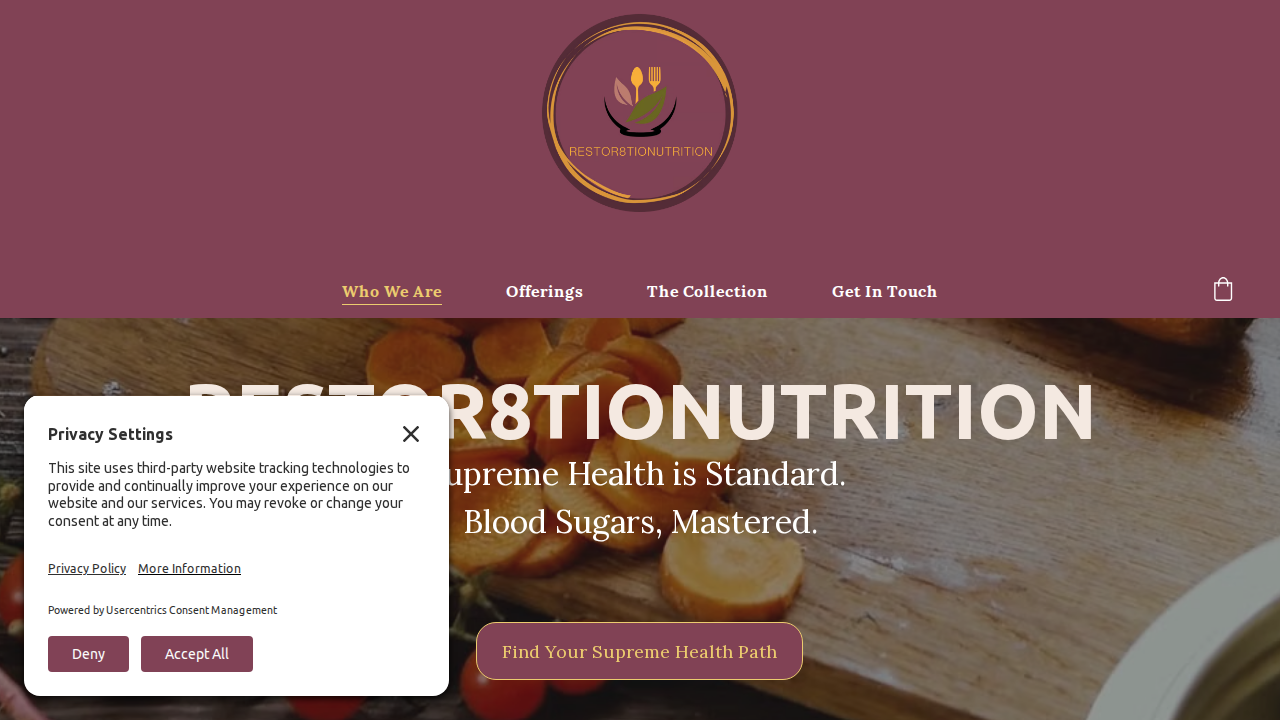
On 07/08/26 restor8tionutrition.com scored 46% — **Below Average** – Overall, the site has some solid basics, but a few visibility and clarity gaps are keeping it from showing up confidently in AI-driven results.
Executive summary
Score Breakdown (High Level)
- Discoverability: 75% - The site has well-crafted metadata and titles, but discovery is currently blocked by a 'noindex' tag and missing XML sitemaps.
- Structured Data: 33% - While there's a valid basic schema block on the homepage, the absence of organization-level details and blog-specific markup leaves a lot of room for improvement.
- AI Readiness: 17% - The site is accessible to AI crawlers, but it lacks foundational technical discovery elements like an XML sitemap and a verified Wikidata presence.
- Performance: 50% - Mobile performance is generally solid with excellent layout stability and responsiveness, though the homepage's main content takes a bit too long to appear at 5.7 seconds.
- Reputation: 73% - The brand is well-recognized by AI models and has a strong social presence, but it lacks independent press validation and consistent business address data.
- LLM-Ready Content: 28% - The page identifies a clear author but lacks the standard heading hierarchy and external linking patterns needed for optimal AI indexing.

What stands out most overall
The big picture is that the brand is generally present online, but a few core signals are either missing or inconsistent, which makes it harder for AI systems to confidently find and describe the site. A lot of what’s showing up here isn’t “wrong,” it’s more that the site and its content don’t read as clearly or as verifiably as they could in AI-driven discovery. The breakdown below walks through the specific areas where clarity, credibility, and content usability signals didn’t come through. None of this is unusual, and it’s the kind of set of gaps we see often when a site has good fundamentals but hasn’t been tuned for AI visibility yet.
Detailed Report
Discoverability
❌ Homepage set to be ignored
What we saw
The homepage includes a directive telling engines not to include it in results. That makes it much harder for the site to be discovered through search and AI experiences.
Why this matters for AI SEO
If the main entry point is treated as “don’t show this,” it limits how reliably engines can find, reference, and summarize the brand. It also reduces the chances that other pages get connected back to a trusted home base.
Next step
Remove the instruction that prevents the homepage from being included in results.
❌ No content map found
What we saw
We didn’t find a standard site content map. As a result, engines have less guidance on what pages exist and which ones matter most.
Why this matters for AI SEO
Generative engines benefit from clear, complete discovery paths so they can find content quickly and keep it refreshed in their understanding. When this is missing, important pages can be skipped or picked up inconsistently.
Next step
Publish a standard content map that lists the key URLs you want discovered.
❌ No media content map found
What we saw
We didn’t detect a dedicated map for images or videos. That can make it harder for engines to fully understand and surface the site’s media content.
Why this matters for AI SEO
AI-driven results often pull in visuals and media context when summarizing a brand or topic. If media is harder to locate and interpret, those signals are less likely to show up in generative answers.
Next step
Add a media-focused content map where it’s relevant for your site’s images and/or videos.
Structured Data
❌ Brand entity not clearly defined
What we saw
The structured data detected on the homepage didn’t include an organization-level description of the brand. That leaves engines with a thinner understanding of “who” the site represents.
Why this matters for AI SEO
Generative engines do better when they can anchor a site to a clearly defined brand entity. Without that, the site can be harder to verify and less likely to be treated as a trusted source.
Next step
Add organization-level structured data that clearly describes the brand behind the website.
❌ Blog/resource structured data couldn’t be confirmed
What we saw
We weren’t able to verify structured data on a resource or blog page because that page content wasn’t available in the evaluation. That means we can’t confirm whether the content is being clearly described to engines.
Why this matters for AI SEO
For content to show up reliably in AI summaries, it helps when engines can quickly understand what a page is and how it should be referenced. If that layer isn’t present (or can’t be confirmed), content may be interpreted less consistently.
Next step
Make sure blog/resource pages include structured data that clearly describes the content type and key details.
❌ Author details not confirmed via structured data
What we saw
We couldn’t confirm a clear, non-generic author or any author-specific structured data (including profile references). This was also impacted by the resource/blog page not being available for evaluation.
Why this matters for AI SEO
When authorship isn’t clearly defined, it’s harder for generative engines to connect content to real expertise and consistent identity signals. That can reduce trust in what gets quoted or summarized.
Next step
Add author structured data that identifies the author clearly and ties them to consistent external profiles.
AI Readiness
❌ AI discovery path is incomplete
What we saw
A standard content map wasn’t found. Because of that, there was also no way to confirm freshness signals tied to that map.
Why this matters for AI SEO
AI crawlers rely on clear discovery and update cues to prioritize what to read and re-check. When those signals aren’t available, newer or important pages can be slower to surface.
Next step
Provide a content map that engines can use to discover pages and understand what has changed over time.
❌ No clear brand context page detected
What we saw
We didn’t find an internal page that clearly reads as a dedicated brand context page (based on the signals checked). That makes it harder to locate a single, authoritative explanation of who you are.
Why this matters for AI SEO
Generative engines look for straightforward brand context so they can describe your business accurately and consistently. When that’s harder to find, the brand story can become fragmented.
Next step
Create or clearly label a dedicated page that explains the brand and its background in one place.
❌ No verified Wikidata entity found
What we saw
We didn’t find a verified Wikidata item tied to the brand. That removes a common external reference point used to validate identity.
Why this matters for AI SEO
When a brand is anchored to widely recognized external entities, AI systems have an easier time confirming that the business is real and consistent. Without that anchor, identity verification can be weaker.
Next step
Establish a verified Wikidata entity for the brand so engines have a consistent external reference.
Performance
❌ Main homepage content loads slowly
What we saw
The primary “above the fold” content on the homepage took longer than expected to fully appear. This can make the first impression feel sluggish, especially on mobile.
Why this matters for AI SEO
When key content takes longer to render, it can reduce how efficiently engines and users reach the substance of the page. Over time, that can affect how confidently the page is treated as a good source to reference.
Next step
Reduce the time it takes for the main homepage content to fully load.
Reputation
❌ Conflicting business address signals
What we saw
Different sources report different physical addresses for the business (including locations in Minnesota and Wyoming). That creates a mismatch in the brand’s identity footprint.
Why this matters for AI SEO
Generative engines tend to trust brands more when core identity details line up everywhere. When fundamental facts conflict, systems may hesitate to surface the brand or may present inconsistent details.
Next step
Align the business address information across the sources that reference your brand.
❌ No Wikidata presence
What we saw
We didn’t find a Wikidata entity for the brand in the available signals. That leaves a gap in third-party identity confirmation.
Why this matters for AI SEO
A verified entity reference helps AI systems connect your brand to a consistent knowledge-graph-style identity. Without it, brand verification can rely more heavily on scattered mentions.
Next step
Create and verify a Wikidata entity that represents your brand accurately.
❌ Limited independent press mentions
What we saw
We didn’t find independent, third-party press coverage tied to the brand in the evaluated signals. That means there are fewer external sources “vouching” for the business.
Why this matters for AI SEO
Generative engines often weigh independent coverage heavily when deciding what brands to reference and trust. When those mentions are missing, it can be harder to earn strong authority in AI answers.
Next step
Build a clearer footprint of independent third-party coverage that references the brand.
LLM-Ready Content (Blog Analysis)
Heads up: this section looks at one article as a snapshot, so it’s a little more interpretive than the rest of the report and may shift slightly from run to run. Have questions? Just shoot us an email at hello@v9digital.com
❌ Content looks out of date
What we saw
The article’s last update date is older than a year. That can make the page feel less current for topics where freshness influences trust.
Why this matters for AI SEO
Generative engines tend to prefer content that looks maintained, especially when summarizing guidance or best practices. Older timestamps can reduce confidence in citing the page.
Next step
Review the article for accuracy and update it so the page reflects current information.
❌ No supporting external references
What we saw
We didn’t find outbound links to authoritative, non-social sources within the article. The only external links detected were to social platforms.
Why this matters for AI SEO
Citations to credible third-party sources help engines validate claims and understand the broader context of your content. Without them, the page can read as less verifiable.
Next step
Add a small set of relevant, authoritative external references where they naturally support key points.
❌ Hard for AI to “chunk” the article
What we saw
The page didn’t use section-level headings to break the content into clear segments. That makes it tougher to scan and interpret the flow.
Why this matters for AI SEO
AI systems often rely on clear section structure to extract, summarize, and quote the right parts of a page. When the structure isn’t obvious, important details can get overlooked.
Next step
Restructure the article into clear sections with consistent section headings.
❌ No table-based summary found
What we saw
We didn’t see any table used to summarize key takeaways, comparisons, or quick-reference information. That’s not required, but it can make information easier to reuse.
Why this matters for AI SEO
Structured summaries can be easier for generative engines to interpret and restate accurately. Without them, engines may have to infer structure from long-form text alone.
Next step
Include a simple table when it genuinely helps summarize or compare information in the article.
❌ Subheadings aren’t descriptive
What we saw
Because the article didn’t include section headings, we couldn’t find descriptive subheadings that clearly signal what each section covers. This reduces scannability for both readers and engines.
Why this matters for AI SEO
Descriptive subheadings help AI systems identify the “right” section to pull from when answering specific questions. Without that structure, the content can be harder to match to intent.
Next step
Use clear, descriptive subheadings that reflect the actual questions or topics covered in each section.
❌ Key answers don’t surface early
What we saw
With no section structure to evaluate, we couldn’t confirm that each major topic gets an early, direct answer. That often leaves the strongest takeaways buried deeper in the page.
Why this matters for AI SEO
Generative engines frequently look for clear, direct statements near the start of a topic section to form reliable summaries. When answers aren’t easy to spot, content can be underused in AI responses.
Next step
Make sure each main section begins with a clear, direct takeaway before expanding into detail.
Does Anything Seem Off?
Thanks for taking our free GEO Grader for a spin. When we started this journey, the tool had a fairly long processing time to check everything we wanted both onsite and offsite, so we made a few adjustments on the backend to speed things up. As a result, there are times when the grader may not get everything 100% right. If something feels off, we recommend running the tool a second time to confirm the results. From there, you’re always welcome to reach out to us to schedule a GEO consultation, or to have your SEO provider validate the findings with a more detailed crawl and manual review.
