
Overview:
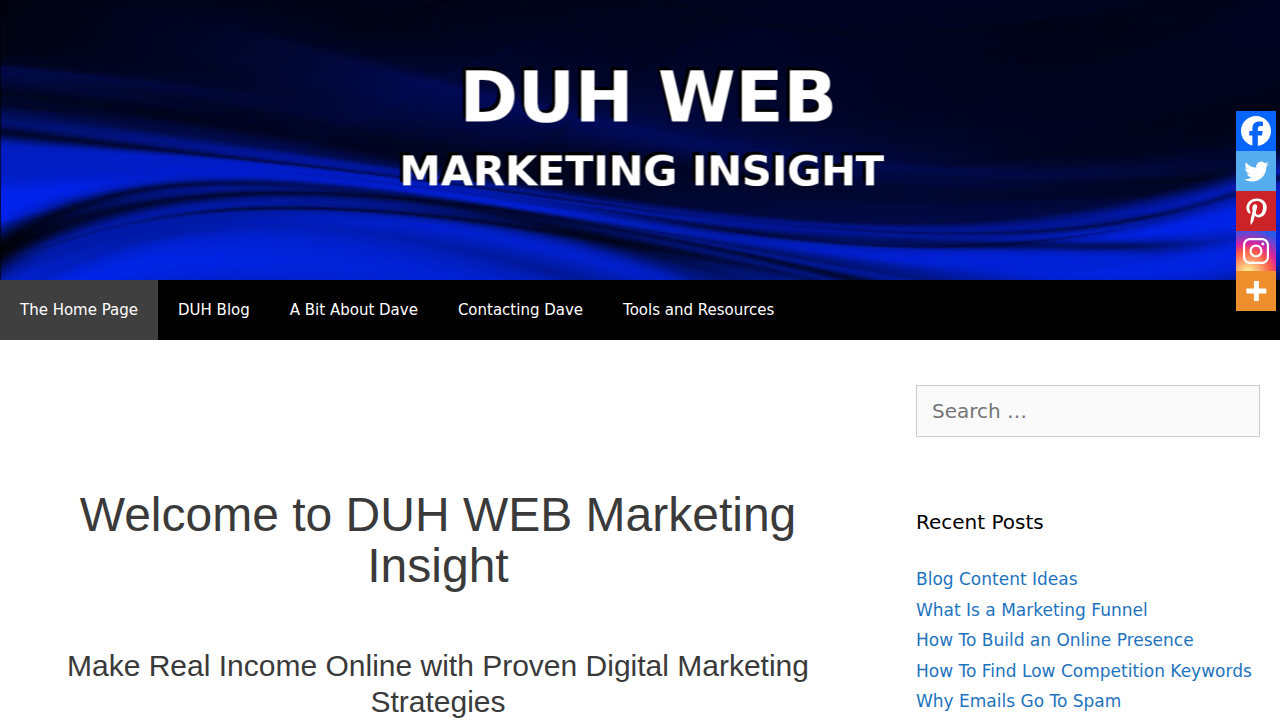
On 04/14/26 duhwebmarketinginsight.com scored 74% — **Good** – Overall, the site reads clearly and feels well put-together, with a few visibility and credibility gaps that keep it from showing up as confidently across AI-driven experiences.
Executive summary
Score Breakdown (High Level)
- Discoverability: 100% - The site is generally solid for discovery with all core metadata and standard sitemaps in place, though it is currently missing dedicated sitemaps for images and video.
- Structured Data: 92% - The structured data setup is generally excellent and includes organization-level details, though adding social profile links to the author schema would help further verify the brand's digital identity.
- AI Readiness: 67% - The site's technical foundation is solid with a clear sitemap and no AI crawler blocks, though it lacks a Wikidata entity to anchor its brand identity.
- Performance: 89% - Mobile performance generally landed well outside the 'poor' range, though the main content on the resource page is loading a bit slower than the 5.0-second target.
- Reputation: 35% - Overall, the site has a clean reputation with no negative signals, but it lacks the offsite authority and brand recognition needed to stand out to generative engines.
- LLM-Ready Content: 88% - The content is extremely well-structured and recently updated, though it relies on a few unexplained technical acronyms that could slightly hinder machine understanding.

Where things stand at a glance
The big picture is that your on-site foundation looks strong, but a few key signals that help AI confidently verify “who you are” aren’t showing up consistently off-site. None of this reads like a major problem—more like missing context that makes it harder for systems to connect the dots. Below, we’ll walk through the specific areas where the report flagged gaps, grouped by category so it’s easy to digest. Overall, this is a pretty manageable set of issues to address once you see them laid out.
Detailed Report
Discoverability
❌ Image or video discovery signals missing
What we saw
We didn’t see any dedicated signals that specifically point search engines toward your images or videos. That means media content may be harder to surface on its own.
Why this matters for AI SEO
Generative engines pull from lots of different content types, not just text. When media isn’t clearly discoverable, you can miss out on visibility for queries where images or video could be a strong match.
Next step
Add a clear way for crawlers to find and understand your image and/or video content at scale.
Structured Data
❌ Author identity isn’t externally connected
What we saw
The author information is present, but we didn’t see any external profile links included alongside that author identity. As a result, the author reads as real but not easily verifiable.
Why this matters for AI SEO
When AI systems can’t confidently connect an author to stable external identities, it’s harder to treat that author as a consistent, trustworthy source across the web. That can limit how strongly content is attributed and reused.
Next step
Connect the author identity to relevant external profiles so it’s easier to verify and reconcile across sources.
AI Readiness
❌ No Wikidata entity found for the brand
What we saw
We didn’t find an associated Wikidata entity for the brand in the results we reviewed. That leaves a notable gap in third-party identity confirmation.
Why this matters for AI SEO
AI systems often lean on consistent public entities to validate “who is who” online. When that connection is missing, the brand can be harder to confirm and less likely to be recognized consistently.
Next step
Establish a verifiable public entity reference for the brand so AI systems have a clearer identity anchor.
Performance
❌ A deeper content page loads its main content too slowly
What we saw
On the resource/blog page, the main above-the-fold content took longer than expected to fully appear. This was isolated to that deeper page rather than the homepage.
Why this matters for AI SEO
When key content takes longer to load, real users are more likely to bounce or skim, and that can reduce the page’s perceived usefulness over time. It also increases the chance that systems evaluating the page get a weaker first impression of the content experience.
Next step
Improve how quickly the main content of the resource page becomes visible to users.
Reputation
❌ Brand recognition is limited across major AI models
What we saw
Most of the major AI models reviewed didn’t recognize the brand. This is common for smaller or newer brands, but it does show up as a visibility gap.
Why this matters for AI SEO
If models don’t already “know” the brand, they have to rely more heavily on external confirmation signals to describe it accurately. Limited recognition can reduce how often the brand is mentioned or confidently summarized.
Next step
Strengthen the brand’s external footprint so it’s easier for AI models to recognize and validate.
❌ Brand identity details aren’t consistently confirmed
What we saw
The brand’s identity signals didn’t fully line up in the results, including missing key business details and unclear consensus on the official name. That creates avoidable ambiguity.
Why this matters for AI SEO
When identity details aren’t consistent, generative engines are more likely to hedge, simplify, or get details wrong. Clear, consistent identity signals help AI present the brand with more confidence.
Next step
Make sure the brand’s core identity details are consistently represented and easy to corroborate.
❌ No Wikidata listing for the brand
What we saw
No matching Wikidata entity was identified for the brand. This removes one of the more commonly referenced public identity sources.
Why this matters for AI SEO
Wikidata is frequently used as a reference layer for entity verification. Without it, AI systems may have fewer strong “anchors” to confirm the brand.
Next step
Create or connect a Wikidata entity so the brand has a stronger third-party identity reference.
❌ No Wikidata identity anchors detected
What we saw
We didn’t see supporting identifiers that tie the brand back to an established public entity record. In practice, that means fewer durable reference points.
Why this matters for AI SEO
Identity anchors help generative engines disambiguate brands with similar names and avoid mixing signals between entities. Missing anchors can lead to weaker confidence in brand attribution.
Next step
Add stable, third-party identity anchors that help confirm the brand across sources.
❌ No third-party customer reviews found
What we saw
We didn’t find independent customer reviews in the off-site signals reviewed. That leaves the brand without a key form of external validation.
Why this matters for AI SEO
Third-party reviews act as a strong trust shortcut for both people and AI systems. Without them, it’s harder for generative engines to confidently describe real-world reputation.
Next step
Build a track record of independently hosted customer feedback that can be referenced externally.
❌ Review sources aren’t verifiable
What we saw
No concrete, verifiable review sources were identified in the results. So even if feedback exists somewhere, it isn’t showing up in a way that can be referenced cleanly.
Why this matters for AI SEO
Generative engines tend to rely on sources they can point to and reconcile. If review sources aren’t clear, the brand loses out on reputation signals that help AI speak with confidence.
Next step
Ensure reviews are hosted in places that are independently accessible and easy to validate.
❌ Off-site social profiles aren’t consistently recognized
What we saw
The results couldn’t reach consensus on which off-site social profiles represent the brand. That makes the social footprint feel fragmented from an AI perspective.
Why this matters for AI SEO
When AI systems can’t confidently connect the brand to a consistent set of profiles, it’s harder to treat those profiles as corroborating identity signals. That can reduce overall trust and clarity.
Next step
Align the brand’s off-site social identity so it’s consistently attributable across platforms.
❌ No independent press mentions found
What we saw
We didn’t find independent press coverage referencing the brand. That leaves a gap in third-party validation beyond owned channels.
Why this matters for AI SEO
Independent mentions help AI systems confirm a brand exists and matters outside its own site and social pages. Without them, AI may be less likely to treat the brand as notable or authoritative.
Next step
Earn credible third-party mentions that establish the brand outside of owned properties.
❌ No owned press or releases identified
What we saw
We didn’t see any press or media releases associated with the brand in the reviewed signals. That limits the amount of “official story” content available off-site.
Why this matters for AI SEO
Press-style content can give AI systems clean, quotable context about what a brand does and what’s changed over time. Without it, there’s less structured narrative for generative engines to pull from.
Next step
Publish a clear set of brand announcements or media updates that can be referenced as official context.
LLM-Ready Content (Blog Analysis)
Heads up: this section looks at one article as a snapshot, so it’s a little more interpretive than the rest of the report and may shift slightly from run to run. Have questions? Just shoot us an email at hello@v9digital.com
❌ A few subheadings are too generic to guide skimming
What we saw
Some subheadings were labeled with broad, non-specific phrasing (for example, sections like a generic wrap-up or resources label). That makes it harder to understand what a section contains at a glance.
Why this matters for AI SEO
Clear, descriptive section labels help AI systems map the content and pull the right snippet for the right question. Generic section names can weaken how easily the page is summarized and reused.
Next step
Rewrite generic subheadings so they describe the specific takeaway or topic of each section.
❌ Several acronyms aren’t explained near first use
What we saw
We saw multiple acronyms used without an expanded definition close to where they first appear (examples included SEO, DM, GDPR, and AI). That can create small comprehension gaps for new readers.
Why this matters for AI SEO
Generative engines do better when terms are explicitly defined in-context, especially when the audience could be mixed. Missing expansions can reduce clarity and increase the chance of fuzzy or incomplete summaries.
Next step
Add plain-language expansions for acronyms near their first mention so the content is self-contained.
Does Anything Seem Off?
Thanks for taking our free GEO Grader for a spin. When we started this journey, the tool had a fairly long processing time to check everything we wanted both onsite and offsite, so we made a few adjustments on the backend to speed things up. As a result, there are times when the grader may not get everything 100% right. If something feels off, we recommend running the tool a second time to confirm the results. From there, you’re always welcome to reach out to us to schedule a GEO consultation, or to have your SEO provider validate the findings with a more detailed crawl and manual review.
