
Overview:
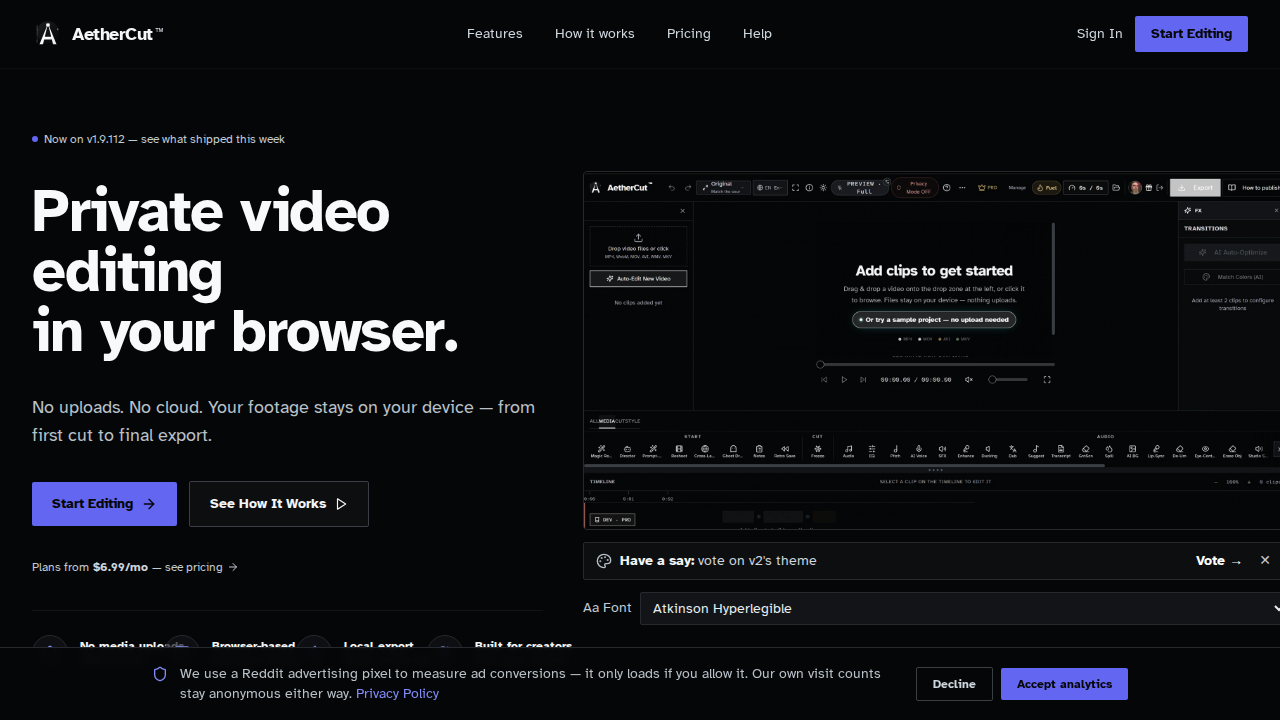
On 09/18/26 AetherCut.app scored 45% — **Below Average** – Overall, the foundations are there, but a handful of missing or unclear signals are holding back how confidently AI systems can understand and reference the site.
Executive summary
Score Breakdown (High Level)
- Discoverability: 100% - The site is technically very accessible and well-optimized for discovery, though it's currently missing dedicated sitemaps for images and video.
- Structured Data: 58% - The homepage schema is solid and error-free with clear organization details, but we weren't able to find or evaluate any article-level markup or authorship data.
- AI Readiness: 67% - The site's technical foundation is excellent with clear sitemaps and open access for AI crawlers, though it is currently missing a Wikidata entity to help search engines definitively identify the brand.
- Performance: 0% - We weren't able to find the mobile performance data for this section, so we couldn't confirm if the site meets basic speed and stability standards.
- Reputation: 35% - The brand maintains a clean record with no negative feedback, but it currently lacks widespread LLM recognition and verified offsite identity anchors like Wikidata.
- LLM-Ready Content: 40% - The content is well-attributed and recently updated, but it currently lacks the descriptive subheadings and paragraph depth needed for optimal AI comprehension.

What stands out most overall
The big picture is that the site reads as credible in some areas, but a few core signals are either missing, inconsistent offsite, or not easily confirmed from the available data. In practice, that tends to show up as an AI “clarity” problem more than a quality problem—systems can’t always connect the dots with confidence. Below, we’ll walk through the specific sections where visibility and understanding broke down, grouped by theme. None of this is unusual for a growing brand, and it’s all the kind of stuff that becomes straightforward once it’s clearly surfaced.
Detailed Report
Discoverability
❌ Image or video discovery coverage
What we saw
We didn’t find any dedicated support for helping platforms specifically discover image or video assets.
Why this matters for AI SEO
When rich media isn’t clearly surfaced, AI systems can miss or underuse visual content that could otherwise reinforce what the brand does.
Next step
Add dedicated support for image and/or video discovery so those assets are easier to find and interpret.
Structured Data
❌ Resource/blog page structured details not available
What we saw
We couldn’t locate a resource or blog page to evaluate, so we weren’t able to confirm structured details for long-form content.
Why this matters for AI SEO
Without consistent, page-level content signals, AI systems have a harder time classifying your articles and connecting them back to the brand.
Next step
Ensure your resource/blog content is accessible and includes clear, page-level structured details.
❌ Author identity on resource/blog content not confirmed
What we saw
Because the resource/blog content wasn’t available to review, we couldn’t confirm that the author is clearly identified in a non-generic way.
Why this matters for AI SEO
When author identity isn’t clear, AI systems may treat the content as less attributable and less trustworthy to cite.
Next step
Make sure each long-form page clearly names a real author in a consistent, recognizable way.
❌ Author profile connections not confirmed
What we saw
We couldn’t verify any author profile connections to other authoritative profiles because the resource/blog page content wasn’t available.
Why this matters for AI SEO
Clear, consistent author connections help AI systems resolve “who wrote this” and reduce ambiguity across the web.
Next step
Add clear author profile connections that point to the author’s established public profiles.
AI Readiness
❌ No Wikidata entity found for the brand
What we saw
We didn’t find a Wikidata entity associated with the brand.
Why this matters for AI SEO
Without a strong, independent entity reference, AI systems have a harder time confidently disambiguating and validating the brand.
Next step
Create or claim a Wikidata entry for the brand and align your public brand references around it.
Performance
❌ Homepage responsiveness data unavailable
What we saw
We weren’t able to review the homepage responsiveness signal because the data wasn’t available in the report output.
Why this matters for AI SEO
When user experience signals can’t be verified, it’s harder to gauge whether visitors (and by extension, AI-driven referrals) will have a smooth experience.
Next step
Collect and confirm homepage responsiveness results so this area can be properly validated.
❌ Homepage load experience data unavailable
What we saw
We couldn’t verify key homepage loading signals because the data wasn’t available in the report output.
Why this matters for AI SEO
If performance can’t be confirmed, it creates uncertainty around how usable and reliable the site feels when AI systems send people your way.
Next step
Capture and review homepage loading results so the site experience can be validated end to end.
❌ Homepage visual stability data unavailable
What we saw
We couldn’t verify whether the homepage stays visually stable during load because the data wasn’t available.
Why this matters for AI SEO
A stable experience supports trust and usability, which can influence how confidently AI platforms surface and recommend a site.
Next step
Collect and confirm homepage visual stability results so this can be assessed accurately.
❌ Homepage overall performance signal unavailable
What we saw
We couldn’t confirm the homepage’s overall performance signal because the data wasn’t available in the report output.
Why this matters for AI SEO
When performance isn’t measurable in the assessment, it limits confidence in how well the site supports real users from AI-driven discovery.
Next step
Generate an updated homepage performance readout so this section can be validated.
Reputation
❌ Limited brand recognition across major AI systems
What we saw
The brand wasn’t consistently recognized across multiple major AI systems in the evaluated results.
Why this matters for AI SEO
If AI systems don’t consistently recognize the brand, they’re less likely to surface it confidently in recommendations and comparisons.
Next step
Strengthen the brand’s presence on well-known third-party sources that AI systems commonly rely on.
❌ Offsite identity signals don’t fully match
What we saw
We couldn’t confirm a consistent physical address across offsite sources, which prevented a full identity match.
Why this matters for AI SEO
Inconsistent identity details make it harder for AI systems to confidently connect mentions back to a single, verified brand entity.
Next step
Align offsite brand listings so core identity details match consistently.
❌ No Wikidata presence supporting reputation
What we saw
No matching Wikidata entity was found in the evaluated reputation signals.
Why this matters for AI SEO
Wikidata is a common reference point for entity verification, and its absence can reduce confidence in brand legitimacy and consistency.
Next step
Establish a Wikidata entity and ensure it connects cleanly to the brand’s public footprint.
❌ Limited third-party validation (press/reviews)
What we saw
There wasn’t broad confirmation of third-party reviews or independent press coverage in the evaluated results.
Why this matters for AI SEO
Independent validation helps AI systems weigh credibility, especially when deciding what to cite, recommend, or treat as authoritative.
Next step
Build more independent third-party references that clearly mention and describe the brand.
LLM-Ready Content (Blog Analysis)
Heads up: this section looks at one article as a snapshot, so it’s a little more interpretive than the rest of the report and may shift slightly from run to run. Have questions? Just shoot us an email at hello@v9digital.com
❌ No non-social outbound references
What we saw
We didn’t see any outbound links to non-social, third-party sources within the article content.
Why this matters for AI SEO
External references can help AI systems validate claims and better understand context, especially for specialized topics.
Next step
Add a small number of relevant third-party references that support key points in the piece.
❌ Sections are too short for reliable reuse
What we saw
Most sections are very brief, which makes the content easy to skim but limits how much meaning each section carries on its own.
Why this matters for AI SEO
AI systems tend to reuse content in chunks, and very short sections can reduce clarity when pulled out of page context.
Next step
Expand key sections so each one contains enough self-contained explanation to stand on its own.
❌ Subheadings don’t consistently signal what follows
What we saw
Many subheadings are too short or don’t clearly match what the section actually covers.
Why this matters for AI SEO
Clear subheadings help AI quickly map “question → answer,” improving comprehension and reuse in generated responses.
Next step
Rewrite subheadings so they’re more descriptive and clearly aligned with the section’s main point.
❌ Sections don’t consistently start with a clear lead-in
What we saw
A meaningful portion of sections don’t open with a substantial first paragraph that frames the takeaway.
Why this matters for AI SEO
When sections start abruptly, AI systems may struggle to extract a clean, standalone answer from the top of each section.
Next step
Add a short lead-in at the start of each section that states the point in plain language.
❌ Acronyms aren’t consistently explained
What we saw
The content includes multiple technical acronyms (like SSO, SOC2, HIPAA) that aren’t explained in-line.
Why this matters for AI SEO
Unexplained acronyms create ambiguity for AI systems and can reduce confidence when summarizing or quoting the page.
Next step
Define specialized acronyms the first time they appear so the meaning is unambiguous.
Does Anything Seem Off?
Thanks for taking our free GEO Grader for a spin. When we started this journey, the tool had a fairly long processing time to check everything we wanted both onsite and offsite, so we made a few adjustments on the backend to speed things up. As a result, there are times when the grader may not get everything 100% right. If something feels off, we recommend running the tool a second time to confirm the results. From there, you’re always welcome to reach out to us to schedule a GEO consultation, or to have your SEO provider validate the findings with a more detailed crawl and manual review.
