
Overview:
On 06/23/26 wilsonandmilo.com/ scored 32% — **Weak** – Overall, the site currently gives AI systems a pretty limited and sometimes unclear picture of what the brand is and what it offers.
Executive summary
Score Breakdown (High Level)
- Discoverability: 75% - The site is technically crawlable and doesn't block search engines, but it's currently missing a meta description and a sitemap to help with discovery.
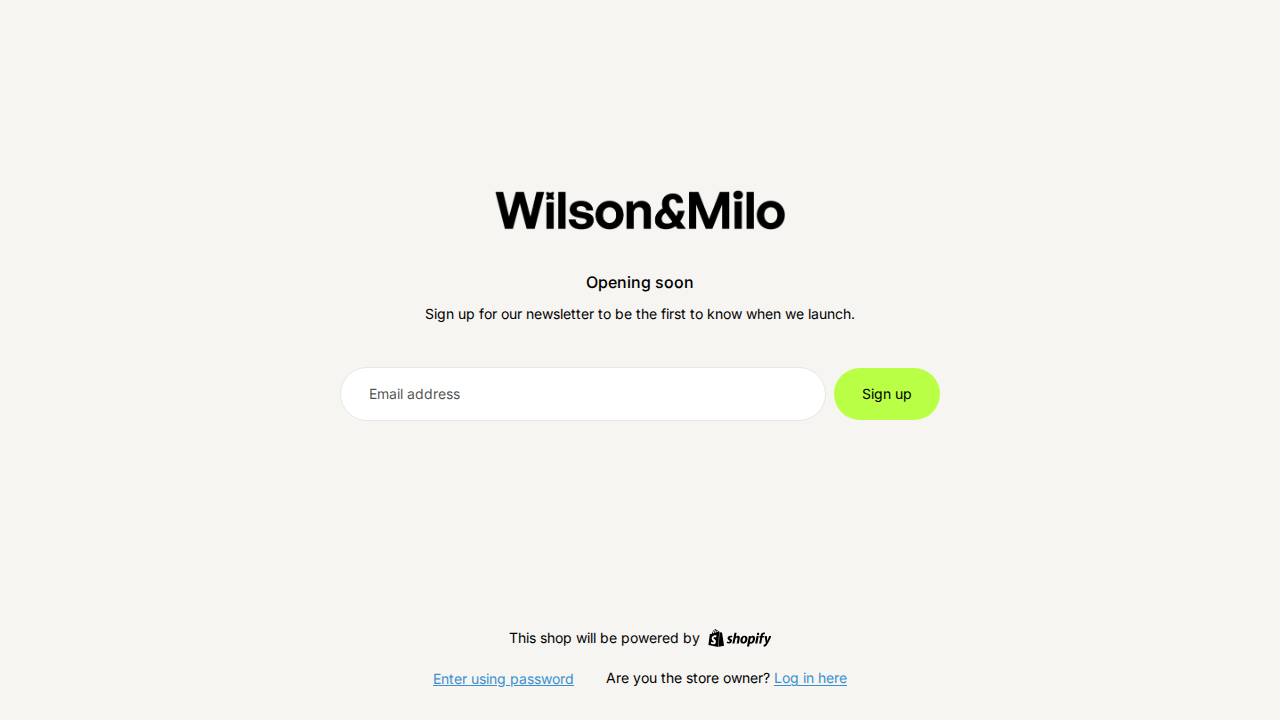
- Structured Data: 0% - We weren't able to find any schema markup or structured data on the homepage, likely because the site is currently behind a password-protected placeholder page.
- AI Readiness: 17% - The site is currently accessible to AI crawlers, but the lack of a sitemap and brand context pages—likely due to the password-protected launch screen—limits content discovery.
- Performance: 50% - The homepage shows strong stability and responsiveness, though the main content takes a bit longer than 5 seconds to fully load.
- Reputation: 46% - The brand has a clean record with no negative assertions, but its overall authority is limited by a lack of third-party reviews, press coverage, and a consistent digital identity.
- LLM-Ready Content: 12% - The page is currently a password-protected landing page that lacks the authorship, dates, and content structure needed for AI systems to process it as a reliable resource.

The big picture before we dig in
The main takeaway is that there isn’t enough clear, accessible information for AI systems to confidently understand the brand right now, even though some foundational signals are present. Most of what’s missing boils down to clarity and verification signals, not anything “wrong,” especially with the site currently presenting a limited, launch-style experience. The detailed breakdown below walks through the specific discoverability, structured data, content, performance, and reputation areas where key signals didn’t show up. Once those gaps are visible, it’s usually straightforward to see what’s holding AI visibility back.
Detailed Report
Discoverability
❌ Missing homepage meta description
What we saw
The homepage HTML didn’t include a standard meta description. Social sharing descriptions appear to be present, but the basic description used for general discovery wasn’t found.
Why this matters for AI SEO
When AI systems pull quick summaries about a brand, they often lean on short, explicit descriptions to understand what a page is “about.” If that’s missing, the page can be easier to misinterpret or summarize inconsistently.
Next step
Add a clear, plain-English meta description to the homepage that summarizes what the brand does and who it’s for.
❌ No standard XML sitemap found
What we saw
We couldn’t find a standard XML sitemap for the site. That leaves crawlers without a reliable map of the key pages you want discovered.
Why this matters for AI SEO
AI discovery depends on systems being able to find and revisit the right pages efficiently. Without a clear site map, important pages can be missed or picked up more slowly.
Next step
Publish a standard XML sitemap that lists the main pages you want indexed.
❌ No image or video sitemaps found
What we saw
No specialized image or video sitemaps were detected. If your site relies on visual media, those assets may be harder to discover and interpret.
Why this matters for AI SEO
AI systems increasingly use images and video as part of how they understand a brand and its offerings. If media isn’t clearly surfaced, you lose context that can influence summaries and recommendations.
Next step
Add image and/or video sitemaps if visual assets are a meaningful part of your site’s content.
Structured Data
❌ No schema markup detected on the homepage
What we saw
No valid schema markup was detected in the homepage HTML. As a result, the page isn’t providing structured, machine-readable signals about what it represents.
Why this matters for AI SEO
Structured data helps AI systems extract reliable facts about a brand and its pages without guessing. When it’s absent, engines may rely more on incomplete or inconsistent third-party descriptions.
Next step
Add schema markup to the homepage so core brand details can be read consistently by machines.
❌ No organization-type schema on the homepage
What we saw
We didn’t find any organization-related schema types on the homepage. That means key identity details aren’t being explicitly declared in a structured way.
Why this matters for AI SEO
AI systems use these organization-level signals to confirm “who” a brand is, which reduces confusion and improves trust in summaries. Without them, identity can be fuzzier across different engines.
Next step
Include organization-type schema that clearly represents the business identity.
❌ Resource/blog page couldn’t be evaluated
What we saw
No resource or blog page HTML was provided for review, so we couldn’t confirm structured data coverage beyond the homepage.
Why this matters for AI SEO
Content pages are often what AI systems quote and cite, so they’re a major source of “understanding” about your expertise. If those pages aren’t evaluated, you lose clarity on how well AI can interpret your content.
Next step
Provide a live resource or blog URL (or page HTML) so content-level structured data can be reviewed.
❌ Schema quality couldn’t be validated
What we saw
Because no schema markup was found, there wasn’t anything available to check for errors or completeness.
Why this matters for AI SEO
AI engines benefit from structured information that’s both present and consistent. If it’s missing entirely, they’re forced to interpret the site using weaker or more ambiguous signals.
Next step
Add core schema markup so the site can be evaluated (and trusted) on structured clarity.
❌ Author details couldn’t be confirmed for content
What we saw
No resource page was provided to identify an author, and no author-related schema was found.
Why this matters for AI SEO
AI systems look for clear ownership and attribution when deciding what content is trustworthy enough to reuse. Missing author context can reduce confidence in content summaries and citations.
Next step
Make sure resource/blog content includes a clear author and supporting author markup where appropriate.
❌ No author “sameAs” links found
What we saw
No author schema was detected, and no “sameAs” links were present to connect an author to known profiles.
Why this matters for AI SEO
When AI can connect a person to consistent external profiles, it has an easier time verifying identity and reducing ambiguity. Without that, author entities can be harder to validate.
Next step
Add author details that connect the author to consistent, official profile URLs.
AI Readiness
❌ No XML sitemap detected
What we saw
A standard XML sitemap wasn’t found. This makes it harder for AI-related crawlers to quickly understand the site’s overall shape.
Why this matters for AI SEO
AI systems do best when they can easily find key pages and keep them updated in their understanding. A missing sitemap can slow down discovery and reduce coverage.
Next step
Create and publish an XML sitemap that reflects the main pages you want AI systems to see.
❌ Sitemap freshness data not available
What we saw
Because no sitemap was detected, we couldn’t confirm whether it includes page update information (like last modified dates).
Why this matters for AI SEO
AI engines need cues for what’s current versus outdated, especially when summarizing or recommending information. Missing freshness signals can reduce confidence that content is up to date.
Next step
Ensure your sitemap includes last modified information for URLs where it’s available.
❌ No clear brand context page surfaced from the homepage
What we saw
We didn’t find internal links from the homepage that point to a clear brand context page (like an About/Company/Team page).
Why this matters for AI SEO
AI systems look for authoritative “who we are” context to anchor brand identity and reduce confusion. If that context isn’t easy to find, the brand story can come through fragmented.
Next step
Add a clearly labeled brand context page and make it easy to reach from the homepage.
❌ No Wikidata entity found for the brand
What we saw
A Wikidata item ID wasn’t found for the brand.
Why this matters for AI SEO
Wikidata is a common reference point for entity validation across many AI and knowledge systems. Without it, it can be harder for engines to confirm official identity details with confidence.
Next step
Create (or claim, if it exists) a Wikidata entry that accurately represents the brand.
Performance
❌ Main page content took too long to fully appear
What we saw
The homepage’s largest above-the-fold content element loaded slightly later than the benchmark used in this evaluation.
Why this matters for AI SEO
Performance affects how reliably pages can be accessed and processed at scale, especially when crawlers revisit and re-evaluate pages. Slower loading can also reduce perceived quality signals tied to user experience.
Next step
Improve how quickly the homepage’s main content renders so it appears sooner for users and crawlers.
Reputation
❌ Brand identity details aren’t consistent enough
What we saw
A consensus physical address could not be confirmed, with most sources returning no address at all.
Why this matters for AI SEO
When core identity details aren’t consistently available, AI systems can hesitate to confidently describe or verify a business. That uncertainty can lead to vague or conflicting brand summaries.
Next step
Make sure the brand’s official identity details are clearly available and consistent across trusted sources.
❌ No Wikidata entity could be confirmed
What we saw
No Wikidata entry was found for the brand, so there was no matched knowledge base record to reference.
Why this matters for AI SEO
Wikidata can act like a stable “anchor” that helps AI systems reconcile brand identity across the web. Without it, entity confidence can remain lower.
Next step
Establish a Wikidata entity for the brand and ensure it matches official brand details.
❌ Official identity anchors couldn’t be evaluated
What we saw
Because no Wikidata data was available, there was nothing to evaluate for official identity anchors.
Why this matters for AI SEO
These anchors help AI systems confirm they’re talking about the right entity. Without them, AI may rely on weaker corroboration and produce less reliable brand profiles.
Next step
Add verifiable official identity anchors to the brand’s knowledge presence once an entity exists.
❌ Third-party reviews weren’t clearly confirmed
What we saw
The presence of third-party reviews or customer feedback couldn’t be confirmed with confidence.
Why this matters for AI SEO
AI systems often use third-party feedback as a trust and legitimacy signal when describing brands. If that footprint is unclear, recommendations and summaries can be more cautious or less detailed.
Next step
Build a clear, verifiable trail of third-party reviews on well-known platforms relevant to your business.
❌ Review sources weren’t concrete
What we saw
No specific, verifiable review sources were identified by consensus.
Why this matters for AI SEO
Even when AI “hears” that reviews exist, it’s the concrete sources that let it trust and reference that information. Without named sources, review signals tend to be weaker.
Next step
Ensure review signals are tied to specific, recognizable sources that can be cited consistently.
❌ Homepage doesn’t visibly link to social profiles
What we saw
The current homepage experience does not include outgoing links to social platforms, largely due to the password-protected state.
Why this matters for AI SEO
When official profiles are clearly linked from the site, it’s easier for AI systems to confirm which accounts are authentic. Without that on-page confirmation, identity signals can look less complete.
Next step
Add clear, visible links from the homepage to the brand’s official social profiles.
❌ No independent third-party coverage was identified
What we saw
No independent press mentions or coverage were identified in the available reputation data.
Why this matters for AI SEO
Independent references can help AI systems corroborate what a business does and why it’s credible. When that footprint is missing, brand descriptions can vary more widely.
Next step
Establish at least a baseline of independent mentions or coverage that reflects the brand accurately.
LLM-Ready Content
❌ No clear author information
What we saw
No author name was identified on the evaluated page, and no author markup was detected either.
Why this matters for AI SEO
AI systems are more likely to trust and reuse content when it has clear ownership and accountability. Missing authorship can make content feel less credible or less “citable.”
Next step
Add a specific author name to the content and ensure it’s clearly visible.
❌ No publish or update date found
What we saw
No publication date or last-updated date was detected on the page.
Why this matters for AI SEO
Dates help AI systems judge whether information is current and safe to surface. Without them, content can be treated as less reliable or harder to contextualize.
Next step
Add a visible publish date and/or last updated date to the page.
❌ Freshness couldn’t be verified
What we saw
Because no modified date was present, we couldn’t confirm whether the content has been updated recently.
Why this matters for AI SEO
When AI can’t tell how fresh content is, it may be less likely to reference it for timely topics. That can limit how often your content shows up in AI-generated answers.
Next step
Include an updated date whenever content changes in a meaningful way.
❌ Content isn’t broken into readable sections
What we saw
The page didn’t contain enough section structure to be considered “chunked” for easy reading.
Why this matters for AI SEO
LLMs understand and reuse content better when it’s organized into clear sections. Without that structure, key points are harder to extract and summarize accurately.
Next step
Restructure the content into multiple clear sections with distinct headings.
❌ No table-based summary content found (bonus)
What we saw
No HTML table was found on the page.
Why this matters for AI SEO
Tables can make comparisons, specs, and quick takeaways easier for AI systems to interpret and reuse. When they’re absent, information may be harder to extract cleanly.
Next step
Add a simple table where it naturally helps summarize key information.
❌ Subheadings aren’t descriptive enough (or not present)
What we saw
The page lacked sufficient heading elements to support descriptive, section-based subheadings.
Why this matters for AI SEO
Clear subheadings help AI map what topics are covered and where answers live on the page. Without them, content tends to be summarized more generally and with less precision.
Next step
Add descriptive subheadings that reflect the specific questions or topics each section addresses.
❌ Key answers don’t appear early
What we saw
Because the page didn’t have enough structured sections, we couldn’t identify clear early-answer placement.
Why this matters for AI SEO
AI systems often prioritize content that gets to the point quickly, especially when generating direct answers. If the core takeaway isn’t easy to find early, it may be overlooked.
Next step
Make sure the page’s primary takeaway is stated clearly near the top.
❌ Page content is too fragmentary to assess
What we saw
The content appears to be in a placeholder/password-wall state, which made it too limited to judge overall readability and cohesion.
Why this matters for AI SEO
If AI systems can’t access or interpret meaningful on-page content, they have very little to index or summarize. That typically leads to thin, inconsistent, or missing brand coverage.
Next step
Replace the placeholder experience with accessible, substantive content that clearly explains the brand and its offerings.
Does Anything Seem Off?
Thanks for taking our free GEO Grader for a spin. When we started this journey, the tool had a fairly long processing time to check everything we wanted both onsite and offsite, so we made a few adjustments on the backend to speed things up. As a result, there are times when the grader may not get everything 100% right. If something feels off, we recommend running the tool a second time to confirm the results. From there, you’re always welcome to reach out to us to schedule a GEO consultation, or to have your SEO provider validate the findings with a more detailed crawl and manual review.
