
Overview:
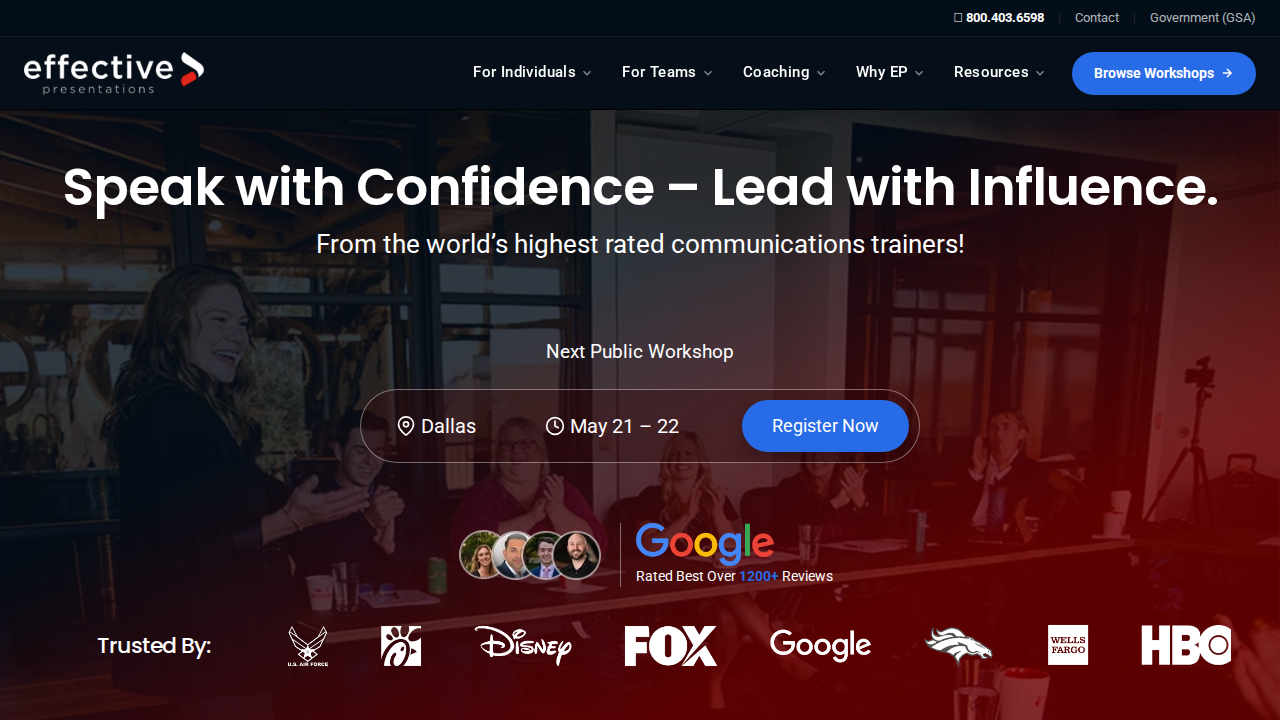
On 05/19/26 effectivepresentations.com scored 70% — **Decent** – Overall, the site looks in a solid place for AI visibility, with a few trust and content-clarity gaps that keep it from feeling fully “buttoned up.”
Executive summary
Score Breakdown (High Level)
- Discoverability: 100% - The site’s technical discovery signals are in great shape, with properly configured sitemaps, an accessible robots.txt, and solid metadata throughout.
- Structured Data: 58% - The site has a strong technical foundation with well-implemented organization schema on the homepage, though we weren't able to verify author or resource-specific data.
- AI Readiness: 67% - The site’s technical foundation is mostly AI-ready with accessible crawlers and detailed sitemaps, though we couldn't find a Wikidata entry to anchor the brand's identity.
- Performance: 67% - The site's mobile performance is excellent, with fast load times and no stability issues on the homepage.
- Reputation: 73% - The brand shows strong recognition and positive review signals across major platforms, though it lacks a verified Wikidata presence and consistent physical address data in the broader ecosystem.
- LLM-Ready Content: 64% - The page demonstrates strong authority through clear authorship and recent updates, though its highly fragmented layout and lack of data tables limit its overall structural score.

The main visibility gaps we saw
The big picture is that your baseline visibility signals look steady, but a few identity and content-structure details aren’t coming through as clearly as they could. None of this reads like a major problem—more like missing or incomplete context that makes it harder for AI systems to confidently connect the dots. The sections below walk through the specific areas where key information wasn’t found or couldn’t be verified in this run. Once you read through them, you’ll have a clear, manageable list of what’s actually getting in the way.
Detailed Report
Structured Data
❌ Missing schema on a resource/blog page
What we saw
We weren’t able to detect structured data on a resource or blog page because the resource page file provided was missing or empty. That means there wasn’t enough information available to confirm how articles/resources are being defined beyond the homepage.
Why this matters for AI SEO
When AI systems can’t find clear, consistent page-level details on your educational content, it’s harder for them to categorize and reuse it confidently. That can limit how often those pages show up as supporting sources.
Next step
Make sure a valid, crawlable resource/blog page is available and includes structured data appropriate for that page type.
❌ No clear, verifiable author on a resource/blog post
What we saw
Because no usable resource/blog page was provided, we couldn’t identify or verify an author as a real individual for that content. As a result, author details couldn’t be evaluated at the article level.
Why this matters for AI SEO
For AI-driven discovery, clear authorship helps establish credibility and reduces ambiguity about who’s behind the content. When author identity is missing or unverifiable, it can weaken trust signals tied to expertise.
Next step
Ensure each resource/blog post clearly identifies a specific author and that this author information is consistently represented.
❌ Author schema missing “sameAs” identity links
What we saw
We couldn’t evaluate “sameAs” links for the author because author schema wasn’t available from a resource/blog page in this run. That leaves the author’s broader identity signals unconfirmed.
Why this matters for AI SEO
AI systems lean on consistent identity references to confirm that an author is the same person across the web. Without those connections, it’s easier for systems to treat authorship as thin or uncertain.
Next step
Add author identity references (via “sameAs” links) where author details are defined for resource/blog content.
AI Readiness
❌ No Wikidata entity found for the brand
What we saw
We didn’t find a Wikidata entity associated with the brand during this evaluation. In other words, there wasn’t a confirmed Wikidata identifier available to reference.
Why this matters for AI SEO
Wikidata is one of the common “anchor points” AI systems use to confirm brand identity across sources. When that anchor is missing, it can make entity verification less consistent across platforms.
Next step
Create or claim an accurate Wikidata entry for the brand and ensure it clearly matches your official identity details.
Reputation
❌ Brand identity consistency issue (physical address)
What we saw
The brand was recognized, but it didn’t pass the consistency check because physical address information wasn’t present/consistent in the supporting data used for the evaluation. That left an important part of the brand profile unconfirmed.
Why this matters for AI SEO
When core business details aren’t consistently reflected across public sources, AI systems can be more cautious about presenting definitive brand facts. That can show up as vaguer answers or weaker confidence in citations.
Next step
Confirm that your official physical address is consistently represented across major public business profiles and references.
❌ No off-site authority entity found (Wikidata)
What we saw
No matching Wikidata entity was found for the brand in the off-site authority review. This mirrors the brand-entity gap seen elsewhere in the report.
Why this matters for AI SEO
Off-site identity sources help AI systems reconcile “who is who” when multiple sites mention similar names, services, or locations. Without that reference point, it’s harder to build a clean, unified entity profile.
Next step
Establish a Wikidata entity that aligns with your brand’s official name and key identity details.
LLM-Ready Content (Blog Analysis)
Heads up: this section looks at one article as a snapshot, so it’s a little more interpretive than the rest of the report and may shift slightly from run to run. Have questions? Just shoot us an email at hello@v9digital.com
❌ Sections are too fragmented for deep context
What we saw
The content is broken into many short sections, with the average section length coming in well under what’s typically needed to fully develop a point. As a result, the page reads more like quick snippets than complete thought blocks.
Why this matters for AI SEO
AI systems tend to do better when each section contains enough context to stand on its own. When sections are too thin, it can be harder for models to extract clean, quotable explanations and connect related ideas.
Next step
Combine or expand short sections so each one fully explains a single idea with enough supporting detail to be self-contained.
❌ No data tables found
What we saw
We didn’t find any table-based content on the page. That means there wasn’t a structured way to present comparisons, definitions, or summaries in a format that’s easy to extract.
Why this matters for AI SEO
Tables can make key information more “liftable” for AI systems, especially for quick lookups and summary-style answers. Without them, important details may be less immediately accessible.
Next step
Add at least one simple table where it naturally fits (like a comparison, checklist, or definitions summary).
❌ Subheadings aren’t consistently descriptive
What we saw
A number of subheadings were short or generic and didn’t clearly reflect the content directly underneath them. This made the structure feel less “self-labeling” at a glance.
Why this matters for AI SEO
Descriptive subheadings help AI quickly map what each section is about and pull the right snippet for the right question. When headings are vague, it increases the chance of misclassification or weaker retrieval.
Next step
Rewrite headings so they clearly preview the specific point or takeaway covered in the section that follows.
Does Anything Seem Off?
Thanks for taking our free GEO Grader for a spin. When we started this journey, the tool had a fairly long processing time to check everything we wanted both onsite and offsite, so we made a few adjustments on the backend to speed things up. As a result, there are times when the grader may not get everything 100% right. If something feels off, we recommend running the tool a second time to confirm the results. From there, you’re always welcome to reach out to us to schedule a GEO consultation, or to have your SEO provider validate the findings with a more detailed crawl and manual review.
