
Overview:
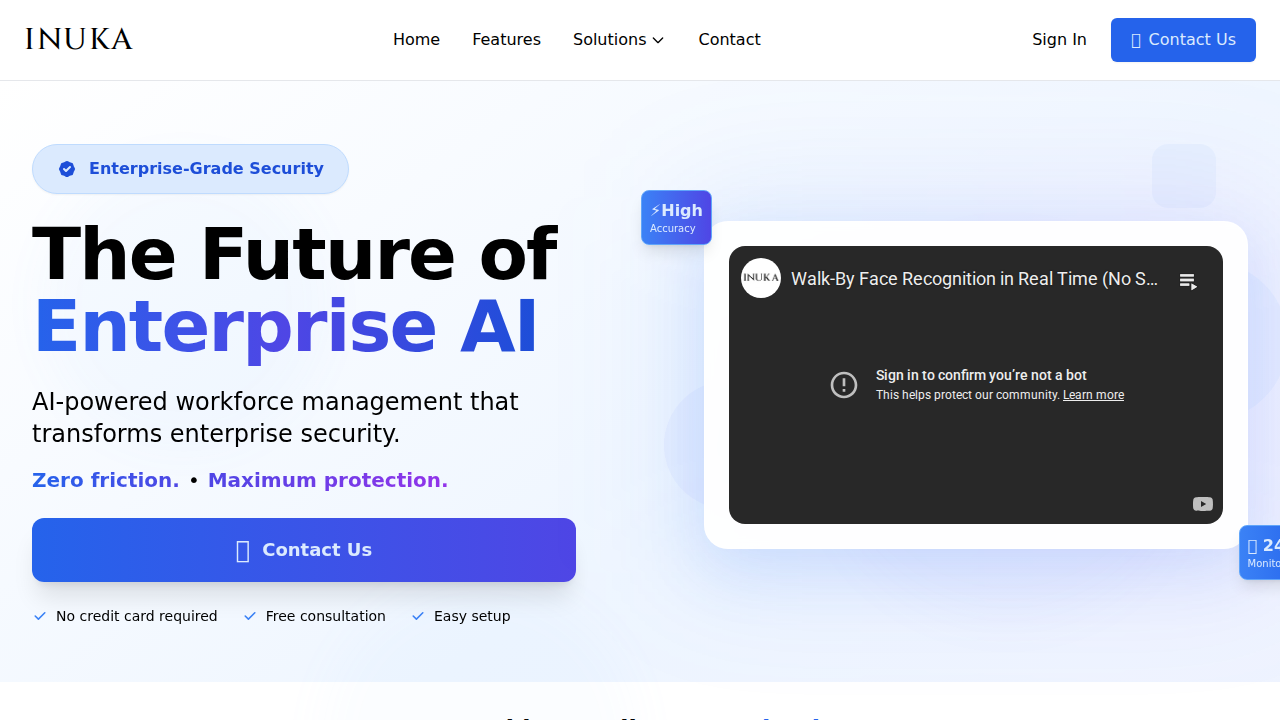
On 02/23/26 inuka.ai scored 59% — **Fair** – Overall, the site looks credible and easy to find, but a few key visibility and clarity gaps are holding back how well AI systems can confidently use and reference it.
Executive summary
Score Breakdown (High Level)
- Discoverability: 100% - Overall, the site is in great shape for discovery, though we didn't see any image or video sitemaps.
- Structured Data: 58% - The homepage features well-structured Product and Video schema, though the absence of a resource page in the data prevented us from evaluating author-specific markup.
- AI Readiness: 33% - The site has a functional XML sitemap with freshness data, but it explicitly blocks major AI crawlers and lacks standard internal links to a brand context page.
- Performance: 50% - Mobile performance is generally responsive and stable, though the main page content takes longer than ideal to fully render.
- Reputation: 81% - Overall, the brand maintains a strong offsite reputation with significant press coverage and social proof, though the lack of a Wikidata entry and some inconsistent address data are minor gaps in its digital footprint.
- LLM-Ready Content: 40% - The page effectively establishes brand trust and currency, but the content is too sparse and lacks the structural depth required for optimal generative engine performance.

The main takeaway at a glance
The big picture is that your baseline visibility and credibility signals are in place, but a few missing clarity signals keep AI systems from confidently understanding and reusing what’s on the site. Most of what came up isn’t “wrong,” it’s just information that isn’t as available or as easy to interpret as it could be. Next, we’ll walk through the specific areas where the evaluation couldn’t confirm key signals, plus the spots where the page doesn’t yet provide enough depth for clean extraction. None of this is unusual—it’s the kind of gap that shows up when a site is strong in intent but still light on supporting details.
Detailed Report
Discoverability
❌ Image or video sitemap not found
What we saw
We didn’t find a dedicated sitemap for images or videos. That means your visual assets don’t have a clear, centralized way to be discovered as part of your broader site footprint.
Why this matters for AI SEO
Generative engines often lean on strong discovery signals to locate and understand supporting media. When visuals aren’t as easy to surface, they’re less likely to be pulled into AI-generated summaries or references.
Next step
Add an image sitemap and/or video sitemap so your visual content can be more consistently discovered and understood.
Structured Data
❌ Resource or blog page markup couldn’t be verified
What we saw
A resource/blog page wasn’t available in the evaluation packet, so we couldn’t confirm whether those pages include structured information. As a result, this area shows up as missing for now.
Why this matters for AI SEO
When AI systems summarize or cite content, they rely on clear page-level context to interpret what a page is and how it should be categorized. If that context can’t be confirmed on content pages, it can reduce how confidently the content is used.
Next step
Make sure your resource/blog pages include clear structured context so their purpose and content type are easy to interpret.
❌ Author details on posts couldn’t be confirmed
What we saw
Because a resource/blog post wasn’t provided for review, we couldn’t verify whether individual posts show a clear, non-generic author. This leaves the author signal unconfirmed at the post level.
Why this matters for AI SEO
Author clarity can affect trust and attribution when AI systems compile answers or decide what to quote. If author information isn’t consistently established on content pages, it weakens credibility signals.
Next step
Ensure each article clearly names a real author (or consistently defined brand author) on the page.
❌ Connected author profile references couldn’t be confirmed
What we saw
We weren’t able to verify whether author information on posts includes connected profile references, since the resource/blog content wasn’t available to evaluate. This makes it harder to confirm the author’s broader identity signals.
Why this matters for AI SEO
Generative engines tend to trust entities more when identity signals connect cleanly across the web. Missing or unverified author profile references can reduce confidence in attribution.
Next step
Add consistent author profile references on article pages so the author identity is easier to validate.
AI Readiness
❌ Major AI/LLM crawlers are explicitly blocked
What we saw
The site’s crawler rules explicitly disallow several major AI and LLM crawlers. That means those systems may be prevented from accessing and learning from your content.
Why this matters for AI SEO
If key AI crawlers can’t read your pages, your site is less likely to show up accurately in generative answers or be used as a source. This can limit both visibility and how consistently your brand is represented.
Next step
Decide which AI crawlers you want to allow and update the crawl rules to match that intent.
❌ About/Company/Team link not detected on the homepage
What we saw
We didn’t detect a clear internal link on the homepage pointing to an About, Company, or Team page. This makes brand context harder to find from the main entry point.
Why this matters for AI SEO
Generative engines look for quick, obvious brand context to understand who you are and what you do. When that context isn’t easy to reach, it can reduce confidence and lead to thinner brand summaries.
Next step
Add a clear, easily discoverable link to your brand/about context from the homepage.
❌ No Wikidata entity found for the brand
What we saw
We didn’t find a Wikidata identifier associated with the brand. That leaves a common “official entity” signal unconfirmed.
Why this matters for AI SEO
AI systems often use established entity sources to disambiguate brands and keep facts consistent. Without that anchor, it’s easier for your brand identity details to drift or fragment across different answers.
Next step
Create and validate a Wikidata entity for the brand so it has a durable identity anchor.
Performance
❌ Main content appears too slowly on mobile
What we saw
The primary content on the homepage took longer than expected to appear for mobile users. This points to a sluggish initial load experience.
Why this matters for AI SEO
When pages feel slow to load, users are more likely to bounce and engage less, which can weaken the overall usefulness signals around the page. Over time, that can make it harder for your content to be surfaced and trusted.
Next step
Improve the time it takes for the main homepage content to appear for mobile visitors.
Reputation
❌ Brand address information appears inconsistent
What we saw
We saw conflicting information about the brand’s official business address, with references pointing to different locations. Some sources also appeared to be missing address details entirely.
Why this matters for AI SEO
Inconsistent identity details can cause entity confusion, especially when AI systems try to summarize “who the company is” in a single clean snapshot. That confusion can reduce confidence and lead to mixed or incomplete brand profiles.
Next step
Align your official business location information so it’s consistent across the web.
❌ No matching Wikidata entity found
What we saw
We weren’t able to find a Wikidata entry that matches the brand. That means an important third-party entity reference point isn’t currently established.
Why this matters for AI SEO
Wikidata can act like a central “identity card” that helps generative engines keep brand facts stable. Without it, it’s easier for details like name variants or location to show up inconsistently.
Next step
Establish a Wikidata entry that clearly matches the brand name and domain.
❌ Official identity anchors in Wikidata couldn’t be validated
What we saw
Because a matching Wikidata entry wasn’t found, we also couldn’t confirm the presence of official identity anchors there. This is essentially blocked by the missing entity match.
Why this matters for AI SEO
When identity anchors aren’t in place, AI systems have fewer reliable ways to confirm they’re talking about the right organization. That increases the odds of fragmented or incomplete brand understanding.
Next step
Once a Wikidata entity exists, ensure it includes official identity details that clearly tie back to the brand.
LLM-Ready Content
❌ No supporting outbound references in the content
What we saw
We didn’t find outbound links to external, non-social sources within the content. That leaves the page without obvious third-party references that back up key claims.
Why this matters for AI SEO
Generative engines tend to trust content more when it’s grounded in verifiable sources. Without external references, it’s harder for systems to cross-check details and treat the page as a strong factual input.
Next step
Add a small set of relevant third-party references that support important statements on the page.
❌ Content sections are too thin for strong extraction
What we saw
The page reads more like a minimal landing page, with sections that are very short and light on detail. As a result, there isn’t much substance for AI systems to extract into clear answers.
Why this matters for AI SEO
AI models do best when there’s enough on-page detail to understand context, constraints, and specifics. Thin sections make it easier for key nuances to get missed or oversimplified.
Next step
Expand key sections so each one provides enough context to stand on its own.
❌ No table-based information found
What we saw
We didn’t find any table formatting used to present structured information. That removes an easy-to-parse way to summarize comparisons, features, or key details.
Why this matters for AI SEO
Structured formatting can make it easier for AI systems to pull precise facts without guessing. When everything is purely paragraph-based (and short), fewer concrete “extractable” details stand out.
Next step
Include at least one simple table where it naturally helps clarify key information.
❌ Subheadings don’t clearly preview what follows
What we saw
Some subheadings didn’t clearly match the content directly underneath them. That makes the page harder to skim and reduces how clearly each section is “about” a specific idea.
Why this matters for AI SEO
Generative engines often chunk pages into sections and try to label what each chunk covers. If headings and body text don’t align well, the system’s understanding of the section can get fuzzy.
Next step
Tighten subheadings so they plainly reflect the main point of the section text.
❌ Sections don’t answer key questions early
What we saw
Introductory text at the start of sections was very brief, so the page doesn’t quickly deliver a clear “here’s the answer” summary upfront. This can make the content feel less immediately useful.
Why this matters for AI SEO
AI systems favor content that states the main point early, then supports it with details. If key answers aren’t front-loaded, the page is less likely to be pulled into direct, high-confidence responses.
Next step
Make each section open with a short, clear paragraph that spells out the main takeaway before going deeper.
Does Anything Seem Off?
Thanks for taking our free GEO Grader for a spin. When we started this journey, the tool had a fairly long processing time to check everything we wanted both onsite and offsite, so we made a few adjustments on the backend to speed things up. As a result, there are times when the grader may not get everything 100% right. If something feels off, we recommend running the tool a second time to confirm the results. From there, you’re always welcome to reach out to us to schedule a GEO consultation, or to have your SEO provider validate the findings with a more detailed crawl and manual review.
