
Overview:
On 06/10/26 frankiesflawlessfinish.com scored 61% — **Decent** – Overall, the site has a solid baseline for AI visibility, with a few clear gaps around credibility and how easily key information gets pulled through.
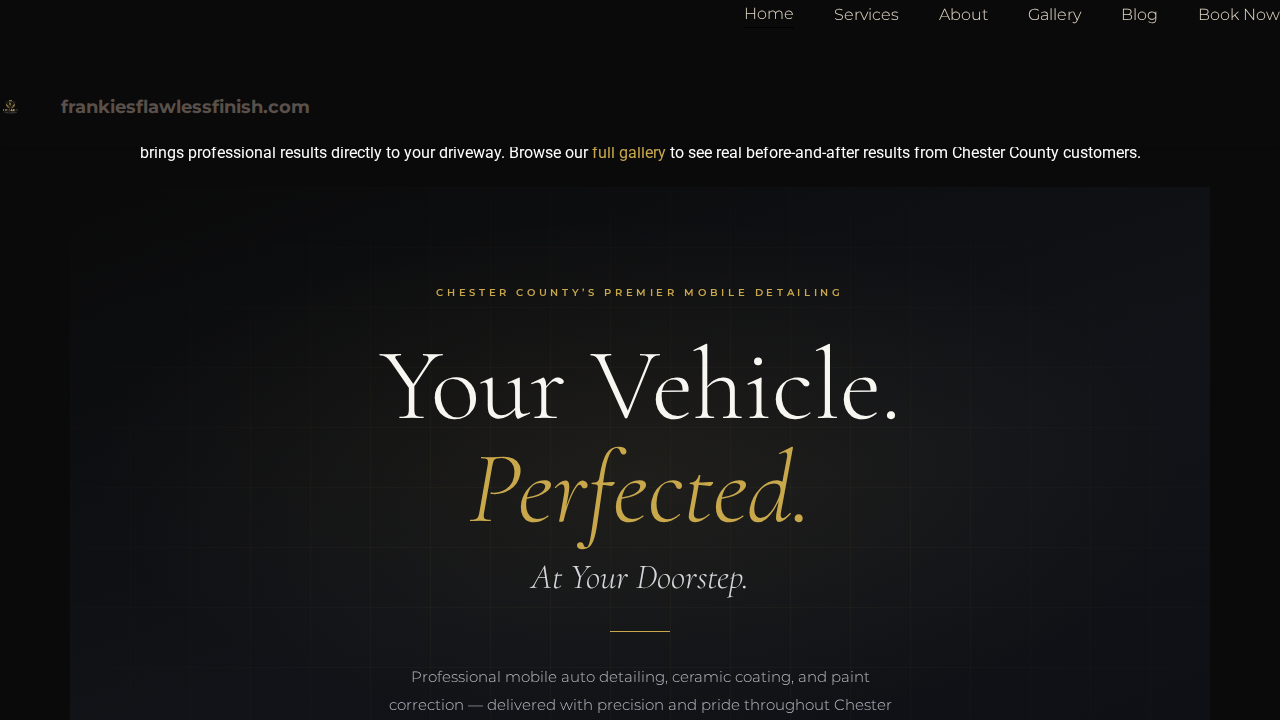
Executive summary
Score Breakdown (High Level)
- Discoverability: 100% - The site has a strong technical foundation with proper metadata and sitemaps, although adding a dedicated image sitemap would be a good next step for visibility.
- Structured Data: 58% - The homepage has excellent local business and service markup, though we couldn't confirm structured data implementation for the blog or resource pages.
- AI Readiness: 67% - The site provides a strong technical foundation for AI crawling but lacks the external validation of a Wikidata entity.
- Performance: 50% - Mobile performance is a bit of a mixed bag; the site is very responsive and stable, but the initial load time for the main content is significantly delayed.
- Reputation: 69% - The brand has a solid foundation with positive reviews and active social profiles, though it lacks the broader digital footprint of a Wikidata entry or independent press coverage.
- LLM-Ready Content: 40% - The site does a great job establishing clear authorship and keeping content fresh, though the highly fragmented page layout makes it harder for AI to process complex information.

Where things stand at a glance
The big picture is that the site has a strong baseline, but a few missing trust and content signals are making it harder for AI systems to confidently interpret and reuse what you publish. Several of the gaps are more about clarity and verification than anything being “wrong,” especially around brand identity consistency and how blog content is framed for attribution. The sections below walk through the specific areas that didn’t meet the mark, grouped by topic so it’s easy to see what’s driving the drag. Overall, this is a manageable set of issues—clear, specific, and common for growing brands.
Detailed Report
Discoverability
❌ No image or video sitemap found
What we saw
We didn’t detect an image sitemap or a video sitemap. That means visual content may not be as clearly surfaced for discovery as it could be.
Why this matters for AI SEO
Generative engines and modern search experiences often lean on visual assets to understand and showcase a brand. When visuals aren’t as easy to find and interpret, you can lose visibility in image- and video-driven results.
Next step
Add a dedicated image and/or video sitemap so your visual assets are easier to discover and attribute.
Structured Data
❌ Blog/resource structured data couldn’t be verified
What we saw
We weren’t able to review the blog/resource page content in the dataset, so we couldn’t confirm whether structured data is present there. As a result, the blog/resource area is effectively a blind spot in this evaluation.
Why this matters for AI SEO
When AI systems summarize or cite articles, they rely on clear page-level context to understand what the content is and how it should be referenced. If that context isn’t present or can’t be confirmed, the content may be harder to interpret consistently.
Next step
Ensure your blog/resource pages include structured data that clearly describes the page as an article/resource.
❌ Article author clarity couldn’t be verified
What we saw
Because the blog/resource page HTML wasn’t available for review, we couldn’t confirm whether each article is attributed to a specific, non-generic author. That makes it unclear how authorship is being communicated off the homepage.
Why this matters for AI SEO
Clear authorship helps AI systems evaluate credibility and decide what content is safe to reuse in answers. When authorship isn’t confirmed, the content can come across as less attributable and less trustworthy.
Next step
Make sure each blog/resource post clearly identifies a specific author (not a generic label).
❌ Author profile external links couldn’t be verified
What we saw
We couldn’t confirm whether the author information includes external profile links, since the blog/resource page HTML wasn’t provided. This leaves a gap in how well the author’s identity connects to the broader web.
Why this matters for AI SEO
External profile connections help generative engines reconcile “who wrote this” across different sources. Without that connective tissue, it’s harder for AI systems to confidently attribute expertise.
Next step
Add external profile links to author information so AI systems can better verify and connect the author identity.
AI Readiness
❌ No Wikidata entity found for the brand
What we saw
We didn’t find a Wikidata item ID for the brand. That means there isn’t a clear external entity reference tying the brand name to a single, verified identity.
Why this matters for AI SEO
Generative engines often use external entity sources to validate who a business is and to reduce confusion with similar names. When that reference isn’t available, the brand can be harder to verify at a glance.
Next step
Create and/or validate a Wikidata entity for the brand so AI systems have a stronger identity reference point.
Performance
❌ Main content takes too long to appear on the homepage
What we saw
The homepage took a very long time before the largest, most important content element fully loaded. In practical terms, that can feel like the page is “stuck” before it really becomes useful.
Why this matters for AI SEO
Slow initial loading can reduce engagement and trust, which can limit how well your pages perform in search-driven discovery. It can also make it harder for systems to quickly access and understand the primary content users care about.
Next step
Reduce the time it takes for the homepage’s primary content to fully load.
Reputation
❌ Inconsistent address/identity details across sources
What we saw
There wasn’t clear consensus on a verified physical address across sources reviewed, and the data showed discrepancies between locations. This creates ambiguity around the business’s “official” identity details.
Why this matters for AI SEO
Generative engines try to reconcile brand facts across the web to avoid giving incorrect details. When core identity signals don’t line up, it can reduce confidence and limit how often the brand is included in answers.
Next step
Align and standardize the business’s official location details so they’re consistent wherever the brand is referenced.
LLM-Ready Content (Blog Analysis)
Heads up: this section looks at one article as a snapshot, so it’s a little more interpretive than the rest of the report and may shift slightly from run to run. Have questions? Just shoot us an email at hello@v9digital.com
❌ No non-social external outbound link found
What we saw
We didn’t see outbound links to external informational sources or partner sites within the visible content. The page largely keeps the reader within the site’s own ecosystem.
Why this matters for AI SEO
Thoughtful external references can help AI systems understand what your content is grounded in and how it connects to the broader topic space. Without them, the content can read as less anchored and less verifiable.
Next step
Include at least one relevant, non-social external link that supports or adds context to the article.
❌ Sections are too short to build full context
What we saw
The content is broken into very short sections, which can make the narrative feel fragmented. It reads more like quick bullets than complete, self-contained explanations.
Why this matters for AI SEO
LLMs tend to reuse content more accurately when each section contains enough context to stand on its own. If sections are too thin, the model has less to work with when forming a confident answer.
Next step
Expand key sections so they provide more complete, self-contained explanations rather than quick fragments.
❌ No table used where structured info could help
What we saw
No table was detected in the content. That means any structured comparisons, pricing ranges, steps, or feature breakdowns (if present) aren’t being presented in a clearly scannable format.
Why this matters for AI SEO
Tables can make it easier for AI systems to extract precise, structured facts without misreading the relationships between items. When everything is in prose or lists, important details can be easier to miss or misinterpret.
Next step
Add a simple table in places where the content naturally includes comparisons, options, or structured details.
❌ Subheadings don’t clearly match the section content
What we saw
A number of subheadings weren’t strongly aligned with the text that followed them, so the sections don’t “label” themselves clearly. This can make the content harder to skim and harder to understand out of context.
Why this matters for AI SEO
Generative engines often use headings as signposts to decide what a section is about. If those signposts are vague or don’t match the text, the model is more likely to misunderstand or overlook key points.
Next step
Rewrite subheadings so each one clearly previews the specific point the section explains.
❌ Key answers don’t show up early in sections
What we saw
Many sections don’t open with a clear, full sentence that quickly delivers the “answer” or main point. Instead, the content often takes a bit to get to the takeaway.
Why this matters for AI SEO
AI systems tend to reward content that makes its main point quickly and unambiguously, especially when extracting summaries or direct answers. When the core takeaway is buried, it’s easier for the model to miss or soften it.
Next step
Start each key section with a clear opening paragraph that states the main takeaway upfront.
Does Anything Seem Off?
Thanks for taking our free GEO Grader for a spin. When we started this journey, the tool had a fairly long processing time to check everything we wanted both onsite and offsite, so we made a few adjustments on the backend to speed things up. As a result, there are times when the grader may not get everything 100% right. If something feels off, we recommend running the tool a second time to confirm the results. From there, you’re always welcome to reach out to us to schedule a GEO consultation, or to have your SEO provider validate the findings with a more detailed crawl and manual review.
