
Overview:
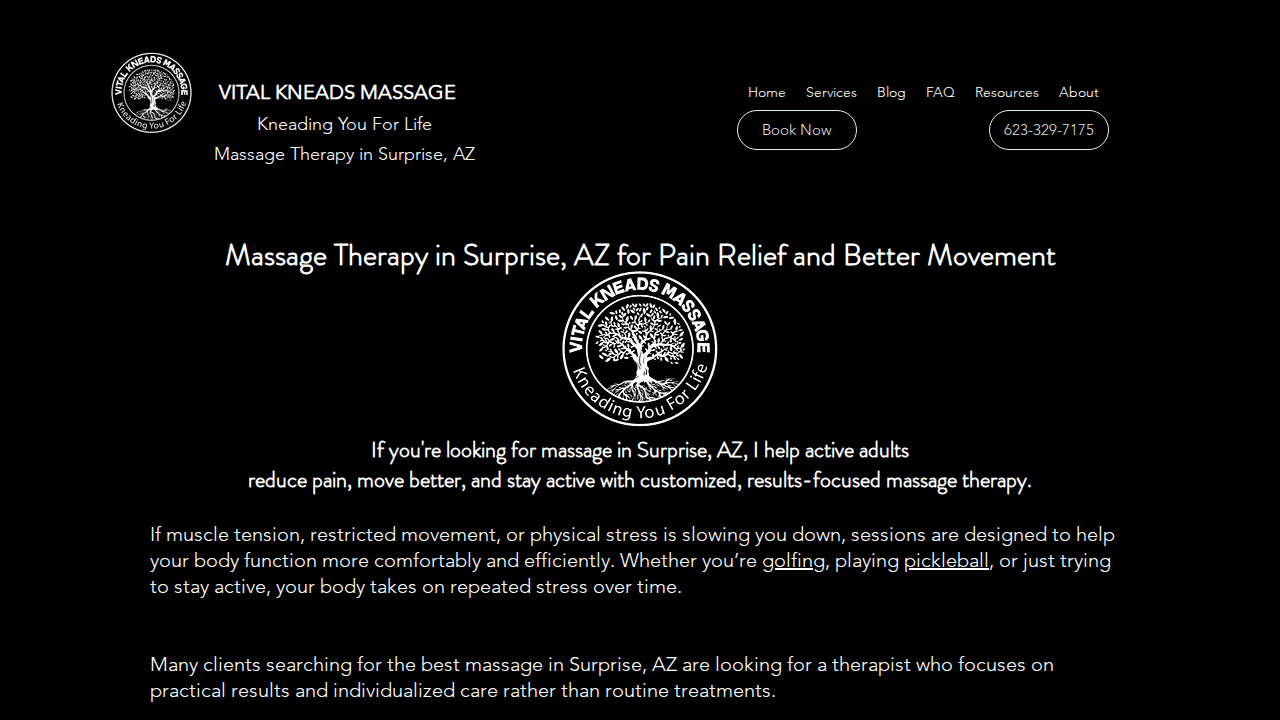
On 04/17/26 vitalkneads.net scored 67% — **Decent** – Overall, the site shows a solid baseline for AI visibility, with a few clear gaps around content clarity and offsite identity signals holding it back.
Executive summary
Score Breakdown (High Level)
- Discoverability: 100% - Everything in this section looks generally solid, though we didn't see any dedicated image or video sitemaps.
- Structured Data: 58% - The homepage markup is technically sound and descriptive, but we weren't able to confirm any schema or author details for your blog posts.
- AI Readiness: 67% - The site is technically well-prepared for AI crawlers with a healthy sitemap and open access, though it lacks a Wikidata entity to help verify its brand identity.
- Performance: 50% - Mobile performance is generally in good shape, though the homepage load time clocked in at 5.8 seconds, which is slightly above the preferred limit.
- Reputation: 73% - The brand has a solid foundation of reviews and social links, but conflicting location data across AI models and a missing Wikidata presence are currently limiting its off-site authority.
- LLM-Ready Content: 60% - The site demonstrates strong authorship and content freshness but would benefit from more descriptive subheadings and the addition of structured data tables.

The main takeaway overall
The big picture is that your on-site foundation is pretty solid, but a few missing clarity signals make it harder for AI systems to confidently interpret and reuse what you publish. These aren’t “bad” signs so much as areas where the story is a little fragmented—especially around consistent brand identity and how clearly content sections communicate their purpose. Below, we’ll walk through the specific categories where the evaluation flagged gaps, with a plain-English explanation of what was missing and why it matters. None of this is unusual, and it’s all the kind of stuff that becomes straightforward once it’s clearly defined.
Detailed Report
Discoverability
❌ Visual content isn’t clearly surfaced for discovery
What we saw
We didn’t find a dedicated way for search engines to specifically discover image or video content. That means your visual assets may be harder to surface consistently.
Why this matters for AI SEO
AI-driven experiences often lean on visual assets to understand offerings and to enrich answers. When that content is harder to find, it can reduce how often it shows up in AI summaries and recommendations.
Next step
Add a dedicated discovery path for your image and/or video content so those assets are easier to find and index.
Structured Data
❌ Blog/resource pages weren’t confirmed as having structured data
What we saw
We weren’t able to verify structured data on the blog/resource page during the evaluation. As a result, the article-level details weren’t clearly communicated in a machine-readable way.
Why this matters for AI SEO
When article details aren’t clearly labeled for machines, AI systems can have a harder time understanding what a piece of content is, what it’s about, and when it should be referenced.
Next step
Make sure your blog/resource templates include structured data that describes each article clearly.
❌ Author information wasn’t confirmed as specific on the resource content
What we saw
We couldn’t confirm that the evaluated resource/blog content included a clear, non-generic author identity. That leaves authorship signals ambiguous at the article level.
Why this matters for AI SEO
Clear authorship helps AI systems judge credibility and decide whether to use the content as a reliable source. If authorship is unclear, trust signals can weaken.
Next step
Ensure each resource/blog post clearly names a real author in a consistent, non-generic way.
❌ Author identity wasn’t connected to external profiles
What we saw
We didn’t see the author identity tied to recognized external profile references on the resource/blog content. That makes it harder to reconcile “who wrote this” across the web.
Why this matters for AI SEO
AI systems are more confident when they can match an author to consistent external identities. Without that connection, authorship can be treated as less certain.
Next step
Connect author identity to a few consistent external profile references so it’s easier to verify.
AI Readiness
❌ No Wikidata entry found for the brand
What we saw
We didn’t see a Wikidata entity associated with the brand. That leaves a notable gap in how cleanly AI systems can “pin” the business to a single, confirmed identity.
Why this matters for AI SEO
When AI engines can’t confidently resolve an entity, they’re more likely to mix details up with similar names or outdated information. A clear entity reference helps reduce ambiguity.
Next step
Create and/or confirm a Wikidata entity for the brand so AI systems have a stronger identity anchor.
Performance
❌ The homepage’s main content loads later than ideal
What we saw
The homepage’s primary content took longer than expected to fully appear for users. This points to a slower “first meaningful view” experience on the homepage.
Why this matters for AI SEO
Slower-loading pages can reduce how reliably content gets consumed and re-used, especially when systems prioritize sources that are easier to access quickly and consistently.
Next step
Improve the homepage’s initial load experience so the main content becomes visible sooner.
Reputation
❌ Brand location signals appear inconsistent
What we saw
We saw conflicting location information associated with the brand, with references pointing to Royal Oak, MI and Denver, CO rather than the Surprise, AZ location. That creates an identity mismatch around where the business is actually based.
Why this matters for AI SEO
When AI systems see inconsistent identity details, they become less confident about factual basics like location. That can impact how (and where) the brand shows up in AI-driven results.
Next step
Align your offsite brand references so location information is consistent and unambiguous.
❌ No Wikidata entity found for the brand
What we saw
No matching Wikidata entity was identified for the business. This leaves a gap in the strongest “single source of truth” style references that many AI systems rely on.
Why this matters for AI SEO
Without a widely recognized entity record, models may rely on scattered mentions across the web, which can introduce inconsistencies. A stronger entity footprint helps stabilize brand understanding.
Next step
Establish a Wikidata entity so your brand is easier for AI systems to identify consistently.
❌ Missing official identity anchors tied to a Wikidata record
What we saw
Because there’s no Wikidata record in place, we didn’t see supporting identity anchors tied to it. That reduces the number of “official” cross-references AI systems can use to confirm details.
Why this matters for AI SEO
Identity anchors help models reconcile your brand across sources and reduce mix-ups. Fewer anchors can mean more uncertainty in AI answers.
Next step
Add official identity anchors that connect back to a consistent, recognized entity record.
❌ No independent third-party coverage was identified
What we saw
We didn’t see evidence of independent press or third-party coverage mentioning the brand. That means most of the narrative is coming from owned or review-based sources.
Why this matters for AI SEO
Independent mentions can help AI systems validate that a business is recognized beyond its own channels. When that layer is missing, authority can be harder to establish.
Next step
Build a footprint of independent, third-party mentions that clearly reference the brand.
LLM-Ready Content (Blog Analysis)
Heads up: this section looks at one article as a snapshot, so it’s a little more interpretive than the rest of the report and may shift slightly from run to run. Have questions? Just shoot us an email at hello@v9digital.com
❌ Sections are too thin to be easily reusable
What we saw
The content is broken into sections, but the sections are very short on average, so key points don’t get much room to develop. That makes each section less “standalone” and harder to lift cleanly.
Why this matters for AI SEO
AI systems tend to do better when content is organized into clearly bounded, substantial chunks that each answer a focused question. Thin sections can make the page feel harder to summarize accurately.
Next step
Expand key sections so each one fully answers a specific question in a more complete, self-contained way.
❌ No structured table was found for quick facts
What we saw
We didn’t find any structured table on the page. As a result, readers (and AI systems) don’t get a clean, scannable block of specifics.
Why this matters for AI SEO
Well-organized facts are easier for AI to extract, quote, and reuse accurately. When everything is in narrative form, key details are easier to miss or misinterpret.
Next step
Add a simple table where it makes sense to summarize key details in a compact, consistent format.
❌ Subheadings don’t describe what each section delivers
What we saw
Many subheadings are generic labels (for example, “Answer”) instead of describing the specific topic of that section. That makes it harder to understand the page structure at a glance.
Why this matters for AI SEO
Descriptive subheadings help AI systems map sections to questions and intent. When headings are vague, the content becomes harder to navigate, summarize, and cite.
Next step
Rewrite generic subheadings so each one clearly states the question or topic that section addresses.
Does Anything Seem Off?
Thanks for taking our free GEO Grader for a spin. When we started this journey, the tool had a fairly long processing time to check everything we wanted both onsite and offsite, so we made a few adjustments on the backend to speed things up. As a result, there are times when the grader may not get everything 100% right. If something feels off, we recommend running the tool a second time to confirm the results. From there, you’re always welcome to reach out to us to schedule a GEO consultation, or to have your SEO provider validate the findings with a more detailed crawl and manual review.
